
In the electrical industry, the reliability of every component is paramount. A secure connection isn’t just a matter of performance—it’s a critical safety requirement. For projects exposed to moisture, dust, or temperature fluctuations, the Waterproof Wire Nut is an indispensable component. However, for procurement managers, electrical contractors, and distributors, navigating the pricing landscape for these essential parts can be challenging. Why does the cost of one waterproof wire nut vary so much from another, and how can you ensure you’re making a cost-effective investment without compromising on quality?
The price difference between a standard indoor wire nut and a waterproof one can be significant, often three to five times higher for the waterproof variant . This premium isn’t arbitrary; it’s the result of advanced materials, complex manufacturing processes, and rigorous testing required to ensure a connection remains secure and corrosion-free in harsh conditions. This guide breaks down the key factors that affect waterproof wire nut pricing, empowering you to make informed bulk purchasing decisions that balance budget, quality, and long-term reliability.
The Anatomy of a Waterproof Wire Nut: Core Components and Material Costs
At first glance, a waterproof wire nut may seem like a simple component, but its construction involves several specialized materials, each contributing to its overall performance and cost.
The Conductive Core: Copper and Brass Terminals
The heart of any wire nut is its conductive interior, which is responsible for creating a secure electrical connection. This component is typically a spring- or threaded-insert made from high-quality metals.
- Copper: Valued for its superior electrical conductivity, copper is a common choice for high-performance connectors. However, its price is subject to global commodity market fluctuations, which can directly impact the cost of the wire nuts.
- Brass: An alloy of copper and zinc, brass offers a good balance of conductivity, corrosion resistance, and mechanical strength. It is often a more cost-stable alternative to pure copper, though it has slightly lower conductivity.
The thickness and design of this metal core also play a role. A thicker, more robust spring provides a stronger grip on the wires, ensuring a more reliable, long-term connection, but it also requires more raw material, increasing its cost.
The Protective Sealant: Silicone Gel and Its Impact
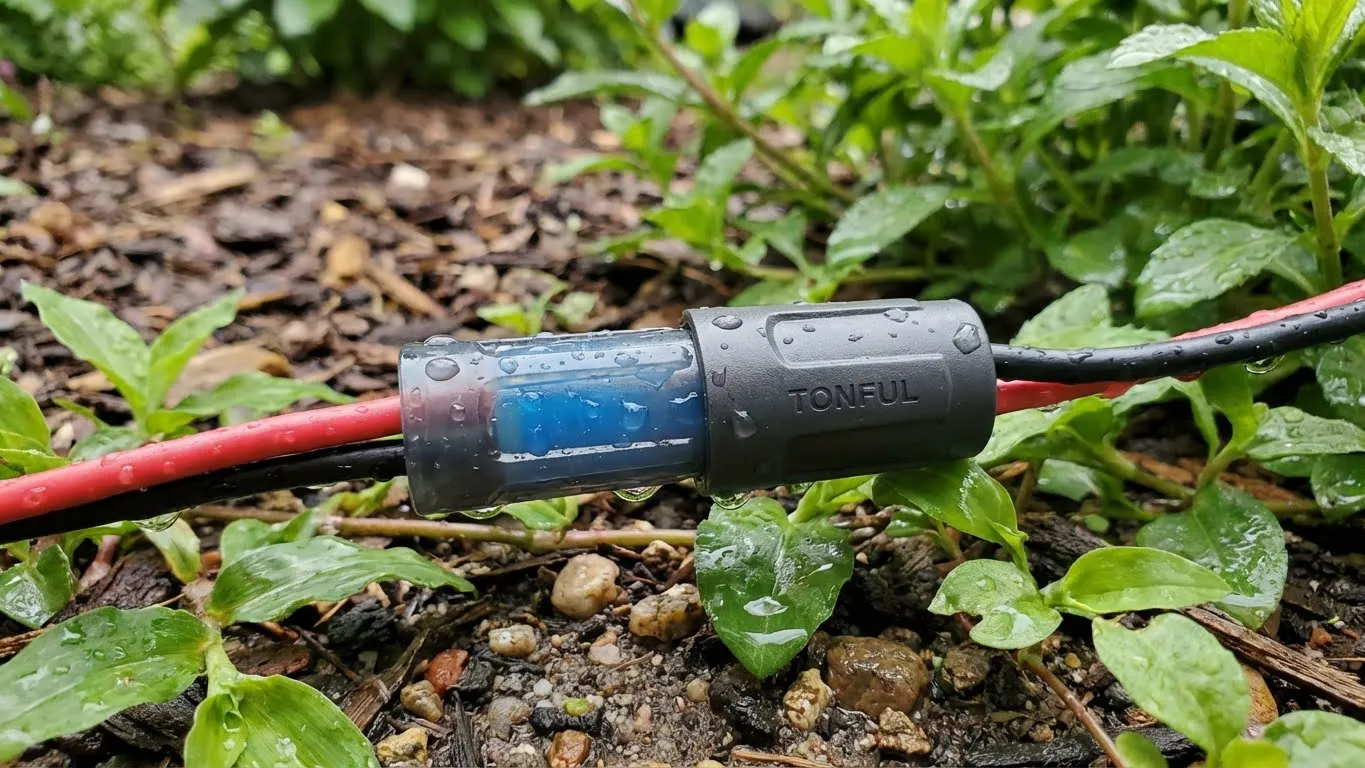
The defining feature of a waterproof wire nut is the sealant that protects the connection from moisture, dust, and corrosive elements. This is most often a high-grade silicone gel pre-filled into the connector’s cap. The gel’s properties are critical to the nut’s effectiveness and are a primary driver of its cost.
Unlike standard connectors, this specialized gel is engineered to remain viscous and pliable across a wide range of temperatures, typically from -40°F to 400°F, ensuring the seal doesn’t crack in the cold or melt in the heat [1]. This dielectric grease also prevents oxidization on the wire ends, which is crucial for maintaining a low-resistance connection over the product’s lifespan. The volume and quality of this silicone are non-negotiable for performance, making it a significant cost factor.
The Outer Shell: Housing Materials and Durability
The external cap of a waterproof wire nut serves as the first line of defense. It not only provides electrical insulation but also protects the internal components from physical impact and environmental stressors like UV radiation. Material choice here is a balance between durability, flame resistance, and cost.
| Housing Material | Key Characteristics | Relative Cost |
|---|---|---|
| Thermoplastic Elastomer (TPE) | Highly durable, flexible, excellent UV resistance, and wide temperature range. Often used in premium connectors. | High |
| Polypropylene (PP) | Good chemical resistance, economical, but can be less durable and flexible than TPE, especially in cold temperatures. | Medium |
| Nylon | Very tough and abrasion-resistant, with good flame-retardant properties. | Medium-High |
| PVC | Inexpensive and flame-retardant, but can become brittle in cold and may not offer the longevity of other materials. | Low |
For outdoor or direct-burial applications, a UV-resistant material like TPE is essential to prevent the housing from becoming brittle and cracking over time. While more expensive, this upfront investment prevents premature failure and costly repairs down the line.
Manufacturing Processes: Where Cost and Quality Intersect
The production of waterproof wire nuts involves sophisticated manufacturing processes that significantly impact their final cost. Understanding these processes helps explain the price differences between budget and premium products.
Injection Molding: Precision and Scale
The outer housing is typically produced through injection molding, a process that requires significant upfront investment in tooling. High-quality molds made from hardened steel can cost tens of thousands of dollars but are essential for producing consistent, defect-free parts with precise tolerances.
The complexity of the mold design affects both the initial investment and the per-unit cost. A waterproof wire nut with integrated strain relief, grip ridges, and a precisely engineered internal chamber for the silicone gel requires a more complex mold than a simple cap design. However, once the tooling is in place, injection molding becomes highly efficient at scale, which is why larger order quantities typically result in lower per-unit costs.
Gel Filling: Automation vs. Manual Process
The process of filling each wire nut with the precise amount of silicone gel is a critical step that directly affects both quality and cost.
- Automated Filling: Premium manufacturers invest in automated dispensing systems that ensure consistent gel volume in every connector. These systems reduce waste, improve quality control, and increase production speed, but they require significant capital investment.
- Manual or Semi-Automated Filling: Lower-cost products may use manual or semi-automated filling processes, which can lead to inconsistencies in gel volume and, consequently, inconsistent waterproofing performance.
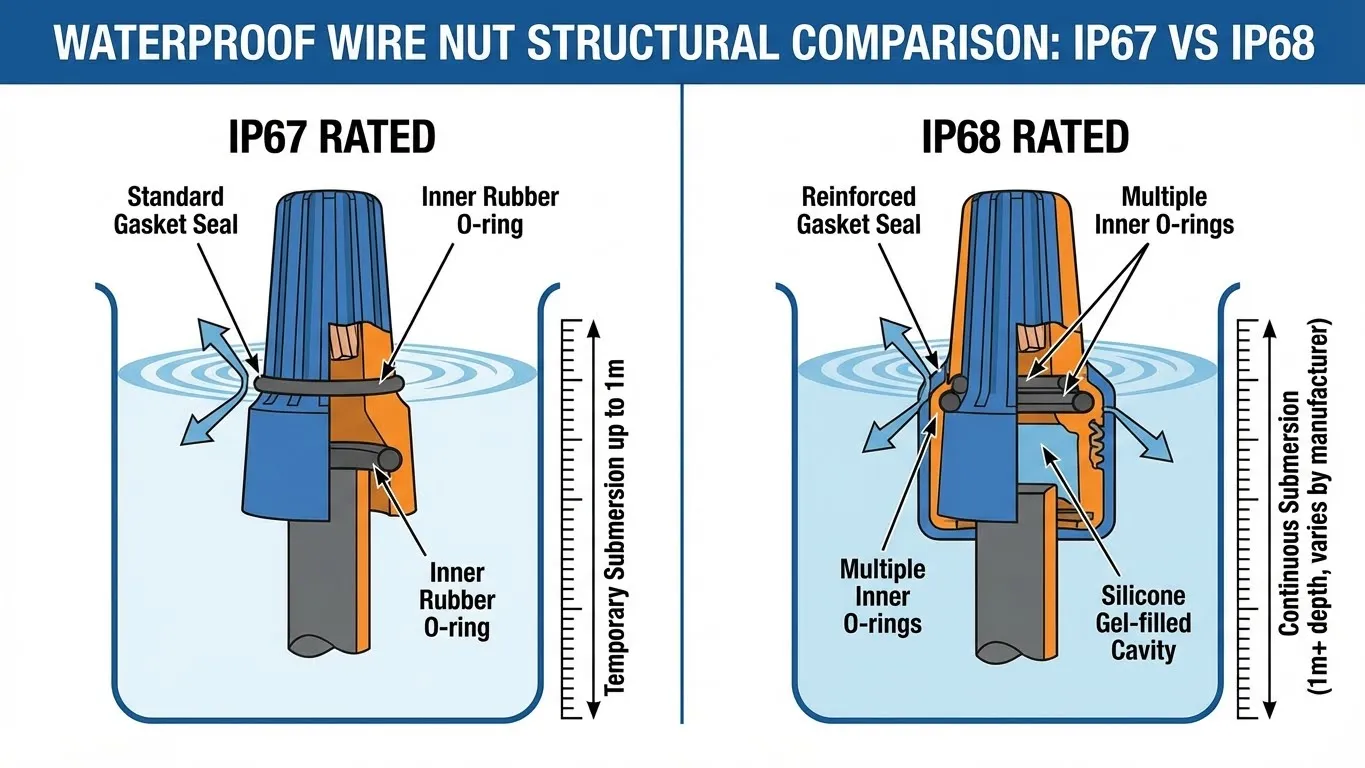
The volume of gel also matters. A connector rated for IP68 (continuous submersion) requires more gel and a tighter seal than one rated for IP67 (temporary immersion), directly impacting material costs and production time.
Assembly and Quality Control Complexity
Unlike standard wire nuts that may only require a single molding step, waterproof versions often involve multi-component assembly. The metal spring insert must be securely positioned, the gel must be precisely dosed, and in some designs, a secondary seal or cap must be attached.
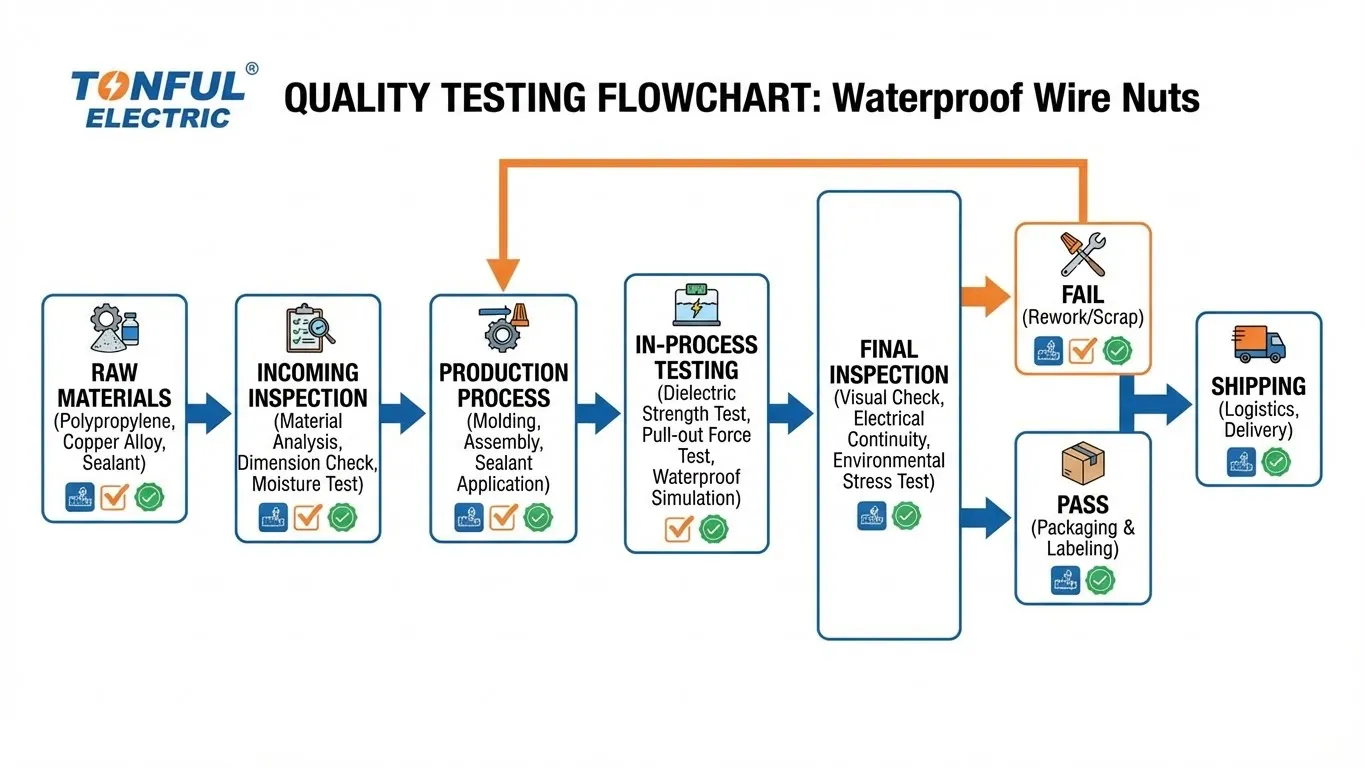
Each additional assembly step adds labor costs and introduces potential quality control points. Reputable manufacturers implement rigorous inspection protocols—such as testing a sample from each production batch for waterproof integrity—which adds to the overall cost but ensures reliability in the field.

IP Rating Certification: The Cost of Proven Performance
One of the most important specifications for a waterproof wire nut is its Ingress Protection (IP) rating, which defines its resistance to solid objects (like dust) and liquids. This rating is not just a marketing claim—it’s a standardized certification that requires rigorous testing and documentation.
Understanding IP Ratings: IP67 vs. IP68
The IP rating consists of two digits:
- First Digit (Solid Protection): For waterproof wire nuts, this is typically “6,” meaning complete protection against dust ingress.
- Second Digit (Liquid Protection): This is where the critical differences lie:
- IP67: Protection against temporary immersion in water up to 1 meter depth for 30 minutes.
- IP68: Protection against continuous immersion beyond 1 meter, as specified by the manufacturer (often 1.5-3 meters for extended periods).
An IP68-rated connector requires more robust sealing design, higher-quality materials, and more stringent manufacturing tolerances than an IP67 product. This translates directly to higher costs [2].
The Testing and Certification Process
Achieving and maintaining an IP rating certification involves several cost factors:
- Independent Laboratory Testing: Products must be tested by accredited third-party laboratories, with fees ranging from several hundred to several thousand dollars depending on the rating level and the number of samples required.
- Design Validation: Before mass production, prototypes must be tested and validated, which can involve multiple design iterations if initial tests fail.
- Ongoing Compliance: Maintaining certification requires periodic re-testing and documentation, especially when manufacturing processes or materials change.
- Higher Rejection Rates: Stricter tolerances mean that a higher percentage of products may fail quality control, increasing waste and per-unit costs.
For bulk buyers, the IP rating is a critical factor in total cost of ownership. A slightly more expensive IP68 connector may be far more cost-effective than repeatedly replacing failed IP67 units in a demanding application.
Quality Testing and Compliance: The Hidden Cost of Reliability
Beyond the IP rating, comprehensive quality testing and regulatory compliance add substantial but essential costs to waterproof wire nuts. These processes ensure that the product will perform reliably in real-world conditions, not just in controlled laboratory environments.
UL Listing and Electrical Safety Standards
For many applications, especially in North America, UL (Underwriters Laboratories) listing is not optional—it’s a requirement. Achieving UL listing for a waterproof wire nut involves:
- Product Evaluation: Comprehensive testing of electrical safety, including dielectric strength, current-carrying capacity, and flame resistance.
- Factory Inspections: UL conducts periodic audits of manufacturing facilities to ensure ongoing compliance.
- Listing Fees: Initial certification and annual maintenance fees can run into thousands of dollars per product line.
Products with UL listing command a premium price, but they also provide legal protection and peace of mind for contractors and facility managers who must comply with electrical codes.
Environmental and Mechanical Stress Testing
Reputable manufacturers subject their waterproof wire nuts to a battery of tests that simulate years of service in harsh conditions:
- Temperature Cycling: Connectors are repeatedly subjected to extreme temperature swings (e.g., -40°F to 200°F) to ensure the materials and seals don’t crack, become brittle, or lose their grip.
- Pull and Torque Tests: Mechanical testing verifies that the connection maintains its integrity under physical stress, such as wire tension or accidental impact.
- Salt Spray (Corrosion) Testing: For coastal or industrial environments, products undergo accelerated corrosion testing in salt fog chambers, sometimes for hundreds or thousands of hours, to simulate decades of exposure.
- UV Aging Tests: Outdoor-rated products are exposed to concentrated UV light to ensure the housing material won’t degrade and crack after years of sun exposure.
Each of these tests requires specialized equipment, trained personnel, and time—all of which contribute to the product’s cost. However, the alternative—field failures and warranty claims—is far more expensive.
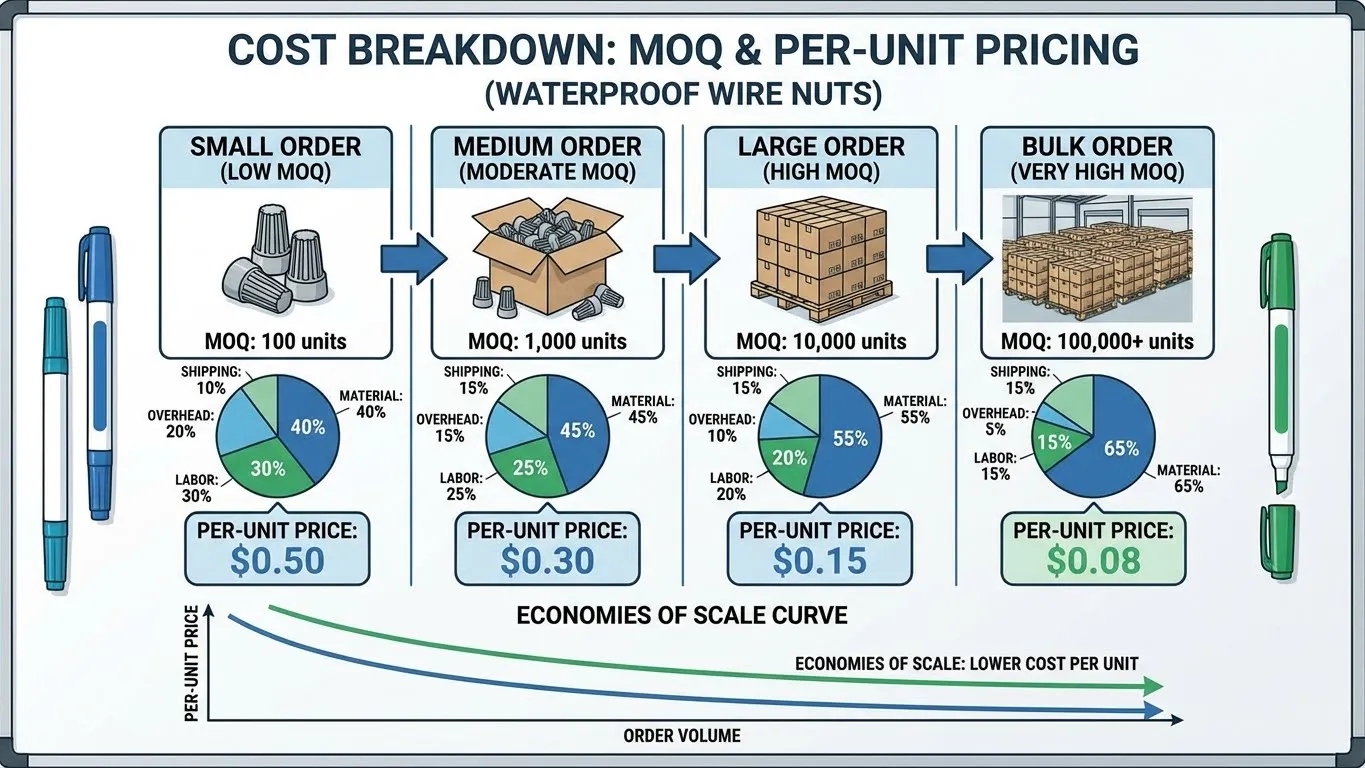
Minimum Order Quantity (MOQ) and Volume Pricing: Unlocking Economies of Scale
For bulk buyers, one of the most significant factors affecting the per-unit price of waterproof wire nuts is the order quantity. Understanding MOQ requirements and volume pricing structures is essential for optimizing your procurement budget.
Why MOQ Matters in Connector Manufacturing
MOQ exists because of the fixed costs associated with production setup. Every production run involves:
- Tooling and Machine Setup: Even with existing molds, there’s a setup time for each production run where machines must be configured, materials loaded, and initial samples tested.
- Material Purchasing: Raw materials like copper, brass, silicone gel, and specialty polymers are often purchased in bulk quantities to secure better pricing. Small production runs may not justify purchasing a full batch of materials.
- Quality Control Overhead: The cost of testing and certification is largely fixed per production batch, not per unit. A batch of 500 units has nearly the same QC cost as a batch of 5,000 units.
For these reasons, most manufacturers set MOQs that ensure each production run is economically viable. For waterproof wire nuts, typical MOQs range from 500 to 5,000 pieces depending on the manufacturer’s scale and the product’s complexity [3].
Volume Pricing Tiers: How Much Can You Save?
The relationship between order quantity and unit price is not linear—there are distinct pricing tiers where economies of scale kick in. Here’s a representative pricing structure based on typical industry practices:
| Order Quantity | Price Per Unit | Total Cost | Savings vs. Small Order |
|---|---|---|---|
| 500-999 units | $1.80 | $900-$1,798 | Baseline |
| 1,000-2,499 units | $1.50 | $1,500-$3,748 | 16.7% |
| 2,500-4,999 units | $1.25 | $3,125-$6,249 | 30.6% |
| 5,000-9,999 units | $1.05 | $5,250-$10,499 | 41.7% |
| 10,000+ units | $0.85 | $8,500+ | 52.8% |
Note: Prices are illustrative and vary based on specifications, IP rating, certifications, and manufacturer.
As the table shows, doubling your order quantity from 1,000 to 2,500 units can reduce the per-unit cost by approximately 17%, while increasing to 10,000 units can cut costs by more than half compared to small orders. For large projects or distributors with predictable demand, negotiating volume pricing is one of the most effective ways to reduce total cost of ownership.
Balancing MOQ with Inventory Costs
While larger orders offer better pricing, they also tie up capital in inventory and incur storage costs. The optimal order quantity depends on your project timeline, storage capacity, and cash flow considerations. For one-time projects, it may be more economical to pay a slight premium for a smaller order. For ongoing operations or distributors, establishing a relationship with a manufacturer for regular bulk orders can unlock the best pricing.
Additional Cost Factors: Beyond the Connector Itself
While material quality, manufacturing processes, certifications, and order volume are the primary cost drivers, several other factors can influence the total landed cost of waterproof wire nuts in a bulk purchase.
Packaging and Labeling Requirements
Bulk packaging is the most economical option, with connectors shipped in large bags or boxes. However, retail-ready packaging (individual blisters or small labeled packages) adds significant per-unit costs due to additional materials, labor, and printing. If you’re a distributor reselling to contractors, retail packaging may be necessary, but if you’re purchasing for internal projects, bulk packaging can save 10-20% on total costs.
Logistics and Shipping Considerations
Waterproof wire nuts are relatively small and lightweight, but shipping costs can still be significant for international orders. Key factors include:
- Origin and Destination: Products manufactured in Asia may have a lower base price but incur higher shipping costs and longer lead times compared to domestically produced alternatives.
- Order Consolidation: Combining multiple product types or sizes in a single shipment can reduce per-unit shipping costs.
- Tariffs and Duties: For international purchases, import tariffs can add 5-25% to the landed cost, depending on trade agreements and classification.
Warranty and Technical Support
Premium manufacturers often include warranties (e.g., 5-10 years) and provide technical support for installation and troubleshooting. While this may not be itemized as a separate cost, it’s factored into the price and provides value by reducing the risk of field failures and the cost of callbacks.
Customization and Private Labeling
If you require custom colors, branding, or specific wire gauge compatibility, manufacturers may charge tooling fees and setup costs. For large, ongoing orders, these fees can be amortized over time, but for one-off purchases, customization can add 20-50% to the base price.
Standard vs. Premium Waterproof Wire Nuts: A Comprehensive Comparison
To help you evaluate your options, here’s a side-by-side comparison of typical standard and premium waterproof wire nuts across key specifications and cost factors:
| Feature / Specification | Standard Waterproof Wire Nut | Premium Waterproof Wire Nut |
|---|---|---|
| IP Rating | IP67 (temporary immersion) | IP68 (continuous submersion) |
| Housing Material | Polypropylene (PP) or PVC | Thermoplastic Elastomer (TPE) |
| Metal Terminal | Brass, standard thickness | Copper or heavy-duty brass |
| Silicone Gel Volume | Standard volume | Enhanced volume, dielectric grease |
| Temperature Range | -20°F to 200°F | -40°F to 400°F |
| UV Resistance | Limited (1-3 years outdoor) | Excellent (10+ years outdoor) |
| UL Listing | Often not listed | UL listed |
| Typical MOQ | 500-1,000 units | 1,000-2,500 units |
| Price Range (per unit at 1,000 qty) | $0.80 – $1.20 | $1.50 – $2.50 |
| Best Applications | Indoor damp locations, temporary outdoor use, budget-sensitive projects | Direct burial, permanent outdoor installations, marine, industrial, critical infrastructure |
| Expected Lifespan | 3-5 years in moderate conditions | 10-20+ years in harsh conditions |
| Warranty | 1-2 years or none | 5-10 years |
This comparison illustrates that while premium products cost 50-100% more upfront, they can offer significantly better long-term value in demanding applications by reducing replacement frequency, labor costs, and downtime.
Making the Right Choice for Your Project
Selecting the right waterproof wire nut isn’t just about finding the lowest price—it’s about matching the product’s specifications and quality level to your specific application requirements. Here’s a practical framework for making that decision:
For Temporary or Indoor Damp Locations
If your application involves occasional moisture exposure—such as basement wiring, crawl spaces, or temporary outdoor events—a standard IP67-rated connector with a polypropylene housing may be sufficient. Focus on finding a reputable manufacturer with good reviews, even if UL listing isn’t mandatory.
Cost Optimization: Negotiate for mid-tier volume pricing (1,000-2,500 units) to balance cost and inventory. Request bulk packaging to save on per-unit costs.
For Permanent Outdoor Installations
Landscape lighting, outdoor signage, and building exterior applications require UV-resistant housings and reliable long-term sealing. Invest in IP67 or IP68 connectors with TPE housings and enhanced silicone gel formulations.
Cost Optimization: Calculate the total cost of ownership over 10 years. A $2.00 premium connector that lasts 15 years is far more economical than a $0.90 standard connector that fails after 3 years and requires costly service calls.
For Direct Burial and Underground Applications
Direct burial applications, such as underground irrigation lighting or utility connections, demand IP68 ratings, corrosion-resistant terminals, and robust environmental testing. UL listing is often required by code.
Cost Optimization: Prioritize quality over price. Failures in buried applications are extremely expensive to repair. Consider establishing a long-term relationship with a manufacturer for regular bulk orders at the best possible pricing.
For Marine and Coastal Environments
Salt exposure accelerates corrosion and demands the highest level of protection. Look for IP68 connectors with copper terminals (not brass, which corrodes faster), TPE housings, and documented salt spray testing results.
Cost Optimization: Factor in the cost of preventive maintenance. Premium connectors with 10-year warranties can eliminate the need for scheduled inspections and replacements, reducing long-term labor costs.
For High-Temperature Environments
Industrial applications with heat exposure (e.g., near HVAC equipment, engine compartments) require connectors rated for extended high temperatures (up to 400°F). Silicone gel formulations must maintain viscosity at these temperatures.
Cost Optimization: Request test reports demonstrating performance at your specific operating temperature. Avoid under-specifying—connector failure in high-heat environments can cause equipment damage far exceeding the cost of premium connectors.
Frequently Asked Questions
Q: Why are waterproof wire nuts so much more expensive than standard wire nuts?
A: Waterproof wire nuts cost 3-5 times more than standard wire nuts because they require specialized materials (high-grade silicone gel, UV-resistant housings, corrosion-resistant terminals), more complex manufacturing processes (gel filling, multi-component assembly), and rigorous testing for IP ratings and certifications. These features ensure reliable, long-term performance in harsh environments, which standard wire nuts cannot provide [1].
Q: What’s the difference between IP67 and IP68, and is it worth paying more for IP68?
A: IP67 protects against temporary water immersion (up to 1 meter for 30 minutes), while IP68 protects against continuous submersion at greater depths (typically 1.5-3 meters, as specified by the manufacturer). For applications like direct burial, pond lighting, or any scenario where prolonged water exposure is expected, IP68 is essential and worth the 20-40% premium. For occasional moisture exposure, IP67 may suffice [2].
Q: How do I know if a waterproof wire nut is genuinely certified or just claiming an IP rating?
A: Always request documentation from the manufacturer, including test reports from accredited third-party laboratories (such as Intertek, TUV, or UL). Reputable manufacturers will provide certification numbers that you can verify. Be wary of products that only claim an IP rating without supporting documentation—these are often not genuinely certified and may fail in real-world conditions.
Q: What’s a typical MOQ for waterproof wire nuts, and can I negotiate it?
A: Typical MOQs range from 500 to 5,000 units, depending on the manufacturer’s scale and the product’s complexity. Smaller manufacturers may accept lower MOQs, but at a higher per-unit cost. Large manufacturers with established production lines may be more flexible on MOQ for high-value customers or if you’re willing to accept standard products without customization [3].
Q: Are there volume discounts available, and how much can I save by ordering in bulk?
A: Yes, volume discounts are significant in this industry. Ordering 5,000 units instead of 500 can reduce per-unit costs by 30-40%, and ordering 10,000+ units can cut costs by 50% or more. The key is balancing your inventory holding costs and cash flow against the unit price savings. For distributors or contractors with predictable ongoing demand, bulk ordering is one of the most effective cost-reduction strategies.
Q: Should I prioritize price or quality when selecting a waterproof wire nut?
A: The answer depends on your application. For low-risk, temporary, or easily accessible installations, a mid-tier product at a competitive price may be appropriate. However, for critical, permanent, or hard-to-access installations (like direct burial or marine applications), prioritize quality and certifications. The cost of a single connector failure—including labor, downtime, and potential safety issues—can easily exceed the savings from choosing a cheaper product.
Q: How do I calculate the total cost of ownership for waterproof wire nuts?
A: Total cost of ownership (TCO) includes the purchase price, shipping and duties, installation labor, expected lifespan, and the cost of potential failures and replacements. For example, a premium IP68 connector at $2.00 with a 15-year lifespan has a lower TCO than a $0.90 standard connector that lasts only 3 years and requires reinstallation (with associated labor costs). Always factor in the fully loaded cost, not just the unit price.
Conclusion: Investing in Quality for Long-Term Value
Navigating the pricing landscape for waterproof wire nuts requires understanding that cost is driven by materials, manufacturing precision, certifications, and order volume—not arbitrary markups. While it may be tempting to select the lowest-priced option, the true measure of value is the total cost of ownership over the product’s lifespan.
For procurement managers, contractors, and distributors, the key is to match the product’s specifications to your application’s demands. A premium IP68 connector with UL listing and a 10-year warranty may cost twice as much upfront as a basic IP67 unit, but in a direct-burial or marine application, it can deliver five times the lifespan and eliminate costly service calls.
By leveraging volume pricing, understanding MOQ dynamics, and partnering with a reputable manufacturer who provides transparent pricing and robust technical support, you can optimize your procurement strategy and ensure reliable, safe electrical connections for years to come.
Ready to source high-quality waterproof wire nuts for your next project? TONFUL Electric specializes in manufacturing premium IP67 and IP68 waterproof wire nuts with UL certifications, rigorous quality testing, and competitive volume pricing for bulk orders. Contact our team today for a customized quote and technical consultation tailored to your specific application requirements.