
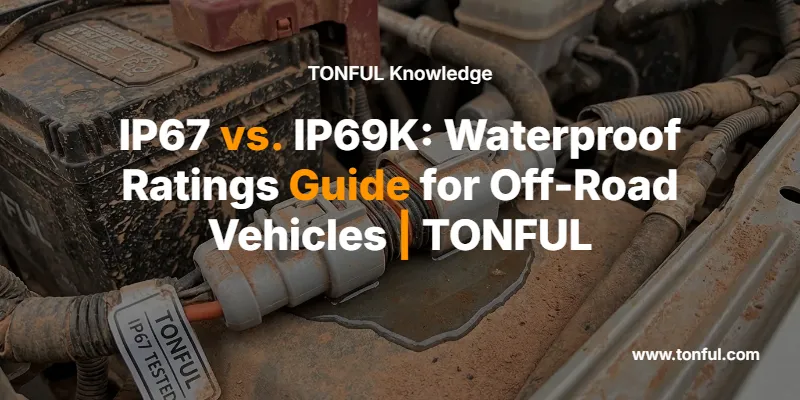
When outfitting off-road vehicles with electrical components, understanding waterproof ratings isn’t just technical jargon—it’s the difference between reliable performance and costly failures in extreme environments. The IP (Ingress Protection) rating system, defined by the International Electrotechnical Commission under IEC 60529 and ISO 20653 standards, provides a standardized method to classify how well electrical enclosures protect against dust and water intrusion. For off-road enthusiasts, fleet managers, and automotive engineers, choosing between IP67 and IP69K ratings directly impacts equipment longevity, maintenance costs, and operational safety.
Off-road vehicles face unique environmental challenges that standard road vehicles rarely encounter. From deep water crossings and high-pressure mud splashes to intensive cleaning requirements after extreme terrain navigation, the electrical systems in these vehicles must withstand conditions that would destroy conventional components. This comprehensive guide examines the critical differences between IP67 and IP69K ratings, helping you make informed decisions about waterproof wire connectors, automotive electrical connectors, and other essential electrical components for your off-road applications.
Understanding the IP Rating System
The IP rating system consists of two digits following the letters “IP.” The first digit (0-6) indicates protection against solid objects like dust, while the second digit (0-9K) measures resistance to water ingress. For off-road applications, the highest solid protection level (6) is typically required, meaning complete dust-tight sealing. The water protection digit varies based on specific environmental exposure, with 7 representing temporary immersion and 9K indicating resistance to high-pressure, high-temperature water jets.

The distinction between IEC 60529 (general industrial standard) and ISO 20653 (road vehicle-specific standard) becomes particularly relevant for off-road vehicles. ISO 20653 introduced the “K” designation in IP69K, which specifies more rigorous testing conditions specifically designed for vehicles requiring high-pressure cleaning. While IEC 60529 includes an IP69 rating, the IP69K variant under ISO 20653 has become the automotive industry standard for components exposed to intensive washdown procedures.
Understanding these ratings helps you select appropriate terminals and connectors that match your vehicle’s operating environment. A construction vehicle regularly subjected to high-pressure washing requires different protection than a recreational off-road vehicle primarily facing water splashes and temporary immersion.
IP67 Rating: Temporary Immersion Protection
IP67-rated components offer complete dust protection (the “6”) and can withstand temporary water immersion up to 1 meter depth for 30 minutes (the “7”). This rating provides robust protection for off-road vehicles that encounter water crossings, heavy rain, and mud splashes but don’t require regular high-pressure cleaning. The testing standard specifies that IP67 components must remain functional after being submerged in water at room temperature under standardized pressure conditions.
For recreational off-road vehicles, IP67 protection typically suffices for most electrical connections. Components like heat shrink terminals, wire terminals, and sensor housings with IP67 ratings perform reliably in conditions involving rain exposure, stream crossings, and occasional submersion during trail riding. The dust-tight sealing prevents fine particles from entering enclosures even during extended desert or beach driving where sand and dust infiltration poses significant risks.

However, IP67 has limitations that become apparent in commercial and industrial off-road applications. The temporary immersion specification means prolonged underwater exposure or repeated submersion cycles may eventually compromise the seal. Additionally, IP67 testing doesn’t include high-pressure water jets, meaning components rated only for IP67 may fail when subjected to pressure washing or intense spray from mud and water thrown by tires at high speeds.
IP67 Applications in Off-Road Vehicles
- Recreational Off-Road Vehicles: ATVs, UTVs, and light off-road trucks benefit from IP67-rated automotive connectors for auxiliary lighting, winch controls, and accessory circuits that face occasional water exposure but not intensive cleaning requirements.
- Sensor and Control Systems: Engine sensors, transmission control modules, and electronic stability systems in off-road vehicles typically require minimum IP67 protection to function reliably despite dust accumulation and water splash exposure during normal operation.
- Lighting Systems: Off-road LED light bars, work lights, and auxiliary lighting with IP67 ratings provide adequate protection against rain and temporary submersion during water crossings, though higher ratings offer additional security for extreme conditions.
IP69K Rating: High-Pressure Washdown Protection
IP69K represents the highest level of ingress protection in the automotive industry, designed specifically for equipment subjected to high-pressure, high-temperature cleaning procedures. The “K” designation comes from ISO 20653 and indicates testing against water jets at 80°C (176°F) delivered at 100 bar (1450 PSI) pressure from multiple angles while the component rotates on a turntable. This extreme testing ensures components survive the intensive washdown procedures common in commercial vehicle maintenance, construction equipment cleaning, and agricultural machinery sanitation.

The IP69K testing protocol is significantly more demanding than IP67. While IP67 tests involve static immersion in room-temperature water, IP69K testing subjects components to dynamic high-pressure spray that simulates real-world pressure washing. The combination of high temperature and pressure creates the most challenging water ingress scenario, ensuring that components meeting this standard can withstand virtually any water-related environmental stress encountered in off-road vehicle operations.
For off-road vehicles operating in commercial, agricultural, or industrial environments, IP69K-rated components provide essential protection. Construction equipment like dump trucks and concrete mixers require regular high-pressure washing to remove accumulated dirt, mud, and material residue. Agricultural vehicles face similar cleaning requirements to prevent cross-contamination between fields and maintain hygiene standards. Mining vehicles operating in dusty, muddy conditions need both dust-tight sealing and the ability to withstand aggressive cleaning procedures.
IP69K Applications in Off-Road Vehicles
- Heavy-Duty Construction Equipment: Excavators, bulldozers, and wheel loaders benefit from IP69K-rated combination switches, control panels, and sensor housings that survive daily pressure washing to remove concrete, mud, and debris.
- Agricultural Machinery: Tractors, harvesters, and sprayers require IP69K protection for electrical components to withstand both field conditions and the intensive cleaning necessary to prevent disease transmission and chemical contamination between applications.
- Mining and Quarry Vehicles: Haul trucks, loaders, and drilling equipment operating in extremely dusty, wet conditions need IP69K-rated waterproof wire connectors to maintain electrical integrity despite constant exposure to abrasive particles and high-pressure washdown procedures.
- Commercial Off-Road Fleets: Utility vehicles, municipal equipment, and emergency response vehicles that undergo regular maintenance cleaning benefit from IP69K protection to extend component lifespan and reduce maintenance costs.
Comparative Analysis: IP67 vs. IP69K
Understanding the practical differences between IP67 and IP69K ratings helps you make cost-effective decisions that balance protection needs against component costs and availability. While both ratings provide complete dust protection, their water resistance capabilities differ significantly in ways that directly impact off-road vehicle applications.

Protection Capabilities Comparison
| Feature | IP67 | IP69K |
|---|---|---|
| Dust Protection | Complete (Level 6) | Complete (Level 6) |
| Water Immersion | Up to 1m depth, 30 minutes | Not specifically tested |
| High-Pressure Jets | Not tested | 100 bar (1450 PSI) |
| Water Temperature | Room temperature | Up to 80°C (176°F) |
| Testing Standard | IEC 60529 | ISO 20653 |
| Typical Applications | Recreational off-road, general automotive | Commercial vehicles, construction, agriculture |
| Pressure Washing | May fail | Designed to withstand |
| Cost Factor | Moderate | Higher |
| Component Availability | Widely available | More specialized |
The most critical distinction lies in how each rating addresses water intrusion. IP67 focuses on static immersion scenarios—the component sitting underwater without movement or pressure differential. This testing method doesn’t account for the kinetic energy of water jets or the thermal stress of hot water contacting cooler components. In contrast, IP69K specifically tests against the most aggressive water exposure scenario: high-velocity, high-temperature jets from multiple angles.
Cost and Availability Considerations
IP67-rated components typically cost 15-30% less than equivalent IP69K-rated parts due to simpler sealing requirements and wider manufacturing availability. For recreational off-road vehicles or applications where high-pressure cleaning isn’t required, this cost difference can be significant across an entire vehicle’s electrical system. However, the initial savings may be offset by premature failure and replacement costs if components face harsher conditions than their rating accommodates.
IP69K components require more sophisticated sealing technologies, including multiple O-ring barriers, specialized gasket materials resistant to high temperatures, and more robust housing designs. These engineering requirements increase manufacturing complexity and cost but provide substantially longer service life in demanding environments. For commercial fleets, the higher initial investment in IP69K-rated electrical connectors typically pays for itself through reduced maintenance downtime and extended replacement intervals.
Selecting the Right Rating for Your Application
Choosing between IP67 and IP69K ratings requires careful analysis of your specific operating environment, maintenance procedures, and budget constraints. The decision should be based on actual exposure conditions rather than simply selecting the highest available rating, as over-specification increases costs without providing practical benefits.

Decision Factors for IP67 Selection
Choose IP67 when:
- Vehicle undergoes only hand washing or low-pressure rinsing
- Primary water exposure comes from rain, splashes, and occasional stream crossings
- Budget constraints require cost-effective solutions
- Components are easily accessible for inspection and replacement
- Operating environment involves dust and moisture but not intensive cleaning
- Application is recreational rather than commercial
Recreational off-road enthusiasts building custom lighting systems, installing winch controls, or adding accessory circuits will find IP67-rated wire nuts and connectors provide adequate protection at reasonable cost. The temporary immersion capability handles water crossings and heavy rain, while complete dust sealing prevents problems during desert or beach driving.
Decision Factors for IP69K Selection
Choose IP69K when:
- Regular pressure washing is part of maintenance procedures
- Vehicle operates in commercial, industrial, or agricultural environments
- Regulatory requirements mandate high-level sanitation (food processing, pharmaceutical transport)
- Components are difficult to access for maintenance or replacement
- Operating conditions involve both extreme dust and water exposure
- Long-term reliability and minimal maintenance are priorities
- Vehicle value and downtime costs justify premium component investment
Commercial fleet managers, construction companies, and agricultural operations should standardize on IP69K-rated components for critical electrical systems. The ability to pressure wash vehicles without protecting or disconnecting electrical components significantly reduces maintenance time and labor costs. Additionally, the superior sealing prevents moisture-related corrosion that commonly affects automotive fuses and terminals in harsh environments.
Hybrid Approach for Optimal Cost-Effectiveness
Many off-road vehicle builders adopt a hybrid approach, using IP69K ratings for critical, hard-to-access components while employing IP67 ratings for easily serviceable accessory circuits. This strategy optimizes the protection-to-cost ratio by investing in premium protection where it matters most while controlling overall system costs.
Critical systems requiring IP69K:
- Engine control modules and sensors
- Transmission control systems
- Main wiring harness connections
- Lighting system main feeds
- Safety-critical sensor housings
Accessory systems suitable for IP67:
- Auxiliary lighting circuits
- Winch control switches
- Interior accessory power outlets
- Audio system connections
- Non-critical sensor applications
Installation and Maintenance Best Practices
Even the highest IP rating provides no protection if components are incorrectly installed or improperly maintained. Proper installation techniques and regular inspection protocols ensure that waterproof ratings deliver their intended protection throughout the component’s service life.
Installation Guidelines
Connector Orientation: Mount connectors with cable entries pointing downward whenever possible to prevent water accumulation at sealing points. Gravity assists in draining any moisture that contacts the connector housing rather than allowing it to pool against seals.
Cable Strain Relief: Use proper strain relief methods to prevent cable movement from compromising seal integrity. Repeated flexing at the cable entry point can gradually work seals loose or create micro-gaps that allow moisture ingress. Quality heat shrink terminals provide integrated strain relief that maintains seal integrity under vibration.
Seal Inspection: Before connecting IP67 or IP69K components, visually inspect all sealing surfaces, O-rings, and gaskets for damage, debris, or degradation. Even microscopic particles trapped in sealing surfaces can create leak paths that compromise waterproof ratings.
Torque Specifications: Follow manufacturer torque specifications for threaded connectors and mounting hardware. Under-torquing fails to compress seals adequately, while over-torquing can damage sealing surfaces or crack housings.
Cable Routing: Route cables away from sharp edges, hot surfaces, and moving components that could abrade insulation or damage connector housings. Use proper electrical tape or protective sleeving for additional mechanical protection in high-risk areas.
Maintenance and Inspection
Regular inspection intervals should be established based on operating conditions and exposure severity. Commercial vehicles undergoing daily pressure washing require more frequent inspection than recreational vehicles used occasionally in moderate conditions.
Visual Inspection Protocol:
- Check connector housings for cracks, deformation, or damage
- Verify that locking mechanisms fully engage and show no wear
- Inspect cable entry points for seal displacement or damage
- Look for corrosion indicators around sealing surfaces
- Confirm that protective caps are in place on unused connectors
Functional Testing:
- Perform continuity tests on critical circuits after pressure washing
- Monitor for intermittent connections indicating moisture intrusion
- Check for voltage drop across connections suggesting corrosion
- Verify that blade fuses and circuit protection devices show no moisture damage
Seal Replacement: Even IP69K-rated components eventually require seal replacement as elastomers age and lose resilience. Establish preventive replacement schedules based on manufacturer recommendations and operating conditions rather than waiting for seal failure.
Common Mistakes and How to Avoid Them
Understanding common errors in waterproof component selection and installation helps you avoid costly failures and maximize the protection your IP-rated components provide.
Mistake 1: Assuming IP69K Includes Immersion Protection
A critical misconception is that IP69K’s higher number automatically includes all lower-level protections. However, IP69K specifically tests high-pressure spray resistance, not prolonged immersion. Components rated only IP69K (without also carrying IP67 or IP68 ratings) may not withstand extended submersion despite surviving pressure washing. For applications requiring both capabilities, look for dual ratings like “IP67/IP69K” or “IP68/IP69K.”
Mistake 2: Neglecting Temperature Differential Effects
IP testing occurs under controlled temperature conditions, but real-world off-road environments create thermal cycling that affects seal integrity. When hot components are suddenly exposed to cold water (or vice versa), pressure differentials develop inside enclosures that can draw moisture past seals. This phenomenon, called “thermal breathing,” isn’t directly tested in standard IP protocols but significantly impacts long-term reliability. Quality IP69K components incorporate pressure equalization membranes that allow air exchange while blocking moisture and dust.
Mistake 3: Mixing Incompatible Components
Using IP69K-rated connectors with standard non-rated cables or terminals creates a weak point that negates the connector’s protection. The entire electrical path must maintain consistent protection levels. When installing IP69K connectors, use compatible waterproof wire nuts and properly sealed cable assemblies to maintain system integrity.
Mistake 4: Improper Cleaning Techniques
Ironically, pressure washing IP69K components incorrectly can still cause damage. Direct sustained spray at close range exceeding test parameters (100 bar pressure, specific distance and angle) may overcome even IP69K sealing. Follow manufacturer guidelines for minimum spray distance and maximum pressure when cleaning vehicles with IP-rated electrical components.
Mistake 5: Ignoring Chemical Compatibility
IP ratings test water resistance, not chemical resistance. Off-road vehicles often encounter fuel, oil, coolant, brake fluid, and cleaning chemicals that may degrade sealing materials not designed for chemical exposure. Verify that component materials are compatible with all substances they may contact in your specific application.
Industry Standards and Compliance
Understanding the regulatory framework surrounding IP ratings helps ensure your off-road vehicle electrical systems meet applicable safety and performance standards.
IEC 60529 vs. ISO 20653
The International Electrotechnical Commission’s IEC 60529 standard establishes IP ratings for general electrical equipment across all industries. ISO 20653, developed specifically for road vehicles, extends IEC 60529 with additional protection levels and testing methods relevant to automotive applications. The “K” ratings (IP6K9K, IP69K) originate from ISO 20653 and address vehicle-specific challenges like high-pressure cleaning.
Both standards define testing procedures that manufacturers must follow to certify components at specific IP ratings. Independent testing laboratories verify compliance through standardized test protocols, ensuring that an IP67 rating from one manufacturer means the same thing as an IP67 rating from another. This standardization allows engineers to specify protection requirements without needing to evaluate each manufacturer’s individual testing methods.
Regional Variations and NEMA Ratings
While IP ratings dominate international markets, North American manufacturers sometimes reference NEMA (National Electrical Manufacturers Association) ratings instead. NEMA enclosure types provide similar information but use different classification systems. Generally, NEMA 6 and 6P ratings roughly correspond to IP67, while NEMA 4X approximates IP66. However, direct equivalency doesn’t exist, and components should be evaluated based on the specific standard relevant to your application and market.
Certification and Testing
Reputable manufacturers submit components to accredited testing laboratories for IP rating certification. Look for documentation showing compliance with IEC 60529 or ISO 20653 testing performed by recognized laboratories. Be wary of self-certified or unverified IP rating claims, as these may not withstand real-world conditions despite marketing assertions.
TONFUL Electric maintains rigorous quality control and testing protocols, ensuring that all automotive electrical connectors and waterproof wire connectors meet or exceed stated IP ratings through independent laboratory verification.
Frequently Asked Questions
Q: Can IP67-rated components survive pressure washing?
A: IP67 testing doesn’t include high-pressure water jets, so components rated only IP67 may fail when pressure washed. While some IP67 components might survive occasional low-pressure rinsing, regular pressure washing requires IP69K-rated components designed specifically for this exposure. If your maintenance procedures include pressure washing, invest in IP69K-rated combination switches and connectors for critical systems.
Q: Is IP69K overkill for recreational off-road vehicles?
A: For purely recreational use without pressure washing requirements, IP67 typically provides adequate protection at lower cost. However, if you frequently drive through deep water, encounter extreme mud conditions, or want maximum long-term reliability, IP69K components offer additional security. Consider IP69K for hard-to-access components where replacement is difficult or expensive, while using IP67 for easily serviceable accessory circuits.
Q: How long do IP-rated seals last?
A: Seal longevity depends on material quality, exposure conditions, and thermal cycling. High-quality silicone and fluoroelastomer seals in IP69K components typically maintain effectiveness for 5-10 years in normal conditions, though harsh environments may reduce this lifespan. Establish preventive replacement schedules based on manufacturer recommendations and conduct regular inspections to identify seal degradation before failure occurs.
Q: Can I upgrade existing connections to higher IP ratings?
A: Existing non-rated or low-rated connections can often be upgraded using IP67 or IP69K-rated replacement connectors and proper installation techniques. However, ensure that cables, terminals, and all connection points meet the target rating, as the weakest point determines overall system protection. Consult with electrical connector manufacturers about compatible upgrade components for your specific application.
Q: Do IP ratings cover chemical exposure?
A: Standard IP ratings test dust and water resistance only, not chemical compatibility. Off-road vehicles encountering fuel, oil, solvents, or aggressive cleaning chemicals require components with sealing materials specifically rated for chemical resistance. Verify material compatibility with all substances the component may contact, particularly when using waterproof wire nuts in fuel system or chemical handling applications.
Conclusion
Selecting appropriate waterproof ratings for off-road vehicle electrical components requires balancing protection needs, cost considerations, and maintenance requirements. IP67 ratings provide excellent dust protection and temporary immersion resistance suitable for recreational off-road use and general automotive applications. IP69K ratings deliver the highest level of protection against both dust and high-pressure, high-temperature water jets, making them essential for commercial vehicles, construction equipment, and agricultural machinery requiring intensive cleaning procedures.
The decision between IP67 and IP69K should be based on actual operating conditions rather than simply choosing the highest available rating. Recreational off-road enthusiasts typically find IP67 components offer adequate protection at reasonable cost, while commercial operators benefit from IP69K’s superior durability and reduced maintenance requirements despite higher initial investment.
Proper installation techniques, regular inspection protocols, and appropriate maintenance procedures ensure that IP-rated components deliver their intended protection throughout their service life. Understanding common mistakes—such as assuming IP69K includes immersion protection or neglecting thermal cycling effects—helps you avoid costly failures and maximize component longevity.
TONFUL Electric manufactures a comprehensive range of IP67 and IP69K-rated automotive electrical connectors, waterproof wire connectors, terminals, and electrical components designed specifically for demanding off-road and commercial vehicle applications. Our commitment to quality, rigorous testing standards, and industry-leading protection ratings ensures your electrical systems perform reliably in the harshest environments.
For technical specifications, product selection guidance, or custom solutions for your off-road vehicle electrical requirements, contact TONFUL Electric’s engineering team to discuss how our IP-rated components can enhance your vehicle’s reliability and performance.