
When it comes to electrical work, the distinction between electrical tape and duct tape is not merely a matter of preference—it is a critical safety decision that can mean the difference between a compliant, secure installation and a dangerous fire hazard. For professional electricians, low-voltage technicians, and industrial maintenance teams, understanding this difference is fundamental to delivering work that meets code requirements and protects both personnel and property.
This comprehensive guide examines the technical specifications, material science, application requirements, and regulatory standards that govern the use of electrical tape versus duct tape in low-voltage applications. We will explore why electrical tape is the only acceptable choice for insulating electrical connections, what makes it engineered for this specific purpose, and how to select and apply it correctly for maximum safety and reliability.
Part 1: What Is Electrical Tape? The Engineered Insulation Solution
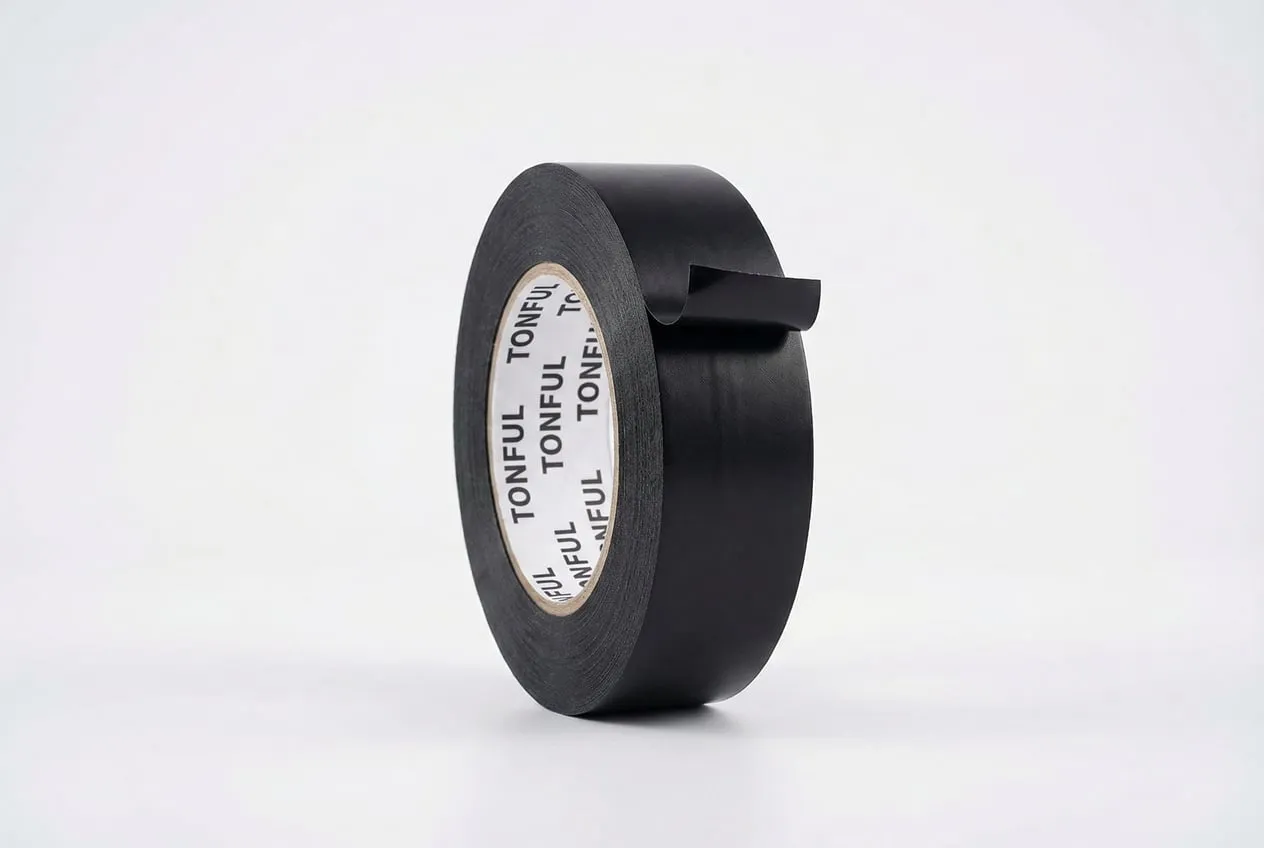
Electrical tape is a pressure-sensitive adhesive tape specifically designed and certified for electrical insulation applications. Unlike general-purpose tapes, electrical tape is manufactured to precise specifications that ensure it can safely insulate electrical conductors and provide a protective barrier against electrical shock, short circuits, and environmental contaminants.
Material Composition: Vinyl (PVC) and Specialized Adhesives
The most common type of electrical tape is made from polyvinyl chloride (PVC), also known as vinyl. This material is chosen for its exceptional electrical insulating properties, flexibility, and durability. The PVC backing is typically 7 mils (0.007 inches or 0.18 mm) thick and is formulated with plasticizers and stabilizers that give it the following critical characteristics:
- High Dielectric Strength: PVC electrical tape can withstand voltages of 600 to 1000 volts per mil of thickness without breaking down. This means a standard 7-mil tape provides insulation for conductors rated up to 600 volts, making it suitable for low-voltage residential, commercial, and industrial applications.
- Flame Resistance: Quality electrical tape is engineered to be self-extinguishing. When exposed to flame, it will not support combustion and will not propagate fire along a cable run—a critical safety feature mandated by electrical codes.
- Temperature Stability: Professional-grade electrical tape maintains its insulating properties and adhesive bond across a wide temperature range, typically from -18°C to 105°C (0°F to 220°F). This ensures reliable performance in cold outdoor installations as well as in warm electrical enclosures.
- UV and Weather Resistance: Premium electrical tapes include UV stabilizers that prevent degradation from sunlight exposure, and they resist moisture, oils, acids, alkalis, and corrosion—making them suitable for both indoor and outdoor use.
The adhesive system on electrical tape is equally important. It is a rubber-based or acrylic pressure-sensitive adhesive (PSA) designed to:
- Conform to irregular surfaces: The adhesive flows into the texture of wire insulation, terminals, and splices, creating a complete seal.
- Provide immediate bond strength: No curing time is required; the tape bonds on contact with adequate pressure.
- Resist cold flow and flagging: High-quality adhesives maintain their position over time without creeping or lifting at the edges.
Types of Electrical Tape
There are several grades and types of electrical tape, each optimized for specific applications:
- General-Purpose Vinyl (PVC) Electrical Tape: The standard workhorse for most electrical applications. UL Listed for 600V, flame-retardant, suitable for temperatures up to 80°C (176°F).
- Professional/Premium Grade Vinyl Tape: Offers superior conformability, higher adhesive strength, and extended temperature ratings (up to 105°C/220°F). Ideal for demanding commercial and industrial installations.
- All-Weather/Cold-Temperature Vinyl Tape: Formulated with special plasticizers to remain flexible and maintain adhesion in freezing conditions, down to -18°C (0°F) or lower.
- Rubber Splicing Tape: A high-voltage insulation tape made from EPR (ethylene propylene rubber). It is self-amalgamating, meaning it fuses to itself when stretched, creating a seamless, moisture-proof insulation layer. Used as primary insulation for splices, with vinyl tape applied over it as a protective jacket.
- Mastic/Rubber Mastic Tape: A thick, conformable tape used for sealing and moisture-proofing cable connections, especially in underground or wet locations.
Part 2: What Is Duct Tape? And Why It’s Wrong for Electrical Applications
Duct tape is a cloth-backed, pressure-sensitive adhesive tape originally developed during World War II for sealing ammunition cases. Its common name comes from its later use in heating, ventilation, and air conditioning (HVAC) ductwork, although modern building codes actually prohibit its use on air ducts due to poor performance under temperature cycling.
Material Composition: Cloth Backing and Polyethylene Coating
Duct tape consists of three layers:
- Cloth Backing: Typically woven cotton or polyester fibers that provide tensile strength and allow the tape to be torn by hand. This cloth is what gives duct tape its characteristic texture and durability for mechanical applications.
- Polyethylene (PE) Coating: A thin plastic film laminated to the cloth backing to provide moisture resistance and add a smooth outer surface.
- Rubber-Based Adhesive: A strong, aggressive adhesive designed to bond to a wide variety of surfaces, including wood, metal, plastic, and fabric.
Why Duct Tape Is Dangerous for Electrical Use
While duct tape is an excellent general-purpose repair tape for non-electrical applications, it is fundamentally unsuitable—and dangerously inappropriate—for any electrical insulation task. Here’s why:
- Zero Dielectric Strength: Duct tape is not rated for electrical insulation. Its cloth backing and polyethylene coating do not provide a reliable barrier to electrical current. If moisture penetrates the tape (which it will, given time), the cloth fibers can become conductive, creating a direct path for current and a serious shock hazard.
- Flammable: Unlike UL-listed electrical tape, which is flame-retardant and self-extinguishing, duct tape will burn readily. The cloth backing, polyethylene coating, and rubber adhesive are all combustible. Using duct tape on an electrical connection can turn a minor fault into a fire.
- Moisture Absorption: The cloth backing of duct tape is hygroscopic—it absorbs and retains moisture. In humid environments or wet conditions, this moisture can wick along the fibers and reach the electrical connection, leading to corrosion, increased resistance, arcing, and potential electrocution hazards.
- Poor Temperature Performance: Duct tape adhesive softens and fails at elevated temperatures and becomes brittle in cold conditions. Electrical connections can generate heat during normal operation; duct tape will degrade, lose adhesion, and expose live conductors.
- Not Code-Compliant: The National Electrical Code (NEC) and Canadian Electrical Code (CEC) require that all electrical insulation materials be listed and labeled by a Nationally Recognized Testing Laboratory (NRTL) such as UL or CSA. Duct tape carries no such certification and its use on electrical wiring is a direct code violation that can result in failed inspections, liability exposure, and voided insurance claims.
Part 3: Direct Comparison—Electrical Tape vs. Duct Tape
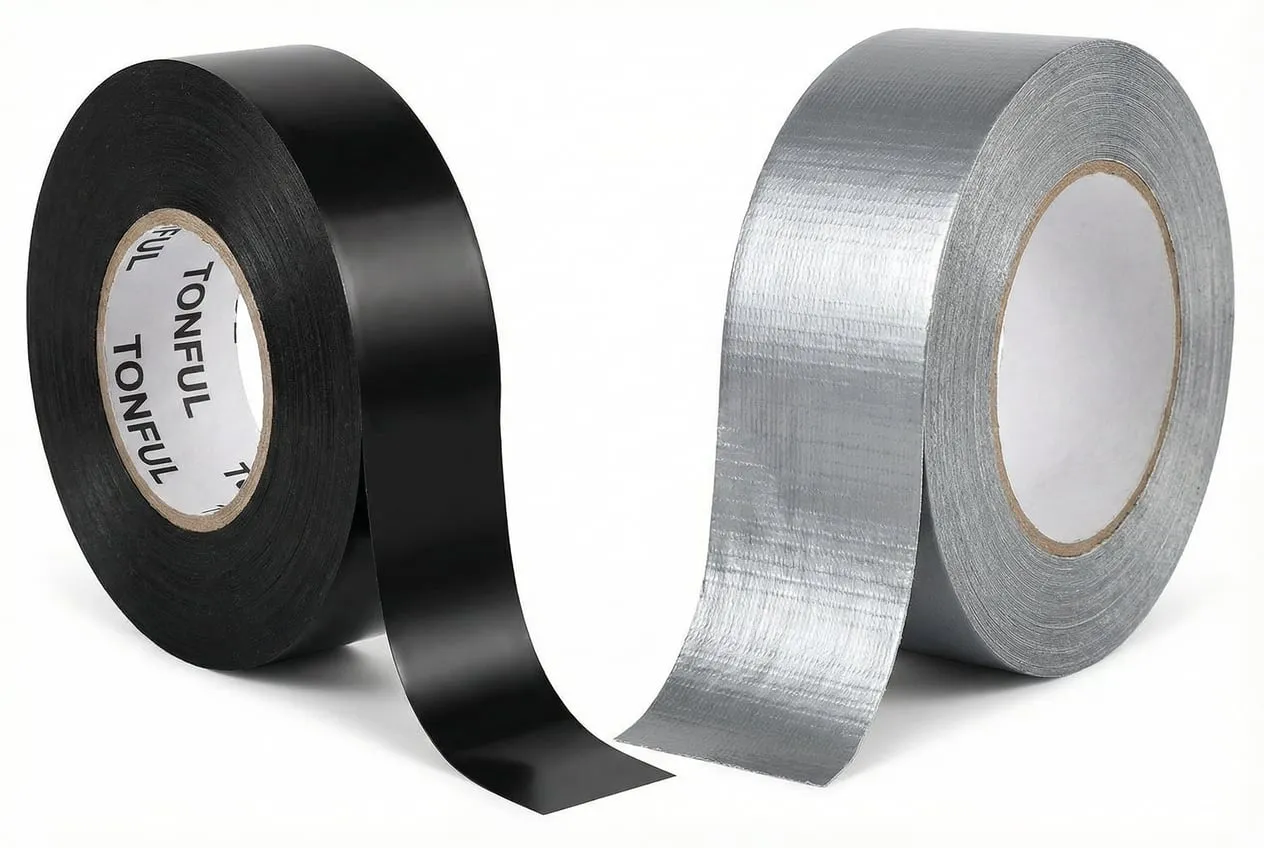
The following table provides a direct, side-by-side comparison of the critical performance specifications and characteristics of electrical tape versus duct tape. This data clearly demonstrates why only electrical tape is acceptable for electrical insulation.
| Specification | Electrical Tape (UL 510 Listed) | Duct Tape |
|---|---|---|
| Primary Material | Polyvinyl Chloride (PVC) or Rubber | Woven cloth (cotton/polyester) with PE coating |
| Dielectric Strength | 600V – 1000V+ (tested and certified) | None (not rated for electrical insulation) |
| Flame Resistance | Self-extinguishing, flame-retardant per UL 510 | Flammable; will burn and propagate flame |
| Temperature Range | -18°C to 105°C (0°F to 220°F) typical | Adhesive fails above ~65°C (150°F); brittle in cold |
| Moisture Resistance | Excellent; non-hygroscopic, prevents water ingress | Poor; cloth backing absorbs moisture |
| UV Resistance | Excellent (with stabilizers); rated for outdoor use | Moderate; degrades with prolonged sun exposure |
| Adhesive Type | Rubber or acrylic PSA designed for conformability | Aggressive rubber adhesive (not electrically rated) |
| Compliance | UL 510, CSA C22.2 No. 197 Listed | No electrical certifications |
| Code Acceptance | Required by NEC and CEC for electrical insulation | Not permitted for electrical use |
| Typical Thickness | 7 mils (0.18 mm) backing | 10-12 mils (0.25-0.3 mm) total |
| Intended Use | Electrical insulation, wire marking, bundling | General repairs, packaging, temporary fixes |
| Cost per Roll | $2-$8 (professional grade) | $3-$10 |
| Safety Rating | High (when used correctly) | Dangerous for electrical applications |
Key Takeaway: The differences are not subtle. Electrical tape is a purpose-built, certified safety product. Duct tape is a general-purpose mechanical repair tape with no place in electrical work.
Part 4: Critical Safety Warnings—The Consequences of Using the Wrong Tape
Using duct tape—or any non-certified tape—on electrical connections is not just a bad practice; it is a serious safety hazard that exposes you and others to significant risk. The following scenarios illustrate the real-world consequences:
Fire Hazard
Electrical connections can develop hotspots due to loose terminations, corrosion, or overload conditions. When a connection begins to heat, the temperature can rise rapidly. If duct tape is used as insulation, the cloth backing and adhesive can ignite, introducing a new fuel source directly into the electrical system. This is a common cause of electrical fires in improperly maintained or amateur installations. Using duct tape where electrical tape is required can directly lead to a fire that destroys property and takes lives.
Shock and Electrocution Hazard
The cloth backing of duct tape is not an effective electrical insulator. If the tape becomes damp—whether from ambient humidity, condensation, or a water intrusion event—the cloth fibers can conduct electricity. A person touching a duct-tape-wrapped connection under these conditions can receive a potentially lethal electric shock. This is especially dangerous in damp environments such as basements, outdoor installations, or industrial facilities.
Equipment Damage and Downtime
When duct tape fails on an electrical connection, the exposed conductors can arc or short-circuit. This can damage sensitive electronic equipment, trip breakers, and cause costly downtime in commercial and industrial settings. The cost of repairing the damage and lost productivity far exceeds the trivial savings of using the wrong tape.
Code Violations and Legal Liability
The National Electrical Code (NEC) Article 110.3(B) requires that all listed or labeled equipment be installed and used in accordance with any instructions included in the listing or labeling. This means that if an insulation product (such as tape) is required for an installation, it must be a listed product tested for that specific use. Using duct tape in place of electrical tape is a code violation that can result in:
- Failed electrical inspections, requiring costly rework
- Voided insurance claims in the event of a fire or injury
- Legal liability for property damage, personal injury, or wrongful death
- Loss of contractor’s license or professional certifications
Bottom Line: There is no scenario where using duct tape on an electrical connection is acceptable. The risk is simply too high, and the cost of the correct tape is insignificant compared to the consequences.
Part 5: Professional Application Techniques—How to Use Electrical Tape Correctly
Even the best electrical tape will fail if it is applied incorrectly. Proper technique ensures a secure, long-lasting, and code-compliant insulation job. Follow these best practices for every electrical tape application:
Step 1: Surface Preparation
- Clean the Surface: The conductor, splice, or terminal must be clean, dry, and free of oil, dirt, oxidation, or old adhesive residue. Use a clean rag and, if necessary, a suitable solvent (isopropyl alcohol or electrical contact cleaner) to prepare the surface.
- Inspect the Conductor: Check for nicks, corrosion, or damage to the wire insulation. If the conductor is damaged, it should be repaired or replaced—not simply covered with tape.
Step 2: The Half-Lap Method
The “half-lap” technique is the industry-standard method for wrapping electrical tape. It ensures complete coverage with no gaps.
- Start on Intact Insulation: Begin wrapping the tape on the undamaged insulation of the wire, not directly on the bare conductor or splice. Anchor the tape with one full wrap.
- Apply Tension: Stretch the tape slightly (about 75% of its maximum stretch) as you wrap. This ensures the tape conforms tightly to the surface and activates the adhesive.
- Overlap by 50%: Each successive wrap should overlap the previous wrap by at least half its width. This guarantees that there are at least two layers of tape covering every point on the connection.
- Cover the Splice/Terminal Completely: Continue wrapping until you have covered the entire splice or terminal and extended onto intact insulation on the other side.
- Finish with Zero Tension: For the final wrap, apply the tape with no stretch at all. Press it down firmly. This prevents “flagging,” where the end of the tape lifts and unravels due to the elastic memory of the stretched backing.
Step 3: Build Adequate Thickness
For low-voltage splices (up to 600V), the finished tape insulation should be at least 1.5 times the thickness of the original wire insulation. For a typical 14 AWG or 12 AWG wire with 30-mil insulation, this means applying enough half-lapped layers to achieve approximately 45 mils of tape insulation. With 7-mil tape applied in half-laps (resulting in a double layer at all points), this requires about 3-4 complete wraps.
Step 4: Overwrapping with Vinyl Tape (When Using Rubber Tape)
When making a primary insulation splice with rubber splicing tape:
- Apply the rubber tape first using the half-lap method, stretching it significantly (about 200-300% of its resting length) to activate its self-amalgamating properties. The rubber tape will fuse to itself and create a seamless, moisture-proof insulation layer.
- Overwrap with vinyl electrical tape to provide a protective jacket. The vinyl tape protects the rubber from UV, abrasion, and mechanical damage. Apply it using the same half-lap technique, but with less stretch (about 50-75%).
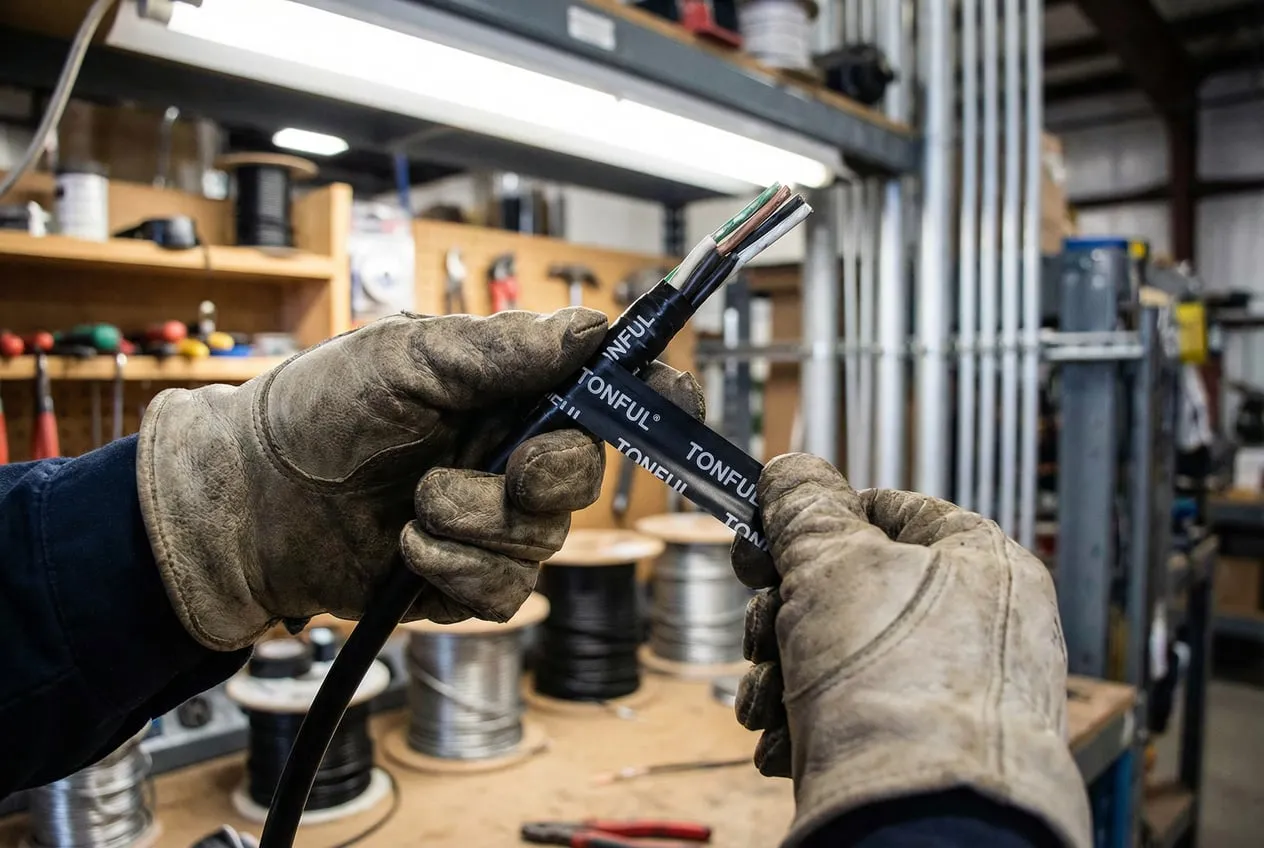
Part 6: Product Selection Guide—Choosing the Right Electrical Tape for Your Application
Not all electrical tapes are created equal. The tape you select should be matched to the specific requirements of your installation. The following table provides a guide to the most common grades of electrical tape and their recommended applications.
| Tape Grade | Key Features | Typical Applications | Temperature Rating | Price Point |
|---|---|---|---|---|
| Economy/General-Purpose PVC | UL 510 Listed, 600V rated, flame-retardant, basic adhesive | Residential wiring, wire bundling, color-coding, general low-voltage work | 0°C to 80°C (32°F to 176°F) | $ (Budget) |
| Professional Grade PVC | Enhanced conformability, stronger adhesive, better UV/weather resistance | Commercial and industrial installations, outdoor use, demanding environments | -18°C to 90°C (0°F to 194°F) | $$ (Mid-range) |
| Premium/All-Weather PVC | Superior cold-weather performance, maximum UV resistance, high-strength adhesive, extended life | Outdoor installations, cold climates, marine applications, high-vibration environments | -30°C to 105°C (-22°F to 220°F) | $$$ (Premium) |
| Rubber Splicing Tape (EPR) | High-voltage insulation, self-amalgamating, moisture-proof, excellent dielectric strength | Primary insulation for splices up to 69kV, critical connections, underground/wet locations | -20°C to 90°C (-4°F to 194°F) | $$$ (Specialty) |
| Rubber Mastic Tape | Highly conformable, void-filling, excellent moisture seal, non-curing | Sealing cable entries, irregular surfaces, moisture barrier for underground splices | -10°C to 90°C (14°F to 194°F) | $$$ (Specialty) |
Recommendation: For most professional low-voltage electrical work, a Professional Grade PVC Electrical Tape from a reputable manufacturer (such as TONFUL Electric’s UL Listed product line) provides the best balance of performance, reliability, and cost. For outdoor or cold-weather installations, upgrade to an All-Weather formulation. For primary insulation of splices in critical or wet locations, always use Rubber Splicing Tape with a vinyl overwrap.
Part 7: Industry Standards and Certifications—Why Compliance Matters
Electrical tape is not simply a commodity product. It is a listed electrical insulation material that must meet stringent safety standards established by nationally and internationally recognized testing laboratories. Using tapes that are not certified to these standards is a code violation and a liability.
UL 510: Standard for Polyvinyl Chloride, Polyethylene, and Rubber Insulating Tape
UL 510 is the primary standard governing electrical insulating tapes in North America. To achieve UL 510 certification, a tape must pass rigorous testing including:
- Dielectric strength testing: The tape must withstand a specified voltage without breakdown.
- Flame resistance testing: The tape must be self-extinguishing and not propagate flame.
- Adhesion and peel strength: The adhesive must meet minimum performance criteria.
- Temperature and aging tests: The tape must maintain its properties after exposure to elevated temperatures and aging conditions.
- Cold-bend and flexibility tests: The tape must remain flexible and not crack at low temperatures.
Only tapes that pass all tests are permitted to carry the UL 510 listing mark.
CSA C22.2 No. 197: Canadian Standard for PVC and Rubber Insulating Tapes
The Canadian equivalent of UL 510, CSA C22.2 No. 197, applies similar testing criteria and is required for tapes sold and used in Canadian electrical installations.
NEC and CEC Requirements
Both the National Electrical Code (NEC) in the United States and the Canadian Electrical Code (CEC) require that all materials used for electrical insulation be listed by an NRTL (such as UL, CSA, ETL, or Intertek). Specifically:
- NEC Article 110.3(B): “Listed or labeled equipment shall be installed and used in accordance with any instructions included in the listing or labeling.”
- CEC Rule 2-024: “Electrical equipment shall be of a kind that is approved.”
Using a non-listed tape (such as duct tape) is a violation of these fundamental code requirements.
Why This Matters to You
As a professional, your reputation depends on delivering work that is safe, compliant, and durable. Using certified, listed electrical tape:
- Protects your clients from fire, shock, and equipment damage.
- Protects you from liability, lawsuits, and the loss of your professional credentials.
- Ensures your work passes inspection the first time, saving time and money.
- Demonstrates professionalism and adherence to industry best practices.
TONFUL Electric is committed to providing only UL Listed and CSA Certified electrical tapes that meet or exceed the requirements of UL 510 and CSA C22.2 No. 197. When you specify TONFUL products, you can be confident that you are using insulation materials that are tested, certified, and code-compliant.
Part 8: Common Applications and Best Practices
Applying the right tape with the right technique is what separates an amateur repair from a professional, code-compliant installation. The following table outlines the best practices for the most common low-voltage applications you will encounter in the field.
| Application | Recommended Tape Types | Best Practices & Techniques |
|---|---|---|
| Primary Insulation for Wire Splicing (600V) | Rubber Splicing Tape (primary) + Premium PVC Tape (outer jacket) | First, wrap the splice with rubber tape, stretching it to activate its self-amalgamating properties. Overlap each layer by 50% (half-lap) until the insulation is at least 1.5x the original cable’s thickness. Then, overwrap the rubber tape with PVC electrical tape to provide a durable, protective jacket against abrasion and contaminants. |
| Insulating Terminals & Lugs | Professional or Premium Grade PVC Tape | Ensure the terminal surface is clean. Begin wrapping on the wire’s insulation and half-lap onto the barrel of the terminal. Apply with firm tension to conform the tape tightly. Finish with a final wrap under zero tension to prevent flagging. |
| Bundling and Harnessing Wires | Professional Grade PVC Tape | For neat and organized wire runs in panels or conduits, use PVC tape to bundle cables at regular intervals. Use just enough tension to secure the bundle without deforming the cable jackets. This aids in organization and strain relief. |
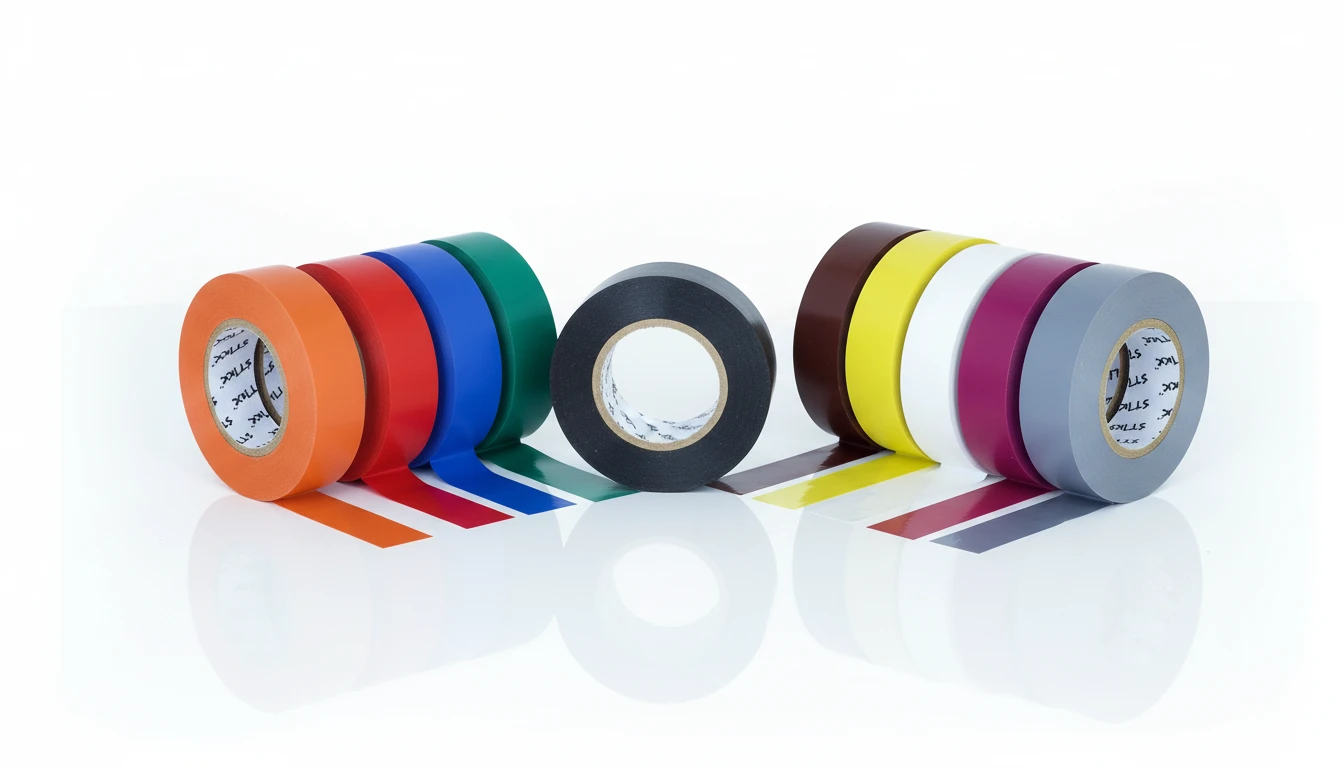
| Phase & Circuit Identification (Color Coding) | Colored Professional Grade PVC Tape | Use industry-standard colors (e.g., black, red, blue for phases; white/gray for neutral; green for ground in the US) to wrap the ends of conductors. This provides clear, immediate visual identification for safety and maintenance. Apply a few tight wraps near the termination point. |
| Cable Jacket Repair | Premium All-Weather Vinyl Tape or Rubber Mastic Tape | For minor nicks and abrasion on a cable’s outer jacket, clean the area and apply a tight, half-lapped wrap of premium PVC tape. For more significant damage or outdoor repairs requiring a moisture seal, use a mastic tape to fill the void before overwrapping with all-weather vinyl tape. |
Part 9: Maintenance and Storage Tips
To ensure your electrical tape performs as expected when you need it most, proper storage and handling are critical. Adhesive properties can degrade if tape is stored incorrectly.
- Store in a Controlled Environment: Keep tape in a clean, dry place at room temperature (around 70°F or 21°C) and away from direct sunlight. Avoid leaving rolls on your truck’s dashboard or in freezing conditions.
- Keep Rolls Clean: Store tapes in their original container or in a plastic bag to protect the roll edges from dirt and debris, which can interfere with a proper wrap.
- First In, First Out (FIFO): Rotate your stock. Use your oldest rolls of tape first to ensure you are always working with fresh adhesive. Most tapes have a shelf life of around 5 years under proper storage conditions.
- Handle with Care: Avoid crushing or deforming the rolls, as this can damage the tape and make it difficult to apply smoothly.
Part 10: Conclusion: A Commitment to Professional Standards
The distinction between electrical tape and duct tape is not a matter of preference; it is a fundamental issue of safety, compliance, and professional integrity. As we have detailed, only listed and properly rated electrical tape has the dielectric strength, material composition, and adhesive properties required to safely insulate electrical connections. Using anything else introduces a significant risk of electrical failure, fire, and legal liability.
For the professional electrician and low-voltage technician, the choice is clear. Your work is a reflection of your standards. By selecting high-performance, certified products, you protect your clients, your reputation, and the integrity of your installations. TONFUL Electric is committed to supporting this standard of excellence by providing a complete portfolio of UL Listed and CSA Certified electrical tapes, from professional-grade PVC to premium all-weather and rubber splicing solutions. When you choose TONFUL, you choose a partner dedicated to uncompromising quality and safety.
Frequently Asked Questions (FAQ)
1. Can I use duct tape for electrical wiring, even temporarily?
No. Never use duct tape for any electrical application. It is flammable, conductive when wet, and has no dielectric strength. Its cloth backing can absorb moisture, creating a dangerous path for electrical current.
2. What does “flagging” mean and how do I prevent it?
Flagging is when the end of a tape wrap begins to unravel or lift away from the surface. It is caused by the tension in the stretched tape trying to return to its original state. To prevent it, always apply the final wrap with zero tension and press it down firmly.
3. How many layers of electrical tape are needed for a splice?
For low-voltage circuits (under 600V), the rule of thumb is to apply enough half-lapped layers to make the total insulation thickness at least 1.5 times the thickness of the original wire’s insulation. For primary insulation using rubber tape, this is especially critical.
4. What’s the difference between rubber tape and vinyl (PVC) electrical tape?
Rubber tape (like rubber splicing tape) is used for primary insulation and moisture sealing. It is soft, conformable, and self-amalgamating (fuses to itself) when stretched. Vinyl (PVC) tape is used as a protective outer jacket over rubber tape and for general-purpose applications like color-coding and bundling. It provides mechanical protection, UV resistance, and is more abrasion-resistant than rubber.
5. Why are there so many colors of electrical tape?
The colors are used for phase identification and marking in electrical systems. This color code allows electricians to safely identify the purpose of each wire. Common standards exist (like in the US: Black/Red/Blue for phases, White for neutral, Green for ground), but different systems may use different codes.
6. Is there a special tape for working in cold weather?
Yes. Standard PVC electrical tape can become brittle and lose its adhesion in cold temperatures. For installations below 32°F (0°C), you must use a tape rated for cold weather, often labeled as “all-weather,” which is designed to remain flexible and sticky.
7. How do I remove old, sticky electrical tape residue?
The best method is to use a citrus-based degreaser or adhesive remover. Apply the solvent, let it sit for a few minutes to break down the adhesive, and then wipe it away with a clean cloth.
8. Is more expensive “premium” tape worth it?
Yes, for demanding applications. Premium tapes offer better elasticity, stronger adhesion, and superior resistance to UV, chemicals, and temperature extremes. For outdoor work, critical connections, or environments with harsh conditions, the reliability of a premium tape is a worthwhile investment.
References
- UL 510, Standard for Polyvinyl Chloride, Polyethylene, and Rubber Insulating Tape
- CSA C22.2 No. 197, Standard for PVC and Rubber Insulating Tapes
- NFPA 70, National Electrical Code (NEC)
- CSA C22.1, Canadian Electrical Code, Part I (CEC)