
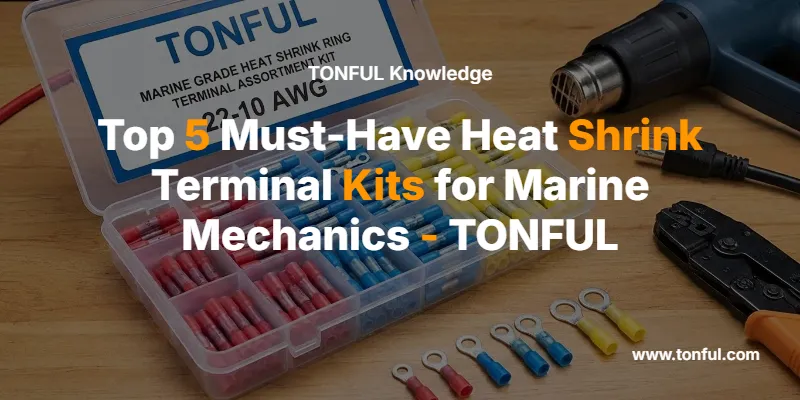
Saltwater is the ultimate adversary of electrical systems. For marine mechanics and boat owners alike, the battle against corrosion, vibration, and moisture ingress is constant. A single failed connection can leave a vessel stranded or its critical systems offline. This is why standard automotive connectors simply don’t cut it on the water. The solution lies in high-quality Heat Shrink Terminal Kits—the gold standard for marine electrical reliability.
Unlike traditional vinyl or nylon connectors, heat shrink terminals feature an adhesive-lined polyolefin tubing that shrinks when heated, creating a permanent, waterproof seal around the wire insulation. This barrier prevents salt spray and humidity from wicking into the copper strands, effectively stopping the “green death” of corrosion before it starts.
In this guide, we will explore the top 5 must-have Heat Shrink Terminal Kits that every marine mechanic should carry in their arsenal to ensure professional, long-lasting repairs.
Why Marine Mechanics Need Heat Shrink Terminal Kits
The marine environment presents a unique set of challenges that demand specialized equipment. Standard crimp terminals leave the connection point exposed to the elements. In a saltwater environment, this exposure leads to rapid oxidation, increased resistance, and eventual circuit failure.
Heat Shrink Terminal Kits are essential for marine applications because they address three critical failure points:
- Corrosion Resistance: The adhesive lining inside the heat shrink tubing melts and flows during the heating process, filling voids and bonding to the wire insulation. This hermetic seal prevents saltwater and oxygen from reaching the metal conductor. For a deeper dive into fighting oxidation, read our guide on marine wiring corrosion prevention.
- Waterproof Sealing: Whether in the bilge or exposed on the deck, connections must be waterproof. Quality heat shrink terminals are rated to withstand submersion and high-pressure spray.
- Vibration Relief: Boats are constantly vibrating and pounding against waves. The thick wall of the heat shrink tubing acts as a strain relief, transferring mechanical stress away from the crimp and onto the wire insulation, preventing fatigue breakage.
What Makes a Quality Heat Shrink Terminal Kit
Not all terminals are created equal. When selecting Heat Shrink Terminal Kits for professional use, specific features separate marine-grade quality from generic alternatives.
- Tinned Copper Construction: Pure copper is a great conductor but corrodes easily. Marine-grade terminals must be plated with tin to resist corrosion.
- Dual-Wall Tubing: The best terminals use dual-wall tubing—a tough outer layer for mechanical protection and an inner adhesive layer for sealing.
- Standard Color Coding: To prevent errors, kits should follow the industry-standard color code: Red (22-16 AWG), Blue (16-14 AWG), and Yellow (12-10 AWG).
- IP Ratings: Look for terminals that help achieve IP67 or IP68 waterproof ratings when installed correctly.
For a comprehensive overview of terminal specifications, visit our heat shrink terminals guide.
Top 5 Must-Have Heat Shrink Terminal Kits
Whether you are outfitting a professional workshop or a mobile repair van, these five specific kit configurations cover 95% of marine electrical tasks.
Kit #1: Marine-Grade Ring Terminal Assortment Kit
The backbone of marine electrical work involves connecting wires to battery posts, bus bars, and fuse blocks. A dedicated ring terminal kit is non-negotiable.
- Best For: Battery connections, grounding applications, power distribution panels.
- AWG Range: 22-10 Gauge.
- Piece Count: Typically 200-300 pieces.
This kit focuses on providing a wide range of stud sizes (#10, 1/4″, 5/16″, 3/8″) for every wire gauge. Often, you will find a 10 AWG wire that needs to fit a small #10 screw on a terminal block, or a 14 AWG wire going to a large 3/8″ battery stud. Having the correct combination prevents dangerous modifications like drilling out terminals or using washers to make oversized terminals fit.
The translucent heat shrink tubing allows for visual inspection of the wire strands after crimping, ensuring the wire is fully inserted. Learn more about the technical specifications in our heat shrink ring terminals guide.

Kit #2: Waterproof Butt Connector Splice Kit
When extending wires or repairing a cut in a harness, the butt connector is your go-to solution. In the bilge or engine room, these connections are the most vulnerable to water intrusion.
- Best For: Wire repairs, extending bilge pump wires, in-line splice connections.
- AWG Range: 22-10 Gauge.
- Piece Count: 100-200 pieces.
A specialized butt connector kit should include standard crimp-and-seal connectors. The key feature here is the seamless barrel design which prevents the terminal from opening up during the crimping process. The dual-wall construction ensures that once heated, the adhesive creates a bond so strong that the wire will often break before the connection pulls apart. For detailed application methods, see our guide on heat shrink butt connectors.

Kit #3: Quick Disconnect Terminal Kit (Male & Female)
Marine accessories like rocker switches, speakers, and navigation lights often require removable connections. Heat Shrink Terminal Kits focusing on quick disconnects (also known as spade terminals or Fastons) are essential for these serviceable parts.
- Best For: Removable connections, toggle switches, relays, pumps.
- AWG Range: 22-10 Gauge.
- Piece Count: 120-250 pieces.
This kit should contain both male and female fully insulated disconnects. The “fully insulated” aspect is crucial in tight console spaces to prevent short circuits if terminals accidentally touch. The heat shrink insulation extends over the connector body, providing vibration resistance and a weatherproof seal, although they are not fully submersible like butt connectors.
Understanding the specific types is important; read about what a Faston terminal is and compare spade terminals vs. quick disconnects.

Kit #4: Fork Terminal Assortment Kit
While ring terminals are safer for permanent connections, fork (or spade) terminals are necessary for components where the screw cannot be fully removed, such as certain older terminal strips or barrier blocks.
- Best For: Terminal blocks, barrier strips, retrofitting legacy equipment.
- AWG Range: 22-10 Gauge.
- Piece Count: 100-150 pieces.
A good fork terminal kit features “flanged” or “locking” forks. These have slightly curved tips that snap onto the screw shaft, preventing the terminal from falling off if the screw loosens slightly—a critical feature in high-vibration marine environments. Like the others, these must be heat shrink sealed to protect the crimp zone. Check out specific applications in our fork insulated terminal guide.

Kit #5: Complete Marine Electrician’s Master Kit
For the professional mechanic or the serious DIYer refitting a whole boat, a Master Kit combines all the above into one large organizer. This is the ultimate “grab-and-go” solution.
- Best For: Professional marine mechanics, full boat rewiring, emergency repairs.
- AWG Range: 22-10 Gauge.
- Piece Count: 300-500 pieces.
This comprehensive kit ensures you never have to leave the job site to find a connector. It typically includes rings, forks, spades, butt connectors, and sometimes even bullet connectors. While the initial investment is higher, the cost per terminal is lower, and the convenience is unmatched. For mechanics looking to stock up, see our review of automotive and marine connector kits.

Comparison Table: Choosing Your Kit
| Kit Name | Terminal Types | AWG Range | Piece Count | Best Application | Waterproof Rating | Price Range |
|---|---|---|---|---|---|---|
| Ring Terminal Assortment | Rings (#10 – 3/8″) | 22-10 | 200-300 | Battery & Grounding | IP67 (Seal only) | $$ |
| Waterproof Butt Splice | Butt Connectors | 22-10 | 100-200 | Wire Extension/Repair | IP68 (Submersible) | $$ |
| Quick Disconnect Kit | Male/Female Spades | 22-10 | 120-250 | Switches & Relays | IP65 (Weatherproof) | $$ |
| Fork Terminal Kit | Locking Forks | 22-10 | 100-150 | Barrier Strips | IP67 (Seal only) | $ |
| Master Electrician’s Kit | All Types | 22-10 | 300-500 | Complete Refit | Mixed | $$$ |
How to Use Heat Shrink Terminals Properly
Owning the best Heat Shrink Terminal Kits is only half the battle; proper installation is critical to achieving a marine-grade seal.
- Strip the Wire: Remove about 1/4″ to 3/8″ of insulation. Do not nick the copper strands.
- Select the Right Size: Match the wire gauge to the terminal color (Red: 22-16, Blue: 16-14, Yellow: 12-10).
- Crimp: Insert the wire into the metal barrel. Use a ratcheting crimper designed for heat shrink terminals. The crimp should be tight enough that the wire cannot be pulled out. Avoid common crimping mistakes like under-crimping or piercing the heat shrink insulation.
- Apply Heat: Use a heat gun (preferred) or a butane torch. Start from the center and move outward. Rotate the wire to ensure even heating.
- Inspect: Watch for the adhesive to ooze slightly from the end of the tubing. This indicates a complete waterproof seal.
For a detailed walkthrough, read how to crimp heat shrink terminals correctly.
Choosing the Right Kit for Your Needs
When selecting from these Heat Shrink Terminal Kits, consider your primary tasks. If you are re-wiring a bilge pump system, the Waterproof Butt Splice Kit is mandatory due to its IP68 capability. If you are installing a new switch panel, the Quick Disconnect Kit is your best friend.
Always check the wire gauge of your vessel. Most modern boats use 16-14 AWG for general lighting and pumps, but main feeds often use 12-10 AWG. Ensure your kit is heavy on the sizes you use most. For more advice on selection, visit our guide on how to choose the right wire connectors.
Maintenance and Storage Tips
Heat shrink terminals have a shelf life, primarily due to the adhesive lining. Store your kits in a cool, dry place away from direct sunlight. Excessive heat (like a hot van dashboard) can cause the tubing to pre-shrink or the adhesive to degrade. Keep the organizer box latched to prevent moisture ingress and oxidation of the tinned copper barrels.
FAQ Section
What AWG wire gauge do I need for marine applications?
Most marine electronics and lighting circuits use 16 AWG or 14 AWG wire. Bilge pumps and higher draw devices often use 12 AWG or 10 AWG. Always size wire based on the current draw and the length of the run to prevent voltage drop.
Are heat shrink terminals better than regular crimp terminals for boats?
Yes, absolutely. Regular crimp terminals allow moisture and salt air to enter the connection, leading to corrosion. Heat shrink terminals seal the connection, making them far superior for marine longevity.
Can heat shrink terminals be reused?
No. Once a terminal has been crimped and heat-shrunk, it is a permanent connection. To change it, you must cut the wire and install a new terminal.
What temperature rating should marine heat shrink terminals have?
Quality marine terminals typically have an operating temperature range of -55°C to +125°C, allowing them to withstand engine room heat and winter freezing.
How do I test if my heat shrink connection is waterproof?
Visually inspect the connection after heating. You should see a small ring of clear adhesive squeezed out where the wire exits the tubing. This “glue ring” confirms a watertight seal.
What’s the difference between single-wall and dual-wall heat shrink terminals?
Single-wall tubing provides electrical insulation but no waterproof seal. Dual-wall tubing contains an inner adhesive layer that melts to bond with the wire, which is essential for marine use.
Conclusion
Investing in high-quality Heat Shrink Terminal Kits is an investment in the safety and reliability of your vessel. Whether you choose a specialized ring terminal assortment or a comprehensive master kit, ensuring you have tinned copper, dual-wall adhesive terminals will save you hours of troubleshooting down the road. Don’t let a $0.50 connector cause a $5,000 failure.
Ready to upgrade your electrical toolkit? Explore our full range of professional-grade solutions at the TONFUL Heat Shrink Terminal Manufacturer page.