
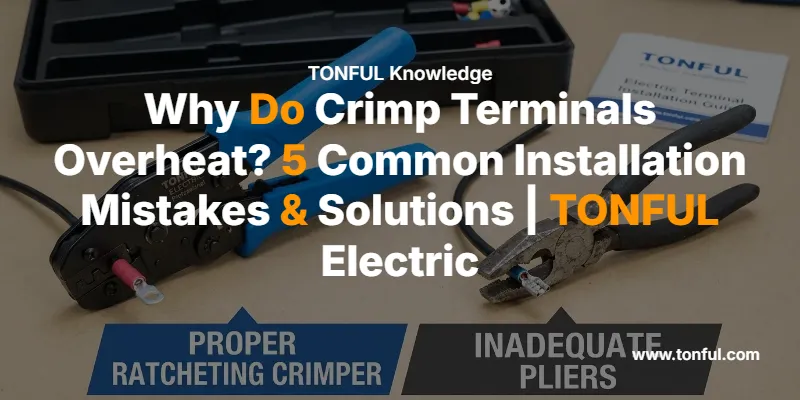
Crimp terminal overheating is a critical safety issue that affects electrical systems across automotive, industrial, and residential applications. When crimp terminals overheat, they create fire hazards, equipment failures, and costly downtime. Understanding the root causes of terminal overheating—particularly installation mistakes—is essential for electrical engineers, technicians, and procurement professionals who specify and install these components.
This comprehensive guide examines the five most common installation mistakes that cause crimp terminals to overheat, providing actionable solutions to prevent thermal failures in your electrical connections.
Understanding Crimp Terminal Overheating: The Technical Foundation
Before diving into specific mistakes, it’s important to understand the physics behind terminal overheating. When electrical current flows through a connection, heat generation follows Joule’s Law: Heat = I² × R × t, where current (I), resistance (R), and time (t) determine temperature rise.
A properly crimped terminal creates a cold-weld connection between wire strands and the terminal barrel, minimizing contact resistance. However, installation errors increase resistance at the crimp interface, leading to excessive heat generation that can exceed the temperature ratings of insulation materials and terminal components.
Critical Temperature Thresholds
Most electrical systems operate within these temperature parameters:
| Component | Maximum Temperature | Failure Point |
|---|---|---|
| PVC Wire Insulation | 60-75°C (140-167°F) | Degradation begins at 80°C |
| Nylon Insulated Terminals | 105°C (221°F) | Structural failure at 120°C |
| Copper Terminal Contact | 75-90°C (167-194°F) | Oxidation accelerates above 100°C |
| Heat Shrink Terminals | 125°C (257°F) | Seal integrity compromised at 150°C |
When contact resistance increases due to poor crimping, localized temperatures can exceed these thresholds, initiating thermal runaway—a self-reinforcing cycle where heat causes further resistance increase, generating more heat until catastrophic failure occurs.
Mistake #1: Incorrect Wire Gauge to Terminal Size Matching
The Problem: Using terminals that don’t match the wire gauge is the most prevalent installation error. This mismatch creates insufficient contact area between conductor strands and the terminal barrel, dramatically increasing electrical resistance.
Why This Causes Overheating
When a wire is too small for the terminal barrel, crimping pressure fails to compress all conductor strands uniformly. This creates air gaps and point contacts rather than the continuous metal-to-metal interface required for low-resistance connections. Conversely, forcing oversized wire into undersized terminals damages conductor strands and prevents proper barrel closure.

The Solution: Proper Size Selection
Always match terminals to wire gauge using standardized color coding for insulated terminals:
| Terminal Color | Wire Gauge Range (AWG) | Metric Equivalent (mm²) |
|---|---|---|
| Red | 22-18 AWG | 0.5-1.0 mm² |
| Blue | 16-14 AWG | 1.5-2.5 mm² |
| Yellow | 12-10 AWG | 4.0-6.0 mm² |
For non-insulated terminals and larger conductors, verify the terminal barrel internal diameter matches the wire’s overall diameter. TONFUL Electric manufactures cold press terminals with precise barrel dimensions engineered for specific conductor sizes, ensuring optimal contact area and minimal resistance.
Pro Tip: When working with stranded wire, calculate the total circular mil area (CMA) to ensure the terminal barrel can accommodate all strands without crushing or leaving gaps. The wire should fill 80-95% of the barrel volume for optimal crimping.
Mistake #2: Using Inadequate or Incorrect Crimping Tools
The Problem: Attempting to crimp terminals with pliers, generic tools, or crimpers designed for different terminal types produces inconsistent compression and unreliable connections.
The Consequences of Wrong Tools
Non-specific tools cannot apply the precise, uniform pressure required across the entire crimp barrel. This results in:
- Uneven compression: Some wire strands remain loose while others are over-compressed
- Barrel deformation: Improper die shapes crack or split terminal barrels
- Inconsistent crimp height: Connections fail to meet manufacturer specifications
- No quality verification: Unlike ratcheting crimpers, generic tools provide no feedback on crimp completion
Research shows that improper crimping tools are responsible for up to 60% of field failures in electrical connections.

The Solution: Tool-Terminal-Wire System Matching
Professional crimping tools must match three critical parameters:
- Wire gauge range: Tool dies must correspond to the wire sizes being terminated
- Terminal type: Open barrel, closed barrel, insulated, and non-insulated terminals require specific die profiles
- Crimp style: Hex, oval, or B-crimp configurations need matching tool geometry
For small to medium gauge wire (22-10 AWG), use ratcheting crimpers with color-coded dies that match insulated terminal colors. These tools won’t release until proper compression is achieved, ensuring consistent quality. For conductors 8 AWG and larger, hydraulic or mechanical advantage crimpers provide the force necessary for proper cold-welding.
Quality Verification: After crimping, perform a pull test by tugging the wire with force equal to 10-15 pounds. A properly crimped connection should show no movement, and the wire should break before pulling out of the terminal.
Mistake #3: Improper Wire Preparation and Contamination
The Problem: Failing to properly strip, clean, and prepare wire before crimping introduces contaminants and oxidation that increase contact resistance.
Hidden Resistance Sources
Even microscopic contamination creates insulating barriers between conductor strands and terminal surfaces:
- Oxidation: Copper oxide forms a semiconductive layer with 10-100× higher resistance than clean copper
- Oil and grease: Manufacturing lubricants or hand oils create non-conductive films
- Wire drawing compounds: Residual lubricants from wire manufacturing reduce conductivity
- Moisture: Water trapped in the crimp promotes galvanic corrosion
A study of electrical failures found that contaminated crimps showed contact resistance 5-15 times higher than clean connections, with corresponding temperature increases of 40-80°C under load.

The Solution: Systematic Wire Preparation
Follow this preparation protocol for every crimp connection:
Step 1: Proper Stripping
- Use calibrated wire strippers set to the exact wire gauge
- Strip insulation to expose conductor length matching the terminal barrel (typically 5-8mm)
- Inspect for nicked or damaged strands—if present, cut and re-strip
- Ensure no insulation enters the crimp barrel
Step 2: Contamination Removal
- For new wire with visible oxidation, lightly abrade with fine abrasive cloth
- Wipe conductors with isopropyl alcohol (90%+ concentration) to remove oils
- For heavily oxidized wire, use contact cleaner or specialized conductor preparation compounds
- Allow complete drying before crimping (alcohol evaporates in 10-15 seconds)
Step 3: Immediate Crimping
- Crimp within 5 minutes of wire preparation to prevent re-oxidation
- In humid environments, consider using anti-oxidant compounds on aluminum conductors
- Never apply solder or tinning to wire before crimping—this creates a weak interface that fails under thermal cycling
TONFUL Electric’s heat shrink terminals incorporate adhesive-lined shrink tubing that seals out moisture and contaminants after installation, providing long-term protection against environmental degradation.
Mistake #4: Incorrect Crimp Compression (Over-Crimping or Under-Crimping)
The Problem: Applying too much or too little compression force during crimping creates mechanically weak connections with high electrical resistance.
The Under-Crimp Failure Mode
Insufficient compression leaves gaps between wire strands and the terminal barrel. Current must jump these gaps through limited contact points, creating localized hot spots. Under-crimped connections exhibit:
- Easy wire pull-out: Terminal fails mechanical pull testing
- Intermittent connectivity: Vibration causes temporary disconnections
- Progressive failure: Thermal expansion/contraction gradually loosens the connection
- Arcing: Micro-arcs form across gaps, generating extreme localized temperatures (>1000°C)
The Over-Crimp Failure Mode
Excessive compression damages conductor strands and terminal barrels, reducing the effective cross-sectional area and increasing resistance:
- Strand breakage: Individual copper strands fracture, reducing current-carrying capacity
- Barrel cracking: Terminal splits or develops stress fractures
- Insulation damage: Excessive force crushes wire insulation, exposing conductors
- Work hardening: Over-compressed copper becomes brittle and prone to fatigue failure

The Solution: Precision Compression Control
Achieving optimal compression requires understanding crimp height specifications:
| Wire Gauge (AWG) | Target Crimp Height (mm) | Acceptable Tolerance (±mm) |
|---|---|---|
| 22-18 | 1.4-1.6 | ±0.1 |
| 16-14 | 1.8-2.0 | ±0.15 |
| 12-10 | 2.2-2.5 | ±0.2 |
| 8-6 | 3.0-3.5 | ±0.25 |
Implementation Methods:
- Ratcheting crimpers: These tools are pre-calibrated to apply correct pressure and won’t release until proper compression is achieved
- Crimp height measurement: Use digital calipers or go/no-go gauges to verify crimp height matches specifications
- Visual inspection: Properly crimped barrels show uniform compression without cracks, splits, or excessive deformation
- Pull testing: Apply force equal to the wire’s rated tensile strength—proper crimps should cause wire breakage rather than pull-out
For high-reliability applications, TONFUL Electric recommends following IPC/WHMA-A-620 standards, which specify crimp height tolerances, visual acceptance criteria, and testing protocols.
Critical Note: Never re-crimp a terminal. If compression is incorrect, cut off the terminal and start with a new connector. Re-crimping work-hardens the metal and creates stress fractures that lead to premature failure.
Mistake #5: Ignoring Environmental and Current Rating Requirements
The Problem: Installing standard terminals in environments or applications that exceed their temperature, current, or environmental ratings accelerates thermal failure.
Environmental Stress Factors
Crimp terminals must withstand the combined stresses of their operating environment:
Temperature Extremes:
- Automotive engine compartments: -40°C to +125°C
- Industrial machinery: Sustained temperatures of 80-100°C
- Solar installations: UV exposure plus thermal cycling from -20°C to +90°C
Current Overload:
- Continuous current exceeding terminal ratings generates steady-state heat
- Inrush currents (motor starting, capacitor charging) create thermal spikes
- Harmonic currents in power electronics increase RMS heating
Environmental Contamination:
- Salt spray in marine applications accelerates corrosion
- Chemical exposure in industrial settings degrades insulation
- Moisture ingress promotes galvanic corrosion between dissimilar metals
When terminals operate beyond their design parameters, resistance increases exponentially. A terminal rated for 20A continuous current may experience acceptable temperature rise (30°C) at rated load, but at 25A (125% overload), temperature rise can exceed 60°C, pushing total temperature above insulation limits.

The Solution: Application-Specific Terminal Selection
Match terminal specifications to actual operating conditions:
Current Rating Selection:
- Calculate actual continuous and peak currents using wire ampacity tables
- Apply derating factors for elevated ambient temperatures (typically 0.8× for each 10°C above 30°C)
- For automotive applications, use terminals rated 150% of circuit protection device rating
- Verify terminal temperature rise specifications match your application
Environmental Protection:
- Marine and outdoor applications: Use waterproof wire connectors with IP67/IP68 ratings
- High-temperature environments: Specify heat shrink terminals with silicone or cross-linked polyolefin insulation rated to 125-150°C
- Corrosive atmospheres: Select tin-plated or nickel-plated terminals with enhanced corrosion resistance
- Vibration exposure: Use terminals with strain relief crimps on both conductor and insulation
Material Compatibility:
- Copper wire with copper or tin-plated copper terminals (standard)
- Aluminum wire requires AL-rated terminals with anti-oxidant compound
- Never mix copper and aluminum in the same connection without proper bi-metallic terminals
TONFUL Electric manufactures application-specific terminal solutions including automotive blade fuses and automotive electrical connectors engineered for demanding environments. For procurement professionals, understanding these specifications ensures long-term reliability and prevents costly field failures.
Comparison Table: Common Crimp Terminal Failures
| Failure Mode | Root Cause | Symptoms | Temperature Impact | Prevention Method |
|---|---|---|---|---|
| High Contact Resistance | Wrong wire-terminal size match | Wire pulls out easily, intermittent connection | +40-80°C above normal | Use color-coded size matching, verify barrel fill |
| Incomplete Cold Weld | Inadequate crimping tool | Visible gaps in crimp, loose barrel | +30-60°C above normal | Use calibrated ratcheting crimpers with proper dies |
| Oxidation Layer | Contaminated wire/terminal | Progressive resistance increase over time | +20-50°C above normal | Clean with alcohol, crimp immediately after prep |
| Strand Breakage | Over-compression | Reduced wire flexibility, visible damage | +15-40°C above normal | Follow crimp height specifications, avoid re-crimping |
| Thermal Runaway | Current overload | Discolored insulation, melted plastic | +80-150°C above normal | Derate for ambient temperature, verify current ratings |
| Corrosion | Environmental exposure | Green/white deposits, increased resistance | +25-70°C above normal | Use sealed connectors, apply protective coatings |
Advanced Diagnostic Techniques for Overheating Terminals
Visual Inspection Indicators
Experienced technicians can identify overheating risk factors through systematic visual inspection:
Warning Signs:
- Discolored insulation: Brown, black, or melted plastic indicates past overheating
- Oxidation: Green (copper oxide) or white (aluminum oxide) deposits signal corrosion
- Deformed barrels: Cracked, split, or irregularly compressed crimps
- Exposed conductors: Wire strands visible outside the crimp barrel
- Loose connections: Terminal moves relative to wire with light pressure
Electrical Testing Methods
For critical applications, implement these testing protocols:
Contact Resistance Measurement:
- Use a milliohm meter with four-wire Kelvin connection
- Acceptable resistance: < 1 mΩ for terminals up to 10 AWG
- Resistance >5 mΩ indicates poor crimp quality requiring replacement
Thermal Imaging:
- Infrared cameras identify hot spots during operation
- Temperature differentials >10°C between similar connections indicate problems
- Perform thermal surveys under full load conditions
Pull Testing:
- Apply tensile force per IPC/WHMA-A-620 standards
- Minimum pull force should equal wire breaking strength
- Proper crimps fail by wire breakage, not terminal separation
TONFUL Electric’s quality control processes include these verification methods to ensure every crimp terminal meets stringent performance standards before shipment.
Best Practices for Preventing Terminal Overheating
Installation Checklist
Use this systematic approach for every crimp connection:
☑ Pre-Installation:
- Verify wire gauge matches terminal specifications
- Select appropriate crimping tool with correct die size
- Inspect terminals for damage or corrosion before use
- Confirm current and temperature ratings exceed application requirements
☑ During Installation:
- Strip wire to correct length (match terminal barrel depth)
- Clean conductors with isopropyl alcohol
- Insert wire fully into terminal barrel until it stops
- Position terminal in crimper die correctly (alignment marks visible)
- Complete full crimping cycle (ratchet releases automatically)
- Inspect crimp for uniform compression without cracks
☑ Post-Installation:
- Perform pull test (wire should not move)
- Verify no exposed conductors outside terminal
- Check crimp height with calipers if specifications available
- Apply heat shrink or protective covering if required
- Document installation date and installer for traceability
Training and Quality Control
Organizations can reduce crimp failures by implementing:
- Technician certification: Formal training programs on proper crimping techniques
- Tool calibration: Regular verification that crimpers maintain proper compression force
- Batch sampling: Destructive testing of sample crimps from each production run
- Failure analysis: Root cause investigation of any field failures to prevent recurrence
For distributors and OEM manufacturers, partnering with quality-focused suppliers like TONFUL Electric ensures consistent terminal performance. Our terminals and connectors undergo rigorous testing including pull strength, contact resistance, temperature cycling, and salt spray exposure.
FAQ: Crimp Terminal Overheating
Q: How hot should crimp terminals get during normal operation?
A: Properly installed crimp terminals should experience temperature rise of 20-30°C above ambient under rated current load. Total temperature should remain below the insulation rating (typically 75-105°C). If terminals feel uncomfortably hot to touch (>50°C), investigate for installation errors or current overload.
Q: Can I use automotive crimp terminals for marine applications?
A: Standard automotive terminals lack the corrosion protection required for marine environments. Marine applications require waterproof wire nuts or sealed connectors with IP67/IP68 ratings and enhanced corrosion resistance. Salt spray accelerates oxidation, increasing contact resistance and heat generation.
Q: What’s the difference between insulated and non-insulated terminals regarding overheating?
A: The insulation sleeve doesn’t affect electrical performance, but it does provide strain relief and environmental protection. Insulated terminals prevent accidental shorts and moisture ingress, which indirectly reduces overheating risk. For heat dissipation, non-insulated terminals may cool slightly faster, but proper crimping technique is far more important than insulation type.
Q: How often should I replace crimp terminals in high-vibration environments?
A: Rather than scheduled replacement, implement periodic inspection for signs of loosening, corrosion, or heat damage. High-quality terminals with proper strain relief crimps can last the equipment lifetime even in vibration-prone applications like automotive or industrial machinery. If inspections reveal deterioration, investigate root causes (inadequate strain relief, wrong terminal type) rather than simply replacing terminals.
Q: Can I solder crimp terminals to improve conductivity?
A: No. Industry standards explicitly prohibit soldering crimped connections. Solder creates a brittle interface that fails under thermal cycling and vibration. The capillary action of solder also wicks up wire strands, creating a stiff section prone to fatigue fracture. Proper crimping creates superior electrical and mechanical connections without solder.
Q: What causes the green corrosion on overheated copper terminals?
A: Green deposits are copper chloride, formed when overheating degrades PVC insulation, releasing chlorine compounds that react with copper. This indicates both thermal damage and chemical corrosion. The affected terminal must be replaced, and the root cause (loose connection, current overload, environmental exposure) must be corrected to prevent recurrence.
Q: Are crimp terminals suitable for high-current applications (>50A)?
A: Yes, when properly sized and installed. Large-gauge terminals (4 AWG and larger) require hydraulic crimpers to achieve proper compression. For currents above 100A, consider using ring terminals with bolted connections, which provide larger contact areas and better heat dissipation than quick-disconnect styles.
Q: How do I select terminals for high-temperature environments like engine compartments?
A: Specify terminals with high-temperature insulation materials: silicone rubber (180°C), cross-linked polyolefin (150°C), or for extreme applications, nickel-plated steel terminals rated to 900°F. TONFUL Electric’s automotive connectors are engineered specifically for under-hood applications with appropriate temperature ratings and materials.
Conclusion: Preventing Crimp Terminal Failures Through Proper Installation
Crimp terminal overheating stems from preventable installation mistakes rather than inherent product limitations. By addressing the five critical errors—incorrect size matching, inadequate tools, contamination, improper compression, and environmental misapplication—electrical professionals can achieve reliable, long-lasting connections that operate safely within temperature limits.
The key takeaways for preventing terminal overheating:
- Match components systematically: Wire gauge, terminal size, and tool specifications must align
- Invest in quality tools: Proper ratcheting crimpers ensure consistent compression
- Maintain cleanliness: Remove oxidation and contaminants before every crimp
- Follow specifications: Crimp height and compression force must meet manufacturer standards
- Consider the environment: Select terminals rated for actual operating conditions
For procurement professionals sourcing electrical terminals from China or other suppliers, prioritize manufacturers with documented quality control processes, testing certifications, and application engineering support. TONFUL Electric’s comprehensive product line includes wire terminals, auto fuses, and electrical tools designed for reliable performance across demanding applications.
By implementing the best practices outlined in this guide, you can eliminate overheating failures, reduce maintenance costs, and ensure electrical system safety and reliability.
About TONFUL Electric
TONFUL Electric is a leading B2B manufacturer specializing in automotive electrical components, crimp terminals, waterproof connectors, and electrical tools. With rigorous quality control standards and comprehensive product testing, TONFUL delivers reliable solutions for automotive, marine, industrial, and residential applications. Visit tonful.com to explore our complete product catalog and technical resources.