
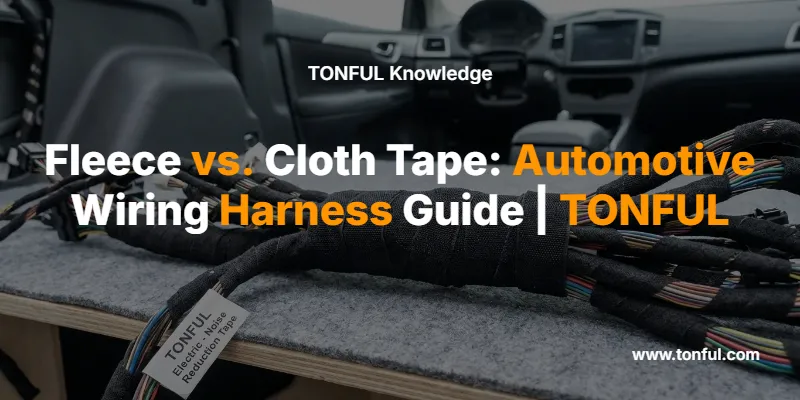
In the sophisticated world of automotive engineering, the difference between a premium vehicle and an average one often lies in the details of NVH (Noise, Vibration, and Harshness). For electrical engineers and procurement managers at TONFUL Electric, we understand that proper wiring harness management is not just about organizing cables—it is about ensuring system integrity and passenger comfort.
One of the most critical decisions in harness assembly is selecting the correct adhesive tape. While a standard PVC tape might suffice for basic insulation, it fails to address the acoustic challenges of a modern vehicle interior or the thermal demands of an engine bay. This technical guide explores the distinct roles of Fleece Tape versus Cloth Tape, helping B2B partners make informed procurement decisions for rattle reduction and wire protection.
The Critical Role of NVH in Wire Harness Design
As a leading electrical tape manufacturer, TONFUL Electric recognizes that wire harnesses are the central nervous system of a vehicle. A typical modern car contains thousands of feet of wiring. If these wires are not properly secured and dampened, they vibrate against chassis panels, plastic trims, and other components, creating “squeaks and rattles” (BSR) that degrade the perception of vehicle quality.
To combat this, OEMs like Volkswagen, Audi, BMW, and Mercedes-Benz have established strict standards for harnessing tapes. The choice between fleece and cloth is dictated by the specific zone of the vehicle: the Passenger Compartment (requires noise damping) vs. the Engine Compartment (requires heat and abrasion resistance).
1. Fleece Tape: The Interior Silence Specialist
Fleece tape, often referred to within the industry as “PET non-woven tape” or “fuzzy tape,” is the industry standard for passenger compartment wiring.
Material Composition
Fleece tape is constructed from a non-woven PET (polyethylene terephthalate) fleece backing. It is typically coated with a pressure-sensitive, rubber-based adhesive. The texture is soft and pliable, resembling felt.
Primary Function: Rattle Reduction
The primary engineering advantage of fleece tape is its high noise damping capability. When a wire harness wrapped in fleece tape strikes a dashboard panel or door frame, the soft fibers absorb the impact energy, effectively silencing the contact.
- Noise Damping Class: High (typically >5dB to >10dB reduction depending on thickness).
- Flexibility: Extremely high, allowing harnesses to bend around tight corners in dashboards without flagging.
- Adhesive: usually rubber-based to ensure immediate grab on irregular surfaces.

Ideal Applications
- Instrument panel harnesses
- Door panel wiring
- Roof lining harnesses
- Audio and infotainment cabling
For more details on our specific product lines, visit our High Quality Electrical Tapes Manufacturer page.
2. Cloth Tape: The Engine Bay Protector
While fleece dominates the interior, Cloth Tape (Woven Polyester or Glass Cloth) is the guardian of the engine compartment and underbody.
Material Composition
Automotive cloth tapes are generally made from woven PET polyester fibers. For extreme heat applications, glass cloth variants are used. Unlike the soft, fuzzy texture of fleece, cloth tape is smooth, dense, and tightly woven.
Primary Function: Abrasion and Heat Resistance
The engine bay is a hostile environment. Wires are exposed to vibrating engine blocks, metal edges, chemicals, and radiant heat. Cloth tape provides a tough physical barrier.
- Abrasion Resistance: High. Rated from Class A (low) to Class F (extremely high) depending on the weave density.
- Temperature Stability: Excellent. Standard PET cloth handles -40°F to 257°F (-40°C to 125°C), while specialized glass cloth can withstand up to 302°F (150°C) or higher.
- Fluid Resistance: Woven structures resist oil, fuel, and battery acid better than non-woven materials.

For a deeper understanding of sealing applications in these harsh environments, refer to our guide on Automotive Sealing Tape Applications.
Technical Comparison: Fleece vs. Cloth
To select the right electrical tape for your manufacturing needs, it is essential to compare the technical specifications side-by-side.
Noise vs. Abrasion
There is an inverse relationship between noise damping and abrasion resistance.
- Fleece: High Noise Damping / Low Abrasion Resistance.
- Cloth: Low Noise Damping / High Abrasion Resistance.
Temperature Ratings
- Fleece: Generally rated for T2 (105°C / 221°F). It is not designed for the intense radiant heat of an engine block.
- Cloth: Generally rated for T3 (125°C / 257°F) or T4 (150°C / 302°F). High-quality acrylic adhesives are often used here to prevent the “oozing” that occurs with rubber adhesives at high temperatures.

Comparative Data Tables
The following tables are designed to assist procurement and engineering teams in selecting the correct SKU for their BOM (Bill of Materials).
Table 1: Technical Specifications Comparison
| Feature | Fleece Tape (PET Non-Woven) | Cloth Tape (Woven Polyester) |
|---|---|---|
| Primary Base Material | Non-woven PET Fleece | Woven PET Polyester |
| Typical Thickness | 0.30mm – 0.50mm | 0.17mm – 0.25mm |
| Noise Damping (Decibels) | High (>5dB – 10dB) | Low (<2dB) |
| Abrasion Resistance | Low (Class A/B) | High (Class C/D/E) |
| Temperature Range | -40°C to +105°C | -40°C to +150°C |
| Hand Tearable? | Yes (mostly) | No (usually requires cutting tools) |
| Common Adhesive | Synthetic Rubber | Advanced Acrylic |
| Primary Zone | Interior (Cabin) | Exterior (Engine/Chassis) |
Table 2: Application Suitability Matrix
| Application Area | Fleece Tape Recommendation | Cloth Tape Recommendation |
|---|---|---|
| Dashboard/Instrument Panel | Highly Recommended (Prevents BSR) | Not Recommended (Too stiff) |
| Roof Liner/Headliner | Highly Recommended (Lightweight) | Not Recommended |
| Door Harness | Recommended (Vibration damping) | Neutral |
| Engine Block Wiring | Not Recommended (Melting risk) | Highly Recommended (Heat resistant) |
| Firewall Pass-through | Neutral | Recommended (Abrasion protection) |
| Chassis/Undercarriage | Not Recommended (Absorbs moisture) | Highly Recommended (Durability) |

Application Techniques and Assembly
Proper application is as important as material selection. Even the best tape will fail if applied incorrectly.
Spiral Wrapping vs. Spot Taping
- Spiral Wrapping: Used for continuous protection. An overlap of 50% is standard to ensure full coverage and maximum noise damping/abrasion resistance.
- Spot Taping: Used for holding wire bundles together where full protection isn’t required.
Handling and Flagging
“Flagging” occurs when the end of the tape lifts up after application. To prevent this:
- Ensure the wire insulation is free of oil and dust.
- Avoid stretching the last inch of tape during application; apply the end with zero tension.
- Use cloth tapes with acrylic adhesives for areas with thermal cycling, as they resist flagging better than rubber adhesives.
We discuss this phenomenon extensively in our Electrical Tape Flagging Causes and Prevention Guide.

Procurement and Cost Considerations for B2B
For procurement managers sourcing from a terminals and connectors manufacturer like TONFUL, cost efficiency is key.
- Fleece Tape: generally more cost-effective per roll than high-temp cloth tape. It is bulky, providing excellent coverage for the price.
- Cloth Tape: typically commands a higher price point due to the complexity of the woven backing and high-performance acrylic adhesives required for heat resistance.
However, substituting cloth tape with fleece tape in an engine bay to save costs will lead to catastrophic insulation failure. Conversely, using expensive high-heat cloth tape in the dashboard is engineering overkill and fails to provide the necessary acoustic damping.
FAQ: Common B2B Questions About Harness Tape
Q: Can I use standard vinyl electrical tape for harnessing?
A: While PVC vinyl tape is excellent for electrical insulation, it is poor for harnessing. It lacks noise damping properties, becomes brittle in cold, and the adhesive often turns into a slimy residue in high heat. For harnesses, always use specific fleece or cloth tapes.
Q: What is the shelf life of TONFUL harness tapes?
A: When stored in a cool, dry place (approx. 20°C, 50% humidity), our tapes typically have a shelf life of 12-24 months depending on the adhesive type.
Q: Do you offer custom widths for automated taping machines?
A: Yes. While standard widths are 9mm, 19mm, and 25mm, TONFUL Electric can slit logs to custom widths to suit specific automated harness winding equipment.
Q: Is fleece tape waterproof?
A: No. Fleece is porous and can absorb moisture. It should strictly be used in “dry” zones (interior). For “wet” zones (doors, chassis), use specialized waterproof cloth or sealed connectors. See our range of waterproof wire connectors.
Q: Does TONFUL tape meet OEM standards?
A: Yes, our manufacturing processes are aligned with major international standards, including ISO and TS requirements common to VW, Audi, and GM specifications.
Q: Can I use fleece tape on battery cables?
A: Only if the battery cable is inside the cabin. For battery cables in the engine bay, use high-heat cloth tape or corrugated tubing.
Q: How do I choose the right tape for a specific temperature zone?
A: Identify the continuous operating temperature. If it is below 105°C (cabin), fleece is sufficient. If it is between 105°C and 150°C (engine), woven polyester or glass cloth is required.
Conclusion
Effective wiring harness management is a balancing act between acoustic comfort and physical durability. Fleece tape is the undisputed champion of the interior, silencing rattles and providing a premium feel. Cloth tape is the robust defender of the engine bay, withstanding heat and abrasion.
At TONFUL Electric, we provide a comprehensive portfolio of electrical tools and tapes designed to meet the rigorous demands of the global automotive industry. Whether you are an OEM engineer designing the next generation of electric vehicles or a distributor stocking for aftermarket repair, selecting the right tape is crucial for longevity and performance.
Ready to upgrade your wiring harness solutions?
Contact TONFUL Electric today for detailed technical data sheets, sample kits, and competitive B2B pricing on our premium fleece and cloth tapes. Ensure your projects are rattle-free and road-ready with TONFUL quality.