
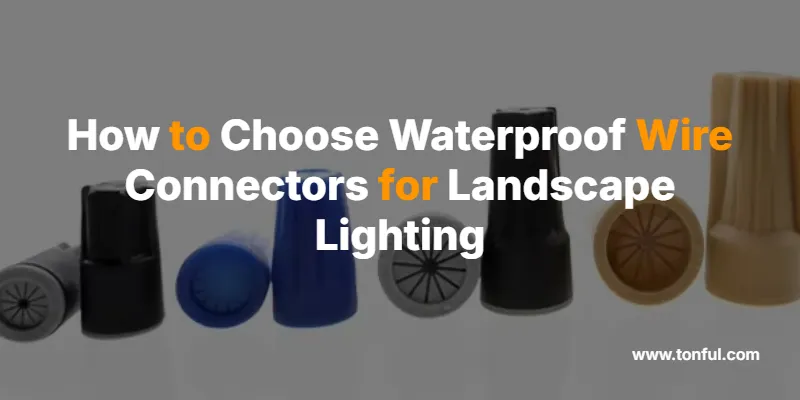
Landscape lighting transforms outdoor spaces into stunning nighttime displays, but the success of any installation depends on one critical component: waterproof wire connectors. These small yet essential devices protect electrical connections from moisture, ensuring your lighting system operates reliably for years. This comprehensive guide will help you select the right waterproof wire connectors for your landscape lighting projects, whether you’re a professional contractor or facility manager.
Understanding Waterproof Wire Connectors for Landscape Lighting

Waterproof wire connectors, also known as waterproof wire nuts, serve as the critical junction points in low-voltage landscape lighting systems. Unlike standard indoor wire nuts, these specialized connectors feature silicone or grease-filled interiors that create moisture barriers around wire splices. This protection prevents corrosion, voltage drop, and connection failure in outdoor environments where exposure to rain, irrigation spray, and ground moisture is constant.
Most landscape lighting operates at 12-24 volts, making proper connections even more critical. At low voltages, even minor resistance from corrosion or loose connections can cause significant brightness loss at fixtures furthest from the transformer. Quality waterproof wire connectors ensure consistent electrical performance throughout your lighting system.
Key Selection Criteria
1. IP Rating Requirements
The Ingress Protection (IP) rating indicates a connector’s ability to resist dust and water infiltration. For landscape lighting applications, understanding these ratings is essential for long-term reliability.

IP Rating Comparison for Landscape Lighting
| IP Rating | Water Protection Level | Landscape Applications | Installation Location | Submersion Rating |
|---|---|---|---|---|
| IP65 | Protected against water jets from any direction | Above-grade connections in covered junction boxes | Sheltered valve boxes, protected areas | Not submersible |
| IP67 | Protected against temporary immersion up to 1 meter for 30 minutes | Standard landscape lighting, path lights, garden fixtures | Direct burial, valve boxes, exposed connections | Temporary immersion only |
| IP68 | Protected against continuous submersion (manufacturer-specified depth) | Pond lighting, fountain fixtures, wet location installations | Underwater applications, chronically wet areas | Continuous submersion (verify depth) |
For most landscape lighting installations, IP67-rated connectors provide optimal protection for connections in valve boxes, direct burial applications, and areas exposed to irrigation spray. IP68 ratings become necessary only for underwater lighting or locations with chronic standing water.
2. Wire Gauge Compatibility (AWG)
Landscape lighting systems typically use 12, 14, or 16 AWG wire, with gauge selection based on run length and total wattage. Your waterproof connectors must accommodate these specific wire sizes for secure, reliable connections.

Landscape Lighting Wire Connector Sizing Chart
| Connector Color | Wire Gauge Range (AWG) | Minimum Combination | Maximum Combination | Typical Landscape Use |
|---|---|---|---|---|
| Gray | 22-16 | 2 × 22 AWG | 2 × 16 AWG | Fixture leads, short runs |
| Blue | 22-16 | 2 × 22 AWG | 3 × 16 AWG | Fixture pigtails to main line |
| Orange | 22-14 | 2 × 22 AWG | 3 × 14 AWG | Medium runs, multiple fixtures |
| Yellow | 18-12 | 2 × 18 AWG | 4 × 14 AWG + 1 × 18 AWG | Standard landscape lighting |
| Red | 18-10 | 2 × 18 AWG | 4 × 12 AWG or 2 × 10 AWG | Long runs, high wattage |
| Tan/Beige | 14-10 | 2 × 14 AWG | 3 × 10 AWG | Main line connections |
Yellow waterproof wire connectors are the most commonly used size for landscape lighting, as they accommodate the 12-16 AWG wire typically specified for runs up to 100 feet. For longer runs requiring 10 or 12 AWG wire, red or tan connectors provide the necessary capacity.
3. Sealant Type and Fill Material
The internal sealant material determines how well a connector protects against moisture infiltration and how easy it is to modify connections later.
Sealant Type Comparison for Landscape Lighting
| Sealant Type | Advantages | Disadvantages | Best Landscape Applications | Reusability |
|---|---|---|---|---|
| Silicone Gel-Filled | Superior moisture barrier, temperature stable (-40°C to 105°C), long service life | Higher cost, messy if reopened | Direct burial, permanent installations, high-end projects | Single use only |
| Grease-Filled (Dielectric) | Good moisture protection, easier to remove, cost-effective | Can dry out over time in extreme heat | Standard landscape lighting, valve box connections | Limited reuse |
| Petroleum-Based | Lowest cost, adequate protection | Environmental concerns, temperature sensitive | Budget installations, temporary lighting | Single use only |
| Hybrid Silicone-Grease | Balanced performance and cost, good protection | Moderate price point | General landscape lighting, residential projects | Single use only |
Silicone gel-filled connectors offer the best long-term performance for landscape lighting, particularly in direct burial applications where connections cannot be easily accessed for maintenance. The silicone remains stable across temperature extremes and provides superior water barrier properties compared to petroleum-based alternatives.
4. UL Certification and Code Compliance
Professional landscape lighting installations require UL-listed waterproof connectors that meet National Electrical Code (NEC) standards for wet locations and direct burial applications.
Essential Certifications:
- UL 486D: Listed for use in damp and wet locations
- UL 486G: Specifically listed for landscape lighting and irrigation applications
- Direct Burial Rating: Required for underground installations per NEC Article 300.5
- Temperature Rating: Minimum 105°C (221°F) for outdoor use
Always verify the UL file number on product packaging and documentation. Reputable manufacturers like TONFUL Electric provide complete certification documentation, ensuring your installations meet inspection requirements and insurance standards.
Connector Types for Landscape Lighting
Twist-On Waterproof Wire Nuts
Traditional twist-on style waterproof wire nuts remain the most popular choice for landscape lighting due to their reliability, ease of installation, and proven performance. These connectors feature internal springs that grip wires securely while the silicone or grease filling seals out moisture.
Advantages:
- Simple installation requiring no special tools
- Proven reliability over decades of use
- Wide availability in multiple sizes
- Visual confirmation of proper seating
- Cost-effective for large installations
Best Applications: Direct burial connections, valve box installations, fixture pigtail connections, and any permanent landscape lighting installation.
Fast-Lock/Quick-Connect Waterproof Connectors
Modern fast-lock connectors feature threaded bodies with internal sealing mechanisms, allowing tool-free installation and theoretically reusable connections.
Advantages:
- No wire twisting required
- Faster installation for experienced installers
- IP67 or IP68 ratings standard
- Suitable for 12-18 AWG wire
Limitations:
- Higher cost per connection
- Requires precise wire stripping
- Bulkier than traditional wire nuts
- Seal integrity degrades with reuse
Best Applications: Above-grade connections in accessible locations, temporary installations, or situations requiring frequent modifications.
Hub-Style Junction Connectors
Hub connectors consolidate multiple fixture connections at a central junction point, simplifying wiring and reducing the number of individual connections.
Advantages:
- Reduces connection points and potential failure locations
- Simplifies troubleshooting and modifications
- Professional appearance
- Easier to organize complex lighting zones
Best Applications: Zone control points, areas with multiple fixtures in close proximity, and installations requiring future flexibility.

Application-Specific Selection Guide
Path and Garden Lighting (12-24V)
Path lights and garden accent fixtures typically use 16-18 AWG fixture leads connecting to 12-14 AWG main line wire. Use blue or orange waterproof wire nuts for these connections, with IP67 rating minimum. Connections are typically made in valve boxes or buried directly with the wire run.
Deck and Patio Lighting
Deck lighting installations often require connections in accessible locations under decking or in junction boxes. Yellow waterproof connectors with silicone filling provide reliable protection while accommodating the 12-14 AWG wire common in these applications. Consider using heat shrink terminals for connections in extremely tight spaces.
Pond and Water Feature Lighting
Any lighting within 10 feet of water features requires IP68-rated gel-filled connectors per NEC Article 680. These applications demand the highest level of water protection due to continuous moisture exposure and potential submersion. Never compromise on ratings for water-related electrical work.
Tree and Uplighting
Tree uplights and architectural uplighting fixtures often require longer wire runs (100+ feet), necessitating 10-12 AWG wire. Use red or tan waterproof connectors sized appropriately for these heavier gauge wires. Consider voltage drop calculations to ensure proper brightness at distant fixtures.
Commercial Landscape Lighting
Commercial installations require enhanced durability and code compliance. Specify UL-listed silicone gel-filled connectors with complete documentation. Consider using assorted connector kits to ensure installers have the correct sizes readily available for various connection scenarios.
Installation Best Practices

Proper installation technique ensures waterproof connectors perform as designed throughout the life of your landscape lighting system:
- Strip wires precisely to 5/8 inch (15-16mm) using quality wire strippers
- Clean wire ends to remove any oxidation or contamination
- Pre-twist wires clockwise to create a tight bundle before inserting into the connector
- Thread wires fully into the connector until all bare copper is covered by the connector body
- Twist firmly 3-5 full rotations until you feel solid resistance
- Tug test each wire individually with 10-15 pounds of force to verify mechanical connection
- Verify sealant distribution around the wire entry point—you should see slight sealant squeeze-out
- Do not over-tighten, which can damage the internal spring mechanism
For detailed installation procedures specific to different applications, consult our comprehensive guides on waterproof wire connector installation and landscape lighting wiring best practices.
Common Selection Mistakes to Avoid
Using Standard Wire Nuts Outdoors
The most critical error is using standard indoor wire nuts for landscape lighting, even with electrical tape added. Standard connectors lack the sealing mechanisms necessary to prevent moisture infiltration, leading to rapid corrosion and connection failure within months.
Incorrect Size Selection
Choosing connectors based solely on color without verifying the specific wire gauge combinations creates unreliable connections. A connector that’s too large won’t grip wires securely, while one that’s too small cannot accommodate the wire bundle, causing physical stress and potential failure.
Attempting to Reuse Waterproof Connectors
Waterproof wire connectors are designed for single-use installation only. Once removed, the internal sealant is compromised and cannot provide the same level of protection. Always use new connectors when making modifications or repairs.
Ignoring Voltage Drop
Selecting connectors without considering the total system voltage drop leads to dim fixtures at the end of wire runs. Use proper wire gauge for run length and wattage, and ensure connectors maintain low resistance connections.
Inadequate Burial Depth
Even with waterproof connectors, connections must be buried at proper depths per NEC requirements (typically 6 inches minimum for low-voltage landscape lighting). Shallow burial exposes connections to physical damage from landscaping equipment.
Quality Indicators When Sourcing Waterproof Connectors
When selecting a supplier for B2B procurement or contractor volume purchases, evaluate these quality indicators:
Manufacturing Standards
- ISO 9001 certified manufacturing facilities
- Documented quality control processes with batch testing
- Consistent product specifications across production runs
- Traceability systems for quality assurance
Material Quality
- Virgin thermoplastic shells rated for UV resistance
- High-grade silicone or dielectric grease sealants
- Corrosion-resistant internal springs (stainless steel or tin-plated copper)
- Flame-retardant materials meeting UL 94V-2 standards
Documentation and Support
- Complete UL certification files with file numbers
- IP rating test reports from accredited laboratories
- Installation instructions in multiple languages
- Technical support for application-specific questions
TONFUL Electric provides comprehensive technical documentation and engineering support for all waterproof wire connector products, ensuring you select the optimal solution for your landscape lighting projects.
Cost Considerations and ROI
Cost-Benefit Analysis for Landscape Lighting Connectors
| Factor | Standard Wire Nut + Tape | Budget Waterproof Connector | Premium Silicone-Filled Connector |
|---|---|---|---|
| Initial Cost per Connection | $0.15-0.30 | $0.40-0.70 | $0.80-1.50 |
| Expected Service Life (outdoor) | 6-18 months | 3-5 years | 10-20 years |
| Failure Rate (5 years) | 60-80% | 20-30% | <5% |
| Maintenance Callbacks | Very frequent | Occasional | Rare |
| Code Compliance | Fails inspection | Meets minimum standards | Exceeds requirements |
| Professional Reputation Impact | Negative | Neutral | Positive |
For professional landscape lighting contractors, using quality waterproof connectors eliminates costly callbacks, protects reputation, and ensures installations pass inspection on the first attempt. The small upfront premium pays for itself through reduced warranty claims and enhanced customer satisfaction.
Maintenance and Inspection
Even properly installed waterproof connectors benefit from periodic inspection in critical applications:
- Annual visual inspection during seasonal system checks for physical damage or signs of water intrusion
- Thermal imaging can identify overheating connections before failure occurs
- Voltage testing at fixtures helps identify connection resistance issues
- Valve box drainage verification ensures connections aren’t sitting in standing water
- Replace compromised connectors immediately—any signs of cracks, dried sealant, or corrosion warrant replacement
Frequently Asked Questions (FAQ)
Q: Can I reuse waterproof wire connectors for landscape lighting?
A: No. Waterproof connectors are designed for single-use installation only. Once removed, the internal sealant is compromised and cannot provide reliable moisture protection. Always use new connectors for any modification or repair work.
Q: What IP rating do I need for landscape lighting connectors?
A: IP67 is the standard rating for most landscape lighting applications, providing protection against temporary immersion up to 1 meter for 30 minutes. IP68 ratings are required only for underwater lighting or chronically wet locations.
Q: What size waterproof connector do I need for 12 AWG landscape lighting wire?
A: For 12 AWG wire, use yellow or red waterproof connectors depending on the number of wires being connected. Yellow connectors typically accommodate up to 4 × 12 AWG wires, while red connectors handle larger combinations. Always consult the manufacturer’s capacity chart for your specific wire combination.
Q: Do waterproof wire connectors need to be in a junction box for landscape lighting?
A: Not necessarily. UL-listed waterproof connectors rated for direct burial can be buried directly in the ground without a junction box. However, using valve boxes at connection points makes future troubleshooting and modifications much easier.
Q: How do I know if a waterproof connector is properly installed?
A: A properly installed connector will: (1) cover all bare copper wire, (2) feel tight when twisted fully, (3) resist 10-15 pounds of pull force on each wire individually, and (4) show slight sealant squeeze-out at the wire entry point. If any wire pulls out easily, the connection is inadequate.
Q: What’s the difference between silicone-filled and grease-filled landscape lighting connectors?
A: Silicone-filled connectors provide superior long-term moisture protection and temperature stability, making them ideal for permanent installations and direct burial. Grease-filled connectors are more cost-effective and easier to remove if modifications are needed, but may dry out over time in extreme temperatures.
Conclusion
Selecting the right waterproof wire connectors for landscape lighting requires careful consideration of IP ratings, wire gauge compatibility, sealant type, and application-specific environmental conditions. By choosing appropriately rated connectors and following proper installation techniques, you ensure reliable, code-compliant electrical connections that withstand moisture, temperature extremes, and environmental challenges for years of trouble-free operation.
For professional landscape lighting contractors and facility managers, partnering with a reputable manufacturer like TONFUL Electric provides access to quality products, comprehensive technical support, and the documentation necessary for code compliance and project success. Whether you’re installing residential garden lighting, commercial property illumination, or specialized water feature lighting, investing in proper waterproof wire connectors protects your work, your reputation, and most importantly, electrical safety.
Explore our complete range of waterproof wire connectors, waterproof wire nuts, electrical terminals, heat shrink terminals, and electrical tools designed for demanding professional landscape lighting applications.