
Stainless steel cable ties in 304 and 316 grades offer unmatched durability for extreme environments, with 316 marine-grade providing superior corrosion resistance in saltwater applications while 304 delivers cost-effective performance for general industrial use—understanding the critical differences ensures optimal selection for your specific application.
Choosing between 304 and 316 stainless steel cable ties can mean the difference between decades of reliable service and premature failure in harsh environments. This comprehensive guide examines the metallurgical differences, performance characteristics, and application-specific recommendations to help engineers, procurement managers, and installers make informed decisions.
Understanding Stainless Steel Cable Tie Fundamentals

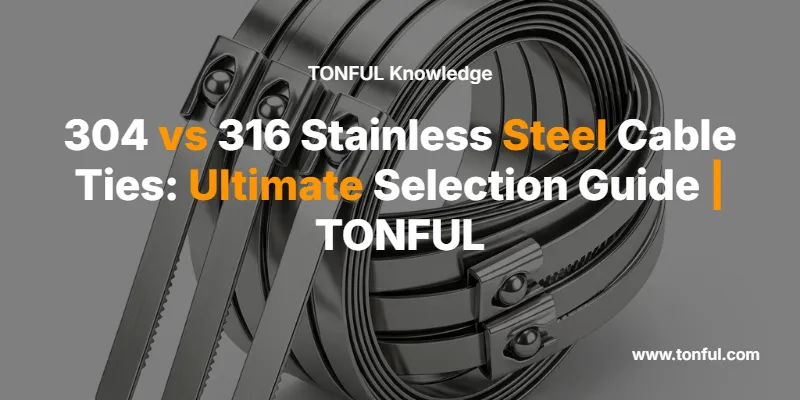
Stainless steel cable ties are permanent fastening solutions engineered from corrosion-resistant alloys designed to withstand extreme temperatures, chemical exposure, and mechanical stress. Unlike plastic cable ties that degrade under UV exposure and temperature extremes, stainless steel variants maintain structural integrity for 20-30+ years in demanding environments.
Core Components:
- Stainless steel band – Continuous loop with serrated edges for locking
- Ball-lock mechanism – Self-locking head using roller ball or ratchet system
- Tail section – Threaded through locking head and trimmed after installation
- Surface finish – Polished, brushed, or coated depending on application
The material grade—304 or 316—fundamentally determines corrosion resistance, temperature tolerance, and suitability for specific environments.
304 vs 316 Stainless Steel: Chemical Composition Analysis

The fundamental difference between 304 and 316 stainless steel lies in their alloy composition, which directly impacts corrosion resistance and environmental performance.
| Element | 304 Stainless Steel | 316 Stainless Steel | Impact on Performance |
|---|---|---|---|
| Chromium (Cr) | 18-20% | 16-18% | Forms protective oxide layer, provides corrosion resistance |
| Nickel (Ni) | 8-10.5% | 10-14% | Enhances ductility, improves corrosion resistance |
| Molybdenum (Mo) | 0% | 2-3% | Critical addition: Superior chloride and pitting corrosion resistance |
| Carbon (C) | ≤0.08% | ≤0.08% | Lower carbon improves weldability and reduces carbide precipitation |
| Manganese (Mn) | ≤2% | ≤2% | Improves hot working properties |
| Iron (Fe) | Balance | Balance | Base metal providing structural strength |
The Molybdenum Advantage: The 2-3% molybdenum content in 316 stainless steel creates a passive film that dramatically enhances resistance to chloride ions, making it essential for marine environments, coastal installations, and chemical processing applications.
Performance Comparison: 304 vs 316 Cable Ties
Temperature Resistance
Both grades excel in extreme temperature applications, significantly outperforming plastic alternatives:
| Grade | Continuous Operating Range | Peak Temperature | Typical Applications |
|---|---|---|---|
| 304 SS | -80°C to +427°C (-112°F to +800°F) | 538°C (1000°F) short-term | Industrial machinery, food processing, general manufacturing |
| 316 SS | -80°C to +538°C (-112°F to +1000°F) | 593°C (1100°F) short-term | Marine engines, chemical reactors, offshore platforms |
Both grades maintain structural integrity and tensile strength across their operating ranges, unlike nylon cable ties that become brittle below -40°C and melt above 85°C.
Corrosion Resistance Matrix

| Environment/Chemical | 304 Stainless Steel | 316 Stainless Steel | Recommended Grade |
|---|---|---|---|
| Saltwater/Marine | Fair (pitting occurs) | Excellent | 316 |
| Chloride Solutions | Poor to Fair | Excellent | 316 |
| Atmospheric (Rural) | Excellent | Excellent | 304 (cost-effective) |
| Atmospheric (Coastal) | Good | Excellent | 316 |
| Sulfuric Acid (dilute) | Good | Excellent | 316 |
| Nitric Acid | Excellent | Excellent | Either |
| Alkaline Solutions | Excellent | Excellent | Either |
| Food Processing | Excellent | Excellent | 316L preferred |
| Petroleum Products | Excellent | Excellent | Either |
Critical Insight: In marine and coastal environments (within 1 mile of ocean), 316 stainless steel cable ties provide 5-10x longer service life compared to 304 grade due to superior pitting and crevice corrosion resistance.
Tensile Strength and Mechanical Properties
| Property | 304 Grade | 316 Grade | Test Standard |
|---|---|---|---|
| Tensile Strength | 515-620 MPa (75-90 ksi) | 515-620 MPa (75-90 ksi) | ASTM A240 |
| Yield Strength | 205-310 MPa (30-45 ksi) | 205-310 MPa (30-45 ksi) | ASTM A240 |
| Loop Tensile (8″ tie) | 100-250 lbs (445-1112 N) | 100-250 lbs (445-1112 N) | MIL-DTL-23053 |
| Elongation | 40% minimum | 40% minimum | ASTM A240 |
| Hardness | 70-90 HRB | 70-95 HRB | ASTM E18 |
Both grades offer comparable mechanical strength, making the selection decision primarily dependent on environmental factors rather than load-bearing requirements.
Application-Specific Selection Guide
Marine and Offshore Applications

Recommended: 316 Stainless Steel
Marine environments present the most aggressive corrosion conditions due to:
- High chloride ion concentration in saltwater
- Constant humidity and wet/dry cycling
- Salt spray and atmospheric salt deposition
- Potential for crevice corrosion in confined spaces
Specific Marine Applications:
- Shipboard wiring and cable management – Engine rooms, deck equipment, navigation systems
- Offshore oil and gas platforms – Process piping, instrumentation cables, safety systems
- Marina and dock installations – Electrical distribution, lighting systems, mooring equipment
- Desalination plants – High-salinity process equipment
- Aquaculture facilities – Underwater and splash-zone installations
Technical Requirement: Specify 316 grade with minimum 2% molybdenum content. For extreme applications, consider 316L (low carbon) to prevent sensitization during welding operations.
Industrial Manufacturing
Recommended: 304 Stainless Steel (cost-effective) or 316 (harsh conditions)
| Industry Sector | Recommended Grade | Key Considerations |
|---|---|---|
| Food Processing | 316L | FDA compliance, washdown environments, sanitary requirements |
| Pharmaceutical | 316L | High-purity requirements, frequent cleaning, validation protocols |
| Chemical Processing | 316 | Chemical resistance, high temperatures, regulatory compliance |
| Automotive Manufacturing | 304 | Cost-effective, adequate corrosion resistance, paint booth environments |
| Aerospace Assembly | 316 | Traceability requirements, quality certifications, long-term reliability |
| Power Generation | 316 | High temperatures, vibration resistance, safety-critical applications |
High-Temperature Applications
Both 304 and 316 grades excel in high-temperature environments where plastic cable ties would fail:
Common High-Temperature Applications:
- Exhaust systems – Automotive, industrial, marine engines (use with heat shrink tubing for additional protection)
- Furnace and oven installations – Industrial heating equipment
- Steam pipe bundling – Power plants, process industries
- Lighting fixtures – High-intensity discharge lamps, industrial lighting
- HVAC systems – Hot air ducts, boiler rooms
Selection Criteria:
- Below 427°C (800°F): 304 grade sufficient and more cost-effective
- Above 427°C (800°F): 316 grade recommended for extended service life
- Cyclic temperature applications: 316 grade provides better thermal fatigue resistance
Chemical and Petrochemical Industries
Recommended: 316 Stainless Steel
Chemical exposure requires careful material selection based on specific chemicals present:
| Chemical Category | 304 Performance | 316 Performance | Recommendation |
|---|---|---|---|
| Organic Solvents | Good | Excellent | 316 for long-term exposure |
| Weak Acids | Fair | Good to Excellent | 316 required |
| Strong Acids | Poor | Fair to Good | 316 minimum, consider specialty alloys |
| Alkaline Solutions | Excellent | Excellent | Either grade acceptable |
| Chlorinated Compounds | Poor | Good | 316 required |
| Petroleum Products | Excellent | Excellent | 304 cost-effective |
Installation Best Practices

Required Tools and Equipment
Essential Tools:
- Stainless steel cable tie installation gun – Manual or pneumatic tensioning tool
- Cable tie cutting tool – Flush-cut design to prevent sharp edges
- Torque limiting mechanism – Prevents over-tightening and cable damage
- Safety gloves – Cut-resistant for handling stainless steel edges
Recommended Torque Settings:
| Cable Tie Width | Maximum Torque | Typical Application |
|---|---|---|
| 4.6mm (3/16″) | 15-20 lb-in | Light-duty bundling, instrumentation cables |
| 7.9mm (5/16″) | 30-40 lb-in | Medium-duty, power cables, hoses |
| 12mm (1/2″) | 50-70 lb-in | Heavy-duty, large cable bundles, structural applications |
Step-by-Step Installation Process
1. Bundle Preparation
- Organize cables/hoses in neat bundle configuration
- Remove sharp edges or burrs that could damage insulation
- Calculate bundle diameter and select appropriate tie length
- Allow 25-50mm (1-2″) overlap for proper locking engagement
2. Tie Positioning
- Thread tail through locking head mechanism
- Position around bundle at desired location
- Ensure tie sits perpendicular to bundle axis
- Verify adequate working clearance for installation tool
3. Tensioning
- Insert tail into installation gun
- Apply steady, even pressure while tensioning
- Monitor torque indicator to prevent over-tightening
- Stop when specified torque is reached or bundle is secure
4. Tail Cutting
- Use flush-cut tool positioned against locking head
- Cut at 90-degree angle to prevent sharp edges
- Inspect cut end for burrs or sharp points
- File smooth if necessary for safety
5. Installation Verification
- Visually inspect locking mechanism engagement
- Verify bundle security with gentle pull test
- Check for cable insulation damage or deformation
- Document installation for quality records
⚠️ Critical Safety Warning: Over-tightening stainless steel cable ties can crush cable insulation, damage conductors, and create electrical hazards. Always use torque-limiting tools and follow manufacturer specifications.
Cost Analysis and ROI Considerations
Initial Cost Comparison
| Cable Tie Type | Unit Cost Range | Installation Cost | Total Initial Cost (per tie) |
|---|---|---|---|
| Nylon Cable Tie | $0.02-$0.15 | $0.05 (hand install) | $0.07-$0.20 |
| 304 SS Cable Tie | $0.40-$1.50 | $0.25 (tool required) | $0.65-$1.75 |
| 316 SS Cable Tie | $0.60-$2.50 | $0.25 (tool required) | $0.85-$2.75 |
Initial Cost Premium: 316 stainless steel cable ties cost 20-40% more than 304 grade, and 10-15x more than plastic alternatives.
Lifecycle Cost Analysis
20-Year Total Cost of Ownership (per 100 ties):
| Scenario | Material | Replacement Cycles | Labor Cost | Total 20-Year Cost |
|---|---|---|---|---|
| Indoor Industrial | Nylon | 4 replacements | $200 | $280 |
| Indoor Industrial | 304 SS | 0 replacements | $25 | $90 |
| Marine Environment | Nylon | 10 replacements | $500 | $720 |
| Marine Environment | 304 SS | 2 replacements | $100 | $230 |
| Marine Environment | 316 SS | 0 replacements | $25 | $110 |
ROI Insight: In harsh environments, 316 stainless steel cable ties deliver 85% lower total cost of ownership compared to plastic alternatives despite 15x higher initial cost, due to elimination of replacement labor and downtime.
When to Justify Premium 316 Grade
316 Grade Justified When:
- Marine or coastal installation (within 1 mile of saltwater)
- Chemical exposure to chlorides or acids
- Safety-critical applications where failure consequences are severe
- Difficult-to-access locations where replacement is costly
- Regulatory requirements specify marine-grade materials
- Expected service life exceeds 15-20 years
304 Grade Sufficient When:
- Indoor industrial environments with controlled conditions
- No significant chloride or chemical exposure
- Adequate access for inspection and replacement
- Cost constraints are primary consideration
- Service life requirement is 10-15 years
Quality Standards and Certifications
Material Certifications
ASTM Standards:
- ASTM A240 – Standard specification for chromium and chromium-nickel stainless steel plate, sheet, and strip
- ASTM A276 – Standard specification for stainless steel bars and shapes
- ASTM A666 – Standard specification for annealed or cold-worked austenitic stainless steel sheet, strip, plate, and flat bar
Industry Certifications:
- UL Recognition – UL94 flammability rating for electrical applications
- RoHS Compliance – Restriction of hazardous substances
- REACH Compliance – European chemical safety regulations
- ISO 9001 – Quality management system certification
Testing and Quality Assurance
Required Testing for Critical Applications:
| Test Type | Standard | Purpose | Acceptance Criteria |
|---|---|---|---|
| Tensile Strength | ASTM A240 | Verify mechanical properties | ≥515 MPa minimum |
| Salt Spray | ASTM B117 | Corrosion resistance validation | 500+ hours no rust (316) |
| Chemical Analysis | ASTM E1086 | Confirm alloy composition | Within grade specifications |
| Loop Tensile | MIL-DTL-23053 | Installed strength verification | Per manufacturer rating |
| Thermal Cycling | ASTM D1790 | Temperature performance | No degradation after 1000 cycles |
TONFUL Quality Assurance: All TONFUL stainless steel cable ties undergo rigorous testing including material certification, dimensional inspection, and performance validation to ensure compliance with international standards and customer specifications.
Troubleshooting Common Issues
Premature Corrosion in 316 Grade
Symptoms: Rust spots, pitting, or discoloration appearing earlier than expected
Possible Causes:
- Contamination during installation – Carbon steel particles embedded in surface
- Galvanic corrosion – Contact with dissimilar metals without isolation
- Counterfeit material – Substandard alloy sold as 316 grade
- Crevice corrosion – Trapped moisture in confined spaces
Solutions:
- Verify material certification and test reports
- Use stainless steel brushes and tools during installation
- Implement isolation barriers for dissimilar metal contact
- Apply protective coatings in extreme crevice conditions
- Source from certified manufacturers with quality documentation
Locking Mechanism Failure
Symptoms: Tie loosens over time, ball-lock disengages, ratchet slips
Possible Causes:
- Insufficient tensioning during installation
- Vibration in high-movement applications
- Improper tool use or worn installation equipment
- Manufacturing defect in locking mechanism
Solutions:
- Use calibrated installation tools with proper torque settings
- Apply thread-locking compound in extreme vibration environments
- Inspect installation tools regularly for wear
- Implement quality control inspection after installation
- Consider double-tie configuration for critical applications
Cable Insulation Damage
Symptoms: Crushed insulation, conductor damage, electrical failures
Possible Causes:
- Over-tightening during installation
- Sharp edges on cut tail section
- Inadequate bundle diameter calculation
- Thermal expansion/contraction cycling
Solutions:
- Use torque-limiting installation guns
- Apply protective heat shrink tubing over high-stress areas
- Calculate bundle size with thermal expansion allowance
- Inspect and file sharp edges after cutting
- Consider cushioned or coated cable ties for sensitive applications
Frequently Asked Questions
Q: Can I use 304 stainless steel cable ties in marine environments?
A: While 304 grade offers some corrosion resistance, it is not recommended for direct marine exposure. In saltwater environments, 304 will develop pitting corrosion within 1-3 years. Always specify 316 marine-grade for coastal, offshore, or saltwater applications to ensure 20+ year service life.
Q: What’s the maximum bundle diameter for stainless steel cable ties?
A: Standard sizes range from 100mm (4″) to 900mm (36″) loop diameter. Calculate required length using formula: Length = (Bundle Diameter × π) + 50mm overlap. For large bundles exceeding 300mm, consider multiple ties or heavy-duty variants with reinforced locking mechanisms.
Q: Do stainless steel cable ties require special installation tools?
A: Yes, manual or pneumatic tensioning tools are required for proper installation. Hand-tightening is not recommended as it cannot achieve adequate tension and increases risk of improper locking engagement. Tool investment ($200-$800) is essential for professional installations.
Q: How do I prevent galvanic corrosion when using stainless steel ties?
A: Use stainless steel cable ties only with stainless steel, aluminum, or properly coated surfaces. For dissimilar metals, install isolation washers, use coated cable ties, or apply dielectric barriers. The galvanic series indicates compatibility: stainless steel should not contact zinc, magnesium, or uncoated carbon steel without isolation.
Q: Can stainless steel cable ties be reused?
A: Standard ball-lock stainless steel cable ties are designed for single-use permanent installation. However, releasable variants with release tabs are available for applications requiring periodic access. Reusing standard ties compromises locking integrity and is not recommended for safety-critical applications.
Q: What temperature rating should I specify for automotive exhaust applications?
A: Automotive exhaust systems can reach 400-650°C (750-1200°F) depending on location. Specify 316 stainless steel cable ties rated for continuous 538°C (1000°F) operation with short-term excursions to 593°C (1100°F). Position ties away from direct exhaust gas flow and use heat shrink tubing for additional thermal protection.
Q: How do I verify authentic 316 grade material?
A: Request mill test certificates (MTCs) showing chemical composition analysis. Genuine 316 stainless steel contains 2-3% molybdenum, which can be verified through XRF (X-ray fluorescence) testing. Reputable manufacturers like TONFUL provide full material traceability and certification documentation with each shipment.
Q: What’s the difference between 316 and 316L stainless steel cable ties?
A: 316L is a low-carbon variant (≤0.03% carbon vs. ≤0.08% in standard 316) that offers improved weldability and resistance to sensitization during high-temperature exposure. For cable tie applications, 316L is preferred in pharmaceutical, food processing, and applications requiring frequent welding or high-purity environments.
Conclusion: Making the Right Selection
For marine, offshore, and coastal applications within 1 mile of saltwater, 316 stainless steel cable ties are non-negotiable. The 2-3% molybdenum content provides essential chloride corrosion resistance that justifies the 20-40% cost premium through decades of maintenance-free service.
For general industrial, automotive, and indoor applications, 304 stainless steel cable ties offer excellent performance at lower cost. The superior temperature resistance and mechanical strength compared to plastic alternatives make them ideal for demanding environments without marine exposure.
Key Selection Criteria:
- Environment assessment – Identify chloride exposure, chemical contact, and atmospheric conditions
- Temperature requirements – Verify continuous and peak operating temperatures
- Service life expectations – Calculate lifecycle costs including replacement labor
- Regulatory compliance – Confirm material certifications and industry standards
- Quality assurance – Source from certified manufacturers with material traceability
TONFUL Electric manufactures premium 304 and 316 stainless steel cable ties with full material certification, rigorous quality testing, and technical support to ensure optimal performance in your specific application. Our engineering team provides application-specific recommendations and custom solutions for demanding environments.
For technical specifications, material certifications, and bulk pricing on stainless steel cable ties, contact TONFUL Electric’s engineering support team. We provide comprehensive solutions for marine, industrial, and specialized applications with factory-direct pricing and expedited delivery.
Related Products:
- Cable Ties (Nylon & Stainless Steel)
- Heat Shrink Tubing for additional cable protection
- Waterproof Wire Connectors for marine electrical systems
- Electrical Tools including cable tie installation guns
*This guide is regularly updated to reflect the latest industry standards, material specifications, and application best practices. For project-specific technical consultation, contact TONFUL Electric’s engineering team.*