
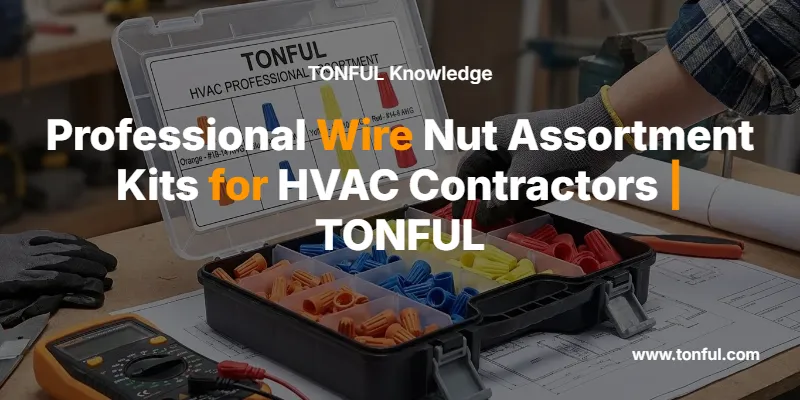
For HVAC contractors and electrical professionals, time on the job site is currency. Nothing erodes profitability faster than a technician searching through a disorganized truck for a specific connector while a client waits without air conditioning. A well-structured Wire Nut Assortment strategy is not just about tidiness; it is a critical component of operational efficiency and inventory management.
As a leading manufacturer of terminals and connectors, TONFUL understands that the difference between a routine service call and a frustrating delay often lies in having the right component at hand. This guide explores how professional wire nut assortment cases can streamline your HVAC operations, ensure code compliance, and improve your bottom line.

Why Wire Nut Assortment Cases Matter for HVAC Professionals
In the high-stakes environment of HVAC repair and installation, inventory organization directly impacts service quality. A disorganized van leads to “truck stock” gaps, where technicians run out of essential consumables like 14 AWG connectors or high-temperature nuts required for furnace wiring.
Implementing a standardized Wire Nut Assortment Case system offers three primary engineering and operational benefits:
- Rapid Identification: Transparent, compartmentalized cases allow technicians to visually verify stock levels instantly, preventing the “empty box” surprise at a job site.
- Environmental Protection: Loose wire nuts in a tool bag can collect dust, drywall debris, or moisture, compromising the internal spring’s conductivity. A dedicated case protects these critical connections.
- Code Compliance: HVAC systems require various connector types—from standard twist-ons for thermostats to waterproof connectors for outdoor condensers. An assortment ensures the correct rated connector is always available, rather than a technician forcing an improper fit.
Types of Wire Nuts Used in HVAC Applications
HVAC systems are unique because they involve a mix of low-voltage control wiring (24V) and line-voltage power circuits (120V/240V), often in harsh environments. A comprehensive assorted box should contain the following categories:
1. Standard Twist-On Connectors (Color-Coded)
These are the workhorses of indoor wiring. They use a standardized color code to indicate wire gauge capacity.
- Blue/Gray: For small gauge control wires (22-16 AWG).
- Orange: Common for lighting and fan controls (18-14 AWG).
- Yellow/Red: For main power feeds and compressor hookups (14-10 AWG).

2. High-Temperature Wire Nuts
Furnace compartments and heating elements generate significant ambient heat. Standard thermoplastic shells may soften or melt. High-temperature wire nuts, often black or dark brown, are molded from specialized thermoplastics or ceramics rated for 150°C (302°F) or higher, ensuring HVAC wiring safety.
3. Waterproof Wire Nuts
For outdoor condenser units, heat pumps, and rooftop package units, moisture ingress is a primary failure mode. Waterproof wire nuts feature a silicone sealant pre-filled inside the shell. When the wire is twisted in, the sealant encapsulates the splice, preventing corrosion and short circuits.
Key Features of Professional Wire Nut Assortment Cases
Not all organizers are created equal. When selecting an assortment case for fleet use, look for these industrial-grade features:
- Impact-Resistant Polypropylene Body: HVAC environments are rough. Cases must withstand drops and heavy tool bags.
- Adjustable Dividers: Your inventory needs change. The ability to resize compartments allows you to stock more high-use items (like Red or Yellow nuts) and fewer specialty items.
- Secure Locking Latches: To prevent spillage during transport.
- Chemical Resistance: The case material should resist degradation from refrigerant oils and cleaning solvents.

How to Organize Your Wire Nut Inventory Effectively
Effective organization goes beyond just throwing parts into a bin. Adopting a “5S” approach (Sort, Set in order, Shine, Standardize, Sustain) can revolutionize your van stock.
- Zone by Voltage: Keep low-voltage (thermostat) connectors separate from line-voltage connectors to prevent dangerous mix-ups.
- Labeling: Use clear labels on the lid interior mapping the compartment contents. This aids in rapid restocking.
- The “Min/Max” System: Mark a “minimum” fill line on the bins. When the level drops below this line, it triggers a reorder.
- Dedicated Waterproof Section: Always segregate silicone-filled connectors. If the silicone leaks due to extreme heat storage, it won’t contaminate standard dry connectors.
Best Practices for Wire Nut Selection and Installation
Even the best inventory system fails if the installation is flawed. As engineers, we must focus on the mechanical and electrical integrity of the connection.
Proper Sizing and Stripping
Using a wire nut that is too large for the wire combination is a leading cause of arcing and heat buildup. Conversely, overcrowding a small nut can crack the shell. Refer to how to choose waterproof wire nuts for specific sizing guides on outdoor applications.
Installation Steps:
- Strip wires to the manufacturer’s recommended length (typically 1/2″ to 3/4″).
- Align conductor ends evenly. Pre-twisting is optional for some brands but recommended for vibration-heavy HVAC environments.
- Twist the connector clockwise until the wires wind together outside the nut (visible twisting of the insulation).
- Perform a “pull test” on each individual wire to ensure security.

Managing Voltage Drop
In long runs or high-amperage compressor circuits, poor connections add resistance. A loose wire nut acts as a resistor, creating heat and voltage drop. This is often misunderstood; for a deep dive, read our engineering guide on the wire nut voltage drop myth.
Troubleshooting Common Issues
If you encounter intermittent power issues or melted connectors, it is often due to reusing old wire nuts or improper torque. Review common waterproof wire nut problems to diagnose field failures effectively.

Cost-Benefit Analysis: Assortment Cases vs. Individual Purchases
Is it worth buying a pre-made assortment case versus buying bulk bags? For most contractors, the assortment case yields a higher ROI through labor savings.
| Feature | Bulk Bags (Individual SKUs) | Professional Assortment Case |
|---|---|---|
| Initial Cost | Lower per unit | Higher initial investment |
| Inventory Visibility | Low (Opaque bags hidden in bins) | High (Transparent, single view) |
| Restocking Speed | Slow (Must check multiple locations) | Fast (Glance and scan) |
| Waste | High (Spillage, lost loose nuts) | Low (Contained and organized) |
| Technician Efficiency | Variable (Search time required) | High (Instant access) |
The Verdict: While bulk bags are excellent for shop inventory, the Assortment Case is superior for mobile service vehicles. It reduces the “search time” billable loss, which can amount to thousands of dollars annually across a fleet.
Technical Comparison: Standard HVAC Wire Nuts
Understanding the specifications of the components in your assortment is vital.
| Color Code | Wire Range (AWG) | Min Combination | Max Combination | Typical HVAC Use |
|---|---|---|---|---|
| Gray | 22 – 16 | 2x #22 | 2x #16 | Thermostat wiring, sensors |
| Blue | 22 – 14 | 3x #22 | 3x #16 | Control boards, fan relays |
| Orange | 22 – 14 | 2x #18 | 4x #16 | Light fixtures, capacitors |
| Yellow | 18 – 10 | 2x #18 | 3x #12 | Blower motors, line voltage |
| Red | 18 – 8 | 2x #14 | 4x #10 | Compressor feeds, disconnects |
FAQ: Wire Nut Assortment for HVAC
Q1: Can I reuse wire nuts found in my assortment case?
A: Generally, no. Once a wire nut has been torqued onto wires, the internal square wire spring expands and deforms to bite into the copper. Reusing it may result in a loose connection. Always use a new connector from your assortment.
Q2: Why do I need waterproof wire nuts for outdoor HVAC units?
A: Standard wire nuts are not sealed. Rain, condensation, and humidity can enter the shell, causing copper corrosion and eventual circuit failure. Waterproof nuts are filled with silicone to prevent this.
Q3: Can I use standard wire nuts for aluminum wire repairs?
A: No. Standard wire nuts in general assortments are typically rated for Copper-to-Copper connections only. Aluminum wire requires specialized purple wire nuts containing antioxidant compound to prevent galvanic corrosion.
Q4: How do I know if a wire nut is high-temperature rated?
A: High-temp nuts are usually black or dark brown and will have a temperature rating stamped on the packaging or the nut itself (e.g., 150°C). Standard thermoplastic nuts are typically rated for 105°C.
Q5: What is the most common wire nut size for residential HVAC?
A: The Orange and Yellow sizes are the most versatile for residential systems, covering the range from thermostat control wires up to most 15-20 amp power circuits.
Conclusion
Organizing your inventory with a professional Wire Nut Assortment Case is a hallmark of a disciplined, efficient HVAC contractor. It ensures that whether you are wiring a delicate 24V thermostat or a robust 240V compressor, the correct, safe, and reliable connector is immediately at hand.
By investing in quality organization and adhering to best practices for selection and installation, you protect your equipment, your customers, and your reputation.
Ready to upgrade your fleet’s efficiency? Explore TONFUL’s range of professional electrical solutions and discover why leading contractors trust us for their connectivity needs.