
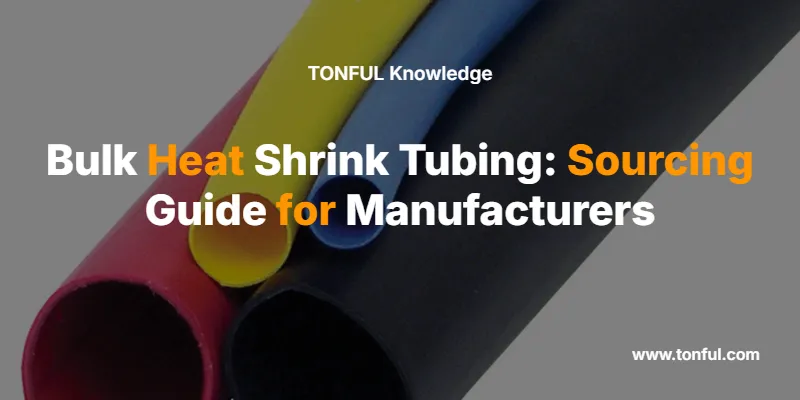
Heat shrink tubing has become an indispensable component in wire harness manufacturing, providing critical insulation, environmental protection, and mechanical strain relief for electrical assemblies. For wire harness manufacturers operating at scale, sourcing bulk heat shrink tubing requires careful consideration of material properties, quality standards, supplier capabilities, and cost-efficiency. This comprehensive guide addresses the key factors that procurement managers and engineering teams must evaluate when selecting bulk heat shrink tubing suppliers.
Understanding Heat Shrink Tubing Fundamentals
Heat shrink tubing is a thermoplastic material that has been mechanically expanded during manufacturing and then cross-linked through radiation or chemical processes. When heat is applied, the tubing returns to its original smaller diameter, creating a tight protective seal around wires, cables, terminals, and connectors. This shrinking mechanism provides electrical insulation, moisture protection, abrasion resistance, and strain relief—all critical functions in automotive, aerospace, industrial, and consumer electronics applications.
The manufacturing process involves extruding polymer materials into tubes, expanding them at elevated temperatures, and then rapidly cooling them to “freeze” the expanded state. This cross-linking creates molecular memory within the material, allowing it to recover its original dimensions when reheated. Understanding this fundamental process helps manufacturers appreciate why material selection and quality control are paramount in bulk sourcing decisions.

Material Types: Polyolefin vs. PVC Heat Shrink Tubing
The two dominant materials in bulk heat shrink tubing are polyolefin and polyvinyl chloride (PVC), each offering distinct advantages for different wire harness applications.
Polyolefin Heat Shrink Tubing
Polyolefin is the most widely used material for heat shrink tubing in demanding applications. It offers superior temperature resistance, typically rated for continuous operation from -55°C to +135°C, with some formulations extending to +150°C. Polyolefin tubing exhibits excellent chemical resistance, flexibility, and flame retardancy, making it ideal for automotive electrical connectors and under-hood wire harness applications.
The cross-linked polyolefin structure provides outstanding mechanical properties, including high tensile strength and abrasion resistance. However, standard polyolefin formulations are vulnerable to UV degradation—only black polyolefin contains sufficient carbon black to provide UV resistance. For wire harnesses exposed to sunlight or outdoor environments, manufacturers should specify UV-stabilized formulations or consider alternative materials.
PVC Heat Shrink Tubing
PVC heat shrink tubing offers a cost-effective alternative for applications with less demanding environmental requirements. It typically operates within a narrower temperature range (-55°C to +105°C) but provides excellent abrasion resistance and inherent UV stability across all colors. PVC tubing is commonly used in interior automotive applications, instrument panels, and consumer electronics where extreme temperatures are not encountered.
The primary trade-off with PVC is its reduced flexibility at low temperatures and lower heat resistance compared to polyolefin. Additionally, PVC contains chlorine, which may release hydrochloric acid when burned—a consideration for applications with stringent fire safety requirements. For detailed comparisons, refer to our article on polyolefin vs. PVC heat shrink tubing.
| Property | Polyolefin | PVC |
|---|---|---|
| Operating Temperature Range | -55°C to +135°C (up to +150°C) | -55°C to +105°C |
| Shrink Temperature | 90-120°C (194-248°F) | 70-100°C (158-212°F) |
| UV Resistance | Poor (except black) | Excellent (all colors) |
| Flame Retardancy | Excellent (self-extinguishing) | Good (may release HCl) |
| Chemical Resistance | Excellent (oils, solvents, acids) | Good (limited solvent resistance) |
| Flexibility | Superior (maintains at low temp) | Reduced at low temperatures |
| Abrasion Resistance | Good | Excellent |
| Cost | Higher | Lower |
| Typical Applications | Automotive engine compartment, aerospace, industrial | Interior automotive, consumer electronics, low-temp applications |

Critical Specification Parameters
Shrink Ratio Selection
Shrink ratio represents the relationship between the tubing’s expanded diameter and its fully recovered diameter. Common ratios include 2:1, 3:1, and 4:1, with each serving specific application requirements.
2:1 Shrink Ratio: The most economical option, suitable for standard wire protection where the substrate diameter is relatively consistent. A 2:1 ratio means 12mm tubing will shrink to 6mm minimum diameter. This ratio works well for single-wire insulation and simple harness bundling.
3:1 Shrink Ratio: Provides greater flexibility for covering irregular shapes, connectors, and components with varying diameters. The increased shrink range allows one tubing size to accommodate a broader range of substrate dimensions, reducing inventory complexity. This ratio is preferred for automotive connector applications and splice protection.
4:1 Shrink Ratio: Offers maximum versatility for complex geometries and situations where precise substrate dimensions are unknown during assembly. While more expensive, 4:1 tubing significantly reduces the number of sizes required in inventory. It’s particularly valuable for repair applications and aftermarket wire harness kits.
For detailed guidance on selecting appropriate ratios, see our article on understanding heat shrink tubing ratios.
Wall Thickness Considerations
Heat shrink tubing is available in thin-wall, medium-wall, and heavy-wall configurations, each providing different levels of mechanical protection and electrical insulation.
Thin-Wall Tubing: Typically 0.2-0.3mm wall thickness, ideal for space-constrained applications where minimal bulk is critical. Commonly used in consumer electronics and densely packed wire harnesses.
Medium-Wall Tubing: Standard 0.4-0.6mm thickness provides balanced protection for most automotive and industrial applications. This represents the optimal cost-performance ratio for general wire harness manufacturing.
Heavy-Wall Tubing: 0.8-1.5mm thickness offers maximum mechanical protection and electrical insulation. Essential for high-voltage applications, harsh environments, and situations requiring superior abrasion resistance. See our guide on heavy wall heat shrink tubing for underground and extreme-duty applications.

Adhesive-Lined vs. Non-Adhesive Tubing
Single-Wall (Non-Adhesive) Tubing: Consists of a single layer of heat-shrinkable polymer. Suitable for dry environments where moisture ingress is not a concern. More economical and easier to remove if rework is required.
Dual-Wall (Adhesive-Lined) Tubing: Features an inner layer of hot-melt adhesive that melts during the shrinking process, creating a waterproof seal. Essential for marine-grade applications, outdoor wire harnesses, and any environment where moisture protection is critical. The adhesive also provides superior strain relief and vibration resistance.
For wire harness manufacturers serving automotive OEMs, dual-wall tubing is often specified for underbody harnesses, engine compartment applications, and any circuits exposed to washing or weather. The additional cost is justified by significantly improved reliability and reduced warranty claims.
Quality Standards and Certifications
Industry Standards Compliance
Professional wire harness manufacturers must source bulk heat shrink tubing that meets relevant industry standards:
- UL 224: The primary standard for extruded insulating tubing in North America, covering electrical, physical, and flame resistance properties. UL-recognized tubing ensures compliance with electrical codes and OEM specifications.
- MIL-DTL-23053: Military specification covering multiple classes of heat shrink tubing for aerospace and defense applications. Classes range from general-purpose (Class 1) to high-temperature, fluid-resistant formulations (Class 7).
- SAE Standards: Automotive-specific standards including SAE AS23053 for aerospace wire harness applications. These specifications define performance requirements for temperature cycling, fluid resistance, and flame propagation.
- ISO 9001 / IATF 16949: While not product standards, these quality management system certifications indicate a supplier’s commitment to consistent manufacturing processes and continuous improvement. For automotive wire harness applications, IATF 16949 certification is often mandatory.
- RoHS and REACH Compliance: European regulations restricting hazardous substances. Essential for manufacturers serving global markets or automotive OEMs with worldwide operations.
TONFUL Electric maintains comprehensive certifications and produces heat shrink terminals and tubing that meet international quality standards, ensuring our bulk products integrate seamlessly into certified wire harness manufacturing processes.
| Standard | Application Area | Key Requirements | Typical Use Cases |
|---|---|---|---|
| UL 224 | General electrical | Dielectric strength, flame resistance, physical properties | North American electrical assemblies |
| MIL-DTL-23053 | Military/Aerospace | Temperature extremes, fluid resistance, flame retardancy | Defense, aviation wire harnesses |
| SAE AS23053 | Aerospace | High reliability, traceability, performance consistency | Aircraft electrical systems |
| AMS-DTL-23053/5 | Aerospace | Flexible, flame-resistant, -55°C to +135°C operation | Commercial and military aircraft |
| ISO 6722 | Automotive | Abrasion, temperature, chemical resistance for vehicle wiring | Automotive wire harness assemblies |
| RoHS/REACH | Consumer/Automotive | Restriction of hazardous substances | EU market compliance |
Testing and Quality Assurance
When sourcing bulk heat shrink tubing, manufacturers should verify that suppliers conduct comprehensive testing:
- Dimensional Verification: Expanded diameter, recovered diameter, wall thickness, and shrink ratio confirmation through statistical sampling.
- Electrical Testing: Dielectric strength, insulation resistance, and voltage withstand testing to ensure electrical safety margins.
- Mechanical Testing: Tensile strength, elongation, and flexibility testing across the operating temperature range.
- Environmental Testing: Accelerated aging, thermal cycling, humidity resistance, and chemical exposure testing to predict long-term performance.
- Flame Testing: Vertical and horizontal flame tests per UL 224 or equivalent standards to verify flame retardancy claims.
Reputable suppliers provide certificates of conformance (C of C) or test reports with each bulk shipment, enabling traceability and quality documentation for ISO/IATF audits.

Bulk Sourcing Considerations
Packaging and Delivery Formats
Bulk heat shrink tubing is available in several packaging formats, each suited to different manufacturing workflows:
- Continuous Spools: Large reels containing 100-500 meters of tubing, ideal for automated cut-to-length systems. Reduces material handling and minimizes waste. Standard for high-volume production lines.
- Pre-Cut Lengths: Tubing cut to specified lengths and packaged in bags or boxes. Eliminates cutting operations but reduces flexibility and typically increases per-meter cost. Suitable for assembly operations without automated cutting equipment.
- Custom Printing: Many suppliers offer custom printing services for identification, part numbers, or branding. Printed tubing aids in assembly verification and quality control but requires minimum order quantities.
- Assortment Kits: For repair operations or low-volume production, heat shrink tubing assortment boxes containing multiple sizes and colors provide flexibility without large inventory commitments.
Minimum Order Quantities and Lead Times
Bulk pricing typically requires minimum order quantities (MOQs) that vary by supplier and product specification:
- Standard Products: Common sizes in polyolefin or PVC may have MOQs as low as 500-1,000 meters per size/color combination. Lead times of 2-4 weeks are typical for stock items.
- Custom Specifications: Non-standard colors, wall thicknesses, or adhesive formulations often require MOQs of 5,000-10,000 meters with lead times extending to 8-12 weeks.
- Strategic Inventory Planning: Wire harness manufacturers should analyze historical usage patterns and forecast production volumes to optimize order quantities. Balancing inventory carrying costs against volume discounts and supply chain reliability is critical for cost-effective operations.
Cost Optimization Strategies
- Standardization: Reducing the number of tubing sizes and types in your bill of materials significantly lowers inventory costs and simplifies procurement. Consider using 3:1 ratio tubing to consolidate multiple 2:1 sizes.
- Volume Consolidation: Combining orders across multiple product lines or manufacturing facilities to reach higher volume tiers can yield 15-30% cost reductions.
- Supplier Partnerships: Establishing long-term agreements with qualified suppliers provides price stability, priority allocation during shortages, and access to technical support. TONFUL Electric offers partnership programs for high-volume wire harness manufacturers.
- Total Cost of Ownership: Evaluate suppliers based on total cost, not just unit price. Consider quality consistency, on-time delivery performance, technical support, and the cost of quality issues or production disruptions.
Application-Specific Selection Guide
Automotive Wire Harness Applications
Automotive applications demand heat shrink tubing that withstands extreme temperature cycling, exposure to automotive fluids (oils, coolants, brake fluid), vibration, and abrasion. High-temperature automotive heat shrink tubing formulations rated to +150°C or higher are essential for engine compartment harnesses.
- Engine Compartment: Specify polyolefin with 3:1 or 4:1 shrink ratio, dual-wall construction, and resistance to petroleum products. Black color provides UV resistance for underhood exposure.
- Interior Harnesses: PVC or polyolefin thin-wall tubing provides cost-effective protection for instrument panel and door harness applications where temperature extremes are minimal.
- Underbody/Chassis: Heavy-wall dual-wall polyolefin with superior abrasion resistance protects harnesses from road debris, salt spray, and moisture. Consider our waterproof wire connectors for complementary environmental protection.
Industrial and Heavy Equipment
Industrial wire harnesses face chemical exposure, mechanical stress, and wide temperature ranges. Medium to heavy-wall polyolefin tubing with appropriate chemical resistance provides reliable long-term protection. For applications involving frequent flexing, consider flexible formulations that maintain properties through repeated bending cycles.
Marine and Outdoor Applications
Marine environments require maximum moisture protection. Dual-wall adhesive-lined tubing is mandatory, with marine-grade formulations offering enhanced salt water resistance. Pair with marine-grade terminals and connectors for complete environmental sealing.

Supplier Evaluation Criteria
Manufacturing Capabilities
When selecting a bulk heat shrink tubing supplier, assess their manufacturing infrastructure:
- Production Capacity: Can the supplier meet your current and projected volume requirements without compromising quality or delivery schedules?
- Material Sourcing: Do they control raw material quality through certified suppliers or vertical integration?
- Process Control: What quality management systems are in place? Look for ISO 9001, IATF 16949, or equivalent certifications.
- Customization Capabilities: Can they produce custom formulations, colors, or printed tubing to meet specific application requirements?
Technical Support and Documentation
Leading suppliers provide comprehensive technical support including:
- Application engineering assistance for material selection
- Heat shrink tubing sizing guides and selection tools
- Installation recommendations and equipment specifications
- Failure analysis support when quality issues arise
- Regulatory compliance documentation (RoHS, REACH, UL, etc.)
TONFUL Electric’s technical team works directly with wire harness manufacturers to optimize material selection, troubleshoot installation challenges, and ensure compliance with customer specifications and industry standards.
Supply Chain Reliability
In today’s volatile supply chain environment, supplier reliability is paramount:
- Geographic Diversification: Does the supplier have multiple manufacturing locations to mitigate regional disruptions?
- Inventory Management: Do they maintain strategic inventory of common products to buffer against supply chain delays?
- Communication and Transparency: How proactively do they communicate about potential delays, quality issues, or specification changes?
- Financial Stability: Is the supplier financially sound with a track record of long-term stability?
Installation Best Practices for Bulk Operations
Automated vs. Manual Application
Automated Heat Shrink Systems: High-volume wire harness manufacturers benefit from automated heat shrink tunnels or ovens that provide consistent heating and cycle time control. These systems ensure uniform shrinkage and eliminate operator variability.
Heat Gun Application: Lower-volume operations or complex assemblies may require manual heat gun application. Proper training on heat gun distance, movement patterns, and temperature settings is essential to avoid overheating or incomplete shrinkage.
Infrared Heating: Some manufacturers employ infrared heating systems that provide rapid, controlled heating without air movement, ideal for sensitive components.
Common Installation Mistakes
Understanding common errors helps prevent quality issues:
- Insufficient Heating: Incomplete shrinkage leaves gaps and reduces protection. Ensure tubing is fully recovered with adhesive (if present) fully melted and visible at tubing ends.
- Overheating: Excessive heat causes material degradation, discoloration, and potential splitting. See our article on why heat shrink tubing splits for detailed troubleshooting.
- Incorrect Sizing: Tubing too large won’t shrink adequately; tubing too small won’t fit over connectors or components. Always verify shrink ratio and dimensions before bulk ordering.
- Contaminated Surfaces: Oil, grease, or moisture on wires prevents proper adhesion in dual-wall tubing. Clean substrates before application.
Emerging Trends and Innovations
High-Performance Materials
Advanced formulations are expanding heat shrink tubing capabilities:
- PVDF and Fluoropolymers: Exceptional chemical resistance and temperature performance (up to +175°C continuous) for demanding aerospace and chemical processing applications.
- Halogen-Free Formulations: Low-smoke, zero-halogen materials meet increasingly stringent fire safety requirements for rail, marine, and building applications.
- Conductive and EMI Shielding: Specialized tubing with conductive coatings or embedded shielding provides electromagnetic interference protection for sensitive electronics.
Sustainability Initiatives
Environmental considerations are influencing material selection:
- Recyclable Materials: Development of heat shrink tubing from recyclable polymers to reduce environmental impact.
- Reduced Packaging: Bulk spools and returnable packaging systems minimize waste in high-volume operations.
- Energy-Efficient Processing: Lower shrink temperature formulations reduce energy consumption during installation.
Smart Manufacturing Integration
- RFID-Tagged Spools: Inventory management systems using RFID technology track material usage, lot numbers, and expiration dates automatically.
- Digital Documentation: QR codes on packaging link to digital certificates of conformance, technical data sheets, and installation guides.
- Traceability Systems: Batch coding and serialization enable complete traceability from raw material through finished wire harness assembly.
FAQ: Bulk Heat Shrink Tubing Sourcing
Q: What is the typical shelf life of bulk heat shrink tubing?
A: Properly stored heat shrink tubing has a shelf life of 3-5 years for polyolefin and 2-3 years for PVC. Store in a cool, dry environment away from direct sunlight and ozone sources. Adhesive-lined tubing may have shorter shelf life due to adhesive aging.
Q: Can heat shrink tubing be removed and reused?
A: Once shrunk, heat shrink tubing cannot be effectively reused. The cross-linked molecular structure has recovered to its original state and will not re-expand. For rework situations, the tubing must be cut away and replaced with new material.
Q: How do I determine the correct size heat shrink tubing for my application?
A: Measure the largest diameter of the substrate (connector, splice, or wire bundle). Select tubing with an expanded diameter 20-30% larger than this measurement. Verify the recovered diameter is smaller than the smallest substrate diameter. Consult our heat shrink tubing sizing guide for detailed selection criteria.
Q: What’s the difference between standard and marine-grade heat shrink tubing?
A: Marine-grade tubing features enhanced adhesive formulations with superior moisture resistance, higher salt spray test performance, and often thicker walls for increased durability. It’s specifically engineered for continuous immersion or exposure to marine environments. See our marine-grade heat shrink tubing guide for complete specifications.
Q: Is custom printing available for bulk orders?
A: Yes, most manufacturers including TONFUL Electric offer custom printed heat shrink tubing for identification, part numbers, or branding. Minimum order quantities typically start at 5,000-10,000 meters depending on complexity. Lead times are 8-12 weeks for custom printing.
Q: How does heat shrink tubing compare to electrical tape for wire harness protection?
A: Heat shrink tubing provides superior mechanical protection, moisture resistance, and professional appearance compared to electrical tape. While tape is suitable for temporary repairs, heat shrink offers permanent protection with better abrasion resistance and no adhesive degradation over time. For detailed comparison, see our article on electrical tape vs. heat shrink tubing.
Conclusion: Strategic Sourcing for Manufacturing Excellence
Sourcing bulk heat shrink tubing requires balancing technical performance, quality consistency, cost efficiency, and supply chain reliability. Wire harness manufacturers must evaluate material properties against specific application requirements, verify supplier capabilities and certifications, and establish partnerships that support long-term manufacturing excellence.
TONFUL Electric specializes in providing high-quality bulk heat shrink tubing, terminals and connectors, and electrical tools to wire harness manufacturers worldwide. Our ISO-certified manufacturing processes, comprehensive technical support, and commitment to quality ensure that your production operations have access to reliable, specification-compliant materials.
For technical specifications, bulk pricing inquiries, or application engineering support, contact TONFUL Electric’s B2B sales team. Our experts are ready to help optimize your heat shrink tubing selection and streamline your wire harness manufacturing operations.
Related Products: