
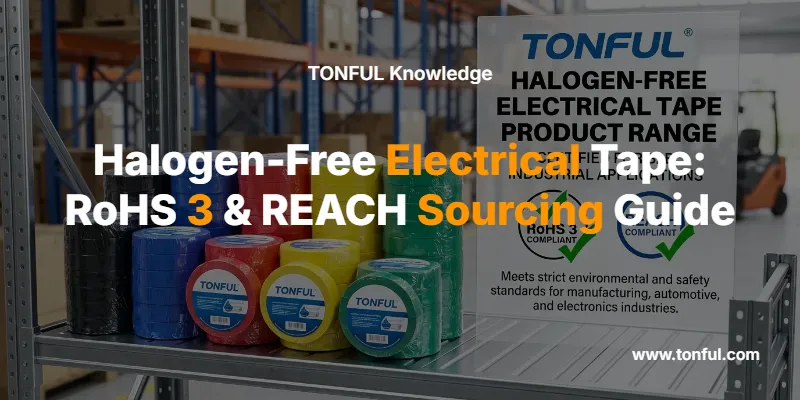
As global environmental regulations tighten, B2B procurement managers and electrical engineers face mounting pressure to source compliant materials. Halogen-free electrical tape has emerged as a critical component for manufacturers seeking to meet RoHS 3 and REACH directives while maintaining fire safety standards. This comprehensive guide examines the regulatory landscape, technical specifications, and sourcing strategies for halogen-free electrical tapes in 2026.
Understanding RoHS 3 and REACH: Why Halogen-Free Matters
The European Union’s RoHS 3 directive (2015/863/EU) restricts ten hazardous substances in electrical and electronic equipment, including polybrominated biphenyls (PBB) and polybrominated diphenyl ethers (PBDE)—both halogenated flame retardants. However, compliance with RoHS does not automatically guarantee halogen-free status, as the directive addresses only specific brominated compounds rather than all halogens.
REACH (Registration, Evaluation, Authorization, and Restriction of Chemicals) casts a wider net, currently monitoring 197 Substances of Very High Concern (SVHC). While RoHS focuses on substances within electrical components, REACH controls all chemicals used throughout manufacturing, including adhesives, coatings, and backing materials in electrical tape.
Critical Distinction: Halogen-free products may not comply with RoHS if they contain other restricted substances, and conversely, RoHS-compliant products may still contain halogens beyond PBB/PBDE. Procurement teams must verify both certifications independently.

IEC Standards for Halogen-Free Electrical Tapes
The International Electrotechnical Commission (IEC) provides the technical framework for halogen-free certification. Understanding these standards is essential for specification and procurement.
IEC 61249-2-21: Defining Halogen-Free
This standard establishes quantitative thresholds for halogen-free materials:
| Parameter | Maximum Limit | Testing Method |
|---|---|---|
| Chlorine (Cl) content | ≤ 900 ppm | IEC 61249-2-21 |
| Bromine (Br) content | ≤ 900 ppm | IEC 61249-2-21 |
| Total halogens (Cl + Br) | ≤ 1,500 ppm | IEC 61249-2-21 |
| Fluorine (F) | Typically excluded from restriction | Material-specific |
IEC 60754: Fire Safety Testing
This three-part standard measures toxic gas emissions during combustion—critical for occupied buildings and transportation applications:
IEC 60754-1: Determines halogen acid gas content during combustion. Compliant materials must produce < 5 mg/g of hydrohalic acid.
IEC 60754-2: Measures acidity and conductivity of combustion gases:
- pH value: ≥ 4.3 (non-acidic)
- Conductivity: ≤ 10 µS/mm
IEC 60754-3: Quantifies low halogen content via ion chromatography for verification.

IEC 61034-2: Smoke Density Requirements
Low Smoke Zero Halogen (LSZH) tapes must maintain light transmittance > 60% during combustion in a 3×3 meter test chamber—compared to ~10% for standard PVC tapes. This ensures visibility for emergency evacuation and firefighting operations.
Material Comparison: PVC vs. Halogen-Free Electrical Tapes
Understanding material properties helps engineers select appropriate tapes for specific applications.
| Property | Standard PVC Tape | Halogen-Free Tape (EPDM/EVA) |
|---|---|---|
| Flame Retardancy | Self-extinguishing (chlorine content) | Requires mineral fillers (Mg(OH)₂, Al(OH)₃) |
| Smoke Generation | High opacity, black smoke | Low smoke, >60% light transmission |
| Toxic Gas Release | HCl gas (corrosive to electronics) | Minimal acid gas (pH ≥ 4.3) |
| Temperature Range | -10°C to +80°C | -40°C to +105°C |
| Electrical Resistivity | Excellent (>10¹⁴ Ω·cm) | Excellent (>10¹³ Ω·cm) |
| Moisture Resistance | Good | Superior (EPDM-based) |
| UV Resistance | Moderate | Requires UV stabilizers for outdoor use |
| Cost (relative) | Baseline (1.0×) | 1.3-1.8× |
| RoHS 3 Compliance | Possible with formulation | Inherent |
| REACH Compliance | Requires SVHC verification | Typically compliant |
Key Insight: While PVC tapes achieve flame retardancy through chlorine content, they generate corrosive hydrogen chloride gas during combustion—damaging to server rooms, control panels, and electronic assemblies. Halogen-free alternatives use mineral-based flame retardants like magnesium hydroxide, which releases only water vapor when heated.

Halogen-Free Tape Materials and Manufacturing
Modern halogen-free electrical tapes utilize advanced polymer formulations to balance flame retardancy, flexibility, and electrical performance.
Primary Polymer Systems
EPDM (Ethylene-Propylene-Diene Monomer): Terpolymer offering excellent heat resistance, ozone resistance, and weather resistance. EPDM provides superior electrical resistivity and responds well to high filler loadings of flame retardants. Typical concentration: 60-100% of polymer blend.
EVA (Ethylene-Vinyl Acetate): Copolymer contributing flexibility and adhesion properties. Often blended with EPDM at 0-40% concentration to optimize tensile strength and processing characteristics.
Polymer Blends: Advanced formulations combine EPDM and EVA with compatibilizers (maleic anhydride grafted polymers) to achieve synergistic properties.
Flame Retardant Systems
Halogen-free tapes achieve UL 510 and IEC 60454 flame retardancy through mineral fillers:
- Magnesium Hydroxide [Mg(OH)₂]: Decomposes at 300-330°C, releasing water vapor and forming protective magnesium oxide layer
- Aluminum Trihydrate [Al(OH)₃]: Lower decomposition temperature (180-200°C), suitable for lower-temperature applications
- Hydromagnesite [3MgCO₃·Mg(OH)₂·3H₂O]: Natural mineral providing fire retardancy in EVA, PE, and EPDM compounds
These fillers typically comprise 10-25% of the formulation by weight.

Application-Specific Selection Guide
Different environments demand specific tape characteristics beyond basic compliance.
| Application | Recommended Type | Key Requirements | Relevant Standards |
|---|---|---|---|
| Data Centers & Server Rooms | LSZH EPDM tape | Low smoke, non-corrosive gases, high dielectric strength | IEC 60754-2, IEC 61034-2 |
| Automotive Wiring Harness | High-temp halogen-free | -40°C to +125°C range, vibration resistance, fuel/oil resistance | ISO 6722, RoHS 3 |
| Marine & Offshore | UV-resistant EPDM | Salt spray resistance (ASTM B117), moisture seal, UV stabilizers | IEC 60092-350 |
| Rail & Transportation | Fire-rated LSZH | EN 45545 compliance, low toxicity index, flame spread rating | EN 45545, IEC 60754 |
| Solar Installations | UV-stabilized halogen-free | Outdoor weathering, temperature cycling, ozone resistance | UL 510, IEC 60454 |
| Consumer Electronics | General purpose halogen-free | RoHS 3 + REACH compliance, cost-effective, good conformability | IEC 61249-2-21 |
For detailed guidance on automotive electrical connectors and wire harness assemblies, proper tape selection ensures long-term reliability in demanding environments.

Sourcing Halogen-Free Electrical Tapes: B2B Procurement Strategies
Successful procurement requires verification beyond supplier claims. Implement these strategies to ensure genuine compliance.
Certification Verification Checklist
When evaluating suppliers, request and verify:
- Test Reports from Accredited Laboratories: IEC 60754-1/2, IEC 61249-2-21, UL 510 reports with test dates within 12 months
- RoHS 3 Declaration of Conformity: Covering all ten restricted substances with concentration limits
- REACH SVHC Declaration: Confirming < 0.1% by weight of any listed SVHC
- Material Safety Data Sheets (MSDS): Detailing polymer composition and flame retardant systems
- ISO 9001 Quality Management Certification: Ensuring consistent manufacturing processes
- Traceability Documentation: Batch numbers, production dates, and raw material sources
Red Flags in Supplier Claims
Be cautious of suppliers who:
- Claim “halogen-free” without providing IEC 61249-2-21 test data
- Offer prices significantly below market (30%+ lower than established suppliers)
- Cannot provide batch-specific test reports
- Use vague terms like “eco-friendly” without specific compliance documentation
- Lack in-house testing capabilities or third-party laboratory relationships
For comprehensive guidance on import electrical terminals from China, apply similar verification protocols to ensure supply chain integrity.
Cost-Benefit Analysis
While halogen-free tapes typically cost 30-80% more than standard PVC alternatives, consider total cost of ownership:
Direct Costs:
- Material cost premium: +$0.15-0.45 per roll (industrial quantities)
- Certification documentation: $2,000-5,000 annual verification costs
Avoided Costs:
- Regulatory non-compliance penalties: €100,000+ per violation (EU)
- Product recalls and rework: 5-15% of production value
- Market access restrictions: Loss of EU/UK/California markets
- Reputation damage: Immeasurable long-term impact
Strategic Benefits:
- Future-proofing against tightening regulations
- Access to environmentally-conscious customer segments
- Enhanced corporate sustainability credentials
- Reduced liability in fire safety incidents
Supplier Qualification Process
TONFUL Electric recommends a structured supplier evaluation:
Phase 1 – Documentation Review (2-3 weeks):
- Verify business licenses and manufacturing permits
- Review third-party audit reports (ISO 9001, ISO 14001)
- Confirm production capacity and lead times
Phase 2 – Sample Testing (4-6 weeks):
- Order samples from multiple batches
- Conduct independent laboratory testing for IEC compliance
- Perform application-specific performance tests
Phase 3 – Factory Audit (1-2 weeks):
- Inspect manufacturing equipment and quality control systems
- Review raw material sourcing and traceability procedures
- Assess environmental management practices
Phase 4 – Pilot Production (8-12 weeks):
- Place limited production order (10-20% of annual volume)
- Monitor delivery performance and quality consistency
- Evaluate technical support responsiveness
For OEM vs. ODM automotive fuse manufacturing decisions, similar qualification protocols ensure reliable partnerships.
TONFUL Electric: Your Halogen-Free Compliance Partner
As a leading manufacturer of electrical components and wire harness assemblies, TONFUL Electric maintains comprehensive RoHS 3 and REACH compliance across our product portfolio. Our halogen-free electrical tapes undergo rigorous testing to IEC 61249-2-21 and IEC 60754 standards, with full traceability documentation for every production batch.
Our commitment extends beyond compliance to practical application support. Whether you’re designing automotive wire harness assemblies, specifying marine-grade waterproof connectors, or sourcing heat shrink terminals for industrial applications, our technical team provides application-specific guidance to ensure optimal performance and regulatory compliance.
For procurement managers seeking reliable wholesale waterproof wire nuts or crimp terminal suppliers, TONFUL’s quality assurance processes and transparent documentation streamline your compliance verification workflow.
Frequently Asked Questions (FAQ)
Q: Is halogen-free electrical tape as flame-retardant as standard PVC tape?
A: Yes, when properly formulated with mineral-based flame retardants like magnesium hydroxide, halogen-free tapes meet the same UL 510 and IEC 60454 flame retardancy standards as PVC tapes. The key difference is the combustion byproducts—halogen-free tapes produce non-corrosive, low-smoke emissions compared to the acidic hydrogen chloride gas from PVC.
Q: Does RoHS 3 compliance automatically mean a product is halogen-free?
A: No. RoHS 3 restricts only specific brominated flame retardants (PBB and PBDE) among other hazardous substances. A product can be RoHS-compliant while still containing other halogens like chlorine (common in PVC). Always verify IEC 61249-2-21 certification for true halogen-free status.
Q: What is the typical price premium for halogen-free electrical tape?
A: Halogen-free tapes typically cost 30-80% more than standard PVC alternatives, depending on specifications and order volume. However, this premium is often offset by avoiding compliance penalties, expanding market access, and reducing fire safety liability.
Q: Can halogen-free electrical tape be used outdoors?
A: Standard halogen-free EPDM tapes require UV stabilizers for outdoor applications. Look for products specifically rated for outdoor use with UV resistance specifications. Without proper stabilization, EPDM-based tapes may crack or degrade under prolonged sun exposure.
Q: How do I verify a supplier’s halogen-free claims?
A: Request third-party test reports from accredited laboratories showing IEC 61249-2-21 compliance (Cl ≤ 900 ppm, Br ≤ 900 ppm, total halogens ≤ 1,500 ppm) and IEC 60754-1/2 fire safety test results. Verify test dates are recent (within 12 months) and batch-specific. Consider independent testing of samples before large-scale procurement.
Q: What are the main applications where halogen-free tape is mandatory?
A: Halogen-free tapes are increasingly required in data centers, server rooms, rail transportation (EN 45545), marine applications (IEC 60092), and any installation where fire safety codes mandate low-smoke, low-toxicity materials. Many electronics manufacturers also specify halogen-free materials to meet corporate sustainability commitments and access environmentally-conscious markets.
Conclusion: Future-Proofing Your Supply Chain
The transition to halogen-free electrical tapes represents more than regulatory compliance—it’s a strategic investment in supply chain resilience, market access, and corporate responsibility. As RoHS 3 and REACH enforcement intensifies and environmental standards proliferate globally, early adoption positions your organization ahead of regulatory curves and competitive pressures.
Successful implementation requires rigorous supplier qualification, comprehensive documentation verification, and application-specific material selection. By partnering with certified manufacturers like TONFUL Electric who maintain transparent compliance documentation and provide technical application support, procurement teams can navigate this transition confidently while maintaining quality and cost-effectiveness.
The halogen-free imperative is not a temporary trend but a fundamental shift in electrical materials standards. Organizations that embrace this transition today will find themselves better positioned for the increasingly stringent environmental regulations of tomorrow.
For technical specifications, compliance documentation, or application-specific guidance on halogen-free electrical tapes and related electrical tools and terminals, contact TONFUL Electric’s technical support team. Our engineers provide customized solutions for automotive terminals, PCB connectors, and complete wire harness assemblies meeting global compliance standards.