
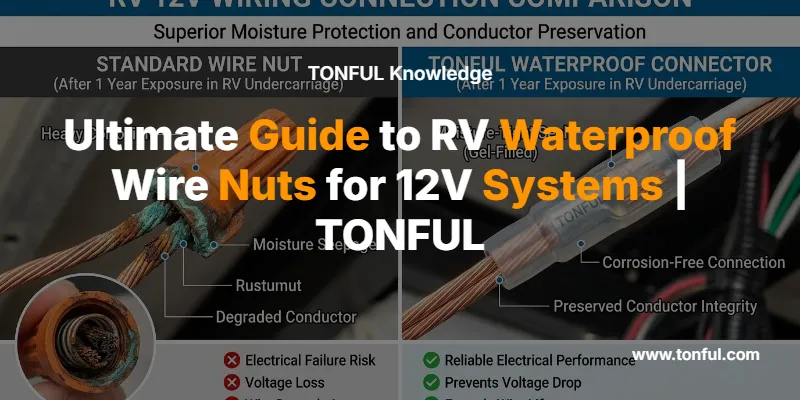
When upgrading your RV’s 12V electrical system, choosing the right waterproof wire connectors can mean the difference between reliable performance and costly failures on the road. Unlike residential wiring, RV 12V wiring connectors face unique challenges: constant vibration, temperature extremes, moisture infiltration, and the mechanical stress of travel. Standard wire nuts simply aren’t designed for these demanding conditions.
This comprehensive guide examines the critical specifications, installation techniques, and selection criteria for waterproof wire nuts in RV and camper 12V systems. Whether you’re a fleet maintenance manager sourcing components for commercial RV operations or a technician performing electrical upgrades, understanding these connectors ensures safe, long-lasting installations that withstand the rigors of mobile environments.
Why Standard Wire Nuts Fail in RV Applications
Traditional twist-on wire connectors were engineered for stationary residential installations with solid copper conductors. RV electrical systems present fundamentally different operating conditions that expose the limitations of standard wire nuts.
Vibration and Mechanical Stress: Road vibration creates micro-movements within wire nut connections. Over time, these movements loosen the mechanical grip on stranded conductors, increasing contact resistance and generating heat. In severe cases, wires can work completely free from the connector, creating open circuits or dangerous arcing conditions.
Moisture Infiltration: RVs encounter rain, humidity, condensation, and occasional water intrusion from roof leaks or plumbing failures. Standard wire nuts provide no environmental sealing. Once moisture enters the connection, corrosion begins immediately, particularly in the presence of dissimilar metals or road salt exposure. Corroded connections exhibit high resistance, leading to voltage drop, heat generation, and eventual failure.
Stranded Wire Compatibility: Most RV wiring uses stranded copper conductors for flexibility. Standard wire nuts are optimized for solid wire and may not grip stranded conductors reliably. Individual strands can break or pull free, reducing the effective conductor cross-section and creating high-resistance connections.
Professional RV technicians recognize these failure modes and specify waterproof wire connectors designed specifically for mobile applications. These connectors incorporate environmental sealing, strain relief, and contact designs optimized for stranded conductors.

Understanding IP Ratings for RV Waterproof Connectors
The Ingress Protection (IP) rating system, defined by IEC 60529, provides standardized classification of environmental protection for electrical enclosures and connectors. For RV applications, understanding IP ratings is essential for specifying appropriate waterproof wire nuts that match your installation environment.
The IP rating consists of two digits: IPXY. The first digit (X) rates protection against solid particles; the second digit (Y) rates protection against water ingress. For RV 12V wiring connectors, the water protection digit is the critical specification.
IP Rating Comparison for RV Applications
| IP Rating | Water Protection Level | Typical RV Applications | Limitations |
|---|---|---|---|
| IP44 | Splash-resistant from any direction | Interior cabin areas near sinks, minimal exposure | Not suitable for direct water spray or submersion |
| IP54 | Limited dust ingress, splash-resistant | Protected interior compartments, under-dash wiring | Cannot withstand hose-down or heavy rain exposure |
| IP65 | Dust-tight, low-pressure water jets | Exterior lighting, engine compartment (protected areas) | Temporary immersion only, not for continuous wet exposure |
| IP67 | Dust-tight, temporary immersion up to 1m for 30 minutes | Underbody wiring, wheel wells, exterior connections | Not rated for permanent submersion or direct burial |
| IP68 | Dust-tight, continuous immersion beyond 1m (manufacturer-specified) | Submersible pumps, direct burial, bilge areas, critical marine-grade connections | Depth and duration vary by manufacturer specification |
For most RV 12V wiring applications, IP67 represents the minimum acceptable standard for exterior and undercarriage connections. This rating ensures the connector can withstand temporary immersion during heavy rain, water crossings, or pressure washing. IP67 vs IP68 waterproof wire nuts differ primarily in their submersion duration and depth ratings.
When to Specify IP68: Applications involving permanent water exposure require IP68-rated connectors. These include fresh water tank level sensor wiring, gray water pump connections, exterior shower connections, and any direct-burial applications where the splice may be continuously exposed to groundwater. Marine RV applications and boats absolutely require IP68 protection due to constant moisture exposure and potential bilge water contact.
The European campervan wiring regulations mandate at least IP44 rating for electrical accessories near water sources, with higher ratings recommended for exterior applications. Understanding these standards helps ensure your RV electrical system meets both safety requirements and long-term reliability expectations.

Critical Specifications for RV 12V Waterproof Wire Nuts
Selecting the appropriate waterproof wire connector requires evaluating multiple technical parameters beyond the IP rating. Professional procurement decisions should consider these specifications to ensure compatibility with your RV electrical system and installation requirements.
Wire Gauge Compatibility and Current Capacity
RV 12V systems typically use wire gauges ranging from 18 AWG (for low-current lighting circuits) to 10 AWG or larger (for high-current inverter and battery connections). Each waterproof wire nut is rated for a specific range of conductor sizes.
Common Wire Gauge Ranges:
- Small connectors: 22-16 AWG (suitable for LED lighting, signal circuits)
- Medium connectors: 16-12 AWG (general-purpose lighting, accessory circuits)
- Large connectors: 12-10 AWG (solar panel connections, battery distribution)
- Heavy-duty connectors: 10-6 AWG (inverter feeds, main battery cables)
Current capacity is directly related to wire gauge and connector contact area. A properly sized connector must handle the circuit’s maximum current without excessive temperature rise. For 12V systems, current draw is significantly higher than equivalent 120V circuits due to Ohm’s Law (P=VI). A 120W load at 12V draws 10 amperes, requiring appropriately sized automotive terminals and connectors.
Temperature Rating and Material Specifications
RV environments expose electrical connections to extreme temperature variations. Engine compartment connections may experience temperatures exceeding 85°C (185°F), while exterior connections in winter climates must remain functional at -40°C (-40°F).
Material Considerations:
- Silicone sealing: Temperature range typically -40°C to +200°C, excellent flexibility retention in cold weather
- Neoprene sealing: Temperature range -40°C to +120°C, good chemical resistance
- EPDM rubber: Temperature range -50°C to +150°C, superior ozone and UV resistance
- Contact materials: Tin-plated copper provides corrosion resistance; some applications require silver-plated or gold-plated terminals for critical connections
TONFUL waterproof wire nuts utilize silicone sealing compounds and tin-plated copper contacts, providing reliable performance across the full temperature range encountered in RV applications.
Voltage Rating and Dielectric Strength
While 12V DC systems operate at low voltage, the connectors must still provide adequate dielectric strength to prevent tracking and leakage currents in wet conditions. Quality waterproof wire nuts are rated for 600V or higher, providing substantial safety margin even though the operating voltage is only 12-14.4V.
This voltage rating becomes particularly important in dual-voltage RV systems where both 12V DC and 120V AC circuits may be routed in proximity. Using connectors with adequate voltage ratings prevents accidental cross-connection hazards during maintenance.
UL and Safety Certifications
Professional-grade waterproof wire connectors should carry relevant safety certifications. UL 486D covers wire connectors for underground use, while UL 467 covers grounding and bonding equipment. Marine applications should specify connectors meeting ABYC (American Boat and Yacht Council) standards for marine electrical systems.
TONFUL waterproof wire nuts are manufactured to meet these safety standards, providing documentation necessary for commercial fleet installations and insurance compliance.

Waterproof Wire Nut Types for Different RV Applications
RV electrical systems encompass diverse applications, each with specific environmental and performance requirements. Understanding the appropriate connector type for each application ensures optimal reliability and simplifies troubleshooting.
Gel-Filled Waterproof Wire Nuts
Gel-filled connectors contain a silicone dielectric compound that displaces air and moisture from the connection cavity. As wires are inserted and the connector is twisted, the gel flows around the conductors, creating a complete environmental seal.
Advantages:
- Excellent moisture exclusion, suitable for direct burial applications
- Self-sealing design requires no additional heat shrink or tape
- Maintains seal integrity even if connector is accidentally loosened
- Transparent or translucent designs allow visual inspection of connection quality
Typical Applications:
- Landscape lighting connections for RV exterior accent lighting
- Underbody lighting installations
- Solar panel junction box connections
- Exterior camera and sensor wiring
Limitations: Gel-filled connectors are typically not reusable. Once the gel is disturbed, the seal integrity is compromised. These connectors work best for permanent installations where future disconnection is unlikely.
Heat-Shrink Waterproof Connectors
Heat-shrink connectors combine a crimp terminal with an adhesive-lined heat-shrink sleeve. When heated with a heat gun, the sleeve shrinks tightly around the connection while the internal adhesive melts and flows, creating a waterproof seal.
Advantages:
- Mechanical crimp connection provides superior vibration resistance
- Dual-wall construction with adhesive provides excellent environmental sealing
- Visual inspection confirms proper heat activation (adhesive visible at sleeve ends)
- Available in butt splice, ring terminal, and spade terminal configurations
Typical Applications:
- Marine wiring applications where maximum reliability is required
- Battery cable terminations
- High-vibration areas (suspension components, engine compartment)
- Permanent connections requiring maximum durability
Limitations: Requires heat gun for installation, making field repairs more challenging. Not reusable; connection must be cut and remade if changes are needed. See our guide on heat shrink terminals for detailed specifications.
Silicone-Sealed Twist-On Connectors
These connectors feature a traditional twist-on design with an integrated silicone sealing cap. The internal spring mechanism grips stranded conductors while the external silicone cap provides environmental protection.
Advantages:
- Familiar installation method for technicians experienced with standard wire nuts
- No special tools required (no crimper or heat gun needed)
- Reusable connections allow for easy troubleshooting and modifications
- Cost-effective for large installations with multiple connection points
Typical Applications:
- Interior lighting upgrades (LED fixture installations)
- Accessory circuit additions (USB charging ports, 12V outlets)
- Control panel wiring
- Low-vibration protected areas
Limitations: While the silicone cap provides good moisture protection, the mechanical connection relies on spring tension. In high-vibration areas, these may not provide the same long-term reliability as crimped connections. Best suited for protected interior locations rather than underbody or engine compartment applications.
Push-In Waterproof Connectors
Modern push-in connectors use a spring-loaded cage mechanism that grips conductors when inserted. Waterproof versions incorporate O-ring seals or silicone gaskets at the wire entry points.
Advantages:
- Extremely fast installation (no twisting or crimping required)
- Consistent connection quality (eliminates installer technique variables)
- Easily reversible for troubleshooting
- Compact design fits in tight spaces
Typical Applications:
- Quick-connect applications for modular RV accessories
- Temporary installations and testing
- Areas requiring frequent disconnection (removable solar panels, portable equipment)
Limitations: Higher cost per connection compared to traditional wire nuts. Some designs may not provide adequate strain relief for mobile applications. Verify vibration resistance specifications before using in high-stress areas.
Installation Best Practices for RV Waterproof Wire Nuts
Proper installation technique is as critical as connector selection. Even the highest-quality waterproof wire nut will fail if incorrectly installed. These professional practices ensure reliable, long-lasting connections in RV 12V systems.
Wire Preparation and Stripping
Strip Length: Each connector specifies a precise strip length, typically 12-15mm for standard wire nuts. Insufficient strip length results in poor contact area and high resistance. Excessive strip length leaves bare conductor exposed outside the connector, creating a corrosion point and potential short circuit hazard.
Use a quality wire stripper with gauge-specific openings to prevent conductor damage. Avoid using knife blades or diagonal cutters, which can nick individual strands and create weak points. For critical connections, inspect stripped wire ends under magnification to verify no strands are cut or damaged.
Conductor Preparation: After stripping, twist stranded conductors clockwise to consolidate individual strands into a tight bundle. This prevents stray strands from escaping the connector during installation. For very fine-stranded wire (such as marine-grade tinned copper), consider using wire ferrules to consolidate strands before inserting into connectors.
Connection Technique
Wire Insertion: Insert all conductors fully into the connector until they bottom out against the internal stop. Partial insertion leaves gaps where moisture can enter and reduces the effective contact area. For gel-filled connectors, ensure wires displace the gel completely—you should see gel squeeze out slightly at the entry point.
Twisting Torque: Apply firm clockwise rotation (typically 3-5 full turns) until you feel definite resistance. The internal spring mechanism must fully engage the conductors. Under-tightening is a common installation error that leads to high-resistance connections and eventual failure.
Pull Test: After installation, perform a firm pull test on each conductor. The wire should not pull free with moderate hand force (approximately 5-10 pounds of tension). If any conductor pulls free, remove the connector and reinstall with a new unit.
Environmental Protection Enhancements
Even with waterproof connectors, additional protection measures improve long-term reliability in harsh RV environments:
Strain Relief: Route wires to avoid tension on the connector. Use cable ties to secure wire bundles to structural members, leaving a small service loop near the connection. This prevents vibration and mechanical stress from transmitting directly to the connection point.
Mounting Orientation: When possible, orient connectors with wire entries facing downward. This prevents water from pooling at the entry point even if the seal is compromised. For underbody installations, mount connectors to the highest practical point to minimize water exposure.
Secondary Protection: In extremely harsh environments (wheel wells, underbody exposed areas), consider enclosing waterproof wire nut connections in a junction box or wrapping with self-fusing silicone tape for additional mechanical protection.
Inspection Access: Route and secure connections to allow future visual inspection without disassembly. Use cable ties with identification tags to mark connection locations for troubleshooting.
Common Installation Mistakes to Avoid
Understanding failure modes helps prevent installation errors:
- Mixing wire gauges: Connecting significantly different wire sizes (e.g., 14 AWG to 18 AWG) in a single connector can result in poor contact on the smaller wire. Use connectors rated for the specific wire size range, or use step-down connectors designed for mixed gauges.
- Reusing gel-filled connectors: Once a gel-filled connector is disturbed, the seal is compromised. Always use a new connector if a connection must be remade.
- Insufficient wire twist: Failing to twist stranded conductors before insertion allows individual strands to escape, reducing contact area and creating potential short circuits.
- Over-stripping conductors: Exposed bare wire outside the connector will corrode rapidly. Follow the manufacturer’s specified strip length precisely.
- Ignoring wire color codes: Maintain consistent color coding throughout your installation. Use red for positive, black for negative, and other colors for specific functions. This prevents dangerous cross-connections during future maintenance.

Troubleshooting and Maintenance of RV Waterproof Connections
Even properly installed waterproof wire nuts require periodic inspection and maintenance in RV applications. Proactive troubleshooting prevents roadside failures and identifies degrading connections before they cause system malfunctions.
Inspection Schedule and Procedures
Annual Inspection: Perform comprehensive electrical system inspection at least annually, preferably before the camping season. Inspect all accessible waterproof connections for:
- Physical damage to connector bodies (cracks, splits, or deformation)
- Discoloration indicating heat generation from high-resistance connections
- Corrosion visible at wire entry points
- Loose or disconnected wires
- Evidence of moisture intrusion (water stains, mineral deposits)
Post-Trip Inspection: After trips involving severe weather, water crossings, or rough road conditions, inspect critical connections in exposed areas (underbody, wheel wells, exterior lighting).
Diagnostic Testing
Voltage Drop Testing: High-resistance connections manifest as voltage drop under load. Use a digital multimeter to measure voltage at the power source and at the load end of the circuit with the load energized. Voltage drop should not exceed 3% for lighting circuits (0.36V on a 12V system) or 5% for motor loads (0.6V on a 12V system). Excessive voltage drop indicates a poor connection requiring investigation.
Thermal Imaging: Infrared thermography quickly identifies high-resistance connections. Using a thermal camera or infrared thermometer, scan electrical connections while circuits are under load. Connections running more than 10°C (18°F) above ambient temperature indicate problems requiring immediate attention. This technique is particularly valuable for hidden connections in walls or under flooring.
Continuity Testing: With circuits de-energized, use a multimeter to verify continuity through each connection. Resistance should be negligible (less than 0.1 ohms for typical connections). Elevated resistance indicates corrosion or poor mechanical contact.
Failure Modes and Corrective Actions
Moisture Intrusion: If moisture is found inside a waterproof connector, the seal has failed. Do not attempt to dry and reuse the connector. Cut out the failed connection, prepare fresh wire ends, and install a new waterproof wire nut. Investigate the cause of seal failure—was the connector damaged, improperly installed, or subjected to conditions exceeding its IP rating?
Corrosion: Green or white corrosion on copper conductors indicates moisture exposure. Cut back the wire to clean copper (typically 2-3 inches beyond visible corrosion), as corrosion wicks along stranded conductors. Install a new waterproof connector and consider upgrading to a higher IP rating if corrosion recurs.
Overheating: Discolored or melted connector bodies indicate overheating from excessive current or high-resistance connections. Verify the circuit current does not exceed the connector’s rating. Check wire gauge is appropriate for the load. Replace the damaged connector and investigate the root cause before re-energizing the circuit.
Mechanical Failure: Connectors pulled apart by mechanical stress indicate inadequate strain relief. When replacing failed connectors, improve wire routing and add cable ties to secure wire bundles and prevent tension on connections.
Selecting the Right Waterproof Wire Nut for Your RV Application
With multiple connector types and specifications available, systematic selection criteria ensure optimal performance for each specific application in your RV electrical system.
Application-Based Selection Matrix
| Application | Recommended IP Rating | Connector Type | Wire Gauge Range | Special Considerations |
|---|---|---|---|---|
| Interior LED lighting upgrades | IP44-IP54 | Silicone twist-on | 18-16 AWG | Low current, protected environment |
| Exterior lighting (running lights, markers) | IP67 minimum | Gel-filled or heat-shrink | 16-14 AWG | UV resistance, vibration tolerance |
| Solar panel connections | IP67 minimum | Gel-filled with UV-resistant housing | 14-10 AWG | High current, temperature cycling |
| Underbody lighting | IP67-IP68 | Heat-shrink butt splice | 16-14 AWG | Road spray, stone impact protection |
| Fresh water tank sensors | IP68 | Gel-filled or heat-shrink | 18-16 AWG | Continuous moisture exposure |
| Battery compartment wiring | IP54-IP67 | Heat-shrink or heavy-duty twist-on | 12-6 AWG | High current, corrosive environment |
| Exterior camera/sensor wiring | IP67 | Gel-filled | 20-18 AWG | Small wire gauge, signal integrity |
| Slide-out mechanism wiring | IP54 | Flexible silicone twist-on | 16-14 AWG | Repeated flexing, protected location |
Cost-Benefit Analysis
While premium waterproof wire nuts cost more than standard connectors, the total cost of ownership favors quality components:
Standard Wire Nut: $0.10-0.25 per connection
- Failure rate in RV applications: 15-25% within 3 years
- Average repair cost (labor + materials): $75-150 per failure
- Total 5-year cost per connection: $11.25-37.50
Quality Waterproof Wire Nut (TONFUL): $0.75-2.50 per connection
- Failure rate in RV applications: <2% within 5 years
- Average repair cost: $75-150 per failure (if failure occurs)
- Total 5-year cost per connection: $0.90-5.50
For commercial fleet operations, the reliability improvement alone justifies the premium cost. For DIY RV owners, waterproof connectors eliminate frustrating electrical problems and provide peace of mind during travel.
Procurement Considerations for Commercial Buyers
Volume Pricing: TONFUL Electric offers volume discounts for fleet operators and RV manufacturers. Contact our B2B sales team for custom pricing on orders exceeding 1,000 units.
Technical Support: When specifying connectors for new RV designs or fleet upgrades, TONFUL provides application engineering support to ensure optimal connector selection and installation procedures.
Quality Assurance: All TONFUL waterproof wire nuts undergo 100% factory testing including pull force verification, IP rating validation, and dielectric strength testing. Certificates of compliance are available for quality documentation requirements.
Inventory Management: Assortment kits containing multiple connector sizes simplify inventory management for service departments. TONFUL offers customized kits tailored to specific RV models or common repair scenarios.

Why TONFUL Waterproof Wire Nuts for RV Applications
TONFUL Electric has specialized in automotive and mobile electrical components for over 15 years, with particular expertise in harsh-environment connectors for RV, marine, and commercial vehicle applications. Our waterproof wire nuts are engineered specifically for the unique demands of mobile 12V systems.
Engineering for Mobile Environments: Unlike consumer-grade connectors designed for stationary outdoor use, TONFUL waterproof wire nuts undergo vibration testing per SAE J1455 automotive standards. Our connectors maintain electrical integrity through 20 hours of multi-axis vibration testing at frequencies up to 2000 Hz, simulating years of road travel.
Material Selection: We use premium silicone compounds rated for -40°C to +200°C, ensuring flexibility and sealing performance across the extreme temperature range encountered in RV applications. Tin-plated copper contacts resist corrosion while maintaining low contact resistance for efficient 12V power delivery.
Quality Control: Every production batch undergoes IP rating verification testing per IEC 60529. We maintain detailed quality records and provide certificates of compliance for commercial fleet requirements. Our manufacturing facility is ISO 9001:2015 certified, ensuring consistent quality across all product lines.
Application Support: TONFUL provides detailed installation instructions, technical specifications, and application engineering support. Our team assists with connector selection for specific RV models and custom applications. We maintain an extensive library of installation guides and troubleshooting resources.
Product Range: Beyond waterproof wire nuts, TONFUL offers a complete range of automotive electrical connectors, terminals, heat shrink tubing, and electrical tools for comprehensive RV electrical system upgrades and maintenance.
Frequently Asked Questions
Q: Can I use regular wire nuts for RV interior wiring?
A: While standard wire nuts may function in protected interior locations, they are not recommended for RV applications. Road vibration can loosen connections over time, and any moisture intrusion (from roof leaks, plumbing failures, or condensation) will cause rapid corrosion. The minimal cost difference makes waterproof connectors the safer choice even for interior applications. For areas near water sources like sinks or showers, waterproof connectors rated IP44 minimum are essential.
Q: What’s the difference between IP67 and IP68 waterproof wire nuts for RVs?
A: IP67 connectors are protected against temporary immersion up to 1 meter depth for 30 minutes, suitable for most RV applications including exterior lighting and underbody wiring. IP68 connectors provide protection for continuous immersion beyond 1 meter (manufacturer-specified depth and duration), necessary for applications like submersible pump wiring, direct burial connections, or marine environments. For detailed comparison, see our guide on IP67 vs IP68 waterproof wire nuts.
Q: How do I know what wire gauge my RV uses?
A: Most RV lighting circuits use 16 or 18 AWG wire. High-current circuits (water pumps, furnace fans) typically use 14 or 12 AWG. Battery and inverter connections use 10 AWG or larger. Check the wire insulation for printed gauge markings, or use a wire gauge tool for accurate identification. Always select connectors rated for your specific wire gauge—using oversized connectors on small wire results in poor contact and potential failure.
Q: Can waterproof wire nuts be reused if I need to modify a circuit?
A: Gel-filled waterproof wire nuts should not be reused, as disturbing the gel compromises the seal. Silicone twist-on connectors can typically be reused if carefully removed and the connector body is undamaged. Heat-shrink connectors are single-use only. For applications requiring frequent disconnection, consider using waterproof quick-disconnect connectors designed for repeated mating cycles.
Q: Do I need special tools to install waterproof wire nuts?
A: Silicone twist-on and gel-filled waterproof wire nuts require only a wire stripper—no special tools needed. Heat-shrink connectors require a heat gun and crimping tool for proper installation. For professional results, invest in a quality wire stripper with gauge-specific openings to prevent conductor damage during preparation.
Q: How often should I inspect RV electrical connections?
A: Perform comprehensive inspection annually before the camping season, and conduct visual inspection of accessible connections after any trip involving severe weather, water crossings, or rough roads. Pay particular attention to connections in wheel wells, underbody areas, and exterior lighting circuits. Use a multimeter to test for voltage drop if you notice dimming lights or intermittent operation of 12V accessories.
Q: Are TONFUL waterproof wire nuts suitable for marine applications?
A: Yes, TONFUL IP68-rated waterproof wire nuts are suitable for marine applications including boats and watercraft. The silicone sealing and tin-plated copper contacts provide excellent corrosion resistance in saltwater environments. For critical marine connections, follow ABYC standards and consider our marine-grade heat shrink terminals for maximum reliability. See our complete guide to marine electrical wiring for additional information.
Ready to upgrade your RV electrical system with professional-grade waterproof wire nuts? TONFUL Electric offers a complete range of IP67 and IP68 waterproof connectors specifically engineered for 12V mobile applications. Contact our technical sales team for product samples, volume pricing, and application engineering support. Visit our waterproof wire connector product page to explore our full catalog and request a quote for your next RV electrical project.