
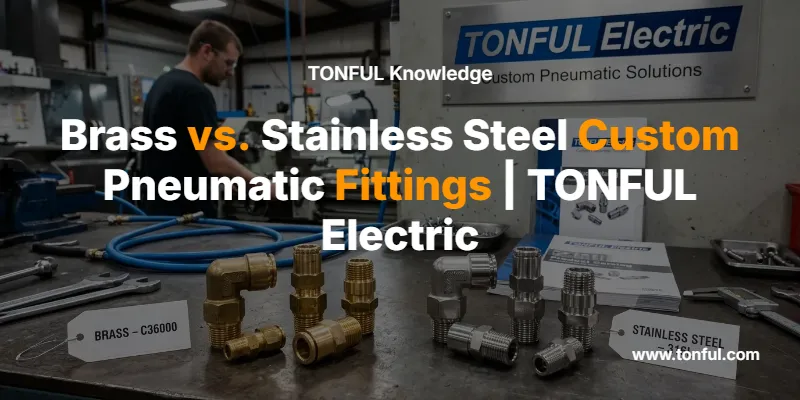
When selecting custom pneumatic fittings for industrial applications, material choice directly impacts system performance, longevity, and total cost of ownership. Brass and stainless steel dominate the pneumatic fitting market, each offering distinct advantages depending on operating conditions, pressure requirements, and environmental factors. This comprehensive guide examines both materials through the lens of engineering specifications, real-world applications, and cost-benefit analysis to help procurement managers and system designers make informed decisions.
Understanding Custom Pneumatic Fittings: Material Fundamentals
Custom pneumatic fittings serve as critical connection points in compressed air systems, controlling airflow between tubes, hoses, valves, and actuators. The material composition of these fittings determines their resistance to corrosion, mechanical strength under pressure, thermal stability, and compatibility with specific industrial environments.

Brass fittings consist of a copper-zinc alloy, typically containing 60% copper and 40% zinc, which provides excellent machinability, natural corrosion resistance, and adequate mechanical strength for standard pneumatic applications. The copper content gives brass its characteristic golden color and contributes to superior thermal conductivity, while zinc enhances strength and reduces material costs compared to pure copper.
Stainless steel pneumatic fittings, commonly manufactured from 304 or 316 grades, offer superior mechanical strength and exceptional corrosion resistance in harsh environments. The chromium content (minimum 10.5%) forms a passive oxide layer that protects against rust and chemical attack. For applications involving exposure to chlorides, marine environments, or aggressive chemicals, 316 stainless steel provides enhanced protection compared to 304 grade.
Material Properties Comparison: Engineering Specifications
Understanding the technical specifications of brass versus steel custom pneumatic fittings enables engineers to match material properties with application requirements.

| Property | Brass Fittings | Stainless Steel Fittings |
|---|---|---|
| Material Composition | 60% Copper, 40% Zinc | Fe + 10.5-18% Cr + 8-10% Ni (304/316) |
| Density | 8.4-8.7 g/cm³ | 7.9-8.0 g/cm³ |
| Tensile Strength | 300-500 MPa | 515-620 MPa |
| Working Pressure | 150-300 psi (10-20 bar) | 1,450-8,700 psi (100-600 bar) |
| Temperature Range | -40°C to +100°C | -196°C to +400°C |
| Corrosion Resistance | Excellent (moisture, standard environments) | Superior (chemicals, marine, extreme conditions) |
| Weight Advantage | 35% lighter than steel | Heavier but more robust |
| Machinability | Excellent | Good to moderate |
| Cost Factor | Baseline (1x) | 2-3x more expensive |
The pressure rating difference between brass and stainless steel represents one of the most significant performance distinctions. Brass fittings typically handle working pressures between 150-300 psi, which adequately serves most industrial pneumatic systems operating at 80-120 psi. However, stainless steel’s superior tensile strength enables pressure ratings from 1,450 psi up to 8,700 psi for heavy-duty applications, making it essential for high-pressure hydraulic systems or specialized pneumatic applications requiring extreme pressure tolerance.
Temperature performance also varies considerably. While brass maintains structural integrity and sealing capability from -40°C to +100°C—sufficient for most manufacturing environments—stainless steel extends this range dramatically, from cryogenic temperatures (-196°C) to high-temperature applications (+400°C). This expanded thermal range makes stainless steel indispensable in food processing, pharmaceutical manufacturing, and aerospace applications where extreme temperatures are routine.
Corrosion Resistance: Environmental Performance Analysis
Corrosion resistance determines fitting longevity in real-world operating conditions, particularly in environments with moisture, chemicals, or salt exposure.
Brass pneumatic fittings excel in standard industrial environments where moisture is the primary corrosion concern. The copper content naturally resists oxidation and rust formation, while the zinc component provides additional protection against atmospheric corrosion. In compressed air systems, moisture condensation is inevitable, and brass’s inherent resistance to water-related corrosion makes it the preferred choice for automotive manufacturing, general industrial automation, and standard pneumatic tool applications. Similar to brass terminals in electrical applications, brass pneumatic fittings maintain reliable performance in environments with regular moisture exposure.
However, brass exhibits vulnerability to specific corrosive agents. Ammonia causes dezincification—a selective corrosion process where zinc leaches from the alloy, leaving behind porous copper. Strong acids and certain chemicals can also attack brass, limiting its use in chemical processing environments. Additionally, brass is susceptible to stress corrosion cracking when exposed to ammonia compounds under tensile stress.
Stainless steel pneumatic fittings provide superior corrosion resistance across a broader range of aggressive environments. The chromium oxide passive layer continuously reforms when scratched or damaged, offering self-healing protection. This makes stainless steel the material of choice for marine applications, offshore platforms, chemical processing plants, and food production facilities where exposure to saltwater, acids, alkalis, or cleaning chemicals is routine. The material selection principles mirror those used in stainless steel machined parts, where environmental conditions dictate grade selection.

| Environment Type | Brass Performance | Stainless Steel Performance | Recommended Material |
|---|---|---|---|
| Standard Industrial (Dry Air) | Excellent | Excellent | Brass (cost-effective) |
| Moisture/Humidity | Excellent | Excellent | Brass (cost-effective) |
| Marine/Saltwater | Poor to Fair | Excellent | Stainless Steel |
| Chemical Processing | Poor | Excellent | Stainless Steel |
| Food & Pharmaceutical | Fair | Excellent | Stainless Steel (hygiene required) |
| Automotive Manufacturing | Excellent | Excellent | Brass (cost-effective) |
| Ammonia Exposure | Poor | Excellent | Stainless Steel |
| High-Temperature (>100°C) | Poor | Excellent | Stainless Steel |
Application-Specific Material Selection
Selecting between brass and steel custom pneumatic fittings requires matching material properties to specific application demands, operating conditions, and performance requirements.
Automotive and General Manufacturing
Brass fittings dominate automotive assembly lines and general manufacturing facilities where pneumatic tools, actuators, and control systems operate at standard pressures (80-120 psi) in climate-controlled environments. The material’s cost-effectiveness, combined with adequate corrosion resistance and mechanical strength, makes brass the industry standard for these applications. Its lighter weight (35% lighter than steel) reduces operator fatigue when technicians frequently connect and disconnect pneumatic tools throughout a shift.
The excellent machinability of brass enables cost-effective production of custom wire harness assemblies and specialized fitting configurations without the tooling costs associated with harder materials. For automotive manufacturers requiring custom pneumatic fittings with non-standard thread configurations or specialized port geometries, brass offers the optimal balance of customization capability and production economics.
Food Processing and Pharmaceutical Manufacturing
Stainless steel pneumatic fittings are mandatory in food processing and pharmaceutical manufacturing environments due to hygiene regulations, cleaning requirements, and corrosion resistance to aggressive sanitizing agents. FDA and EHEDG guidelines require materials that resist bacterial growth, withstand high-temperature steam sterilization, and remain inert when exposed to food products or pharmaceutical compounds.
The smooth surface finish achievable with stainless steel prevents bacterial colonization in crevices, while the material’s resistance to caustic cleaning chemicals (sodium hydroxide, chlorine-based sanitizers, peracetic acid) ensures fitting integrity through thousands of cleaning cycles. These requirements mirror the stringent standards applied to stainless steel components in critical applications, where material purity and surface finish directly impact product safety.

Marine and Offshore Applications
Marine environments present the most aggressive corrosion conditions for pneumatic systems, with constant exposure to salt spray, high humidity, and temperature fluctuations. Stainless steel fittings, particularly 316 grade with molybdenum content, provide the necessary corrosion resistance for pneumatic systems on ships, offshore platforms, and coastal industrial facilities.
The cost premium for stainless steel (2-3x higher than brass) becomes justified when considering the total cost of ownership in marine applications. Brass fittings in saltwater environments typically fail within 12-24 months due to dezincification and general corrosion, requiring frequent replacement and system downtime. Stainless steel fittings routinely achieve 10-15 year service life in the same conditions, reducing maintenance costs and improving system reliability.
Cleanroom and Semiconductor Manufacturing
Semiconductor fabrication and cleanroom environments require pneumatic fittings that minimize particulate contamination and resist the aggressive chemicals used in wafer processing. Stainless steel’s non-shedding properties and resistance to acids, solvents, and plasma cleaning processes make it essential for these applications. The material’s low outgassing characteristics prevent contamination of sensitive processes, while its dimensional stability maintains precise flow control critical to semiconductor manufacturing.
Standards and Certifications for Custom Pneumatic Fittings
International standards govern pneumatic fitting design, performance testing, and quality assurance, ensuring compatibility and safety across global supply chains.
ISO 8434-1 specifies requirements for 24° cone connectors used in fluid power systems, defining dimensional tolerances, pressure ratings, and performance characteristics. This standard applies to both brass and stainless steel fittings, with pressure ratings ranging from 100 to 600 bar depending on material and design. Temperature specifications typically range from -40°C to +100°C for standard applications, with extended ranges available for specialized materials.
ISO 14743 governs push-in pneumatic connectors, the most common quick-connect fitting type in modern automation systems. This standard defines sealing performance, insertion/extraction forces, and vibration resistance requirements. Both brass and stainless steel push-in fittings must meet these specifications, though stainless steel typically demonstrates superior vibration resistance in high-cycle applications.
ISO 8573-1 establishes air quality standards for compressed air systems, classifying contamination levels for particles, water, and oil. While this standard primarily addresses air treatment equipment, it influences fitting material selection since moisture and contaminants affect corrosion rates. Systems operating at higher air quality classes (Class 1-3) benefit from stainless steel fittings that resist corrosion even when air treatment systems fail temporarily.
Thread standards vary by region, with NPT (National Pipe Taper) dominating North American markets and BSP (British Standard Pipe) common in European and Asian applications. Custom pneumatic fittings must match the thread standard of existing equipment, and proper terminal and connector selection principles apply equally to pneumatic systems.

Cost Analysis: Total Cost of Ownership
Initial purchase price represents only one component of total cost of ownership for custom pneumatic fittings. A comprehensive cost analysis must consider material costs, installation labor, maintenance requirements, replacement frequency, and system downtime.
| Cost Factor | Brass Fittings | Stainless Steel Fittings |
|---|---|---|
| Initial Material Cost | Baseline (1.0x) | 2.0-3.0x higher |
| Machining/Customization Cost | Lower (excellent machinability) | Higher (harder material, tool wear) |
| Installation Labor | Standard | Standard |
| Weight Impact (Shipping/Handling) | 35% lighter (lower shipping costs) | Heavier (higher shipping costs) |
| Maintenance Frequency | Moderate (standard environments) | Low (all environments) |
| Service Life (Standard Environment) | 5-10 years | 15-25 years |
| Service Life (Harsh Environment) | 1-3 years | 10-15 years |
| Replacement Cost (Labor + Downtime) | Moderate frequency | Low frequency |
| Total Cost of Ownership (10 years, standard environment) | Lower | Comparable |
| Total Cost of Ownership (10 years, harsh environment) | Higher (frequent replacement) | Lower (extended service life) |
In standard industrial environments with controlled temperature and humidity, brass fittings typically offer lower total cost of ownership over a 10-year period. The initial cost advantage, combined with adequate service life (5-10 years) and lower customization costs, makes brass the economically rational choice for general manufacturing applications.
However, in harsh environments—marine, chemical processing, food production, or high-temperature applications—the equation reverses. Frequent replacement of corroded brass fittings, combined with system downtime and labor costs for maintenance, quickly exceeds the initial premium for stainless steel. A brass fitting costing $5 that requires replacement every 18 months (with $50 in labor and downtime costs per replacement) accumulates $340 in total costs over 10 years. A stainless steel fitting costing $15 with a 12-year service life costs only $65 over the same period.
Installation and Maintenance Considerations
Proper installation techniques and maintenance practices significantly impact fitting performance and service life, regardless of material selection.
Brass fittings require careful torque control during installation. Over-tightening can crack the softer brass material, while under-tightening leads to leaks. Torque specifications typically range from 15-25 Nm for common fitting sizes, though proper crimping and connection techniques vary by fitting type and manufacturer specifications. Thread sealant or PTFE tape is essential for tapered threads (NPT) to achieve leak-free connections, while straight threads (BSP) rely on O-ring or washer seals.
Stainless steel fittings tolerate higher installation torque due to superior material strength, reducing the risk of over-torque damage. However, galling—a form of adhesive wear where mating threads seize together—presents a unique challenge with stainless steel. Anti-seize compounds or nickel-based lubricants prevent galling during installation and facilitate future disassembly. The installation principles mirror those used for cold-pressed terminal plating applications, where surface treatments prevent adhesion and corrosion.
Maintenance requirements differ substantially between materials. Brass fittings in standard environments require periodic visual inspection for corrosion, verdigris formation (green copper oxide), or dezincification (pink/red copper appearance). In moisture-prone areas, annual inspection and replacement of corroded fittings prevents system failures. Stainless steel fittings require minimal maintenance beyond periodic leak checks, with inspection intervals extending to 2-3 years in most applications.
Making the Right Material Choice: Decision Framework
Selecting between brass and steel custom pneumatic fittings requires systematic evaluation of application requirements, environmental conditions, and economic factors.
Choose Brass Custom Pneumatic Fittings When:
- Operating pressure remains below 200 psi (14 bar)
- Temperature range stays within -20°C to +80°C
- Environment is standard industrial (controlled temperature, moderate humidity)
- Moisture is the primary corrosion concern
- Weight reduction benefits operator ergonomics
- Initial cost minimization is critical
- Custom configurations require extensive machining
- Application is automotive manufacturing, general assembly, or pneumatic tools
Choose Stainless Steel Custom Pneumatic Fittings When:
- Operating pressure exceeds 300 psi (20 bar)
- Temperature extremes (below -40°C or above +100°C) are present
- Environment involves saltwater, chemicals, or aggressive cleaning agents
- Hygiene regulations apply (food, pharmaceutical, medical)
- Extended service life (10+ years) is required
- Maintenance access is difficult or costly
- System downtime costs are high
- Application is marine, chemical processing, food production, or cleanroom
For applications with mixed requirements, hybrid approaches offer optimization opportunities. Critical connection points exposed to harsh conditions can use stainless steel fittings, while protected internal connections use brass to control costs. This selective material strategy, combined with proper wire harness protection methods, maximizes system reliability while optimizing total cost.
Frequently Asked Questions
Q: Can brass and stainless steel fittings be mixed in the same pneumatic system?
A: Yes, brass and stainless steel fittings can coexist in the same system without compatibility issues. However, avoid direct brass-to-stainless-steel metal contact in corrosive environments, as galvanic corrosion can accelerate brass degradation. Use dielectric unions or plastic washers to isolate dissimilar metals when necessary.
Q: What is the typical lead time for custom pneumatic fittings?
A: Standard brass fittings typically ship within 1-2 weeks, while custom configurations require 3-4 weeks for tooling and production. Stainless steel custom fittings generally require 4-6 weeks due to harder material machining requirements and longer production cycles.
Q: How do I identify the material of existing pneumatic fittings?
A: Brass fittings display a golden or yellow color, while stainless steel appears silver-gray. Brass is magnetic to weak magnets, while 304/316 stainless steel is non-magnetic. Weight comparison also helps—brass feels noticeably heavier than stainless steel for the same size fitting.
Q: Are nickel-plated brass fittings better than standard brass?
A: Nickel plating enhances corrosion resistance and provides a harder surface that resists wear. For applications with mild chemical exposure or enhanced corrosion protection requirements, nickel-plated brass offers improved performance at modest cost increase (15-25% premium over standard brass).
Q: What pressure safety factor should I apply when selecting fittings?
A: Industry standard practice applies a 4:1 safety factor between burst pressure and working pressure. For a system operating at 150 psi, select fittings rated for at least 600 psi burst pressure. This safety margin accounts for pressure spikes, temperature variations, and material degradation over time.
Conclusion: Strategic Material Selection for Optimal Performance
The choice between brass and steel custom pneumatic fittings fundamentally depends on matching material properties to application requirements. Brass excels in standard industrial environments where cost-effectiveness, weight reduction, and adequate corrosion resistance align with performance needs. Its superior machinability enables cost-effective customization for specialized applications, making it the material of choice for automotive manufacturing, general assembly, and pneumatic tool systems.
Stainless steel justifies its cost premium in harsh environments, high-pressure applications, and regulated industries where extended service life, superior corrosion resistance, and hygiene requirements are paramount. Marine, chemical processing, food production, and pharmaceutical applications demand stainless steel’s performance characteristics despite higher initial costs.
For procurement managers and system designers, the decision framework should prioritize total cost of ownership over initial purchase price, considering maintenance frequency, replacement costs, and system downtime. By systematically evaluating operating conditions, pressure requirements, environmental factors, and economic constraints, engineers can select the optimal material for each application, maximizing system reliability while controlling lifecycle costs.
TONFUL Electric manufactures both brass and stainless steel custom pneumatic fittings to meet diverse industrial requirements, offering engineering support for material selection, custom configuration design, and application-specific optimization. Our ISO 9001 certified manufacturing processes ensure consistent quality and performance across all product lines.