
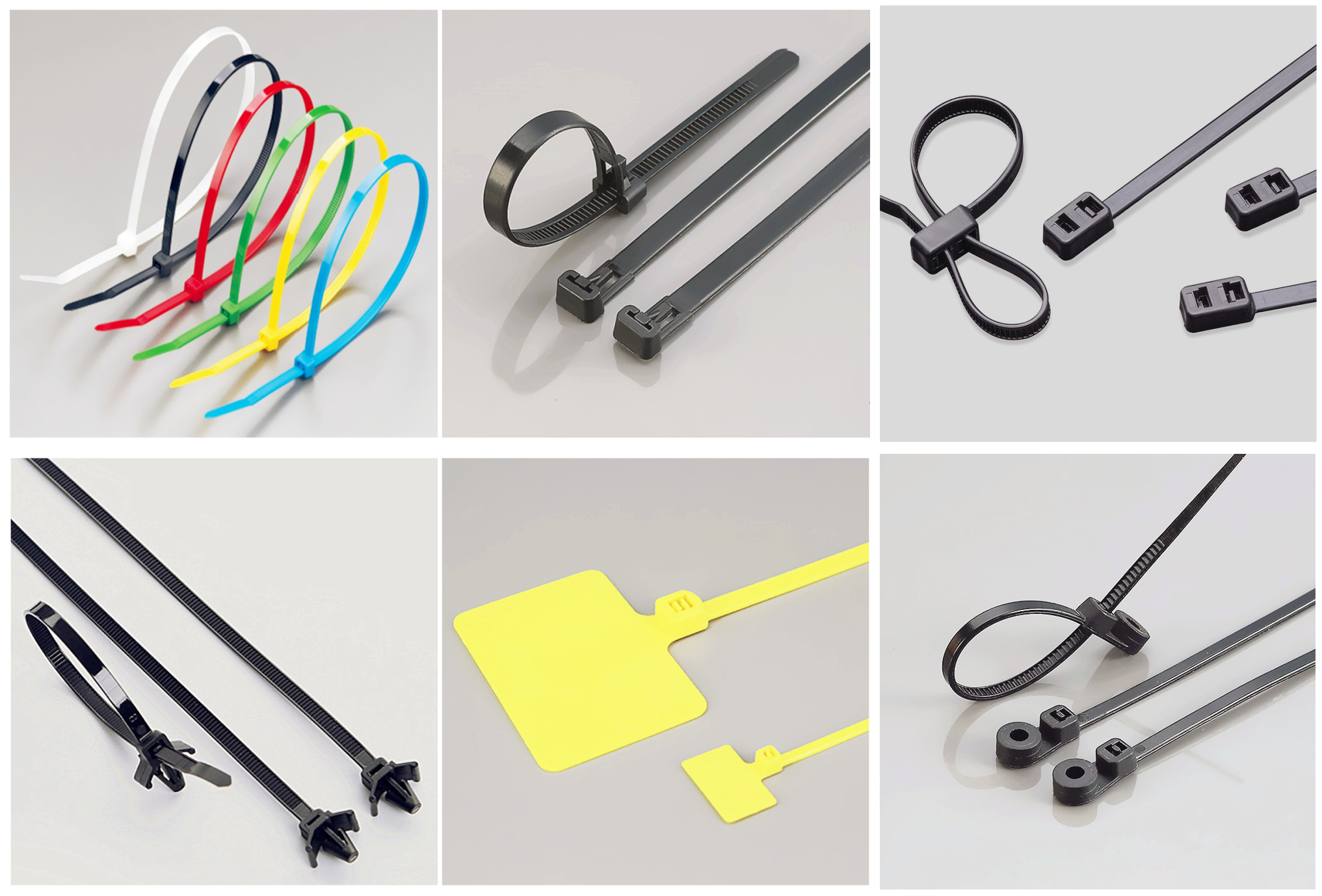
A standard 4-inch nylon zip tie holds 18 lb (8 kg). A heavy-duty 48-inch industrial zip tie holds 250 lb (113 kg) or more. Stainless steel zip ties exceed 485 lb. But behind every number printed on the bag is a precise engineering specification called minimum loop tensile strength — the maximum radial force a closed zip tie can withstand before the ratchet lock fails or the strap snaps.
For B2B buyers specifying a zip tie into wire harnesses, solar arrays, HVAC ductwork, or food-processing lines, understanding that single number is the difference between a bundle that survives vibration, thermal cycling, and UV exposure for a decade — and one that fails in the first storm. This guide breaks down the real weight capacity of a zip tie, the standards behind the ratings, and how to select the correct tie for load-bearing applications.

What Determines a Zip Tie’s Holding Strength
Three variables set the rated capacity of any zip tie: material composition, strap width and thickness, and the ratchet-and-pawl lock design.
Material. Nylon 6/6 (PA66) is the industry default, offering a raw tensile strength of 10,000–12,000 psi. UV-stabilized Nylon 66 adds carbon black for outdoor endurance without sacrificing rated strength. Stainless steel (304 or 316) multiplies capacity several times over and survives temperatures nylon cannot. Specialty polymers like Tefzel (ETFE) serve where chemical resistance and radiation tolerance matter — see the Tefzel ETFE cable tie guide.
Dimensions. Width is the dominant geometric factor. A 2.5 mm miniature tie rates around 18 lb; a 4.8 mm standard tie reaches 50 lb; a 7.6–12.7 mm heavy-duty tie climbs to 120–250 lb. Length adds wrapping reach, not tensile strength — a common misconception that leads to under-specified installations.
Lock mechanism. The ratchet head contains a one-way pawl engaging serrated teeth. Under load, the pawl transfers radial force into the head housing. Most field failures occur at the pawl-to-head interface, not the strap body, which is why head design — not strap thickness alone — governs real-world break point.

Zip Tie Weight Capacity Chart
The table below maps common zip tie sizes to their guaranteed minimum tensile strength, following the grading system detailed in TONFUL’s cable tie tensile strength guide.
| Type | Typical Length | Width | Min. Tensile Strength | Common Applications |
|---|---|---|---|---|
| Miniature | 4 in (100 mm) | 2.5 mm | 18 lb / 8 kg | Fine wire bundling, PCB harnessing |
| Intermediate | 6–8 in (150–200 mm) | 3.6 mm | 40 lb / 18 kg | Appliance wiring, consumer electronics |
| Standard | 8–14 in (200–350 mm) | 4.8 mm | 50 lb / 22 kg | General electrical, panel wiring |
| Heavy-duty | 14–24 in (350–600 mm) | 7.6 mm | 120 lb / 55 kg | HVAC, conduit, automotive harnesses |
| Extra heavy-duty | 24–48 in (600–1200 mm) | 9.0–12.7 mm | 175–250 lb / 80–113 kg | Industrial piping, signage, fencing |
| Stainless steel 304 | 6–14 in (150–350 mm) | 7.9 mm | 200–350 lb / 90–160 kg | High-temp, outdoor, marine |
| Stainless steel 316 | up to 36 in (900 mm) | 12.7 mm | 350–485+ lb / 160–220 kg | Offshore, power plants, aerospace |
These are minimum values — the tie must hold at least this much force before failure. Manufacturers test to MIL-STD-23190 for military-grade ties and to UL and IEC protocols for commercial certification.
Material Comparison: Nylon vs UV-Stabilized vs Stainless Steel
Choosing the wrong material is the most common reason a zip tie rated for 50 lb fails at 20 lb in the field. Environment degrades the strap long before it reaches its tensile limit.
| Material | Tensile Range | Temp. Range | UV Resistance | Best For |
|---|---|---|---|---|
| Nylon 6/6 (natural) | 18–50 lb | –40 to 185°F | Poor (1–2 yr) | Indoor, general purpose |
| Nylon 6/6 (UV black) | 18–50 lb | –40 to 185°F | Excellent (7–10 yr) | Outdoor, solar, fencing |
| Heat-stabilized Nylon | 40–120 lb | –40 to 250°F | Good | Engine bays, industrial ovens |
| Tefzel (ETFE) | 50–120 lb | –100 to 300°F | Excellent | Aerospace, nuclear, chemical |
| Stainless 304 | 200–350 lb | –112 to 1000°F | Excellent | Marine, food, high-temp |
| Stainless 316 | 200–485 lb | –112 to 1000°F | Excellent + chloride | Offshore, salt-spray, pharma |
For deeper material analysis, see the Nylon 66 vs Nylon 12 solar cable tie comparison and the 304 vs 316 stainless steel cable tie guide.

Factors That Reduce Real-World Holding Capacity
The number printed on the bag is a laboratory value, measured at room temperature on a clean, new tie wrapped around a smooth cylindrical mandrel. Real installations rarely match those conditions.
Temperature. Nylon loses 30–50% of its tensile strength at sustained temperatures above 160°F. Engine-bay and solar-roof applications routinely exceed this, which is why heat-stabilized grades or stainless steel are specified there.
UV exposure. Natural (white) nylon embrittles under sunlight within months. UV-black nylon with carbon black stabilizer extends outdoor service life to 7–10 years.
Moisture. Nylon absorbs humidity, and moisture content directly affects flexibility and strength. Dry, brittle ties snap under shock loads — proper storage matters. See the cable tie moisture content and storage guide.
Bundle geometry. The tensile rating assumes a round bundle matching the tie’s designed loop diameter. Sharp corners, over-tightening, or bundling too few conductors concentrates stress at the ratchet head, cutting effective capacity by 30–60%.
Installation damage. Pliers over-tighten beyond the pawl’s design load. A nick from a cutting tool creates a stress riser. The same logic applies to crimp pull force testing in wire harnesses — the weakest point governs the assembly.
Cold. Below 0°F, standard nylon turns glassy and shatters under impact. Cold-rated grades exist for this reason — read the cold weather cable tie guide.

How to Calculate Safe Working Load
Professionals never load a zip tie to its rated tensile strength. A safety factor of at least 2:1 — often 3:1 or 4:1 in critical applications — is standard engineering practice.
$$ \text{Safe Working Load} = \frac{\text{Minimum Tensile Strength}}{\text{Safety Factor}} $$
For a 50 lb standard tie at a 3:1 safety factor, the working load is roughly 16.7 lb. At 4:1, it drops to 12.5 lb. This is why a 50 lb tie is not over-specified for a 10 lb cable bundle — it is correctly specified.
Distributed loading. When securing a heavy object, multiple ties share the load, but only if the load is evenly distributed and each tie wraps a clean, round surface. A single-point load overloads one tie, causing sequential cascade failure across the entire bundle.
Dynamic loads. Vibration, wind, and impact multiply static weight. A signage panel weighing 40 lb on a roof experiences wind loading that can spike effective force to 80–120 lb. Always specify ties rated for the dynamic load, not the static weight.

Choosing the Right Zip Tie by Application
- Wire harnesses and panel wiring — 18–40 lb standard nylon, indoor. See the wire harness manufacturing process.
- Solar and outdoor installations — 50 lb UV-black or Nylon 12. See edge clip cable ties for solar and automotive.
- Engine bays and high-temp zones — 120 lb heat-stabilized nylon or stainless steel cable ties.
- Marine and salt-spray — 200–350 lb 316 stainless. Compare stainless steel vs plastic cable ties.
- Food and pharma (metal-detectable) — see metal detectable cable ties.
- Plenum-rated ceilings — see plenum-rated cable ties (UL 2043).
- Reusable and releasable — 50–120 lb releasable ties, guide here.
For full sourcing options, browse TONFUL’s cable tie catalog or compare against Panduit cable tie alternatives. To learn more about general applications, see what cable ties are used for.
Short FAQ
How much weight can a standard zip tie hold? A standard 4.8 mm nylon 6/6 zip tie holds a minimum of 50 lb (22 kg). Miniature 2.5 mm zip ties hold 18 lb (8 kg); heavy-duty 12.7 mm ties hold up to 250 lb (113 kg).
What is the strongest zip tie? Stainless steel 316 cable ties, rated 350–485 lb minimum tensile strength, are the strongest commonly available zip ties. Specialty aerospace ties exceed 600 lb.
Do longer zip ties hold more weight? No. Length affects wrapping reach, not tensile strength. Width and material determine capacity. A 4-inch and a 14-inch zip tie of the same width and material share the same rating.
Can you double up zip ties for more strength? Only with even load distribution. Two 50 lb ties can theoretically hold 100 lb, but uneven loading causes one to fail first, cascading to total failure. Use a single higher-rated tie instead.
What safety factor should I use for a zip tie? Minimum 2:1 for non-critical loads, 3:1 to 4:1 for dynamic, overhead, or vibration-exposed applications.
Does temperature affect zip tie strength? Yes. Nylon loses 30–50% of tensile strength above 160°F and becomes brittle below 0°F. Specify heat-stabilized or stainless grades for extreme environments.
TONFUL Electric manufactures nylon, UV-resistant, and stainless steel zip ties to MIL-STD, UL, and IEC standards. Contact our engineering team for application-specific specifications and bulk B2B pricing.