
Step-Down Butt Connectors Manufacturer
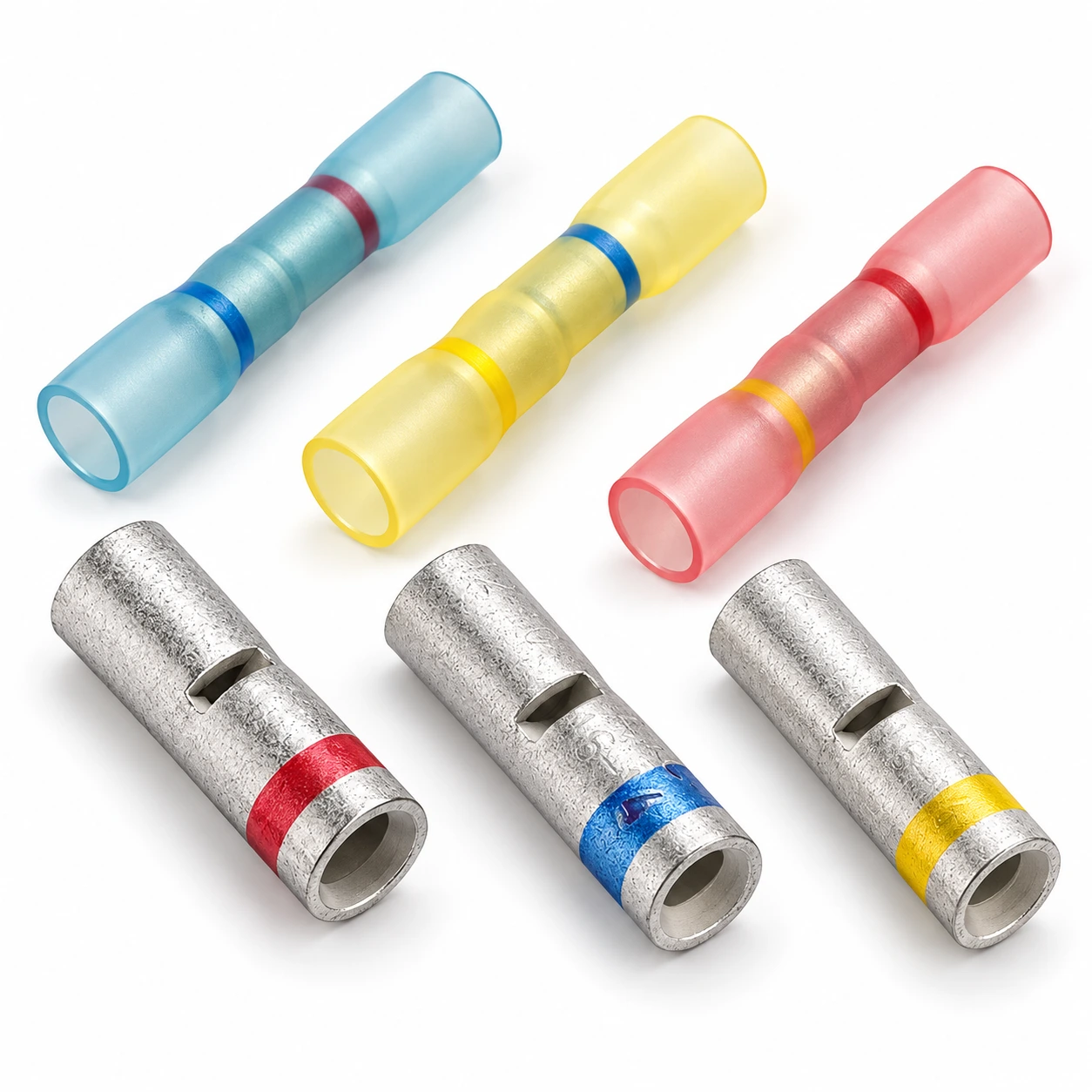
Connect different wire sizes with TONFUL step-down butt connectors, also called reducing butt splices or transition splices. Two barrel sizes provide a dedicated crimping area for each conductor, supporting neat transitions in automotive, marine and industrial wiring.
Choose adhesive-lined heat shrink or non-insulated styles. Explore the existing AWG combinations below, then send your conductor sizes, installation conditions and quantity for product selection and an OEM quotation.
Step-Down Butt Connectors Product Range

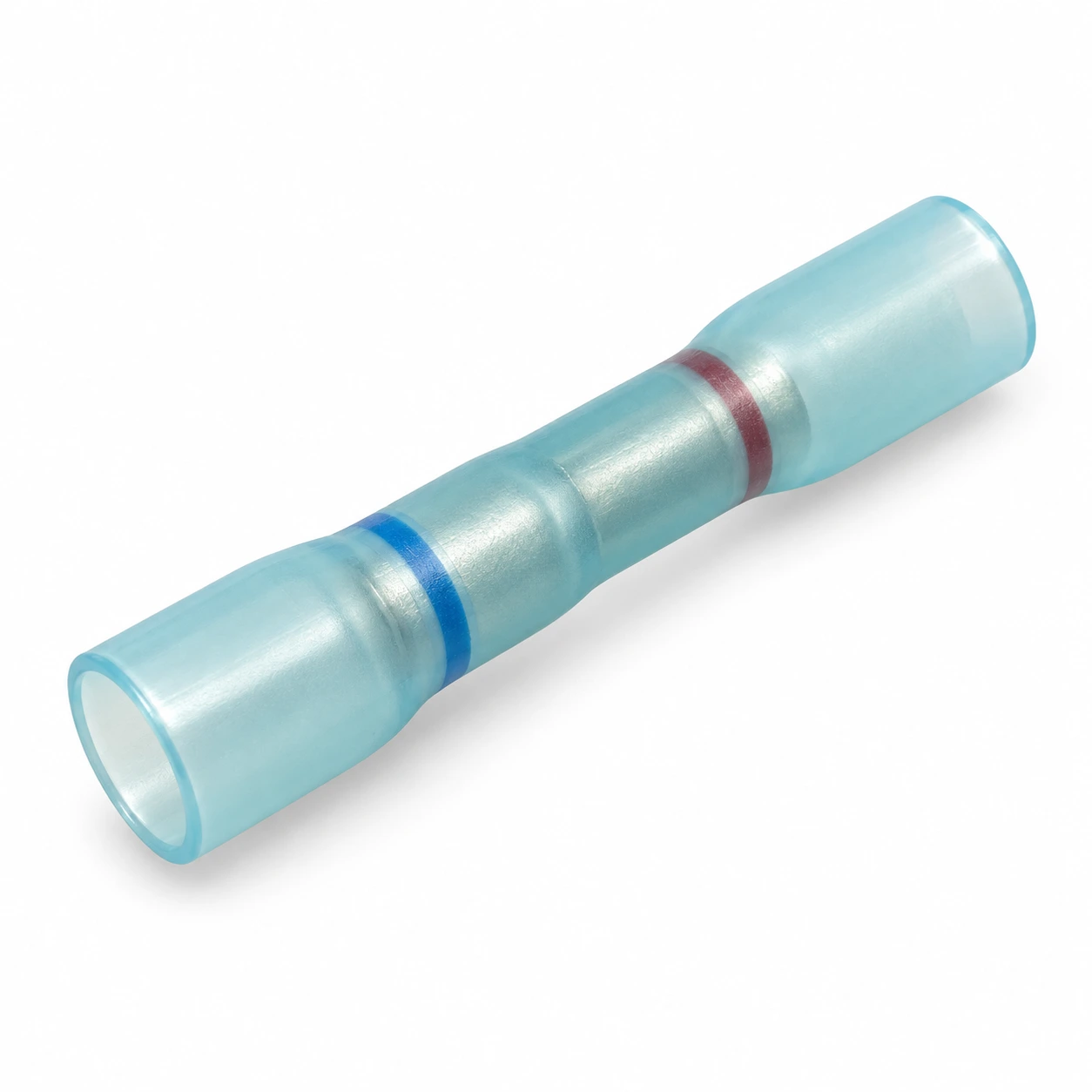
Heat Shrink Step-Down Connector (16–14 AWG ↔ 22–18 AWG)
Adhesive-lined heat shrink insulation for a compact transition from a larger conductor to a smaller wire.
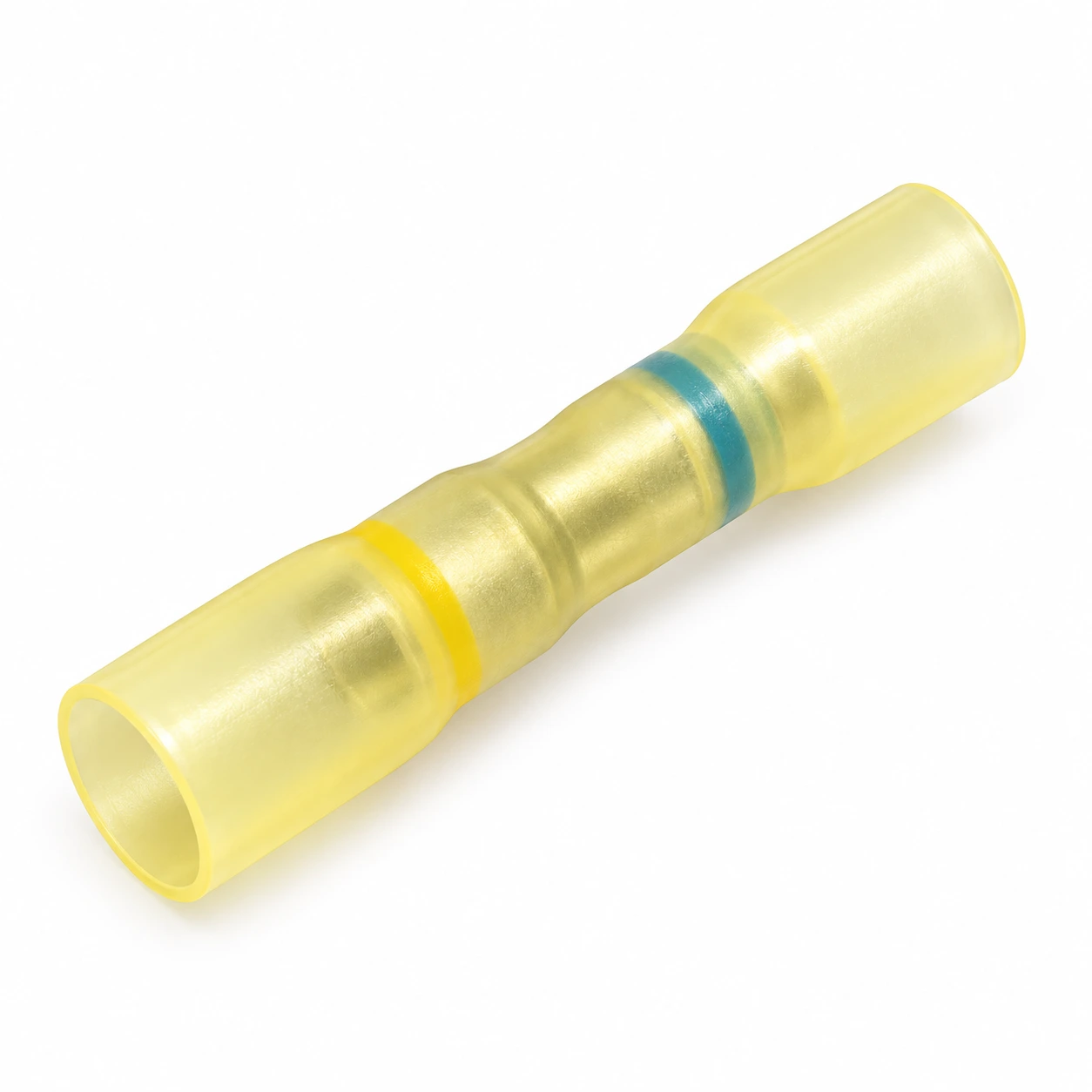
Heat Shrink Step-Down Connector (12–10 AWG ↔ 16–14 AWG)
Dual-size crimp barrel with heat shrink insulation, for wiring transitions that need an insulated splice.
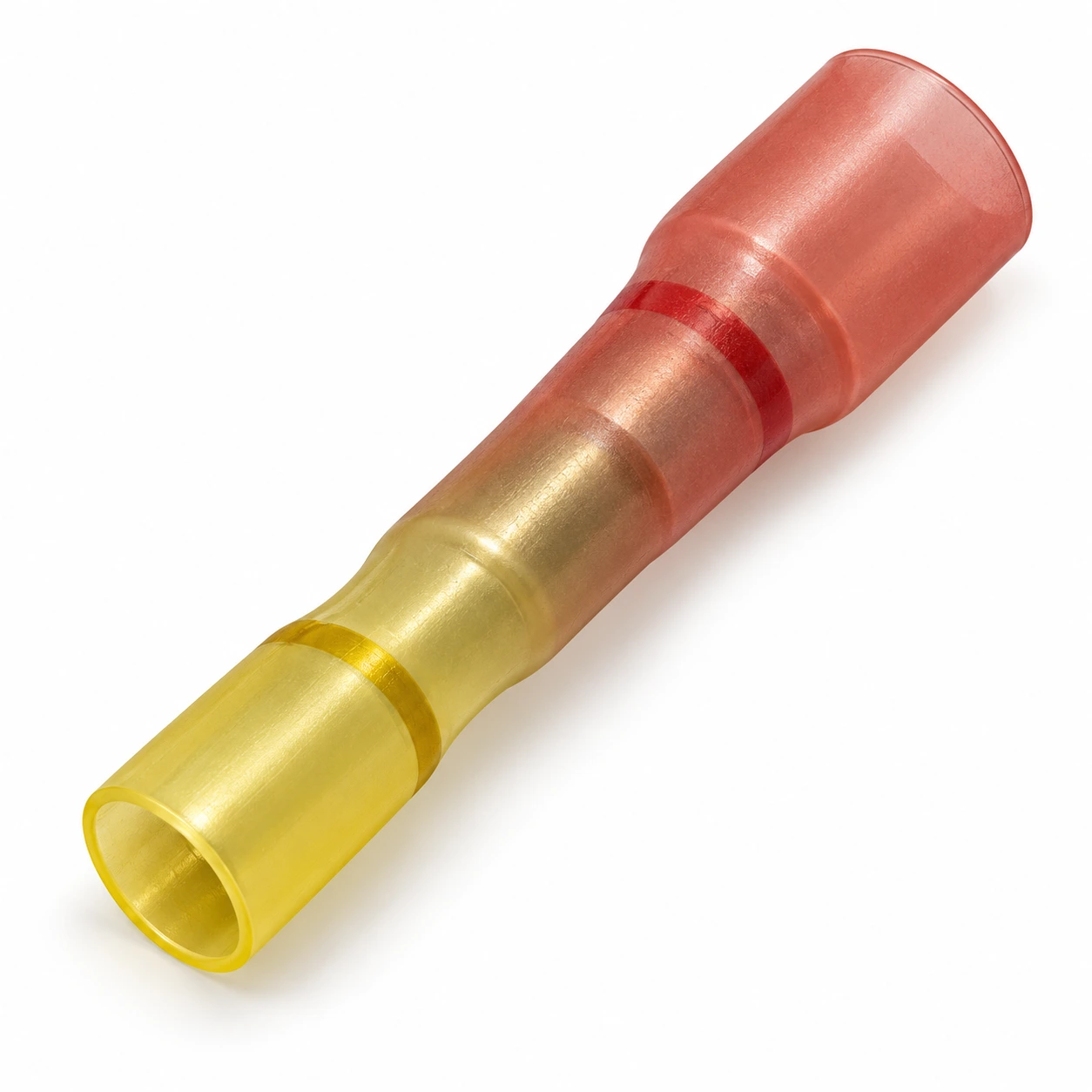
Heat Shrink Step-Down Connector (8 AWG ↔ 12–10 AWG)
A larger step-down combination with a heat shrink sleeve; confirm the selected barrel dimensions and recovery requirements.
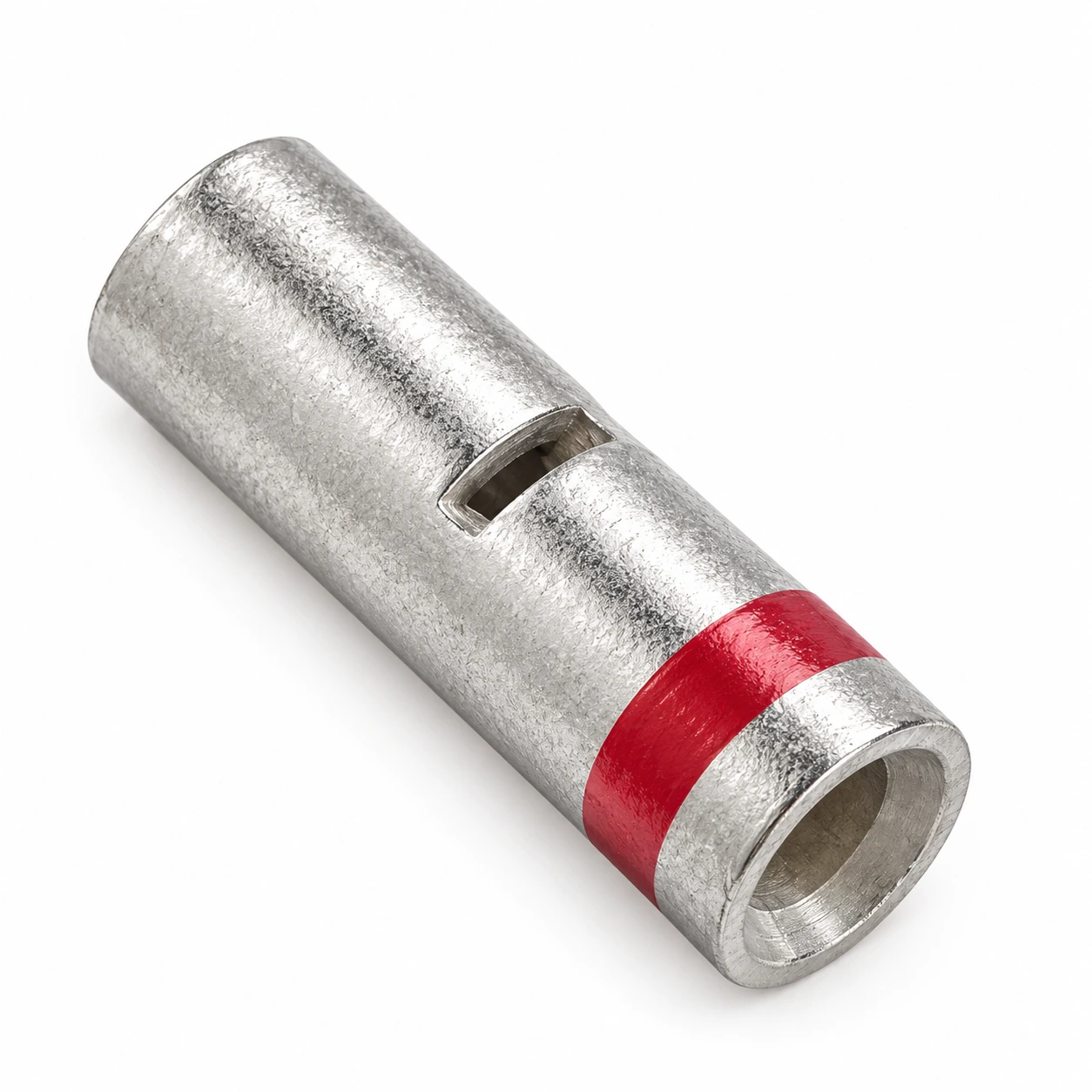
Non-Insulated Step-Down Connector (22–18 AWG ↔ 16–14 AWG)
A compact bare reducing splice for harness assembly with separately specified insulation and protection.
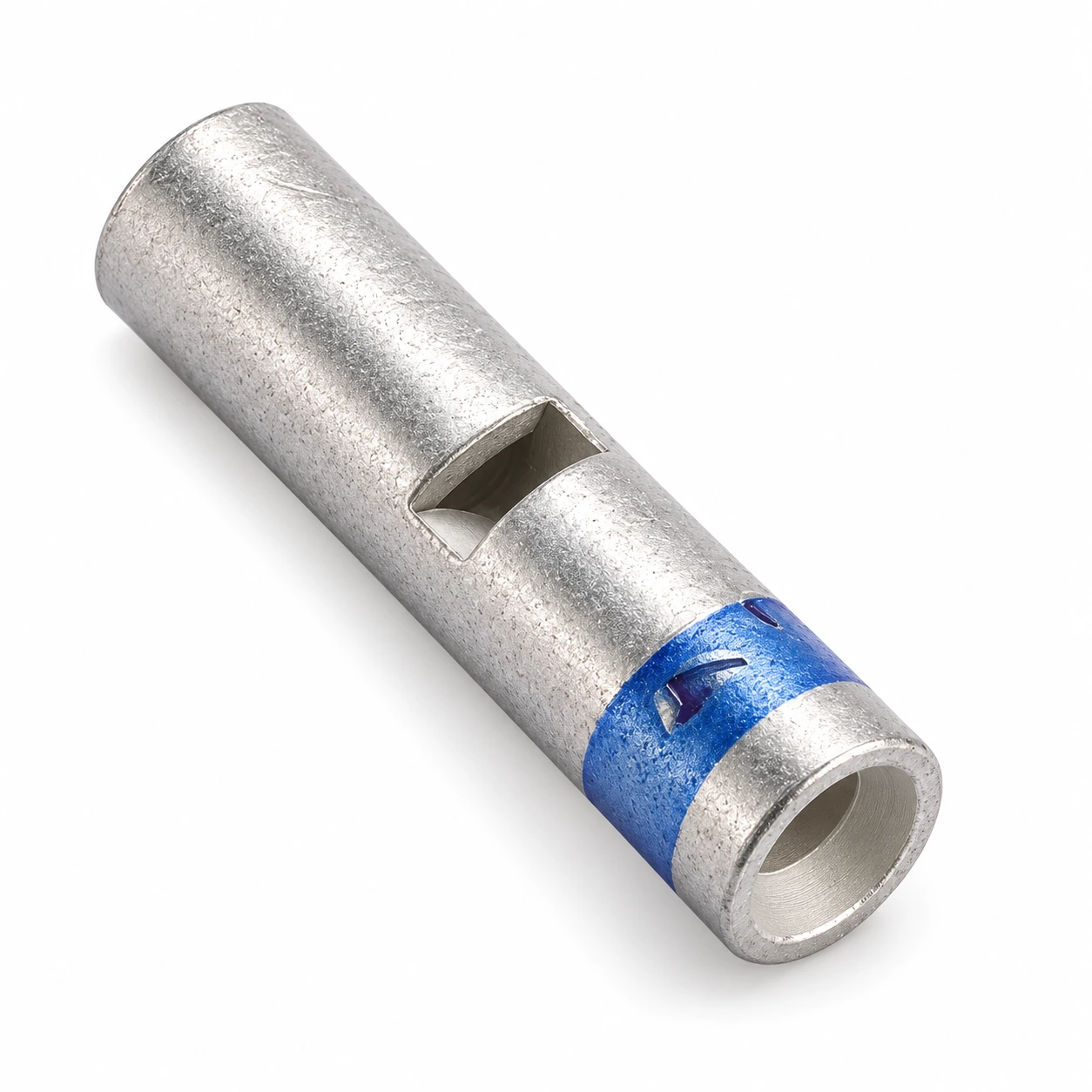
Non-Insulated Step-Down Connector (16–14 AWG ↔ 12–10 AWG)
Unequal barrel openings help match each wire size. Select the crimp die for each end of the splice.
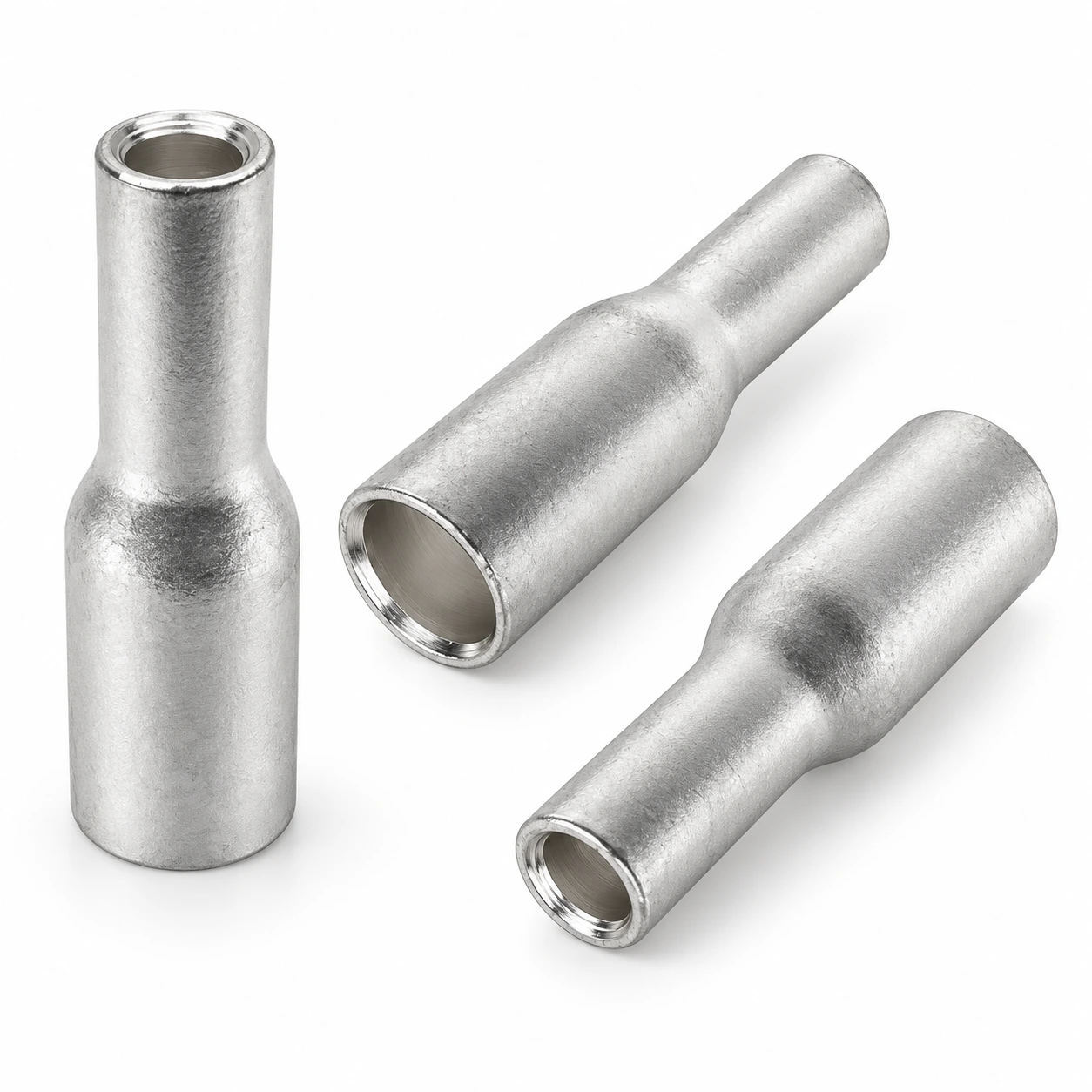
Non-Insulated Step-Down Connector (12–10 AWG ↔ 8 AWG)
A metal reducing splice for transitions between medium and larger conductors, with insulation supplied separately.
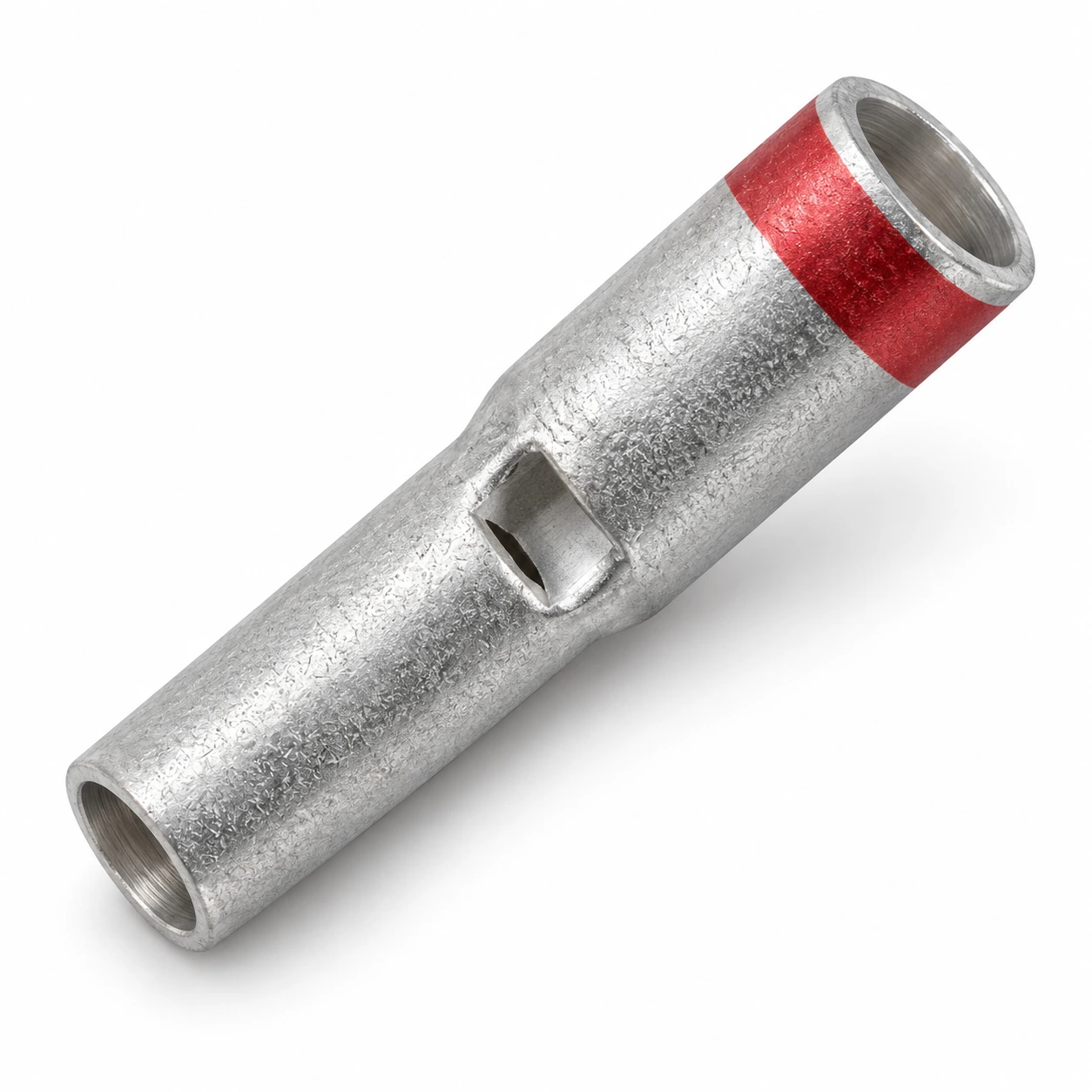
Non-Insulated Step-Down Connector (8 AWG ↔ 6 AWG)
A larger-gauge reducing connector for suitable cable assemblies. Confirm barrel fit, conductor stranding and tooling.
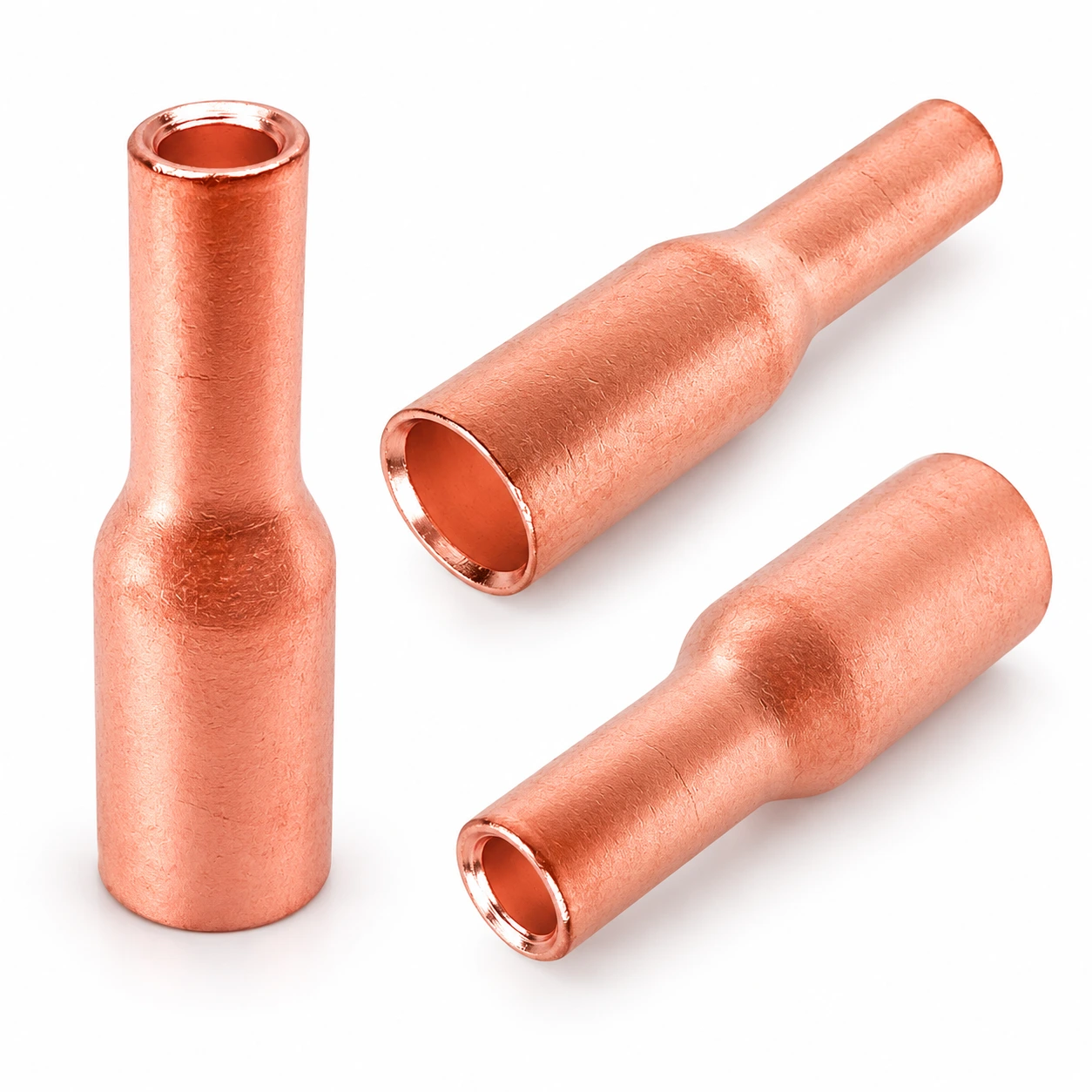
Non-Insulated Step-Down Connector (6 AWG ↔ 4 AWG)
A heavy-gauge reducing splice shown with a copper finish. Confirm the required material, plating and protection for the order.
Step-Down Butt Connector Applications
Use a reducing splice where two different conductor sizes need to join. Match the selected connector, insulation and crimp process to the circuit and operating environment.

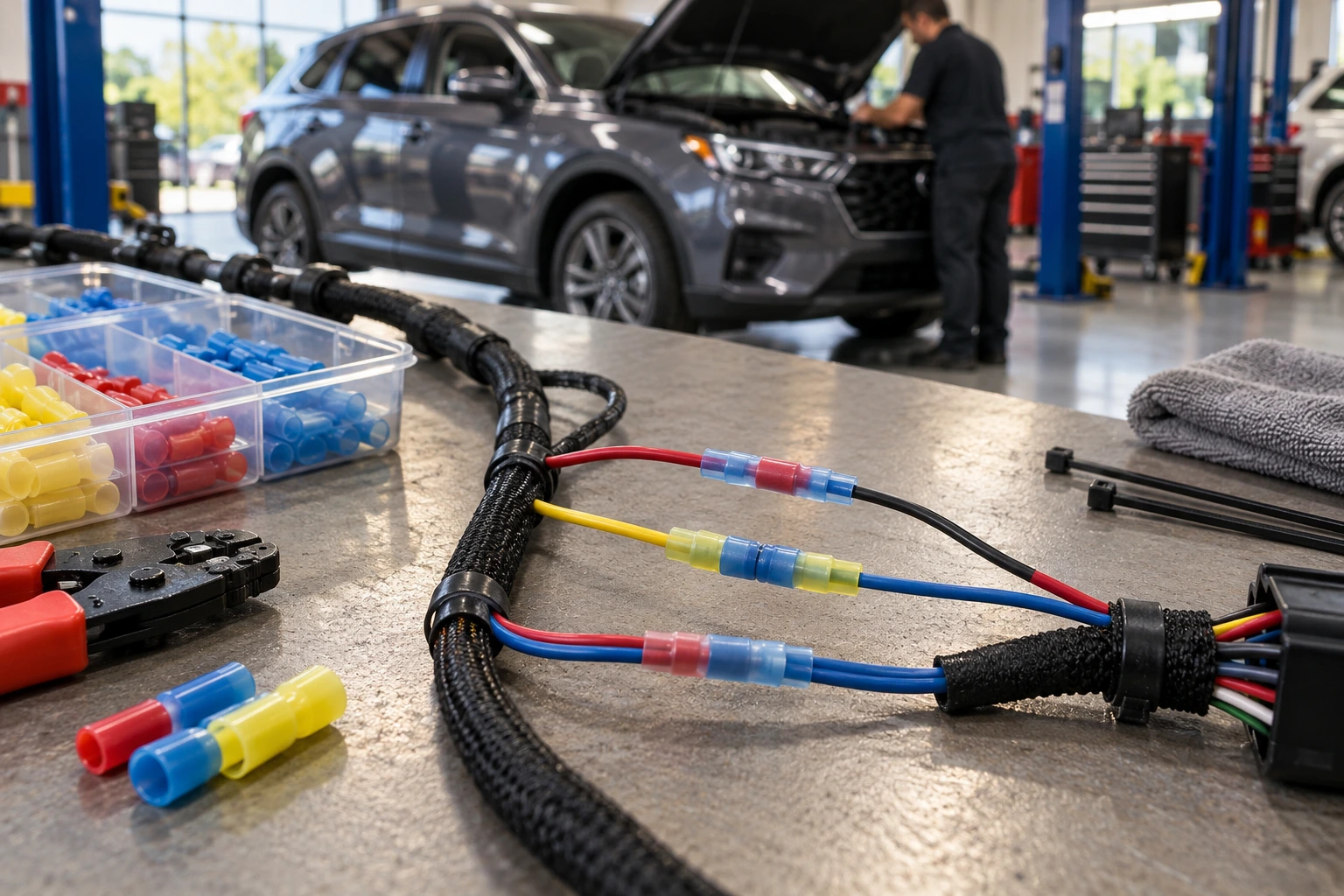
Automotive & Vehicle Wiring
Connect accessory leads, lighting circuits and repair harnesses with different wire sizes. Select each barrel for its conductor, then verify crimp quality, strain relief and insulation before the harness is returned to service.
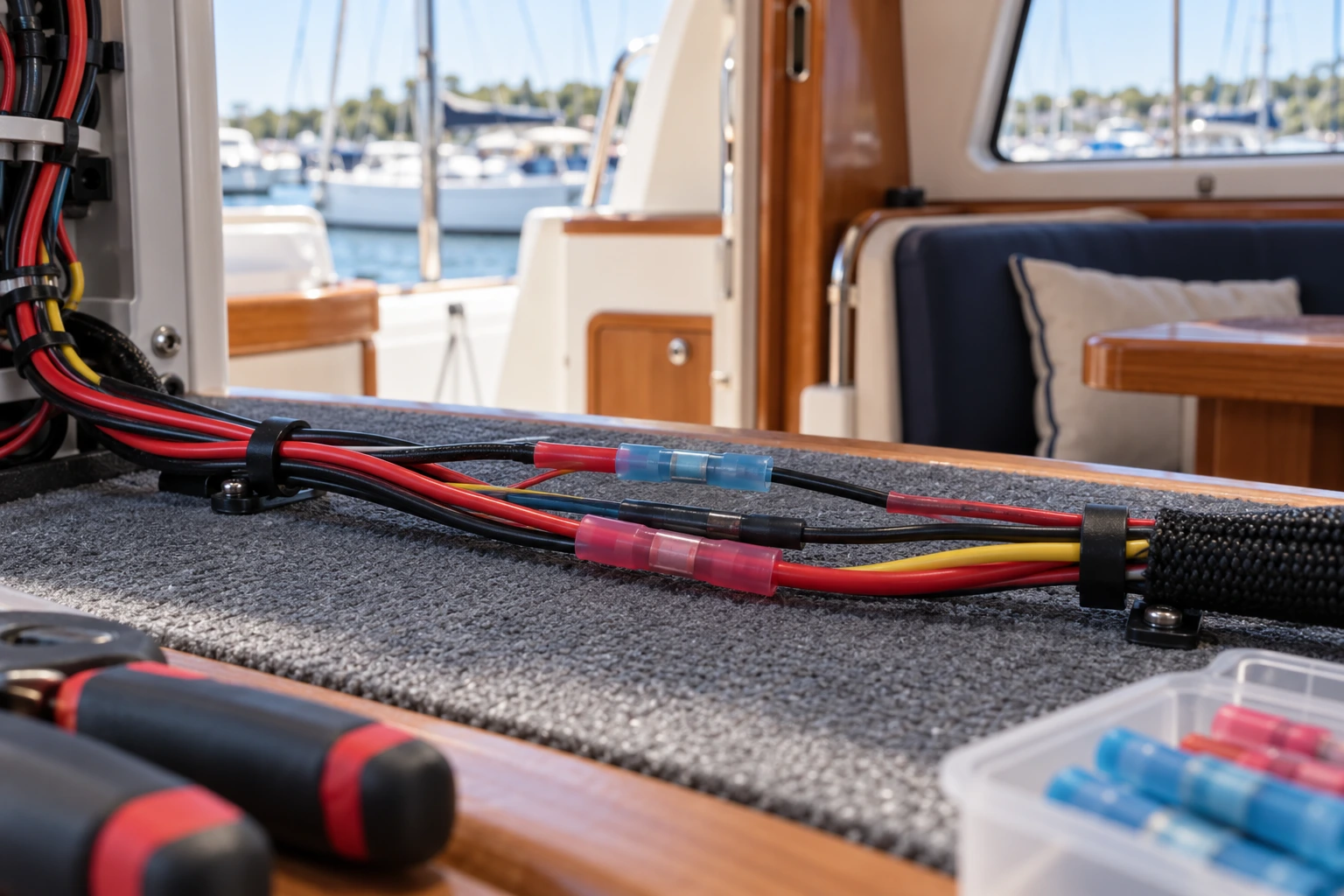
Marine & Outdoor Equipment
Adhesive-lined heat shrink versions can be considered for wiring exposed to moisture. Confirm the selected part and complete splice assembly for the installation; provide additional protection from abrasion, immersion and movement where required.
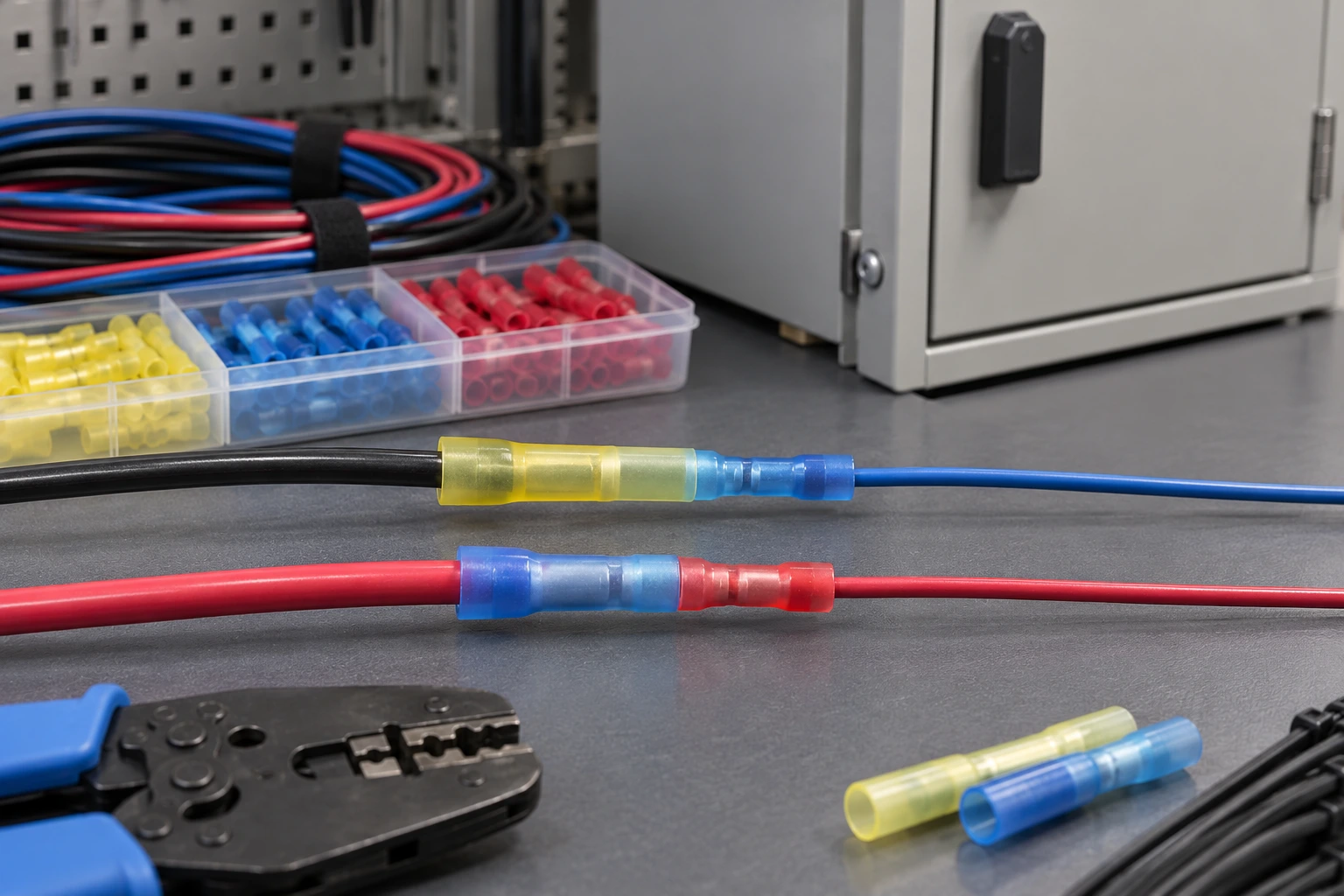
Industrial & Control Harnesses
Join equipment leads to smaller control or sensor conductors in suitable cable assemblies. Non-insulated versions allow a separately specified insulation system; review current, temperature, enclosure and maintenance requirements.

Application images are generated illustrations of typical settings, not customer installation records.
Step-Down Butt Connector Specifications
| Specification | Product Information |
|---|---|
| Connector function | Reducing butt splice joining two different conductor sizes |
| Available constructions | Heat shrink insulated and non-insulated reducing splices |
| Conductor material | Copper conductors; confirm conductor class, stranding and barrel fit |
| Connector material / finish | Copper or tin-plated copper according to the selected part; confirm the approved material specification |
| Heat shrink insulation | Adhesive-lined polyolefin on heat shrink versions |
| Nominal shrink ratio | Existing product information lists 3:1 for heat shrink versions; confirm the selected sleeve |
| Operating temperature | Existing product information lists −55°C to +125°C for heat shrink versions; confirm limits for the complete assembly |
| Shrink temperature | Existing product information lists shrink onset at 80°C and full recovery at 130°C; use the selected sleeve’s installation instructions |
| Moisture protection | Adhesive-lined insulation is intended to help seal the splice; request part-specific test evidence for any IP rating |
| Voltage selection | Confirm the exact part’s voltage rating and intended wiring application; no universal assembly rating is stated here |
| Current capacity | Select against conductor size, crimp quality, temperature and circuit design; request exact part data |
| Dimensions / part numbers | Request barrel diameters, insertion depth, length, wall thickness and ordering code for the selected combination |
| Packing options | Bulk bags, labelled cartons or assorted kits by agreement; quantity per pack confirmed in the quotation |
| Compliance documents | Request current model-specific approval, RoHS and REACH documents required for the order |
Available Wire Gauge Transitions
| Construction | Wire Size Combination | Identification |
|---|---|---|
| Heat Shrink Step-Down Connector | 16–14 AWG ↔ 22–18 AWG | Blue / Red |
| Heat Shrink Step-Down Connector | 12–10 AWG ↔ 16–14 AWG | Yellow / Blue |
| Heat Shrink Step-Down Connector | 8 AWG ↔ 12–10 AWG | Red / Yellow |
| Non-Insulated Step-Down Connector | 22–18 AWG ↔ 16–14 AWG | Per selected part |
| Non-Insulated Step-Down Connector | 16–14 AWG ↔ 12–10 AWG | Per selected part |
| Non-Insulated Step-Down Connector | 12–10 AWG ↔ 8 AWG | Per selected part |
| Non-Insulated Step-Down Connector | 8 AWG ↔ 6 AWG | Per selected part |
| Non-Insulated Step-Down Connector | 6 AWG ↔ 4 AWG | Copper finish shown |
AWG combinations are retained from the existing product range. Each end must be checked against the chosen conductor and crimp die. Colour alone does not establish wire capacity, and a reducing splice does not increase the current capacity of the smaller conductor.
Information for a Quotation
Provide both conductor sizes, conductor material and stranding, insulation style, required drawing, operating environment, quantity and packaging preferences. Share any approval or test requirements so the exact specification can be reviewed.
Why Choose TONFUL Step-Down Butt Connectors
Dedicated Wire-Size Transition
Two barrel sizes accommodate different conductors in one splice. Select a connector designed for both wire sizes rather than modifying the conductor to fill an oversized barrel.
Insulated or Bare Construction
Choose an adhesive-lined heat shrink version or a non-insulated metal splice with a separately specified insulation system.
Copper Contact Options
Review copper and tin-plated copper options against conductivity, contact finish and corrosion exposure requirements for the exact part.
Adhesive-Lined Heat Shrink
On suitable heat shrink models, the sleeve recovers around the splice and wire insulation. Use the prescribed heating process and inspect the finished assembly.
A Range of AWG Combinations
The existing range spans small-wire transitions through 6 AWG to 4 AWG bare splices. Confirm conductor fit and availability for each combination.
OEM Specification Review
Share a drawing, sample, preferred finish or packaging requirement. Dimensions, marking and custom transition combinations can be reviewed for an OEM order.
Choose Your Reducing Splice in Six Steps
Step 1: Identify Both Conductors
State the AWG or mm² size, copper conductor class and stranding at each end. Confirm the splice is specified for those conductors.
Step 2: Choose the Insulation Style
Select heat shrink insulation for a complete insulated splice, or a non-insulated connector with separately specified insulation and environmental protection.
Step 3: Check the Barrel Dimensions
Review insertion depth, bore sizes, wall thickness and overall length against the selected conductor and available installation space.
Step 4: Match the Crimp Tool
Use the specified die and tool for each end. Follow the approved strip length, insertion and crimping instructions, and avoid damaged or cut strands.
Step 5: Complete the Assembly
For heat shrink versions, follow the sleeve’s heating instructions. Inspect insulation recovery, adhesive flow where specified, strain relief and mechanical protection.
Step 6: Confirm Samples & Packing
Agree the ordering code, evaluation samples, inspection requirements, quantity, label details and packaging format before placing the order.
Request Samples for Your Wire-Size Transition
Share both conductor sizes and the intended installation to discuss connector selection, sample availability and evaluation requirements.
Step-Down Connector Workshop & Packaging

Connector Production & Inspection
Discuss tube forming, barrel dimensions, contact finish and inspection requirements for the selected splice. For heat shrink versions, review sleeve placement, end identification and insulation condition. Sample evaluation and production checks can be aligned with the agreed drawing and quality plan.
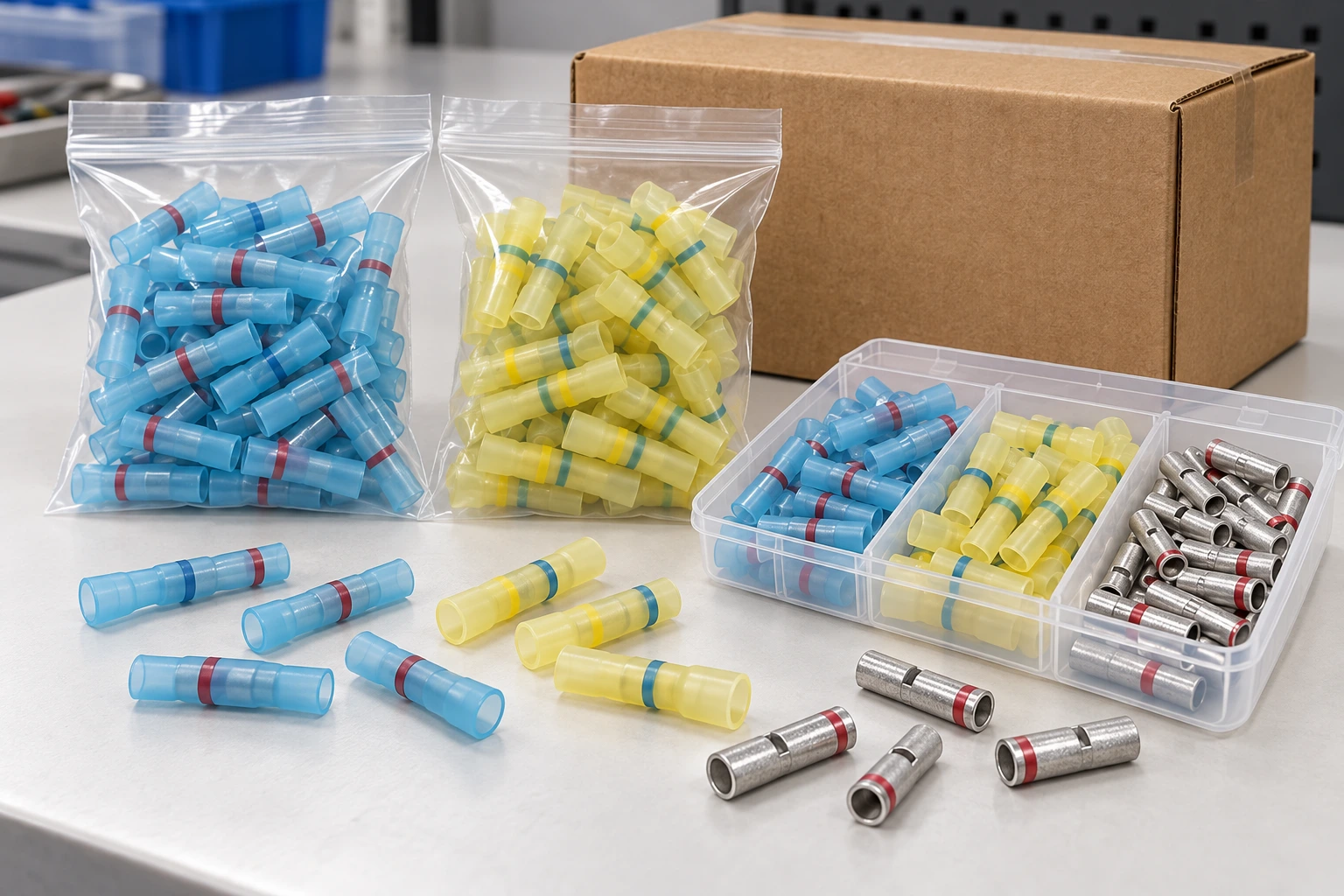
Sorted Bags, Assorted Kits & Export Cartons
Specify bulk bags or mixed-size kits, together with the quantity per pack, compartment layout and outer carton requirements. Labels can identify the part code, wire-size combination, insulation style and batch details. Packing format, OEM labelling and shipment terms are confirmed with the quotation.
Workshop and packaging images are generated illustrations, not photographs of the TONFUL factory or an actual shipment.
More Than Just a Step-Down Connector Supplier

Wire-Size Selection Support
Provide both wire sizes and construction details to review a suitable transition and barrel fit.

Drawing & Sample Review
Compare insertion depth, bore sizes, finish and overall length with the approved sample or drawing.

Crimping & Insulation Guidance
Request the tooling and insulation instructions for the selected part, and plan the checks needed for your completed harness.

OEM Packing & Delivery Planning
Confirm pack quantity, label content, carton format, destination and lead time in the quotation.
Step-Down Butt Connectors: Frequently Asked Questions
Q1: What is a step-down butt connector?
It is a reducing splice with different barrel capacities at its two ends, used to connect two different conductor sizes. Each barrel is selected and crimped for its own conductor.
Q2: Which wire-size combinations are available?
The existing range lists heat shrink versions for 16–14 to 22–18 AWG, 12–10 to 16–14 AWG and 8 to 12–10 AWG. Five non-insulated options span 22–18 to 16–14 AWG through 6 to 4 AWG. Confirm exact part codes and availability when ordering.
Q3: Are heat shrink and non-insulated versions interchangeable?
They use different insulation arrangements. A bare connector requires a separately specified insulation system, while a heat shrink version includes a sleeve. Check dimensions, tooling and the complete assembly requirements before substitution.
Q4: Can I fold a thin conductor to fit a larger barrel?
Select a splice specified for both conductor sizes and follow its approved installation instructions. Do not use improvised conductor preparation as a substitute for the correct barrel and tool.
Q5: Does colour alone determine the wire size?
No. Check the manufacturer’s part data, bore sizes and conductor range for each end. Colour coding can help identify the part but should not replace the approved specification.
Q6: Are all step-down connectors waterproof or IP67 rated?
No. Bare splices have no integral environmental seal. Adhesive-lined heat shrink versions can help seal a properly assembled splice, but any IP rating must be supported by evidence for the exact part and completed assembly.
Q7: What crimping and heating process should I use?
Use the specified strip length, die and crimp tool for each barrel. For heat shrink versions, follow the sleeve’s prescribed temperature and heating method, then inspect the finished splice and test it as required by your quality plan.
Q8: Can TONFUL supply custom combinations and packaging?
Send the required conductor sizes, drawing or sample, material and finish, quantity and packaging requirements. Custom bore combinations, identification and packing can be reviewed; availability and terms are confirmed in the quotation.
Request Step-Down Butt Connector Information
Send both wire sizes, insulation requirements, application, quantity and packing preferences for product selection and an OEM quotation.
Email ivan@tonful.com or open the enquiry window below.
