
Edge Clip Cable Tie Manufacturer
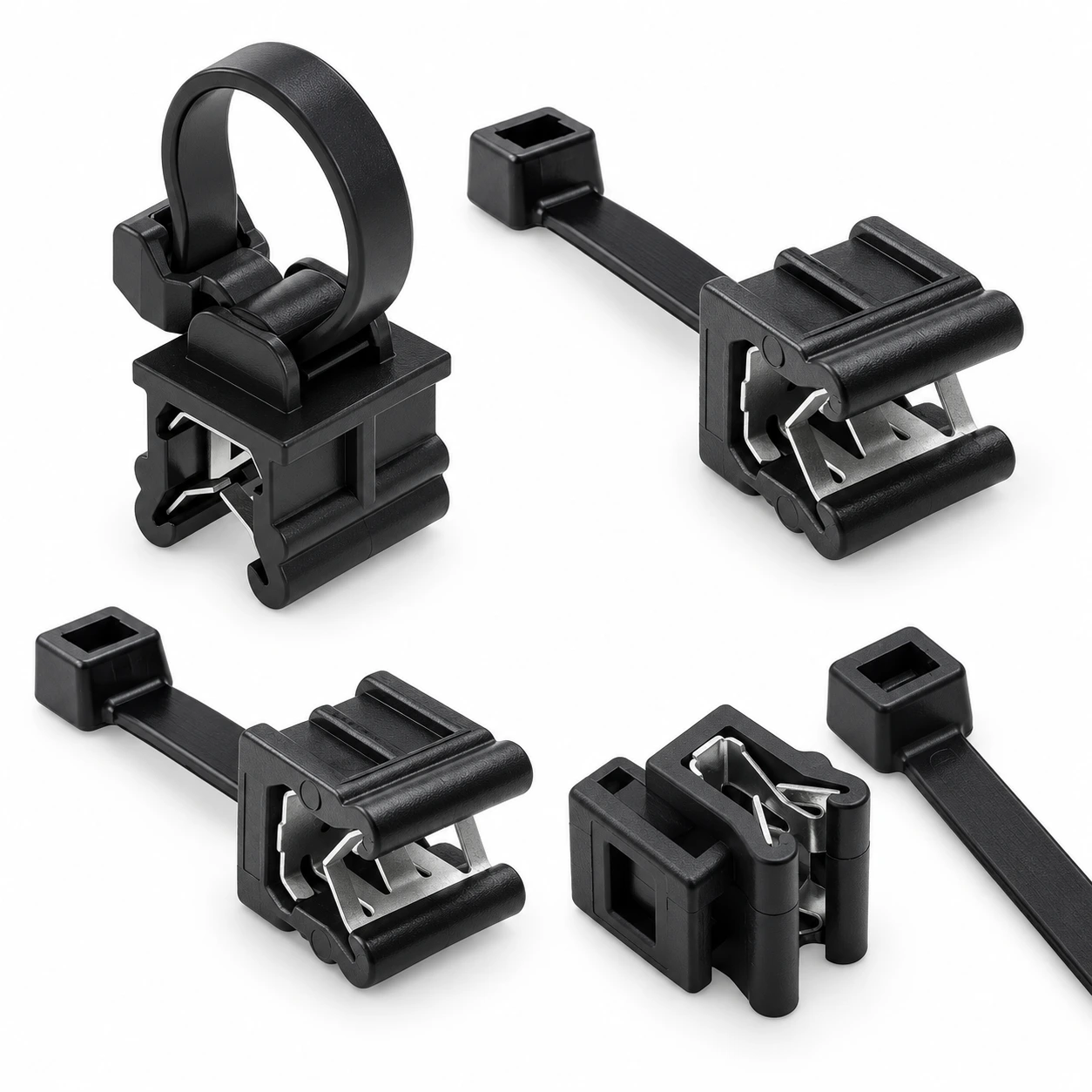
Route cables along panel edges with TONFUL edge clip cable ties. A nylon cable tie and push-on edge clip secure a wire bundle without a drilled mounting hole, helping simplify harness routing on suitable metal or plastic panels.
Compare top-mount and side-mount layouts, plus UV-stabilized and heat-resistant configurations for solar, automotive and equipment applications. Send your panel thickness, bundle size, routing direction and operating conditions for product selection and an OEM quotation.
Edge Clip Cable Tie Product Range

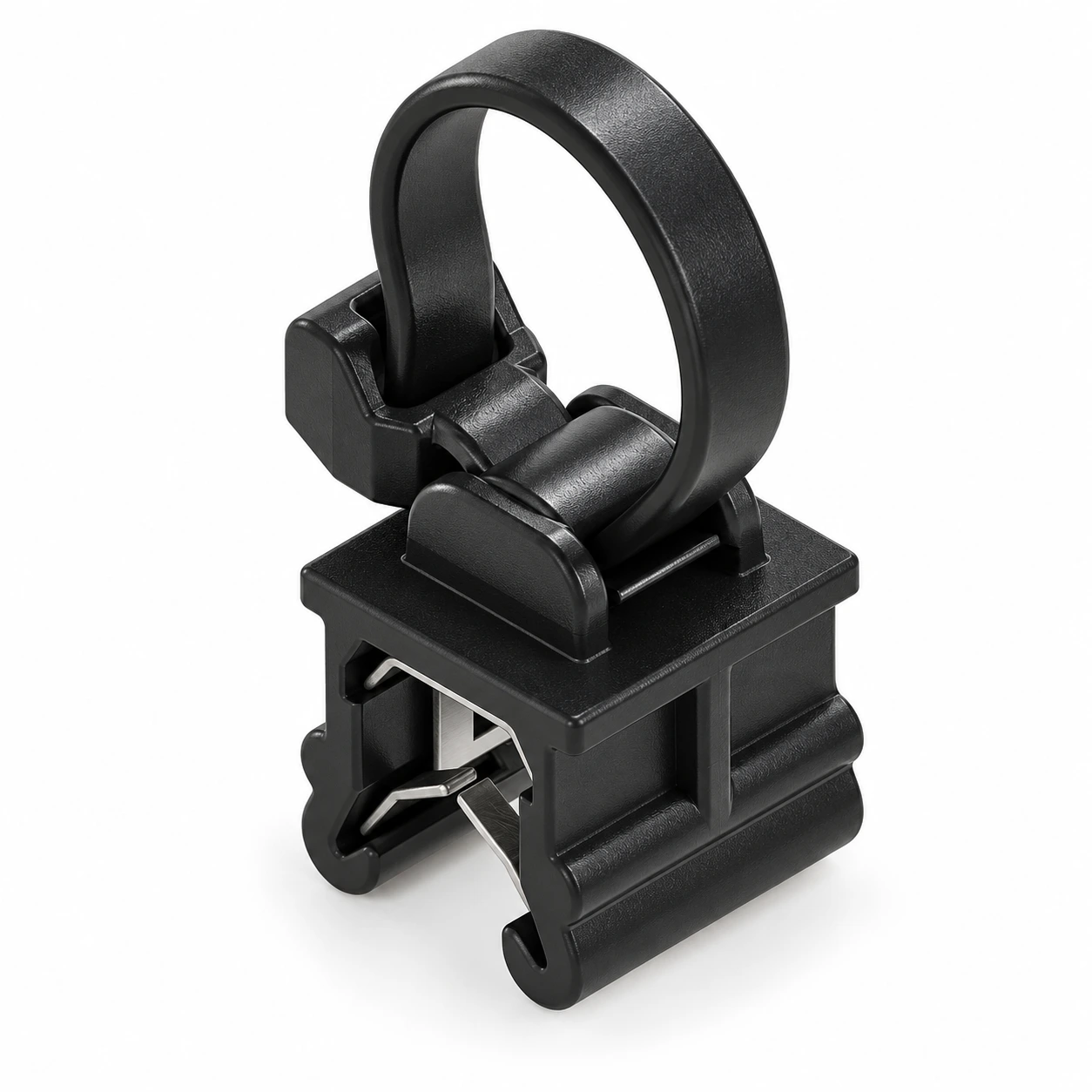
Top-Mount Edge Clip Cable Ties
Position the tie loop and cable bundle above the panel edge. Compare the clip opening, tie direction and available clearance with your panel and harness drawing.
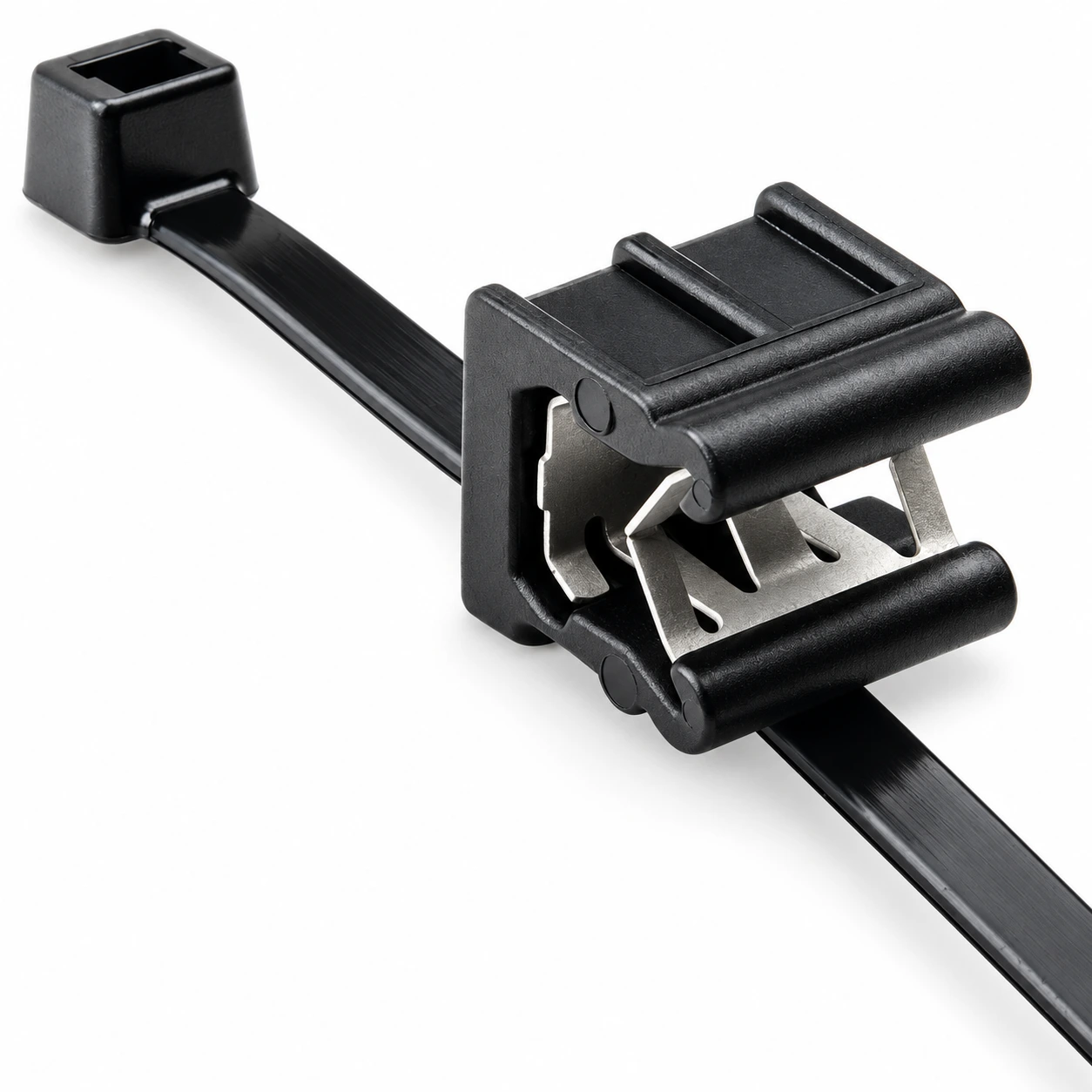
Side-Mount Edge Clip Cable Ties
Route the bundle beside the panel face using a side-positioned tie channel. Select the orientation needed to guide the cable parallel or perpendicular to the edge.
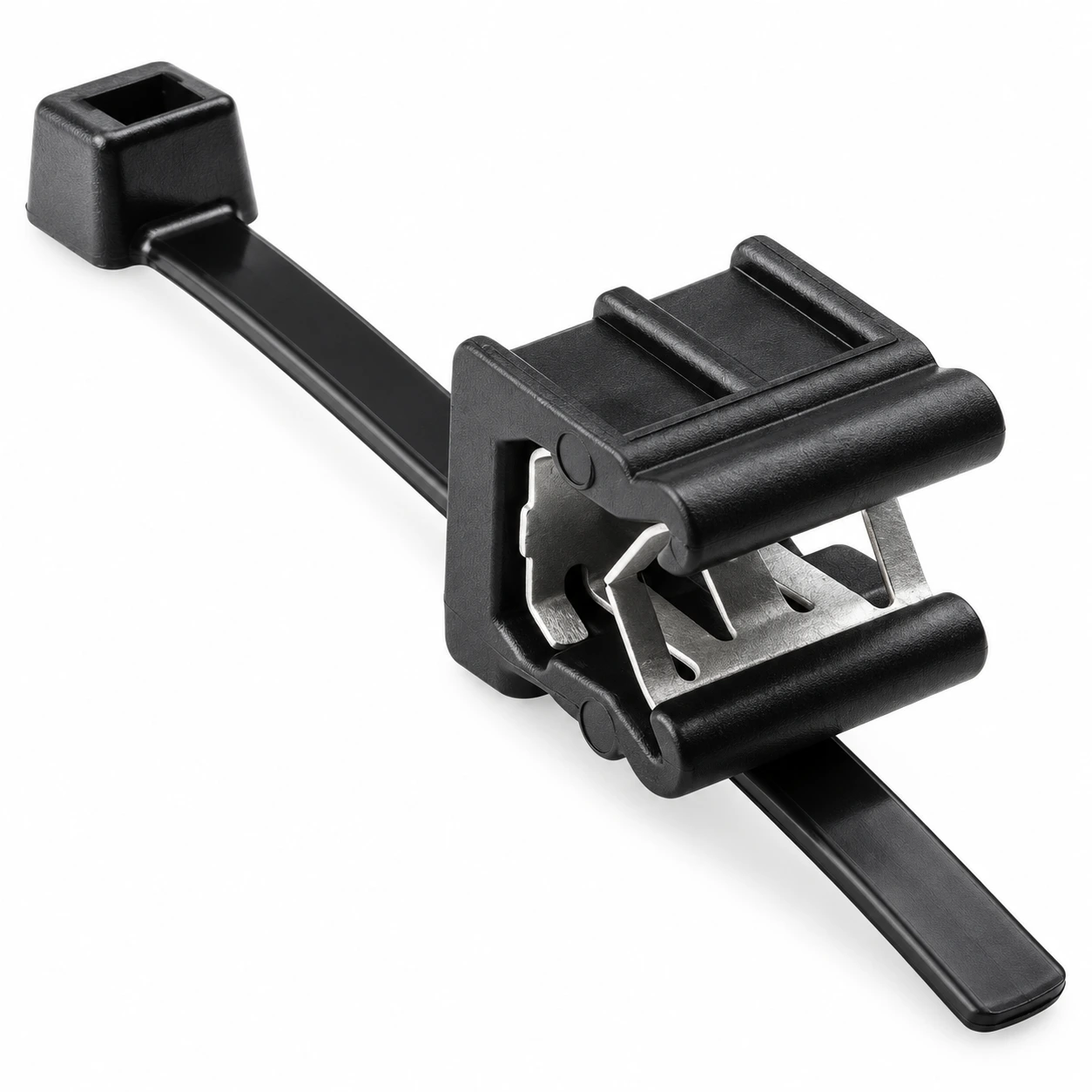
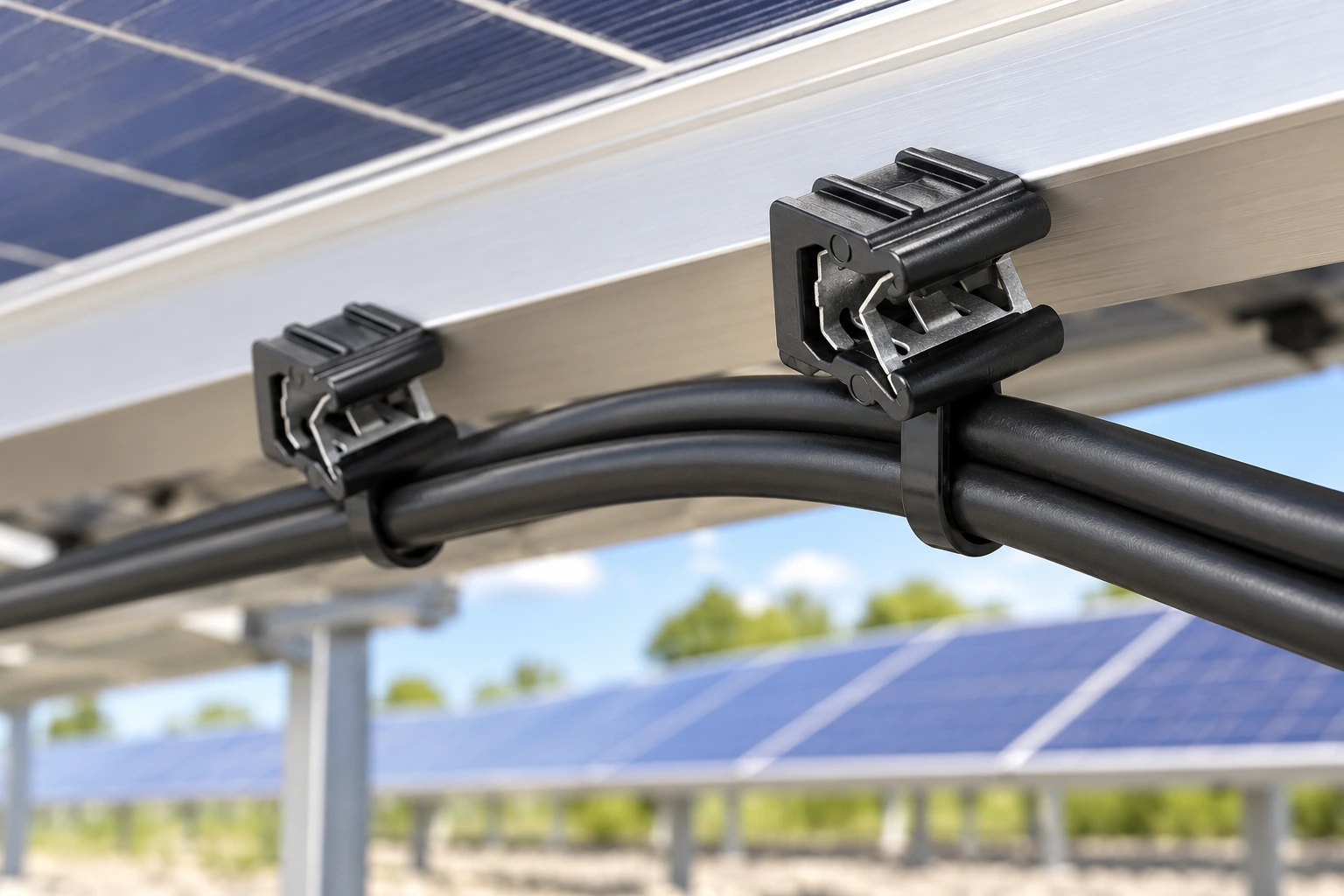
Solar UV-Resistant Edge Clip Assemblies
Review a UV-stabilized tie and a suitable corrosion-resistant clip for solar frame cable routing. Confirm frame thickness, exposure conditions and exact material grade before approval.
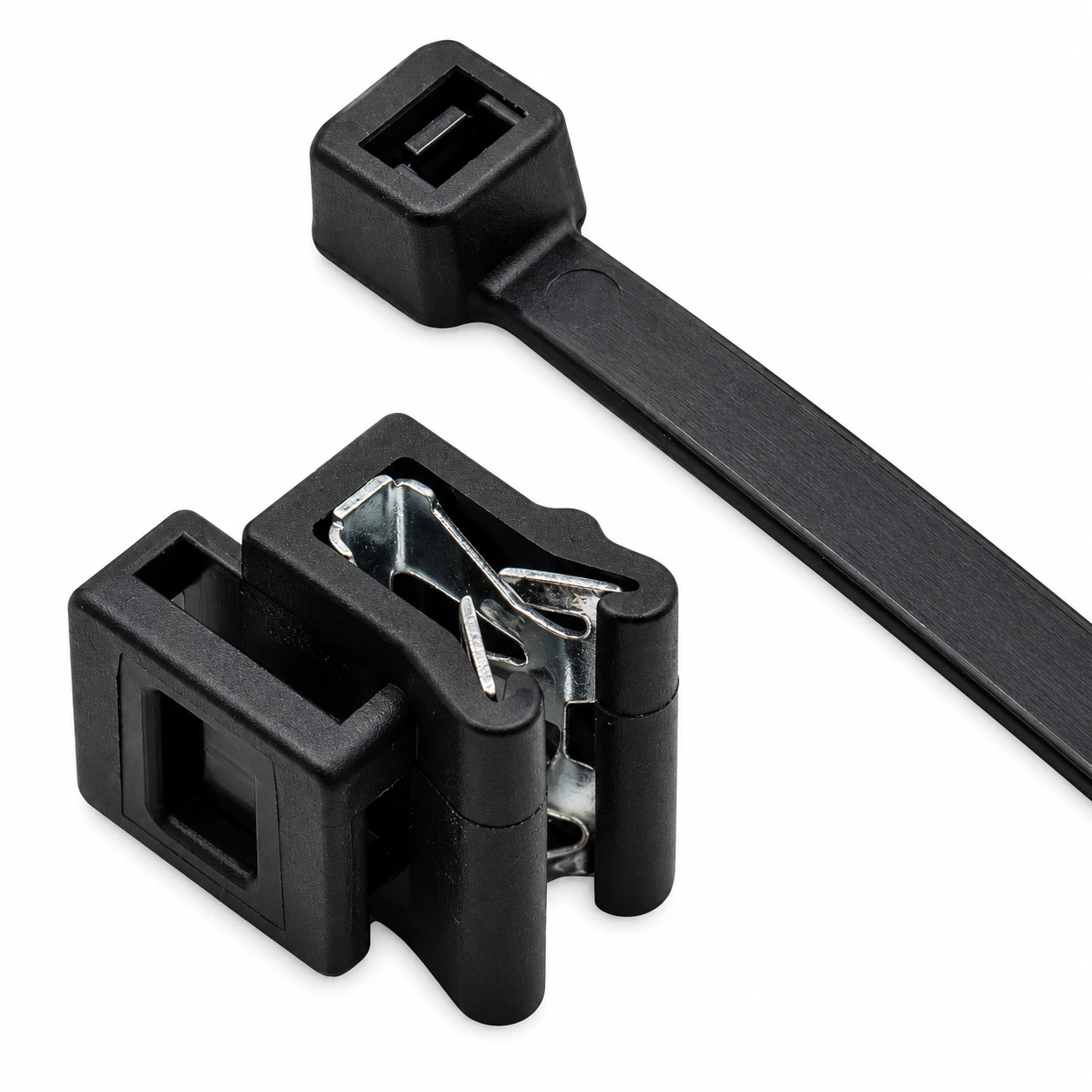
Automotive Heat-Resistant Edge Clips
Review heat-stabilized tie and clip configurations for vehicle harness routing. Confirm the location temperature, panel coating, fluid exposure and required retention test conditions.
Edge Clip Cable Tie Applications
Choose the clip around the panel edge, cable routing and operating environment. Review the complete tie-and-clip assembly on the actual panel before volume installation.

Solar PV Frame Cable Management
Secure insulated PV cables along suitable module-frame lips without drilling an extra fixing hole. Review frame geometry, clip contact, UV exposure, drainage and cable bend radius, and follow the module and cable-management installation requirements.
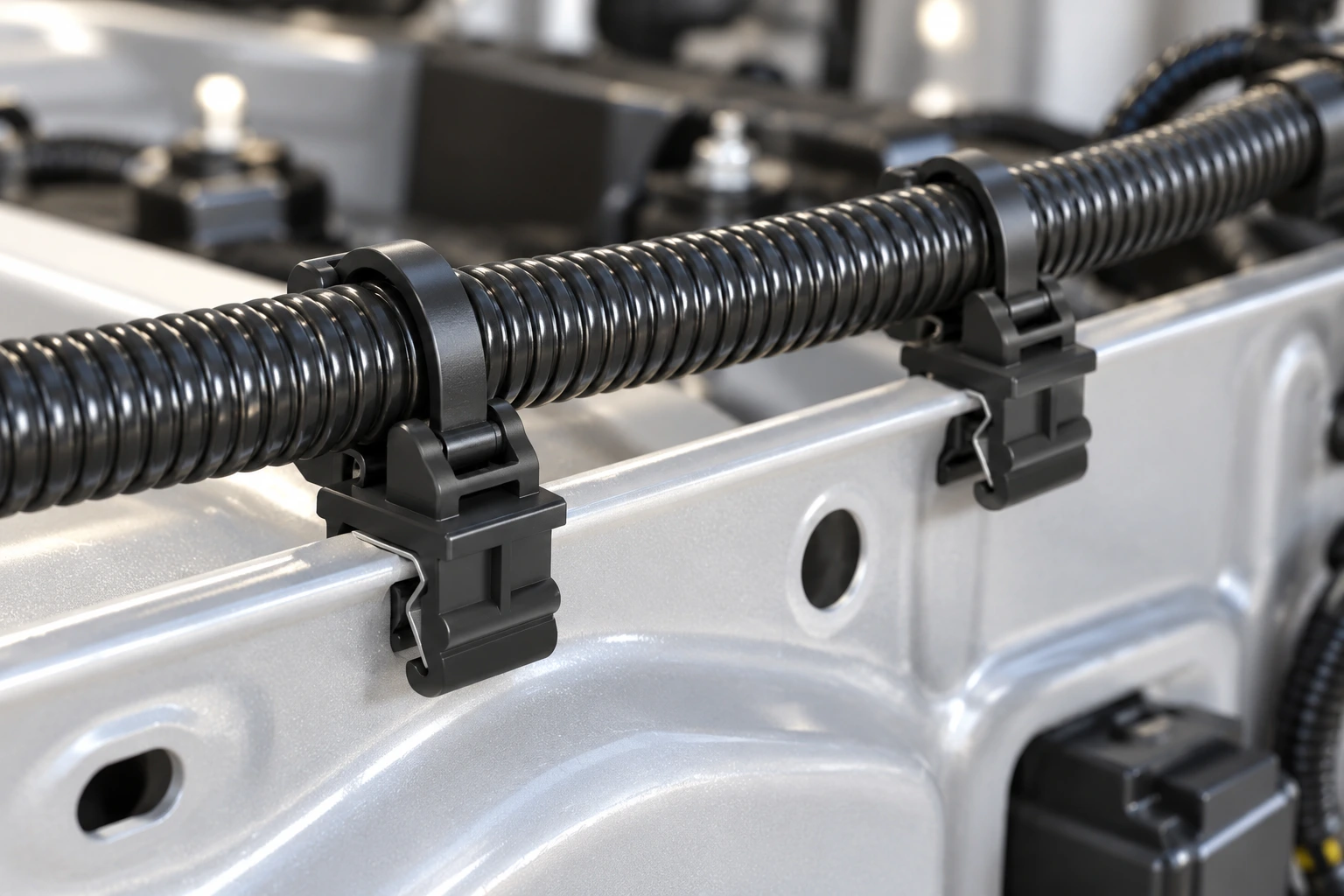
Automotive Wiring Harness Routing
Guide protected harnesses along chassis, body and equipment-panel edges. Select the tie direction and clearance for the harness path, then evaluate retention, vibration, temperature and panel-coating effects under the agreed vehicle requirements.
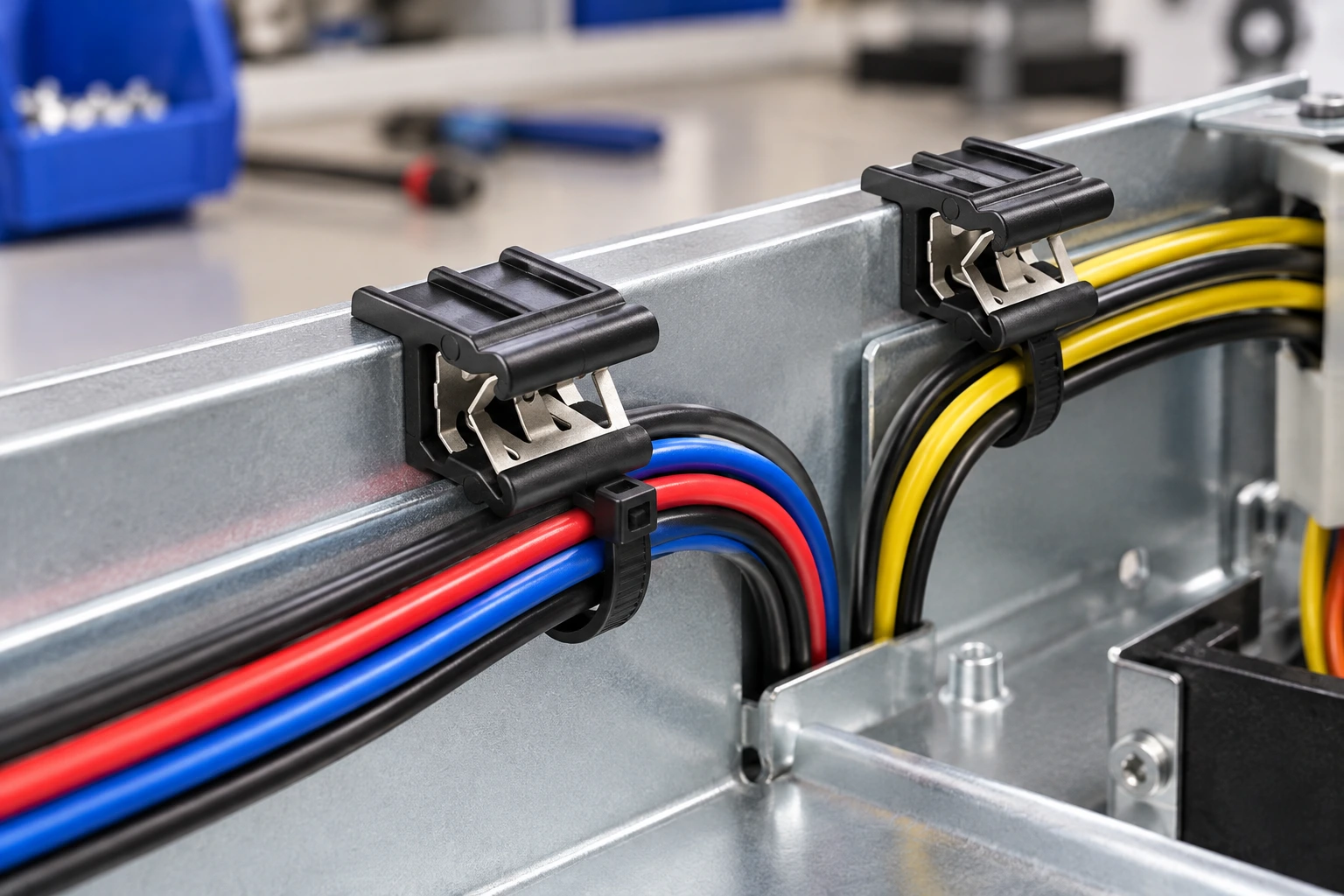
Appliance & Industrial Equipment
Use panel-edge mounting to organize internal wiring in white goods, enclosures and machinery. Match the clip to flange thickness and edge profile, protect cable jackets from sharp edges and allow suitable access for assembly and servicing.
Application images are generated illustrations of typical settings, not customer installation records.
Edge Clip Cable Tie Specifications
| Specification | Information for Selection |
|---|---|
| Product construction | Nylon cable tie with an edge clip; pre-assembled or supplied to the agreed configuration |
| Cable tie material | PA66; UV-stabilized and heat-stabilized grades available by selected part |
| Clip construction | Spring-steel clip or molded housing with a metal retaining insert, according to the selected design |
| Clip material / coating options | Zinc- or Dacromet-coated spring steel; POM housing or stainless-steel retaining features where specified |
| Panel thickness groups | 0.7–3.0mm and 3.0–6.0mm options; select a clip rated for the actual panel thickness |
| Mounting layouts | Top mount or side mount; tie routing parallel or perpendicular to the edge, depending on clip design |
| Standard temperature option | −40°C to +85°C for the specified standard grade; confirm limits for the complete assembly |
| Heat-resistant option | Up to +125°C for specified heat-resistant grades; confirm the grade and required exposure duration |
| Flammability options | UL 94 V-2 material option; V-0 by request where available. A material classification is not a listing of the complete assembly |
| Outdoor selection | Specify UV exposure, moisture, corrosion environment and required test evidence for the selected tie and clip |
| Retention / pull-off force | Request the exact part’s force data, panel material, thickness, coating and test method |
| Tie dimensions / bundle capacity | Specify tie length, width, loop tensile requirement and minimum / maximum bundle diameter |
| Panel interface | Confirm edge radius, burr condition, material, coating and available engagement depth |
| Packing and documents | Agree part identification, pack quantity, labels and model-specific compliance or inspection documents |
Configuration Comparison
| Configuration | Routing / Selection Focus |
|---|---|
| Top mount | Bundle above the edge; confirm vertical clearance and tie orientation |
| Side mount | Bundle beside the panel face; confirm side clearance and cable direction |
| Solar UV-resistant option | Match frame lip, tie material and clip corrosion resistance to the outdoor environment |
| Automotive heat-resistant option | Match the assembly grade, temperature exposure, panel coating and vibration requirements |
Thickness and temperature ranges describe available options and are not universal limits for every configuration. Request the exact ordering code, drawing and material specification before approving the assembly.
Information for an OEM Quotation
Provide panel material and thickness, edge profile and coating, cable bundle diameter, mounting orientation, tie dimensions, environment, retention requirements and quantity. Include a drawing or sample so the clip opening and routing can be reviewed.
Why Choose TONFUL Edge Clip Cable Ties
No-Drill Panel Mounting
A compatible edge clip pushes onto the panel edge, avoiding a dedicated mounting hole. Confirm panel fit and installation access for the selected design.
Top & Side Routing Options
Choose the position of the tie loop and cable bundle to suit the available clearance and harness path.
Integrated Cable Management
The clip provides an edge fixing point while the cable tie retains the bundle. Select dimensions and retention requirements for both parts of the assembly.
Material Options for the Environment
Review standard, UV-stabilized or heat-stabilized tie grades with the corresponding clip construction and corrosion protection.
Drawing & Fit Review
Compare panel thickness, opening, insertion depth, tie direction and bundle clearance against the approved drawing and sample.
OEM Order Support
Discuss tie dimensions, clip configuration, pack quantities, identification and inspection requirements for repeat production orders.
Select Your Edge Clip in Six Steps
Step 1: Measure the Panel Edge
State the actual thickness, material, edge profile and coating. Check burrs and available engagement depth against the clip drawing.
Step 2: Define the Cable Bundle
Provide the bundle diameter, cable-jacket requirements and routing path. Select tie length, width and loop tensile performance for the application.
Step 3: Choose the Mounting Layout
Decide whether the bundle should sit above the edge or beside the panel. Confirm the tie direction and assembly clearances.
Step 4: Specify the Environment
Share temperature, UV, moisture, chemicals and corrosion exposure. Identify the material grade and documentation required for the application.
Step 5: Evaluate Fit & Retention
Test an approved sample on the actual panel and cable bundle. Review installation force, pull-off resistance, coating effects and the agreed vibration or ageing checks.
Step 6: Confirm the Order Details
Agree the part code, drawing revision, quantity, sample approval, pack format, labels and delivery requirements before volume supply.
Request Samples for Panel Fit Evaluation
Send your panel and bundle details to discuss a suitable configuration, sample availability and evaluation requirements.
Edge Clip Cable Tie Workshop & Packaging

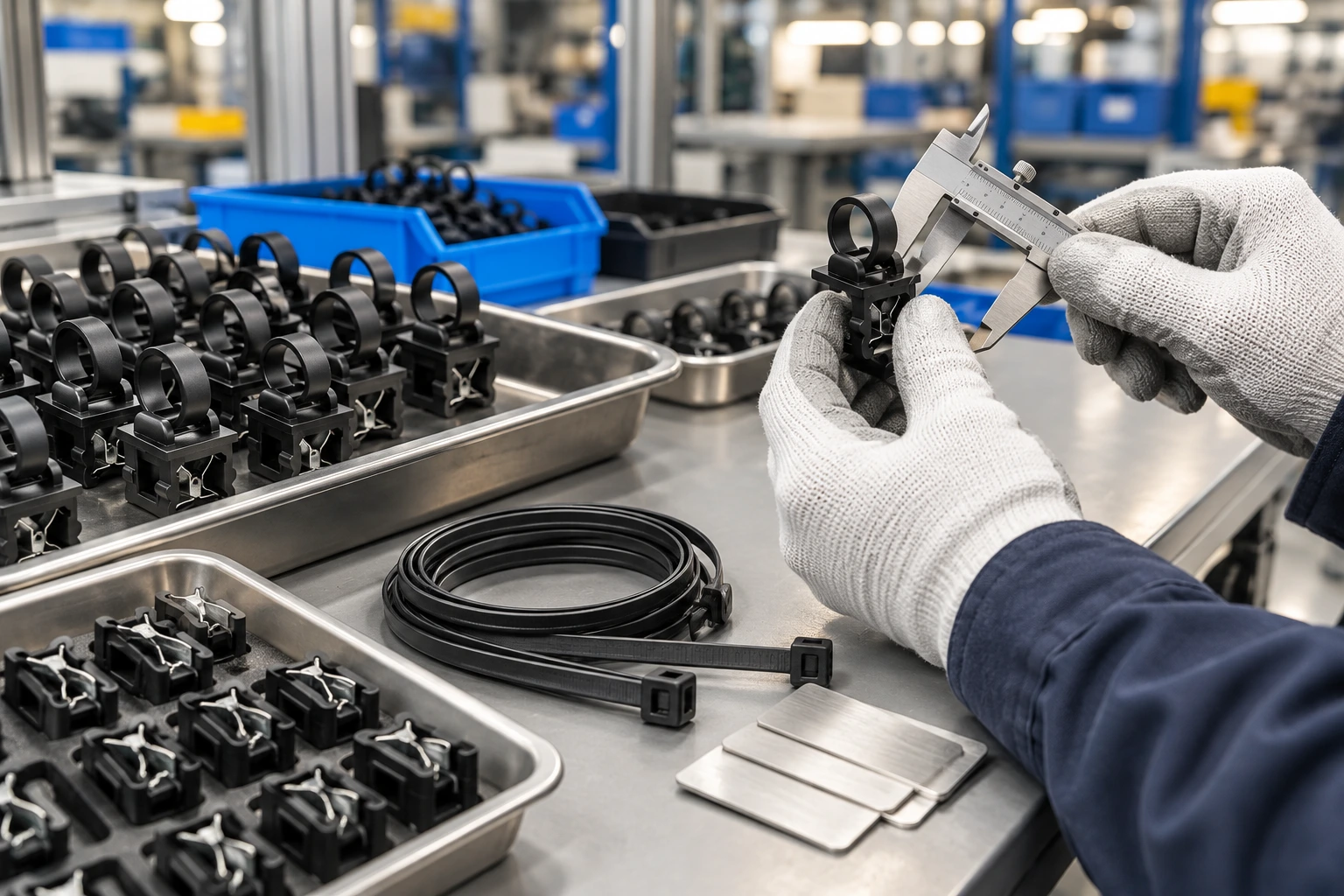
Clip Assembly & Inspection
Discuss molded-housing dimensions, spring-insert condition, tie routing and assembly checks against the approved drawing. Define panel-fit coupons and the insertion or pull-off checks required for your project. Confirm material identification, sampling and inspection records in the agreed quality plan.
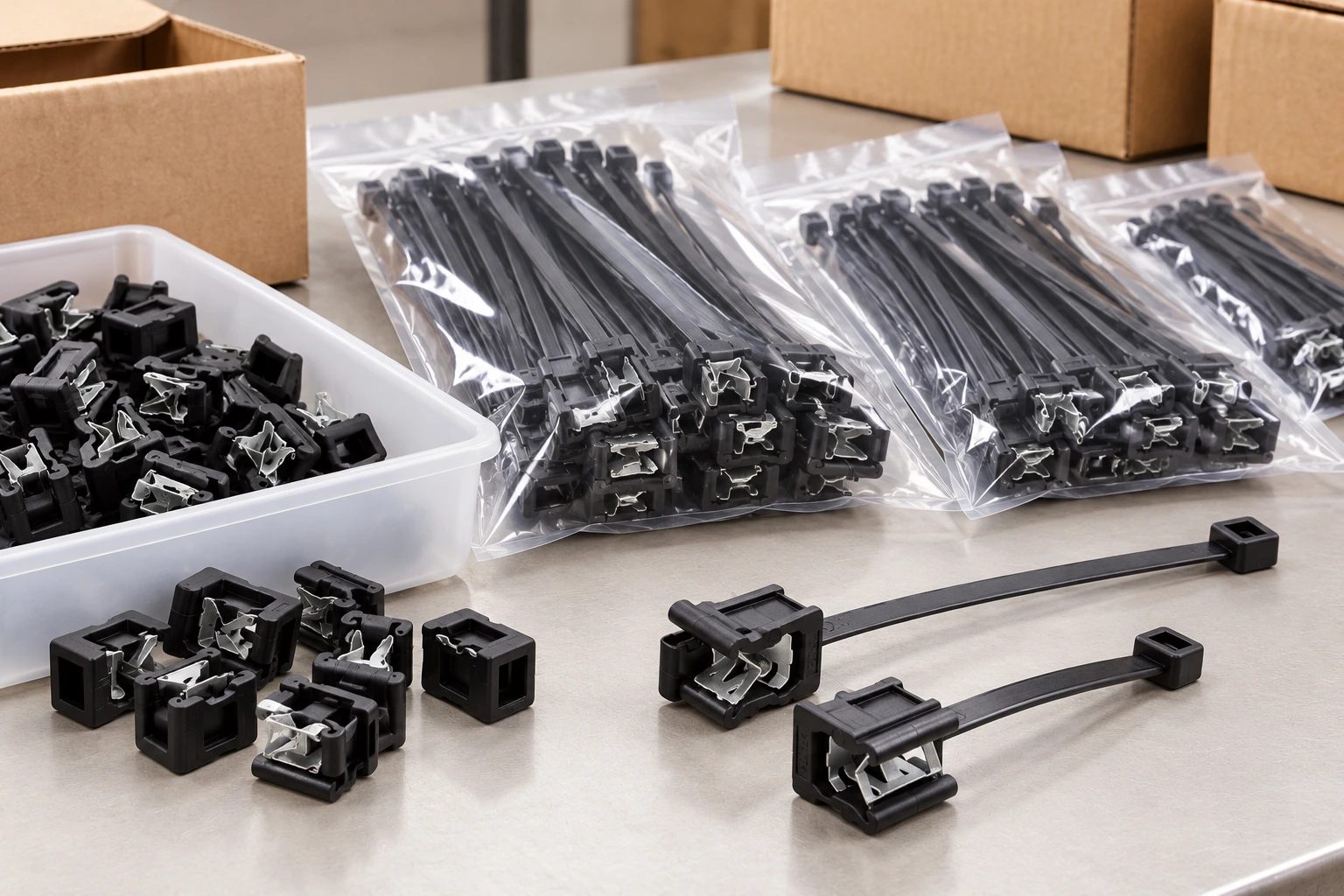
Sorted Bags & Protective Export Packing
Specify pre-assembled sets or separate ties and clips, quantity per bag and outer-carton requirements. Labels can identify configuration, panel-thickness range, tie dimensions, material grade and batch details. Agree OEM labels and packing format to help distinguish similar-looking variants at receiving and assembly.
Workshop and packaging images are generated illustrations, not photographs of the TONFUL factory or an actual shipment.
More Than Just an Edge Clip Cable Tie Supplier

Panel & Routing Consultation
Share the panel drawing, bundle position and available clearance to focus the clip selection.

Configuration Recommendations
Compare top-mount and side-mount layouts and review tie dimensions for the intended harness path.

Sample & Test Coordination
Define fit, retention, environmental exposure and documentation requirements for sample evaluation and production approval.

OEM Packing & Delivery Planning
Confirm assembled-set format, labels, pack quantities, destination and shipping terms in the quotation.
Edge Clip Cable Ties: Frequently Asked Questions
Q1: What is an edge clip cable tie?
It combines a cable tie with a clip designed to push onto a compatible panel edge. The clip provides a fixing point without a dedicated drilled mounting hole, while the tie retains the cable bundle.
Q2: How do top-mount and side-mount designs differ?
A top-mount layout positions the tie loop and bundle above the edge. A side-mount layout routes the bundle beside the panel face. Select the exact direction and clearance from the part drawing.
Q3: Which panel thicknesses can be used?
The listed options include 0.7–3.0mm and 3.0–6.0mm groups. These are selection ranges, not a claim that every clip fits every thickness. Confirm the part code, opening and retention data for the actual panel.
Q4: Do I need tools for installation?
Compatible push-on clips are normally fitted onto the panel edge by hand. Follow the selected part’s installation instructions, seat the clip fully and use suitable tie tensioning and cutting tools where required.
Q5: Can an edge clip damage a painted panel?
Retaining barbs grip the edge and may mark or penetrate a coating. A plastic housing does not by itself guarantee a scratch-free interface. Evaluate the exact clip on the actual panel and agree corrosion and surface-finish requirements.
Q6: Are solar and automotive versions the same?
They may look similar but require different material and exposure reviews. Confirm UV stability, corrosion resistance, temperature grade and the test requirements for the selected assembly. Appearance alone does not establish the grade.
Q7: Can the tie and clip be removed and reused?
Do not assume reuse. A standard self-locking tie is generally cut for removal, and withdrawing the clip can damage its retaining features or the panel. Follow the selected part’s removal and replacement instructions.
Q8: What should I send for a quotation?
Send panel thickness and material, coating, edge drawing, bundle diameter, tie orientation and dimensions, environment, retention requirements, quantity and packing preferences. Include a sample or photograph where useful.
Request Edge Clip Cable Tie Information
Share your panel thickness, bundle diameter, routing layout, operating conditions and quantity for product selection and an OEM quotation.
Email ivan@tonful.com or open the enquiry window below.