Blog

Your blog category

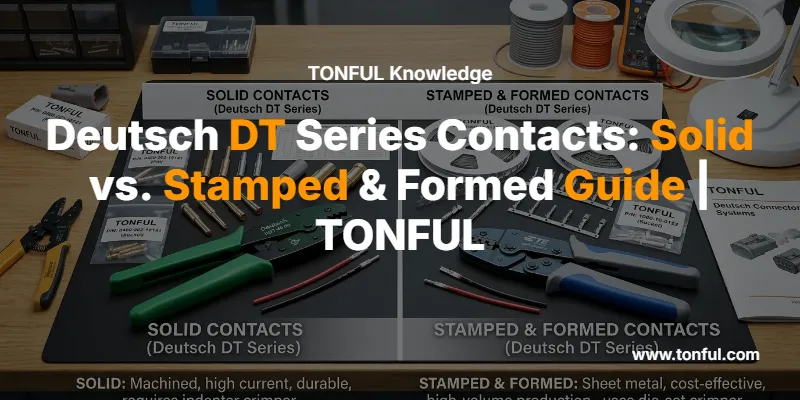
Deutsch DT Series Contacts: Solid vs. Stamped & Formed Guide | TONFUL

When specifying connectors for automotive, industrial, or marine applications, understanding the differences between solid and stamped & formed contacts in the Deutsch DT Series can significantly impact your project’s performance, cost, and reliability. This comprehensive buyer’s guide examines both contact types to help engineers and procurement professionals make informed decisions. Understanding Deutsch DT Series Contacts …

Deutsch DT Series Contacts: Solid vs. Stamped & Formed Guide | TONFUL Read More »
Delphi Metri-Pack & Weather Pack Replacement Terminals | TONFUL

Whether you are repairing an OEM wiring harness or building a custom loom from scratch, sourcing the correct replacement terminals for Delphi Metri-Pack and Weather Pack connectors is critical to long-term electrical reliability. Both connector families—originally developed by Packard Electric and now manufactured under the Aptiv brand—remain the backbone of automotive, heavy-truck, and off-highway electrical …

Delphi Metri-Pack & Weather Pack Replacement Terminals | TONFUL Read More »

Terminal Push-Out Force: Preventing Automotive Connector Failures

Every modern vehicle contains between 1,500 and 5,000 electrical terminals locked into connector housings. When even one terminal pushes out of position, the result can range from an intermittent warning light to a complete system failure at highway speed. Terminal push-out force—the minimum force required to dislodge a fully seated terminal from its connector cavity—is …

Terminal Push-Out Force: Preventing Automotive Connector Failures Read More »

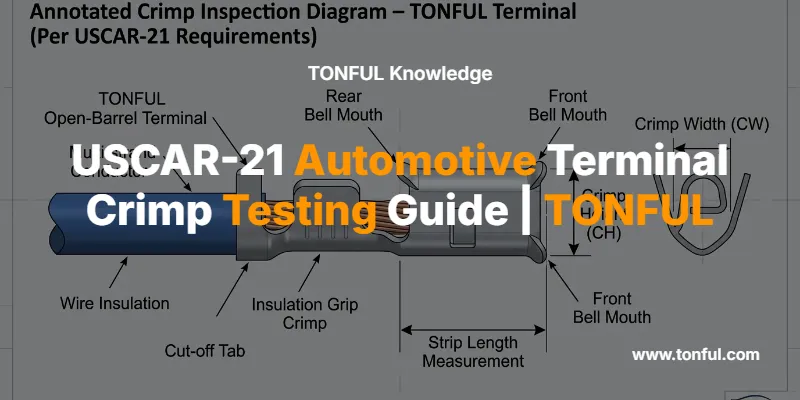
USCAR-21 Automotive Terminal Crimp Testing Guide | TONFUL

Every crimped connection in a modern vehicle must survive 15 years and 150,000 miles of thermal cycling, vibration, and electrical load—without a single measurable increase in resistance. That is the engineering promise behind the USCAR-21 crimp standard, and it is the benchmark against which TONFUL Electric validates every automotive terminal we manufacture. As a wire …

USCAR-21 Automotive Terminal Crimp Testing Guide | TONFUL Read More »

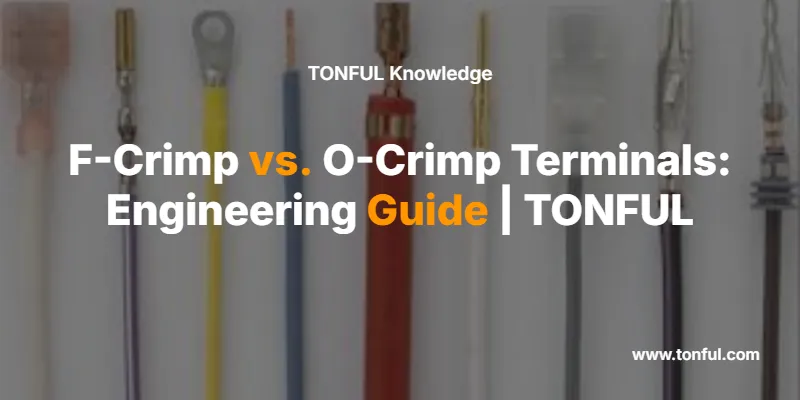
F-Crimp vs. O-Crimp Terminals: Engineering Guide | TONFUL

Every crimped connection in a modern vehicle carries a silent promise: uninterrupted current, mechanical resilience, and decades of service under vibration, heat, and moisture. The crimping profile—the geometric shape pressed into the terminal barrel during assembly—determines whether that promise is kept. Among the profiles used in automotive wire harness production, the F-crimp terminal and the …

F-Crimp vs. O-Crimp Terminals: Engineering Guide | TONFUL Read More »

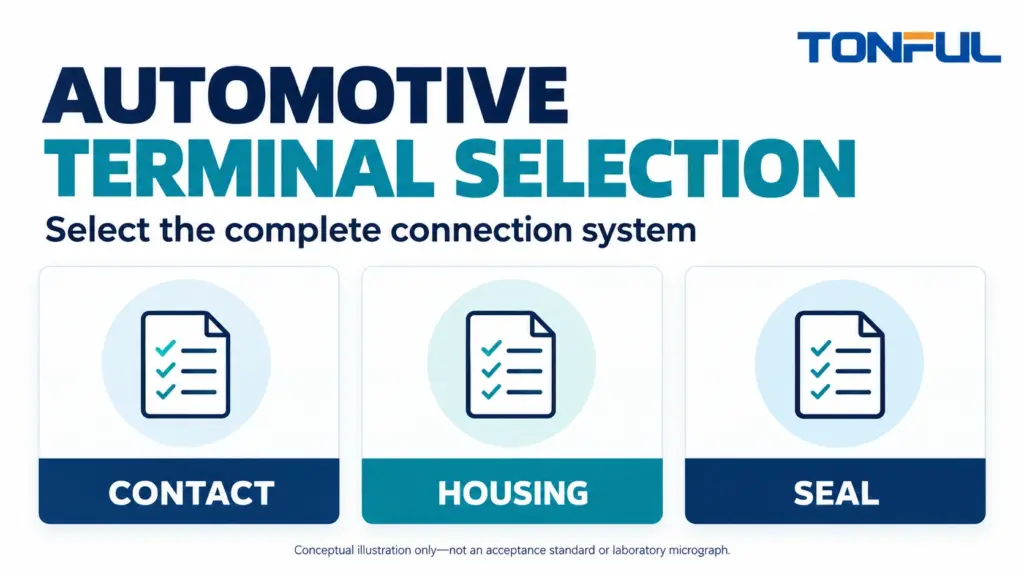
Automotive Terminal Selection: Contacts, Housings and Seals

Automotive terminal selection means selecting a connection system, not finding a metal contact that looks similar to the removed part. The terminal must match its mating interface, housing cavity, wire construction, sealing arrangement and application tooling. A contact can accept the conductor yet fail to lock into the housing or compromise the wire seal. Start …

Automotive Terminal Selection: Contacts, Housings and Seals Read More »

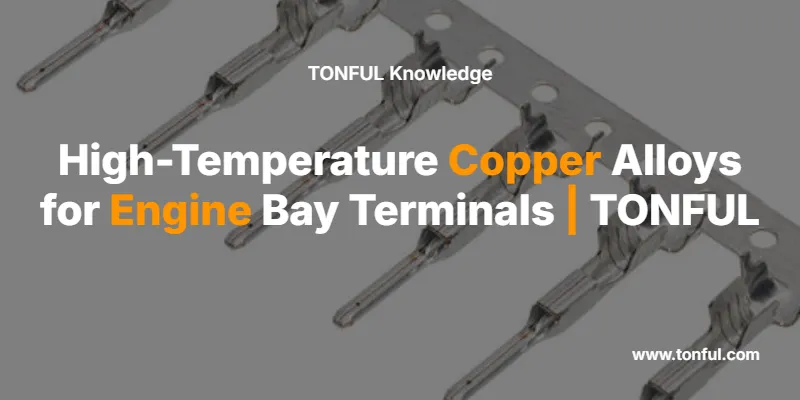
High-Temperature Copper Alloys for Engine Bay Terminals | TONFUL

Modern automotive engine bays present one of the harshest environments for electrical components. With temperatures routinely exceeding 150°C near exhaust manifolds and turbochargers, standard copper terminals quickly degrade, leading to connection failures, voltage drops, and costly warranty claims. For automotive OEMs and tier-1 suppliers, selecting the right high-temp automotive terminals isn’t just about meeting specifications—it’s …

High-Temperature Copper Alloys for Engine Bay Terminals | TONFUL Read More »

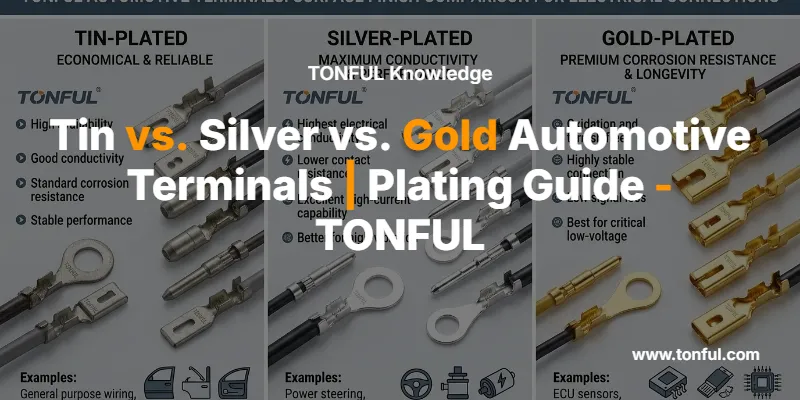
Tin vs. Silver vs. Gold Automotive Terminals | Plating Guide – TONFUL

Selecting the right plating material for automotive terminals is a critical decision that directly impacts electrical performance, corrosion resistance, and long-term reliability. As vehicles become increasingly electrified and sophisticated, understanding the differences between tin, silver, and gold plated terminals has never been more important for engineers, procurement specialists, and automotive manufacturers. This comprehensive guide examines …

Tin vs. Silver vs. Gold Automotive Terminals | Plating Guide – TONFUL Read More »

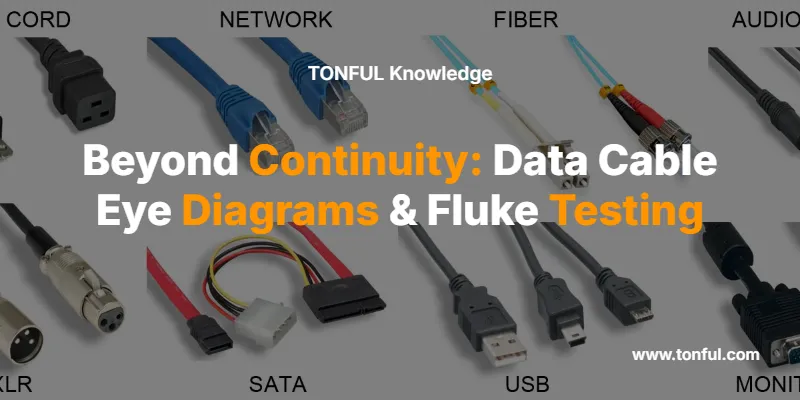
Beyond Continuity: Data Cable Eye Diagrams & Fluke Testing

A cable that passes a simple continuity check can still cause packet loss, latency spikes, and intermittent link drops once it carries gigabit-speed data. Continuity only confirms that copper conductors are connected end-to-end — it reveals nothing about crosstalk, return loss, jitter, or impedance mismatches that cripple high-speed networks. That gap between “wires connected” and …

Beyond Continuity: Data Cable Eye Diagrams & Fluke Testing Read More »

Medical Cable Assembly RFQs: Scope and Validation

A medical cable RFQ should define the cable’s role in the finished device before requesting a material or price. A cable inside an enclosure, a reusable operator-handled lead and a patient-contacting accessory have different risk and evidence boundaries. Calling all three “medical-grade” does not make their documentation or validation interchangeable. This guide supports procurement and …

Medical Cable Assembly RFQs: Scope and Validation Read More »

Scroll to Top

Ask For Quote Now