Blog

Your blog category

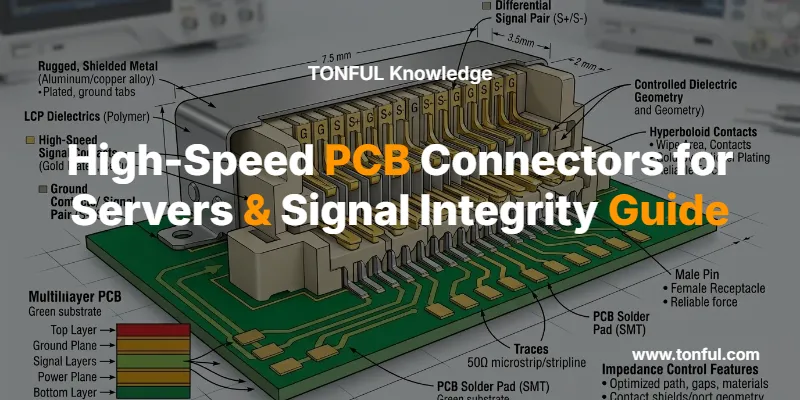
High-Speed PCB Connectors for Servers & Signal Integrity Guide

In today’s data-driven world, server performance hinges on reliable, high-speed data transmission. As data centers push toward 112G and 224G signaling speeds, PCB connectors have become critical components in maintaining signal integrity and system reliability. For engineers designing next-generation server infrastructure, understanding how to select and implement high-speed PCB connectors is essential for preventing data …

High-Speed PCB Connectors for Servers & Signal Integrity Guide Read More »
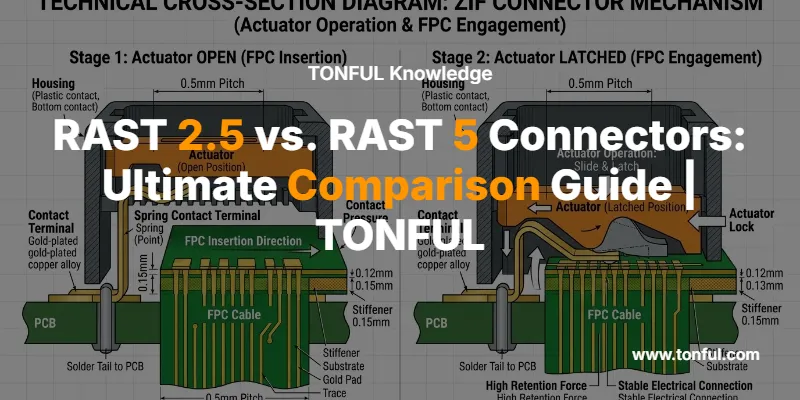
RAST 2.5 vs. RAST 5 Connectors: Ultimate Comparison Guide | TONFUL

When it comes to reliable electrical connections in home appliances, RAST connectors have become the industry standard. Developed by leading European manufacturers in the 1980s, these wire-to-board connectors deliver exceptional performance in washing machines, dishwashers, refrigerators, and countless other household devices. Understanding the differences between RAST 2.5 and RAST 5 connectors is essential for engineers, …

RAST 2.5 vs. RAST 5 Connectors: Ultimate Comparison Guide | TONFUL Read More »

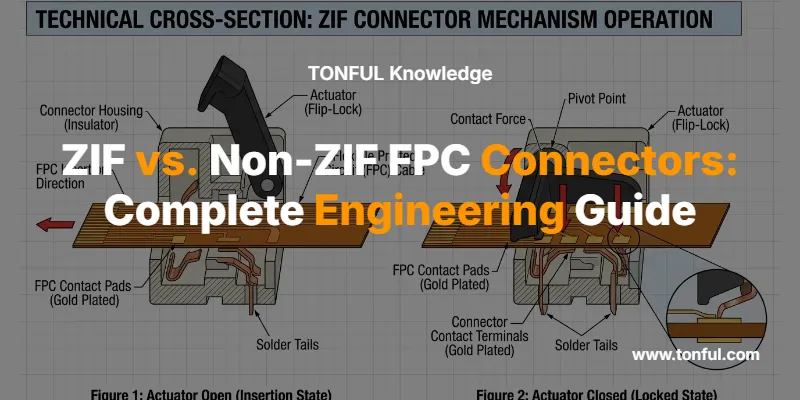
ZIF vs. Non-ZIF FPC Connectors: Complete Engineering Guide

In the world of modern electronics, Flexible Printed Circuit (FPC) connectors have become indispensable components for connecting flexible circuits to printed circuit boards. As devices become increasingly compact and complex, understanding the differences between ZIF (Zero Insertion Force) and Non-ZIF FPC connectors is crucial for engineers, manufacturers, and procurement professionals. This comprehensive guide explores both …

ZIF vs. Non-ZIF FPC Connectors: Complete Engineering Guide Read More »

Press-Fit vs. Soldered Connectors: Why Telecom Chooses Solderless

Quick Summary: Press-fit connectors create gas-tight, solderless interconnections by pressing compliant pins into plated-through holes (PTH) on a PCB. According to IEC 60352-5, this method is at least 10× more reliable than traditional soldered joints — which is exactly why the global telecom industry adopted press-fit technology at scale and has never looked back. TONFUL …

Press-Fit vs. Soldered Connectors: Why Telecom Chooses Solderless Read More »

Automotive PCB Connectors | IATF 16949 Certified | TONFUL

TONFUL automotive PCB connectors, including pin headers, wafer connectors, and FPC connectors, meticulously arranged on an industrial workbench, showcasing our IATF 16949 compliant manufacturing excellence. Introduction: Why PCB Connectors Are the Backbone of Automotive Electronics Modern vehicles contain between 1,500 and 3,000 individual electrical connectors, and a growing share of these are PCB connectors — …

Automotive PCB Connectors | IATF 16949 Certified | TONFUL Read More »

Floating Board-to-Board Connectors: Absorbing PCB Vibration

High-resolution view of a TONFUL floating board-to-board connector installed between two PCBs, highlighting the spring-loaded contacts designed for optimal vibration absorption in industrial applications. Introduction: Why Standard Board-to-Board Connectors Fail Under Vibration In modern electronics — from automotive ECUs and industrial PLCs to medical imaging systems and EV battery management units — printed circuit boards …

Floating Board-to-Board Connectors: Absorbing PCB Vibration Read More »

Wafer Connector Cross-Reference Guide: JST, Molex & TE Alternatives | TONFUL

By TONFUL Electric | PCB Connector Engineering Series When your supply chain hits a wall — a discontinued part number, an extended lead time, or a cost-driven redesign — knowing how to cross-reference a wafer connector to a reliable alternative is an essential engineering skill. This guide delivers a systematic, pitch-by-pitch cross-reference framework covering the …

Wafer Connector Cross-Reference Guide: JST, Molex & TE Alternatives | TONFUL Read More »

Female Header Pitch Guide: 1.27mm vs. 2.0mm vs. 2.54mm | TONFUL

By TONFUL Electric | PCB Connector Engineering Series When selecting a female header or pin header connector for your PCB design, one specification dominates every other consideration: pitch — the center-to-center distance between adjacent pins. Choose the wrong pitch and your connector simply won’t mate. Choose it wisely, and you unlock the perfect balance of …

Female Header Pitch Guide: 1.27mm vs. 2.0mm vs. 2.54mm | TONFUL Read More »

Pin Header vs. Box Header: PCB Connector Guide | Tonful Electric

When designing a PCB or sourcing components for production, one of the most fundamental decisions you’ll face is choosing between a pin header and a box header (also called a shrouded header). While both are staples of PCB interconnection, they serve meaningfully different purposes — and selecting the wrong one can lead to mismatched assemblies, …

Pin Header vs. Box Header: PCB Connector Guide | Tonful Electric Read More »

Crimping Tool Calibration Guide: Ensuring Pull-Off Force Compliance | TONFUL

In the electrical manufacturing industry, the reliability of crimped connections directly impacts product safety and performance. A properly calibrated crimping tool is essential for creating connections that meet industry standards and withstand mechanical stress. This comprehensive guide explores the critical process of crimping tool calibration and pull-off force compliance testing. Professional technician calibrating TONFUL crimping …

Crimping Tool Calibration Guide: Ensuring Pull-Off Force Compliance | TONFUL Read More »

Scroll to Top

Ask For Quote Now