
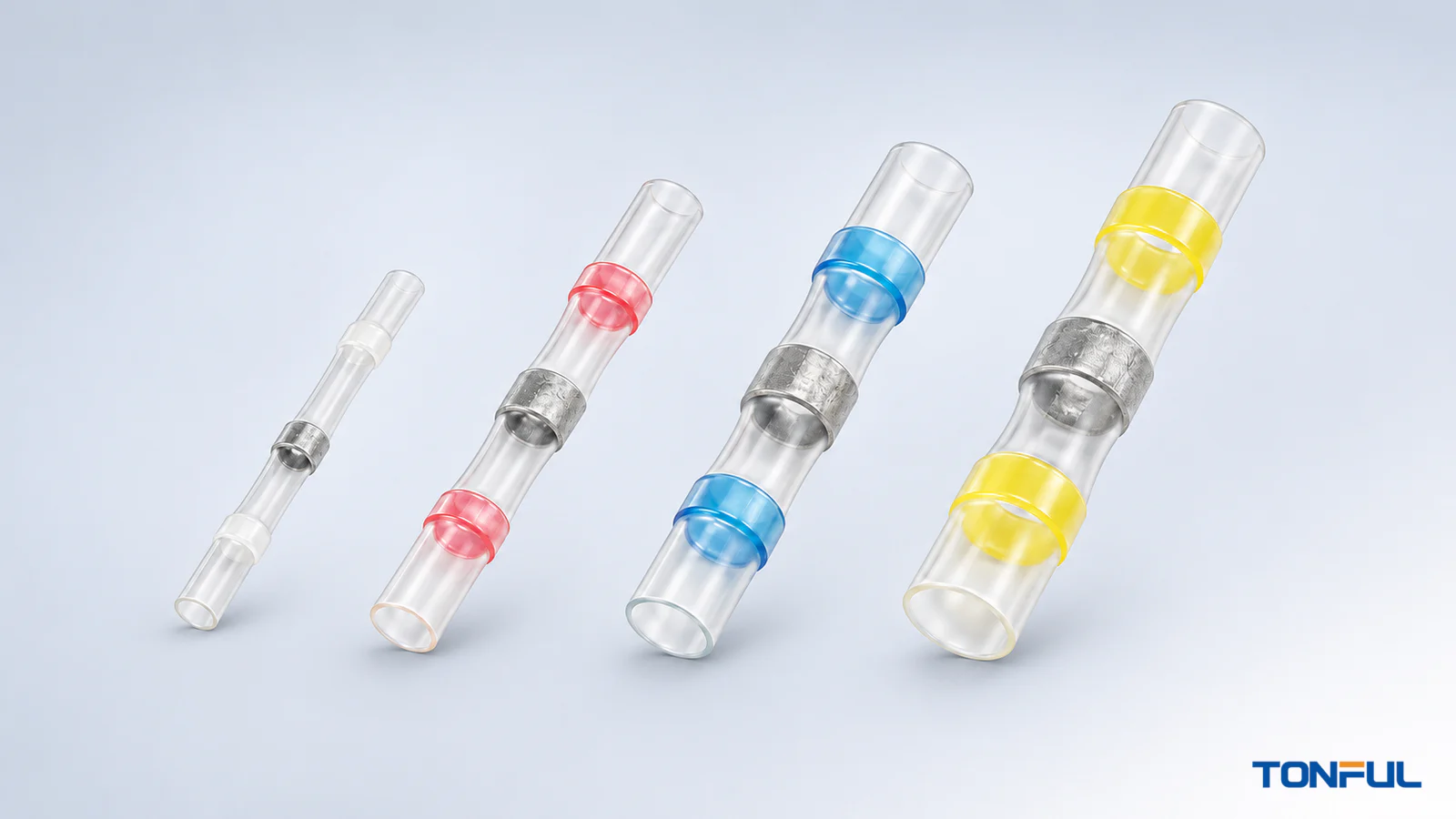
A solder seal connector can fit the conductor gauge on the purchase order and still leave a poor fit where the insulation enters the sleeve. Buy for the exact wire pair. Check the conductor size and the insulation outside diameter on both sides, get the proposed part drawing and heating instructions, and approve a sample made with your actual wires. For bulk orders, quote by the qualified part number and the quantity you need in each size.
This guide covers inline wire-to-wire sleeves for equipment and harness assemblies. The TONFUL HXT design combines a transparent heat-shrink sleeve, a central solder ring, and meltable end rings. The conductor overlap belongs under the solder ring, and the end rings act around the wire insulation during heating. Check the assembly drawing before shortlisting the splice type. If it specifies a crimped joint, use the approved crimp connector and tooling for that assembly. TONFUL HXT design and selection notes · TONFUL heat-shrink terminal range
Specify both wires before choosing a sleeve
Start with the actual wire part number on each side. Record the conductor material and finish, strand construction, nominal cross-section or American Wire Gauge (AWG), and insulation material. Add the minimum and maximum insulation outside diameter (OD) from the wire drawing when available. If the harness can use alternate wire suppliers or jacket constructions, list each permitted pair so the connector review covers the wire your production team may actually receive.
Check the solder zone and the wire entrances separately. The stripped conductors must fit in the arrangement specified for the connector, while each insulated end must fit the sleeve and give its sealing ring the required contact with the jacket. A thin-wall wire and a thicker-jacket wire of the same gauge can produce different fit at the sleeve entries. If both wire versions are approved for the harness, ask the supplier which diameter limits its part drawing covers and include the relevant extremes in the sample plan. TONFUL HXT dimension and selection notes
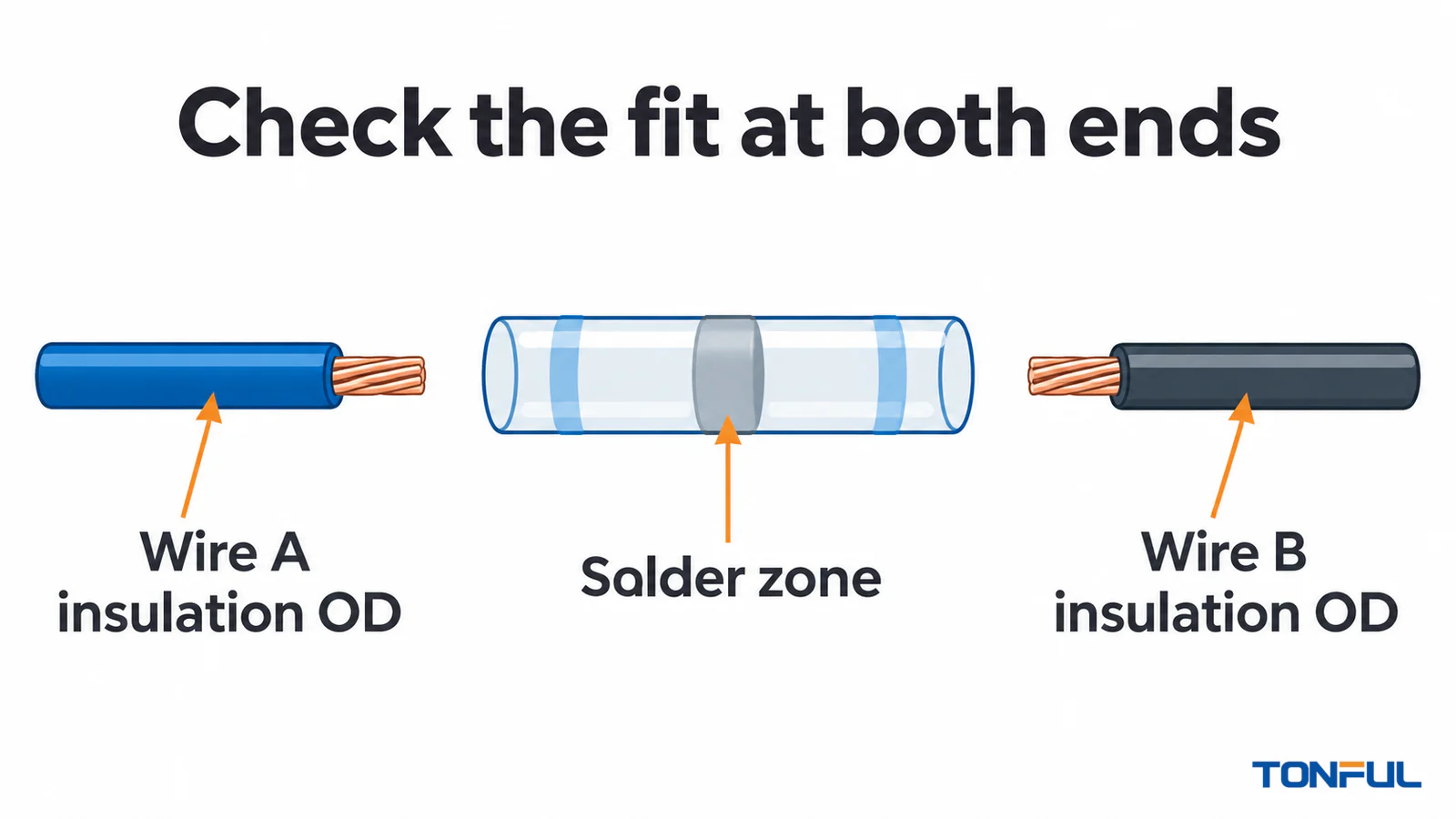
For a mixed-gauge splice or a proposed connection with several conductors entering one end, send a sketch showing the wire count and arrangement on each side. Ask for written confirmation of the exact combination. If the supplier confirms only the individual wire gauges, keep the combination open for drawing review. The overlap still has to fit the center of the sleeve, and the actual wire arrangement determines what the end ring has to seal.
Shortlist the TONFUL HXT model by part number
The published HXT catalog gives the following nominal conductor sections. Use them to shortlist a model, then check the current drawing for the complete wire combination, insulation fit, sleeve dimensions, and any required clearances. TONFUL HXT catalog dimensions and wire ranges
| HXT part number | Catalog conductor section | Catalog color |
|---|---|---|
| HXT-11 | 0.25–0.34 mm² | White |
| HXT-21 | 0.5–1.0 mm² | Red |
| HXT-31 | 1.5–2.5 mm² | Blue |
| HXT-41 | 4.0–6.0 mm² | Yellow |
Worked example. For two wires with a nominal conductor section of 1.5 mm² each, start the HXT drawing review with HXT-31. Red HXT-21 ends at 1.0 mm² in the HXT catalog. Red SST-S21 in the separate kit is listed through 1.5 mm². A request for “red solder seals” leaves the series and fit unresolved. Specify the complete model on the quotation and purchase order, and record the drawing revision used to approve it. TONFUL HXT catalog · TONFUL SST kit specifications
For that example, ask the supplier to confirm the two insulation ODs even when both conductors are nominally the same size. Then check where the sleeve will sit in the harness. A splice beside a branch, clip, or connector may have limited straight length or poor access for the specified heating tool. Include a routing sketch or photograph if access could affect the assembly trial.
Check fit before and after assembly. Before heating, the sleeve needs a clear path to the splice location and room for the specified conductor overlap. Once the sleeve has recovered, the finished joint needs to fit under the harness cover or through the intended routing space. If clearance is tight, request the relevant dimensions on the drawing and check the installed sample in place.
Define what the finished splice has to withstand
Describe the location of the splice when asking for a quote. Identify the required operating temperature and electrical limits, and state whether the splice will encounter splash, immersion, cleaning fluid, vibration, flexing, or abrasion. A harness inside a protected compartment and a harness below a washdown area may need different evidence even when the connector part number is the same. Ask which document or test record covers your actual installation.
If the quotation includes an IP claim, ask what was tested. IEC 60529 classifies degrees of protection provided by enclosures. For the proposed splice, request a report identifying the specimen, exact part, wire configuration, installation process, and exposure conditions. Ask the supplier to show how the reported configuration matches your assembly. Record the electrical and temperature limits separately for the selected model. IEC 60529 official scope · TONFUL HXT application and specification notes
Request the operating temperature limit and the assembly heating instructions as separate items. The operating limit describes conditions in service. The work instructions describe the setup used to make the joint. Tell the supplier if the splice sits close to a heat-sensitive connector seal, label, or wire jacket so the team can plan the trial around the actual installation.
For repairs or substitutions, check the approved service instructions or assembly drawing before treating a different sleeve as interchangeable. Ask the responsible engineer to resolve mismatches in wire material, jacket, approved joining method, or service exposure before the purchase is released.
Approve a sample made on the actual wires
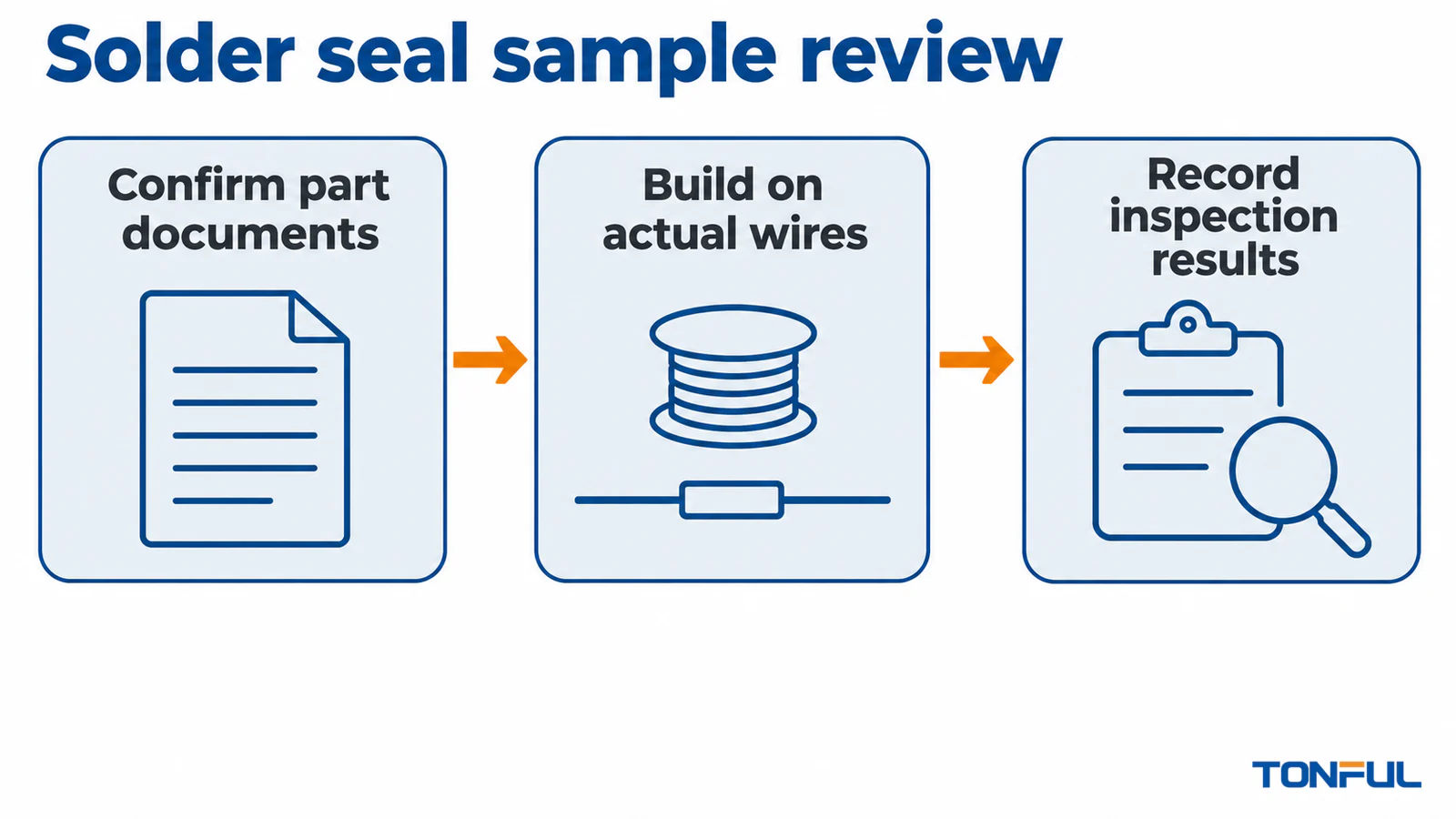
Have qualified staff build trial splices on de-energized assemblies using the exact connector, representative wires, and the specified hot-air equipment and work instructions. Record the sleeve model and lot, the wire references, the setup and any fixture, and the instruction revision. Use the production geometry where it affects heating access. A sleeve that is easy to heat on an open bench may be harder to process beside a branch or enclosure wall. TONFUL HXT selection and heating notes
Agree on visual criteria for the solder zone and both wire entries before samples are built. NASA-STD-8739.4A, Change 4, section 19.6 distinguishes solder wetting from sleeve conformity in its solder-sleeve workmanship requirements. That distinction is useful when writing a sample inspection sheet. Use the applicable project document and the selected sleeve instructions for the actual acceptance criteria. NASA solder-sleeve workmanship requirements, section 19.6
| Sample check | What to record before approval |
|---|---|
| Fit and position | Confirm the actual wire pair and connector model. Record conductor position in the solder zone and fit at each insulated entry. |
| Solder joint and sleeve | Capture the visible joint, sleeve condition, and both end areas against the agreed criteria. Record damaged insulation or an unclear joint as an inspection finding. |
| Electrical and mechanical results | Record the applicable check, method, result, and limit from the assembly specification. Include a defined resistance or pull test where required. |
| Exposure and sealing | Where specified, record the installed sample configuration, exposure method, and pass criteria. Tie the report to the approved wire pair and sleeve. |
Treat those checks as separate entries in the approval record. A continuity result answers whether the circuit conducts under the test conditions. Record mechanical strength or environmental sealing with the evidence the project calls for. If the drawing, spec, and supplier report disagree, hold approval until the responsible engineer identifies the acceptance rule.
Build the trial around the variations that matter. For example, if the bill of materials allows two jacket constructions for the same conductor, make and identify samples with each relevant wire pair. If heating access changes between workstations, document the setup used for each sample. Tie any failure to its wire pair and setup before trying a different sleeve. The resulting record gives purchasing a defined scope for approval.
Keep the approved combination visible on the purchase record. If the supplier changes the sleeve construction or if the harness changes its wire jacket or heating process, check whether the existing evidence covers the change. This gives receiving and production a reference for deciding whether to use the lot or request another trial.
Compare bulk and kit quotes by usable quantity
For a repeat harness build, request a line item per approved connector model and document revision. Set the quantity using the number of splices required for that wire pair, with allowance for inspection samples and any scrap observed during the trial. For an assortment, ask for the count by full model number, how the compartments or packs are labeled, and whether you can replenish individual sizes. Compare the kit quantities with the jobs on your order sheet before choosing a pack.
Use the same basis when comparing quotes. Divide the attributable cost of connectors, assembly labor, inspection, and trial-supported rework by the number of splices that meet your release criteria. Keep the scope and assumptions the same for each proposal. If reliable yield data is unavailable, compare quoted quantities and process time first, then update the calculation after trials. Track surplus kit pieces separately when you expect to use them in later jobs.
For repeat orders, decide how each shipment will be identified. Ask for model and lot information on the bags or cartons, and agree how changes in materials, dimensions, or supply revision will be communicated. That lets receiving match the delivery to the approved connector record before the parts are issued to production.
Send a request for quotation that can be reviewed
Use one line per wire pair or harness splice location. Give the supplier enough information to return a proposed part and the documents needed for approval.
| Include in the request | Ask the supplier to return |
|---|---|
| Wire part number, conductor size and construction, insulation material and OD for each side | Exact connector part number and drawing revision, with confirmation of the wire combination |
| Splice location, electrical requirements, exposure, and installation access | Applicable limits, available test evidence, and heating instructions |
| Required inspection and sample conditions | Sample availability and documents that define the acceptance criteria |
| Quantity by part number and packing requirements | Bulk or kit quantity breakdown, pack labeling, and replenishment options |
Send TONFUL your wire-pair schedule, candidate HXT model if known, splice environment, and order quantity by size. Ask for the current drawing and samples for the combinations you need to approve. Contact TONFUL for solder seal connector selection and quotation