Author name: tonful.com

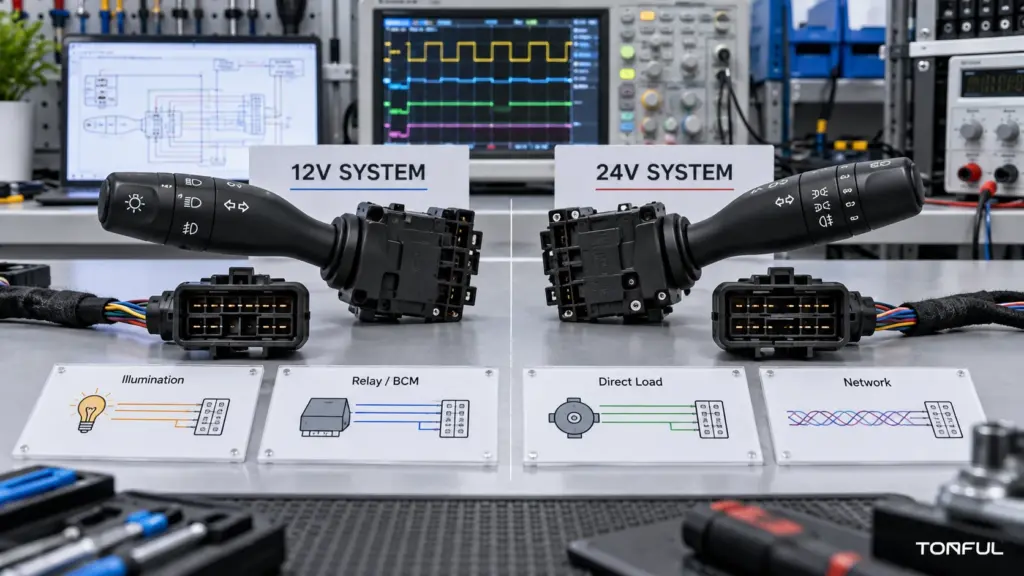
12V vs 24V Combination Switches: What Changes?

Selecting a 12V vs 24V combination switch requires more than matching nominal voltage, stalk action count and connector shape. A 24V label does not identify the circuit architecture, actual switch load, pinout, stalk position, cab generation, communication method or integrated functions. Two switches can appear interchangeable while using different terminal populations, resistance codes, illumination circuits …
12V vs 24V Combination Switches: What Changes? Read More »

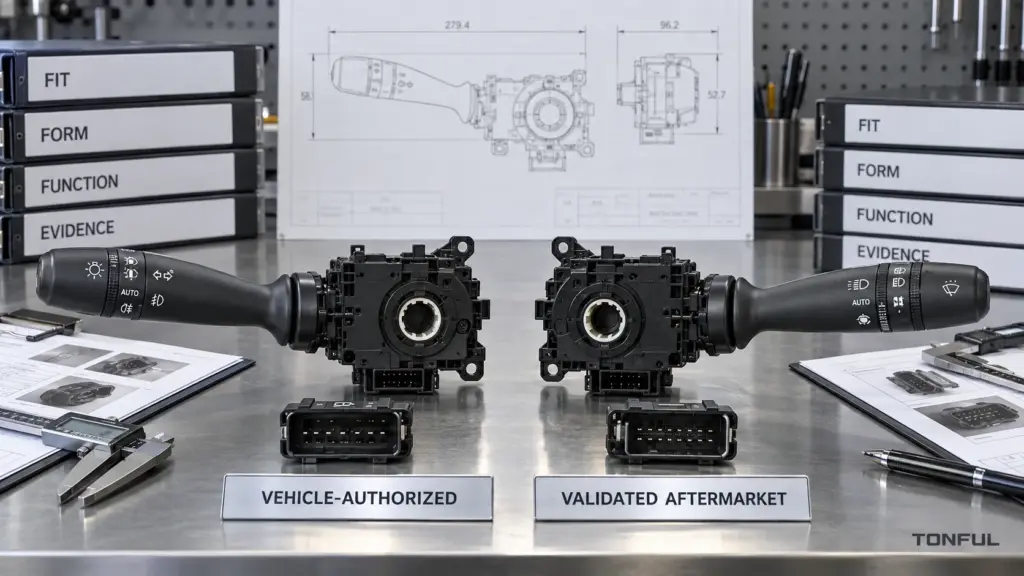
OEM vs Aftermarket Combination Switch: Fit and Function

The OEM-versus-aftermarket label does not by itself prove that a combination switch will fit, communicate correctly or survive the intended application. An OEM service part may offer strong vehicle-specific documentation but still require exact supersession and production-range checks. An aftermarket part may be suitable when its manufacturer supplies controlled interchange evidence, interfaces, functions, validation and …

OEM vs Aftermarket Combination Switch: Fit and Function Read More »

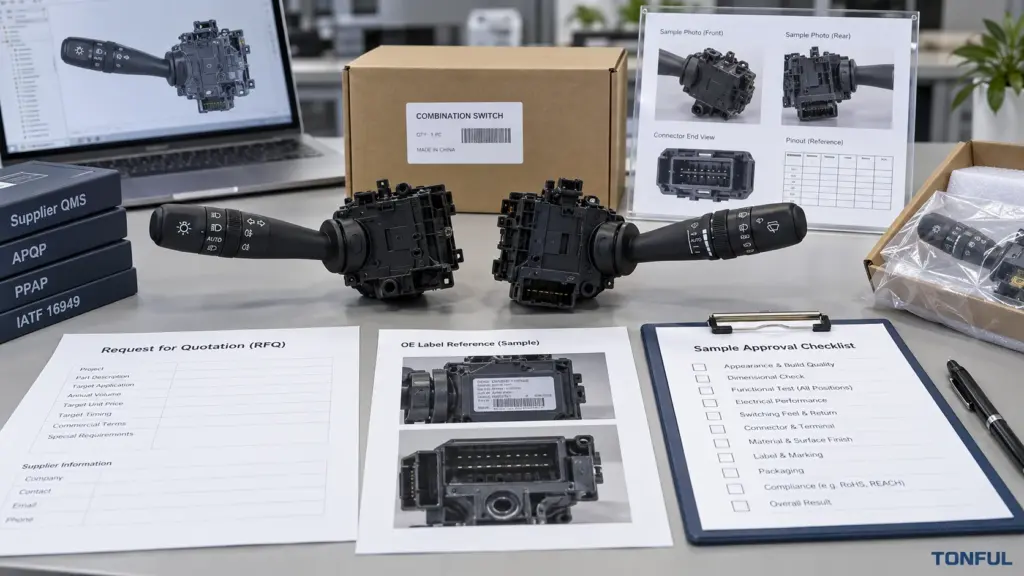
Combination Switch RFQ and Sample Approval Checklist

A useful combination switch RFQ does more than request a price against a photograph or shortened OE number. It defines the vehicle and market, complete reference chain, connector and pinout, function matrix, electrical architecture, mounting, appearance, validation, traceability and commercial conditions. Sample approval then proves only the agreed configuration and evidence—not every similar-looking switch. TONFUL’s …

Combination Switch RFQ and Sample Approval Checklist Read More »

Cable Tie RFQ and Specification Checklist for Buyers

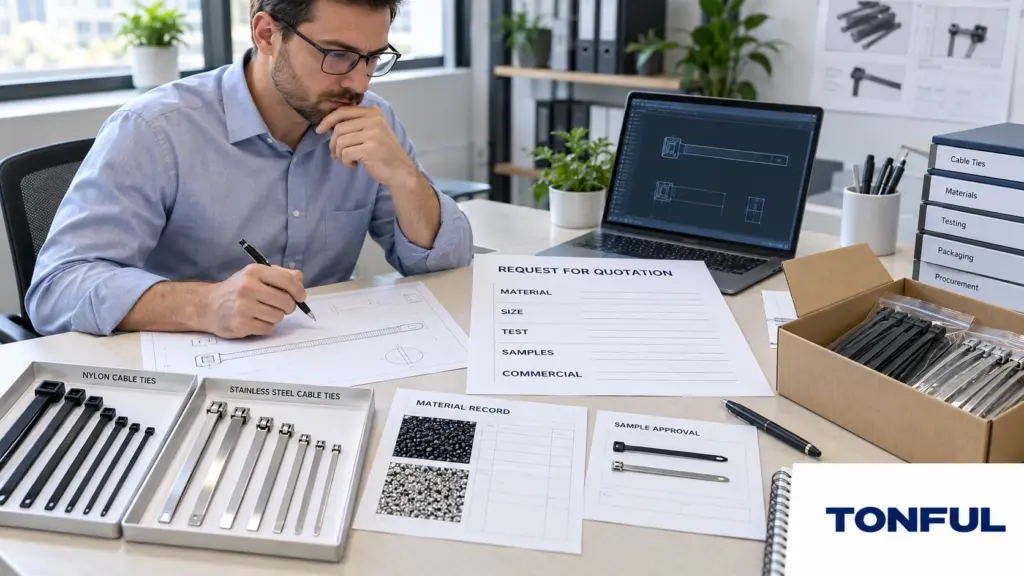
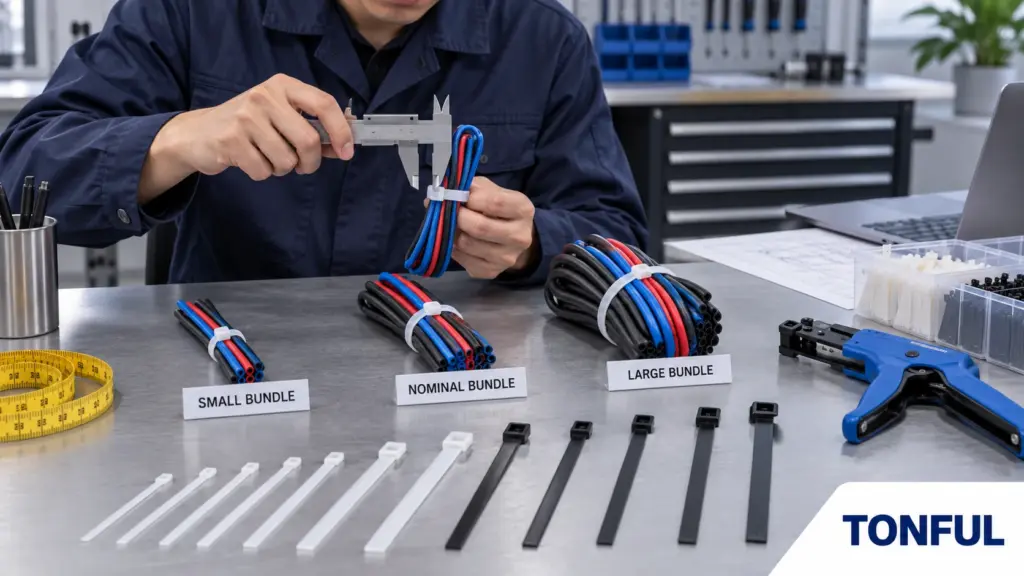
An RFQ that says only “black nylon cable ties, 200 mm, strong enough for automotive use” cannot produce comparable quotations. Suppliers may offer different resin grades, usable bundle ranges, head dimensions, moisture conditions, tools, test methods, packaging and evidence. The lowest quoted unit price may therefore correspond to a different product and a different risk. …

Cable Tie RFQ and Specification Checklist for Buyers Read More »

Cable Tie Manufacturer Audit Checklist for OEM Buyers

Approving a cable tie manufacturer should not depend on a showroom tour, one passing sample or an unchanged supplier part number. Cable tie performance is connected to resin or metal identity, tooling, tooth and lock geometry, conditioning, installation, testing, traceability and change control. A factory can produce an acceptable sample and still lack the controls …

Cable Tie Manufacturer Audit Checklist for OEM Buyers Read More »

Cable Tie Testing: Tensile, Locking and Conditioning

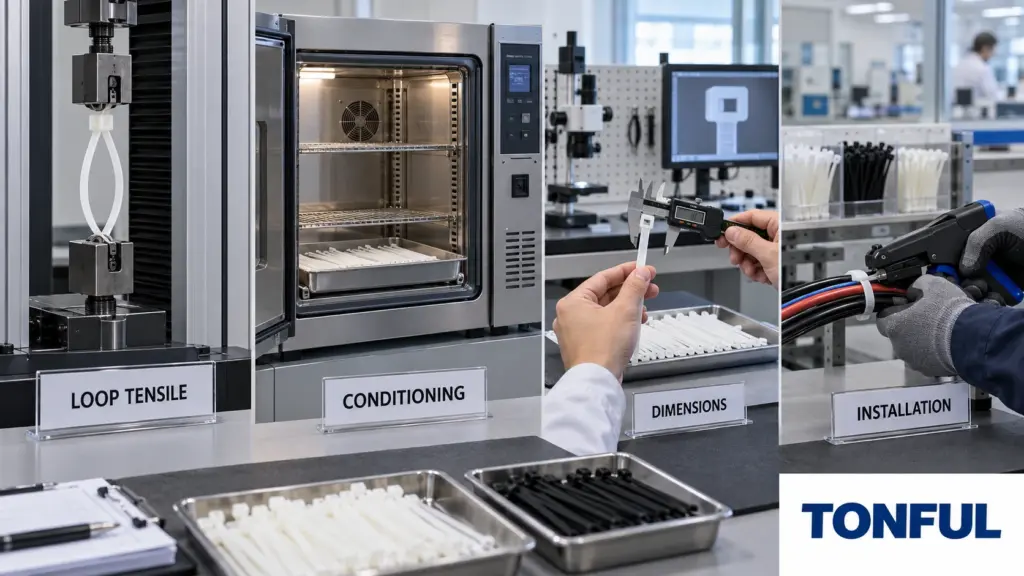
Cable tie testing should answer more than “How much force did it hold?” A useful plan connects specimen identity, conditioning, loop geometry, equipment, installation method, failure mode and acceptance source. Without those controls, a peak-force result cannot be compared reliably across lots, suppliers or materials. This guide organizes loop tensile, locking, conditioning and installation verification …

Cable Tie Testing: Tensile, Locking and Conditioning Read More »

Cable Tie Materials: PA66, PA12, ETFE and Stainless

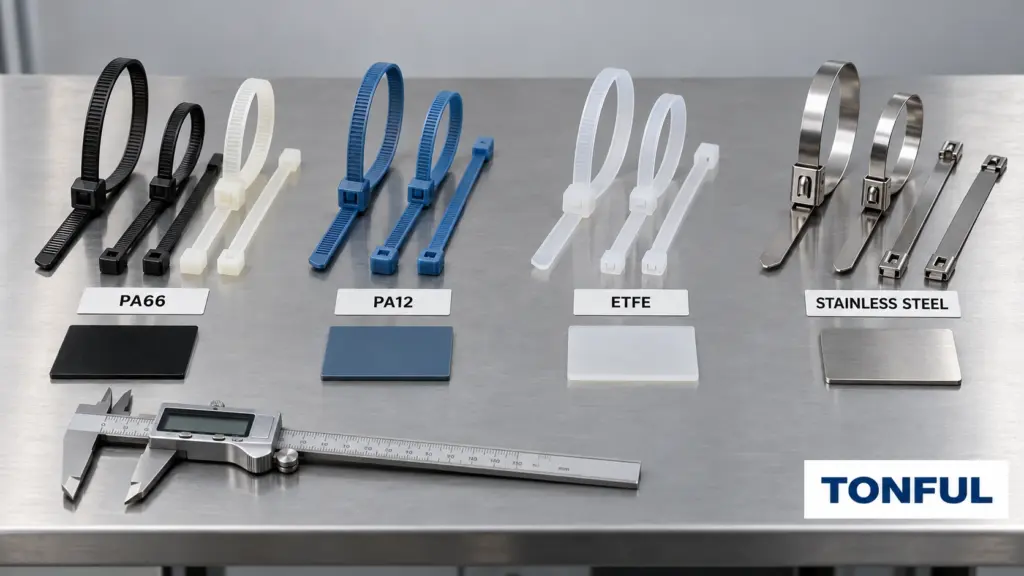
Cable tie material names are useful starting points, but they are not complete specifications. Two products described as PA66 can use different resin grades, stabilizers, pigments, conditioning processes and locking geometry. “ETFE” does not prove that a finished tie has the same properties as a film or another molded part. “Stainless steel” does not identify …

Cable Tie Materials: PA66, PA12, ETFE and Stainless Read More »

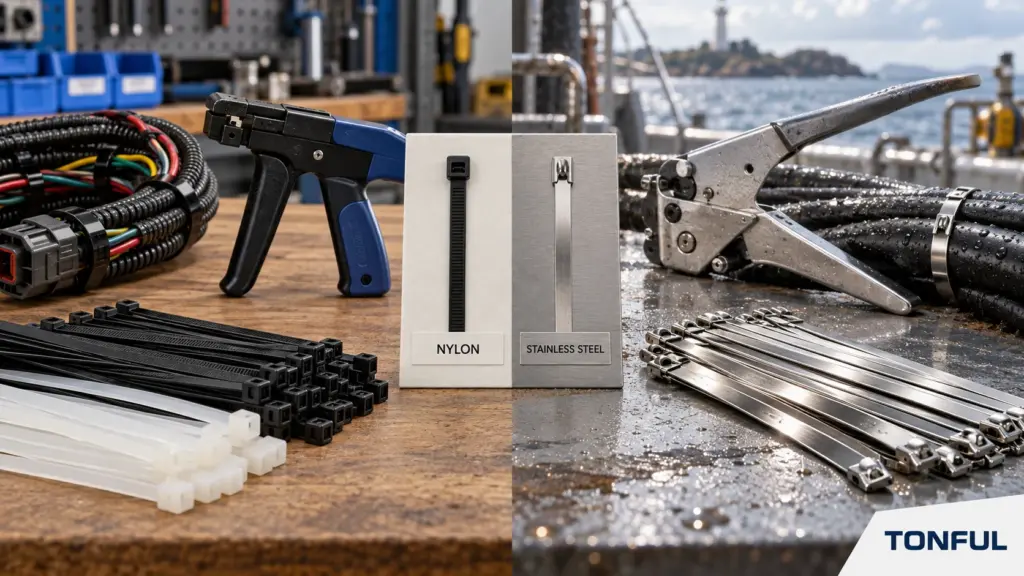
Nylon vs Stainless Steel Cable Ties: Selection Guide

Choosing between nylon and stainless steel cable ties is not simply a question of price or strength. The tie interacts with cable insulation, mounting surfaces, installation tools, heat, moisture, chemicals, vibration and future maintenance. A metal tie may solve one environmental problem while creating a pressure, conductivity or galvanic-corrosion concern. A nylon tie may protect …

Nylon vs Stainless Steel Cable Ties: Selection Guide Read More »

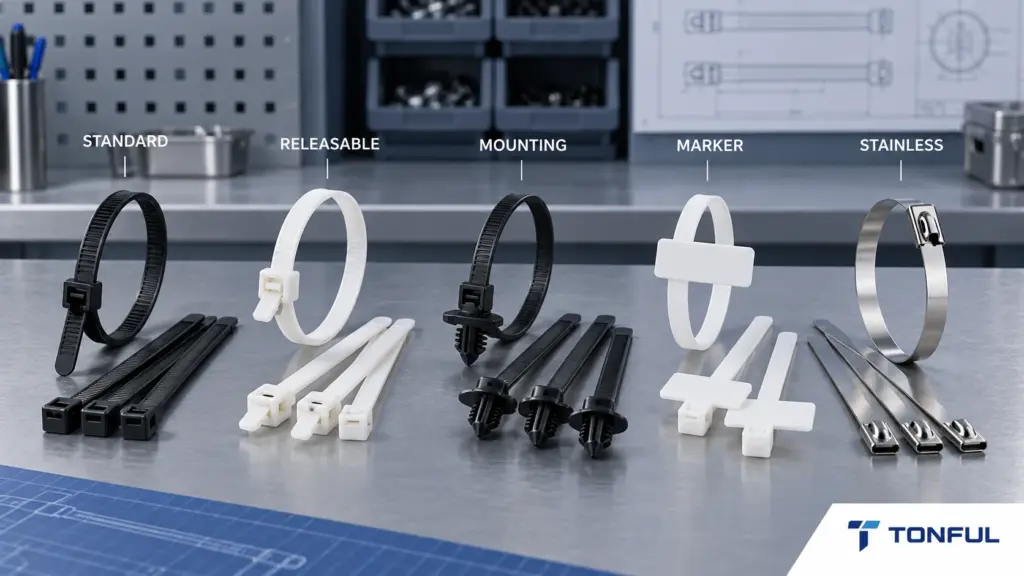
Types of Cable Ties: Locking, Mounting and Materials

Cable ties can be classified by locking method, mounting interface, identification function, material and construction. These categories overlap: one product may be a nylon push-mount tie, a releasable marker tie or a coated stainless steel mounting tie. Treating “mounting,” “marker” and “stainless steel” as mutually exclusive types hides the features that actually control fit and …

Types of Cable Ties: Locking, Mounting and Materials Read More »

Scroll to Top

Ask For Quote Now