Author name: tonful.com

Marine Terminal Selection for Panels and Equipment

Marine terminal selection must account for the connection point and its location on the vessel. A terminal behind a protected distribution panel faces different conditions from a termination exposed to condensation, washdown or machinery movement. The word marine on packaging does not establish compatibility, sealing or installation approval. Choose the terminal barrel for the conductor, …

Marine Terminal Selection for Panels and Equipment Read More »

Loose-Piece vs Reel-Fed Terminals: Production Costs

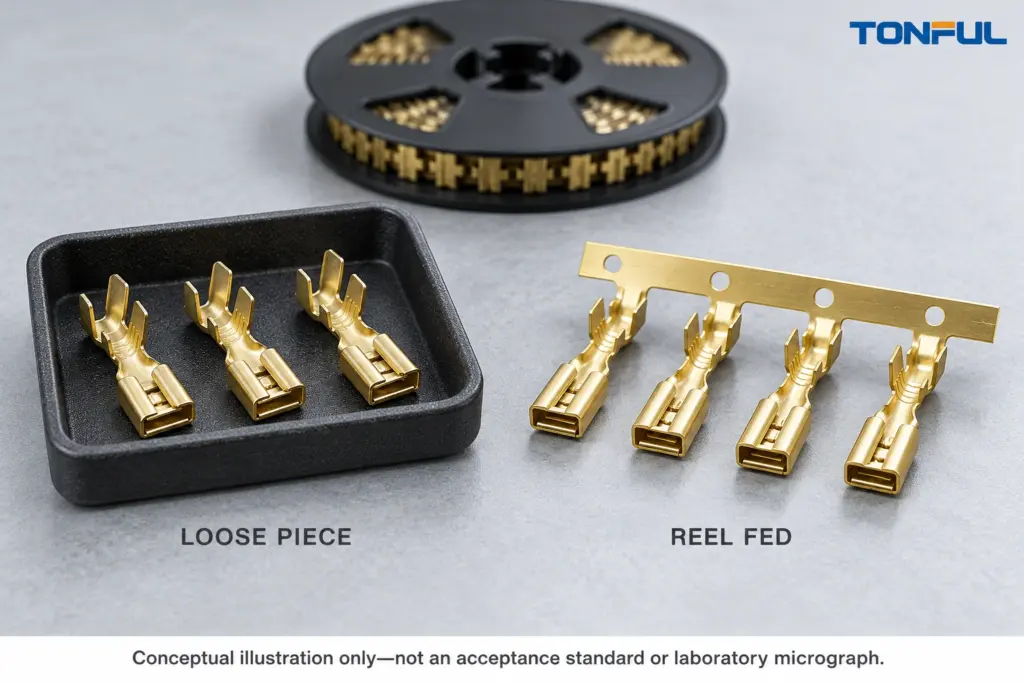
Loose-piece vs reel-fed terminals is a production-system decision, not merely a packaging choice. Loose parts may suit changing product mixes, repairs and controlled manual assembly. Reel-fed parts can support repeatable feeding into compatible production tooling. Neither option is automatically cheaper per acceptable connection. Compare the complete route from material receipt to accepted output. A reel …

Loose-Piece vs Reel-Fed Terminals: Production Costs Read More »

Terminal Corrosion Testing: Plating and Exposure Limits

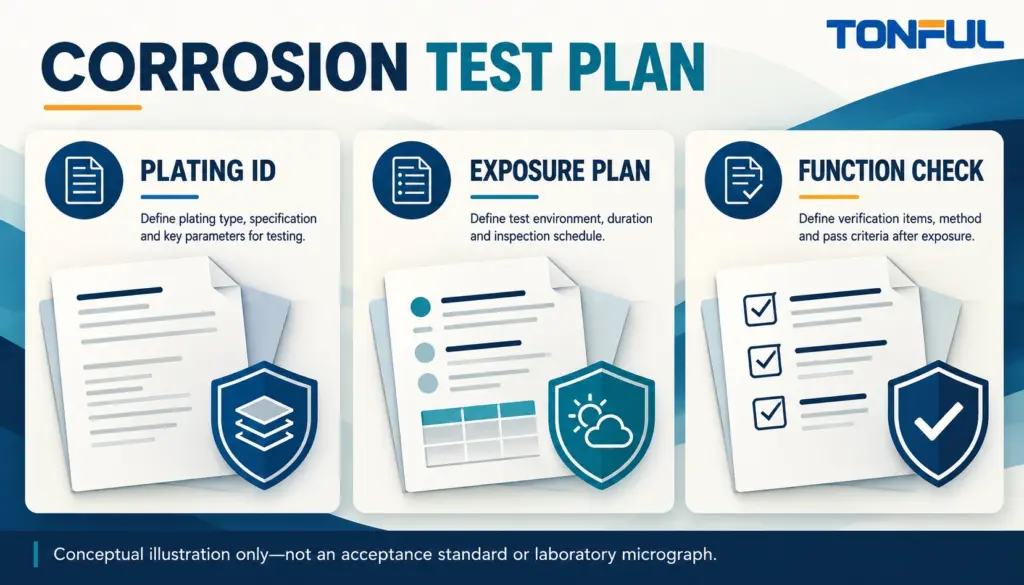
Terminal corrosion testing is useful only when the tested surface, exposure and acceptance decision are defined together. A supplier’s chamber photograph does not identify the plating stack. A long exposure does not establish service life. A clean-looking terminal does not establish stable electrical performance after assembly. Start with the application question: are you comparing finishes, …

Terminal Corrosion Testing: Plating and Exposure Limits Read More »

Terminal Temperature Rise: Why Wire Size Is Not Enough

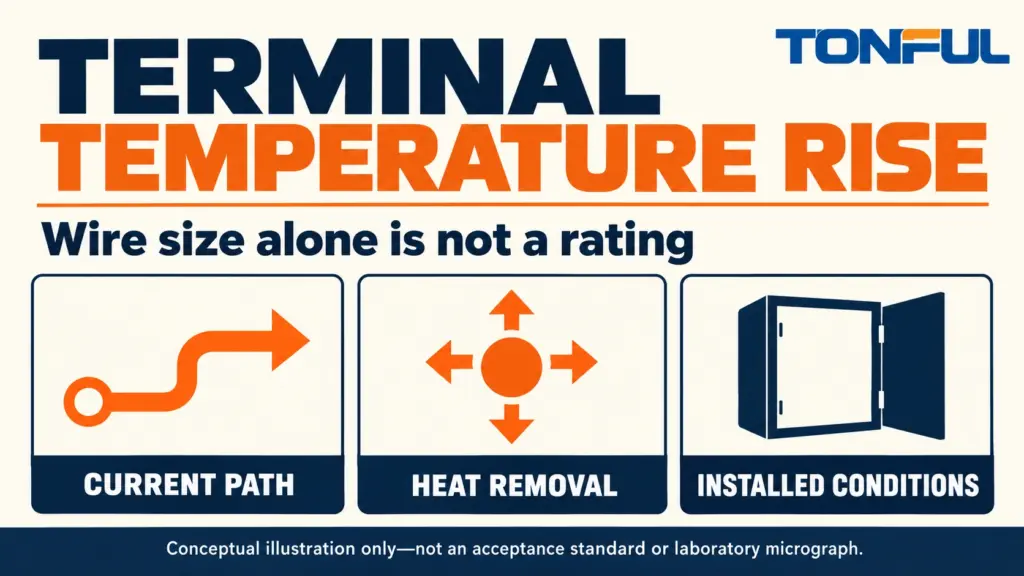
Terminal temperature rise depends on the complete current path and the way heat leaves that path. Wire size matters, but it does not establish the temperature of a crimp barrel, mating contact or bolted joint. Two assemblies using the same nominal conductor area can operate differently because their contact resistance, ambient conditions, enclosure, adjacent circuits …

Terminal Temperature Rise: Why Wire Size Is Not Enough Read More »

Parallel Splices: Wire Combinations and Crimp Validation

Parallel splices join an approved group of conductors within a common termination region. Selecting one requires more than adding wire areas and finding a barrel that appears large enough. The exact wire population, arrangement, splice construction and crimp process must be authorized together, and validation must show that each relevant conductor participates in the joint. …

Parallel Splices: Wire Combinations and Crimp Validation Read More »

Closed-End Crimp Connectors: Wire Combinations and Tooling

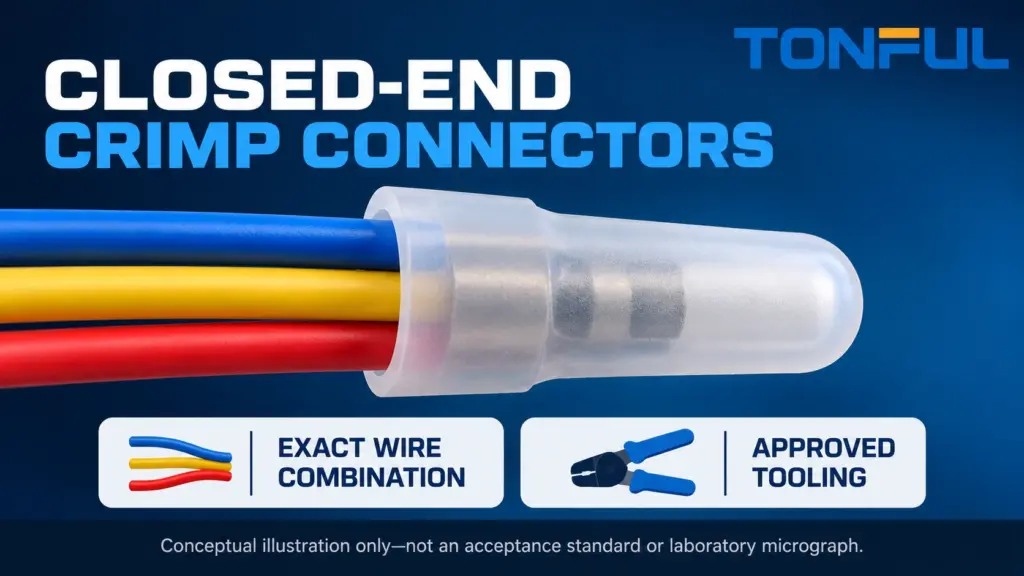
Closed-end crimp connectors combine or terminate wire ends inside a crimped connector body, with the wires entering from the same side. Selection depends on the exact conductor combination and approved tool process, not merely on whether a bundle fits through the insulation opening. A small conductor can remain inadequately captured even when the larger wires …

Closed-End Crimp Connectors: Wire Combinations and Tooling Read More »

Scroll to Top

Ask For Quote Now