Blog

Your blog category

Cold-Pressed Terminals in Electric Vehicle Battery Packs: The Ultimate Connection Solution Guide

Cold-pressed terminals are advanced electrical connectors that create high-integrity connections in electric vehicle battery packs through mechanical compression rather than heat-based joining methods. These terminals deliver superior electrical conductivity, vibration resistance, and thermal management—making them the preferred choice for critical EV battery connections where safety and reliability cannot be compromised. What Are Cold-Pressed Terminals? Essential …

Cold-Pressed Terminals in Electric Vehicle Battery Packs: The Ultimate Connection Solution Guide Read More »

Waterproof Cold-Pressed Terminals: Complete Design Principles and Selection Guide

Waterproof cold-pressed terminals are specialized electrical connectors that provide moisture-resistant connections through mechanical compression without heat application. These terminals combine sealed enclosures with cold-forming crimp technology to create reliable electrical connections in harsh environments where water ingress could cause system failure. Understanding the design principles and selection criteria for waterproof cold-pressed terminals is critical for …

Waterproof Cold-Pressed Terminals: Complete Design Principles and Selection Guide Read More »

Tensile Test and Metallographic Analysis of Cold Pressed Terminals: Complete Quality Control Guide

Tensile testing and metallographic analysis of cold pressed terminals are critical quality control methods that evaluate mechanical strength, material integrity, and manufacturing quality. These complementary testing approaches help manufacturers ensure reliable electrical connections by measuring tensile strength (typically 15-50 lbf for standard terminals) and examining the microscopic structure for defects, grain boundaries, and material flow …

Tensile Test and Metallographic Analysis of Cold Pressed Terminals: Complete Quality Control Guide Read More »

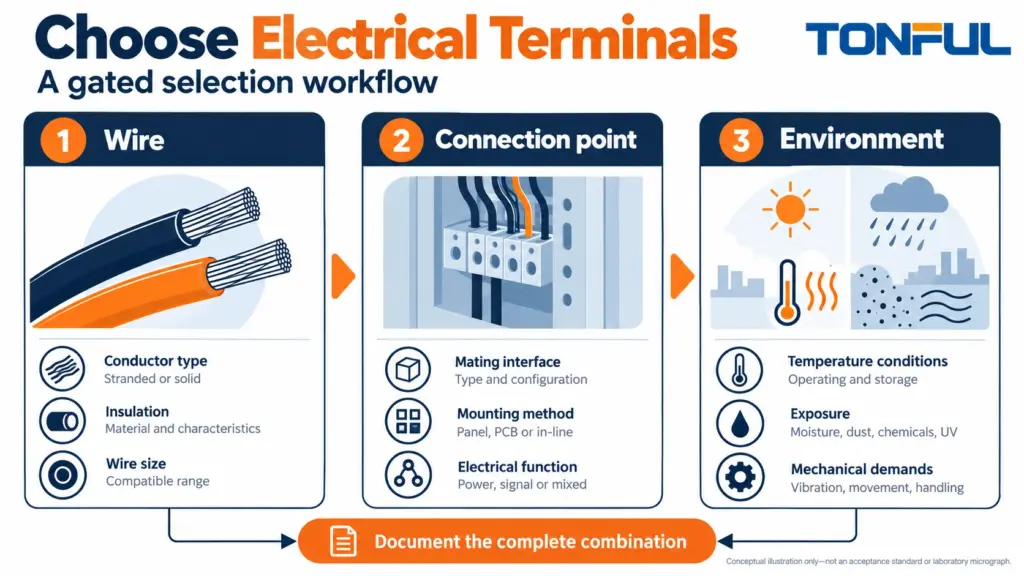
How to Choose Electrical Terminals: Wire, Fit and Environment

Learning how to choose electrical terminals starts with three independent questions: what conductor must be terminated, what connection point receives it, and what conditions surround the completed assembly? A familiar color or a terminal that slides onto a stud answers only part of the problem. The assembly method and supporting evidence must also match. Use …

How to Choose Electrical Terminals: Wire, Fit and Environment Read More »

What Are the Standards for Waterproof Connectors? The Complete 2025 Guide

  Quick Answer: Waterproof connectors are primarily governed by IP (Ingress Protection) ratings defined in IEC 60529, with IP67 and IP68 being the most common waterproof standards. IP67 connectors withstand immersion up to 1 meter for 30 minutes, while IP68 connectors handle deeper, prolonged submersion. Understanding waterproof connector standards is crucial for ensuring reliable electrical …

What Are the Standards for Waterproof Connectors? The Complete 2025 Guide Read More »

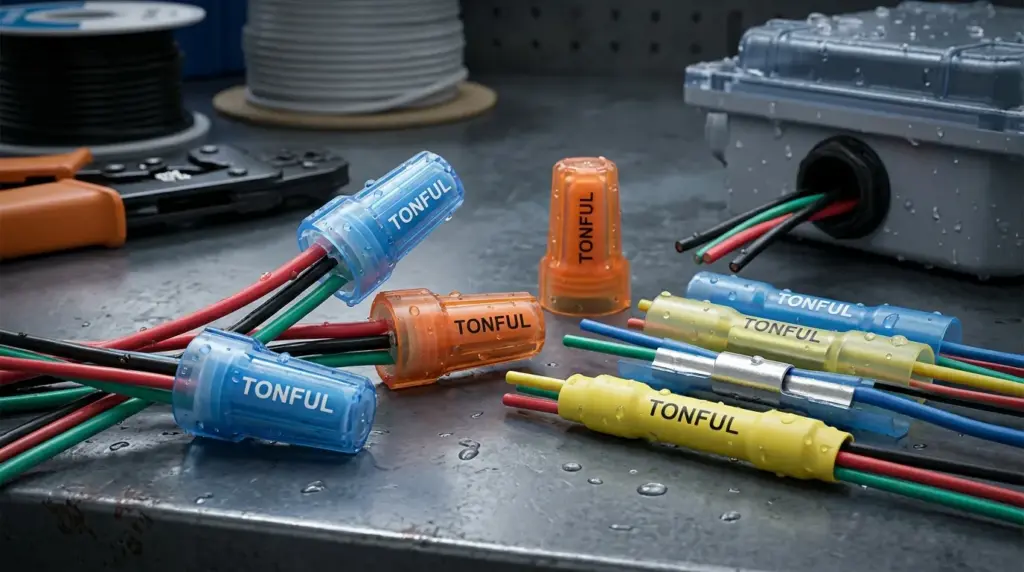
The Ultimate Guide to Selecting the Best Wire Connectors for Water Applications

When electrical connections are exposed to moisture, the margin for error shrinks dramatically. A standard wire connector that performs flawlessly inside a dry wall box can corrode, short, or fail catastrophically once water enters the equation—whether that means an irrigation valve box sitting in saturated soil, a bilge pump cycling through saltwater spray, or a …

The Ultimate Guide to Selecting the Best Wire Connectors for Water Applications Read More »

Outdoor Lighting Connections: Splices or Terminations?

Outdoor lighting connections have two different jobs. A splice joins conductors to continue or branch a circuit. An equipment termination connects a conductor to a luminaire, driver, transformer or other defined interface. Both may need protection from moisture, but a sealed splice cannot automatically replace the terminal specified by the equipment manufacturer. Choose the connection …

Outdoor Lighting Connections: Splices or Terminations? Read More »

Cold-Pressed Terminals

Cold Press Terminals: Complete Guide to Advantages and Disadvantages

Cold Press Terminals: Complete Guide to Advantages and Disadvantages Cold press terminals have become increasingly essential in modern electrical systems, offering a reliable solution for wire connections across various industries. These precision-made electrical connectors create permanent mechanical and electrical bonds without requiring heat or soldering, making them particularly valuable in industrial automation, automotive, and electronics …

Cold Press Terminals: Complete Guide to Advantages and Disadvantages Read More »

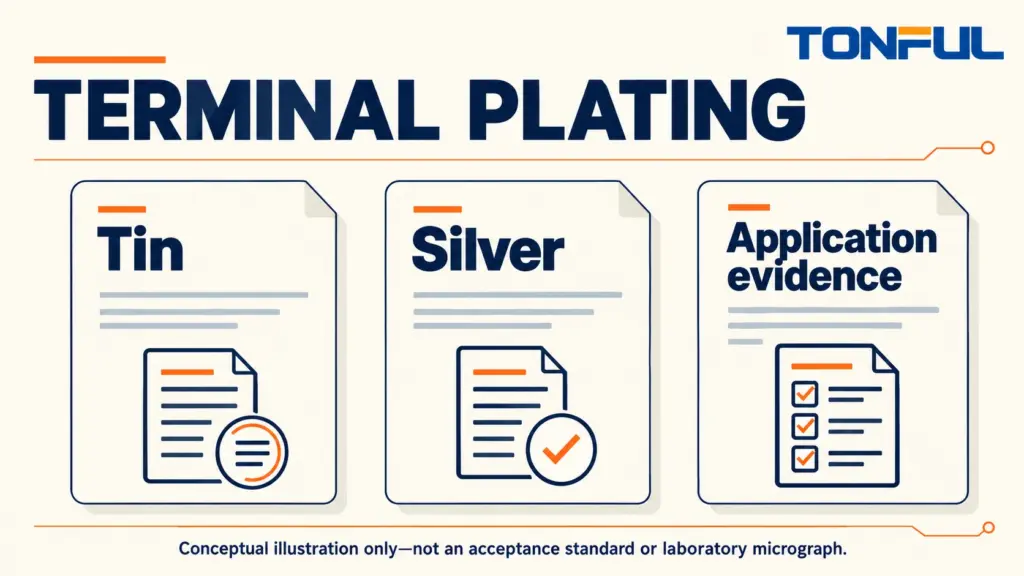
Terminal Plating Selection: Tin, Silver and Conditions

Terminal plating selection starts with the connection interface and its operating conditions, not the brightness of the metal. Tin and silver finishes can both appear in electrical connections, but neither name alone establishes a current rating, corrosion life or acceptable resistance. The base metal, coating system, contact mechanics and installed environment must work together. For …

Terminal Plating Selection: Tin, Silver and Conditions Read More »

Cold Press Terminal vs. Soldering: Which Connection Method Wins?

When an automotive harness fails at 80,000 miles, the root cause is rarely the copper or the insulation—it is the termination. For decades, engineers have debated whether to crimp or solder wire connections, and in B2B electrical manufacturing that debate now has a clear consensus. This guide from TONFUL Electric compares the cold press terminal …

Cold Press Terminal vs. Soldering: Which Connection Method Wins? Read More »

Scroll to Top

Ask For Quote Now