Author name: tonful.com

Which Crimp Die for a Step-Down Butt Connector? A Two-End Tooling Guide

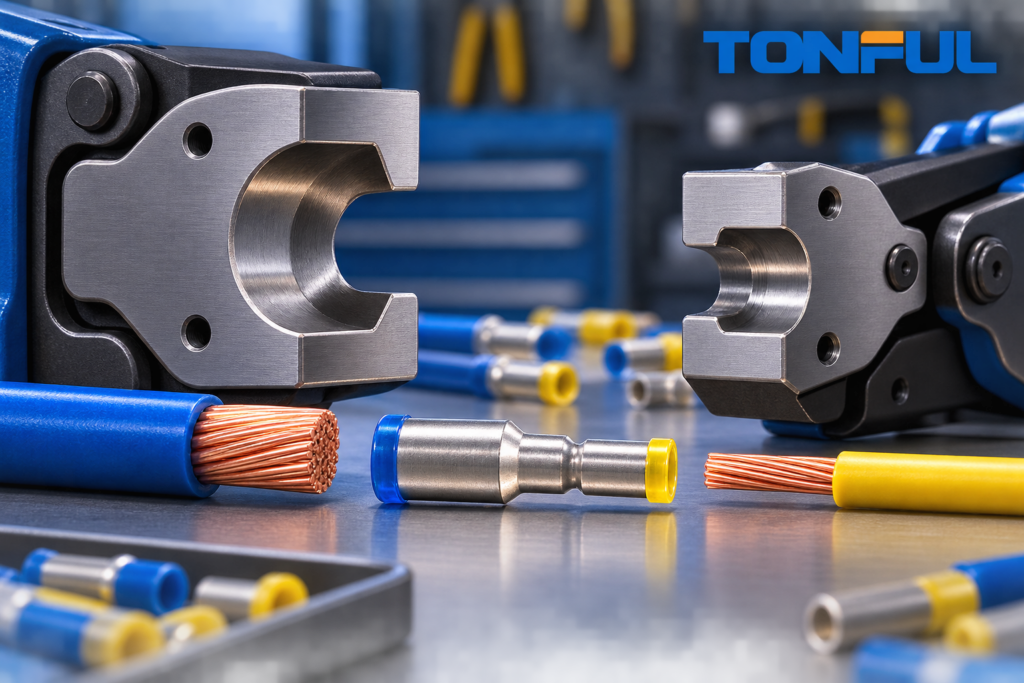
A step-down butt connector may require one die cavity for the large barrel and another for the small barrel. The correct choice comes from the connector application specification and validated wire pair, not only from insulation color or a generic AWG label on the tool. Die selection is a process-engineering decision. The terminal, conductor, insulation, …

Which Crimp Die for a Step-Down Butt Connector? A Two-End Tooling Guide Read More »
Step-Down Butt Splice Cross-Section Analysis Guide

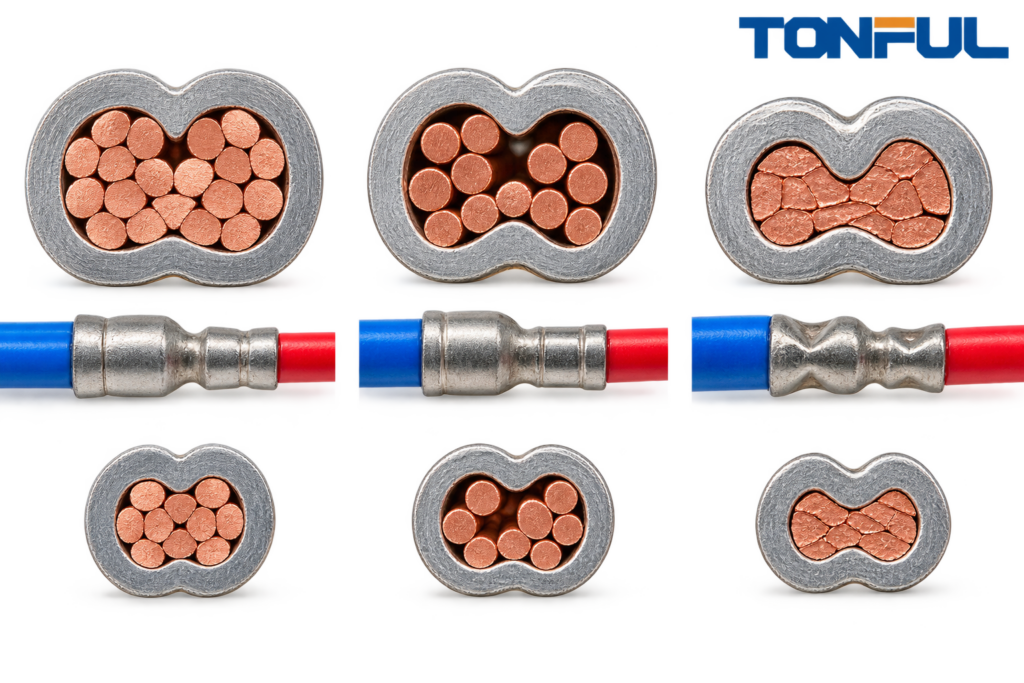
A polished cross-section reveals how the barrel and conductor were compacted during crimping. For a step-down butt splice, the large and small ends must be sectioned and evaluated separately because each interface has different wire area, barrel geometry, and tooling. A photograph alone is not an acceptance specification. Compare every section with the terminal supplier’s …

Step-Down Butt Splice Cross-Section Analysis Guide Read More »

Step-Down Butt Connector RFQ Checklist and Specification Template

A useful RFQ lets suppliers quote the same technical requirement. “Step-down butt connector for 18 and 14 AWG” is not enough because strand construction, insulation diameter, barrel material, sealing, tooling, tests, packaging, and volume can change the design and price. Use this template as a starting point and attach the actual wire datasheets. Treat the …

Step-Down Butt Connector RFQ Checklist and Specification Template Read More »

Custom Step-Down Butt Connectors: AWG Combinations, Tooling, MOQ and Packaging

A custom step-down butt connector project begins with a validated wire pair, not a preferred color or catalog photo. The large barrel, small barrel, insulation system, crimp tooling, application environment, sample plan, order quantity, and packaging all influence cost and feasibility. The purpose of customization is not simply to place two different barrel diameters in …

Custom Step-Down Butt Connectors: AWG Combinations, Tooling, MOQ and Packaging Read More »

Step-Down Butt Connector Manufacturer Audit Checklist

A step-down butt connector has two different conductor ranges in one splice. Supplier approval must therefore verify both ends, the transition between them, and the system that keeps every shipped lot consistent. A certificate or factory tour is not enough. Buyers need a scored, evidence-based audit that connects product requirements to production records and defines …

Step-Down Butt Connector Manufacturer Audit Checklist Read More »

Step-Down Butt Connectors for Automotive Wiring Harnesses

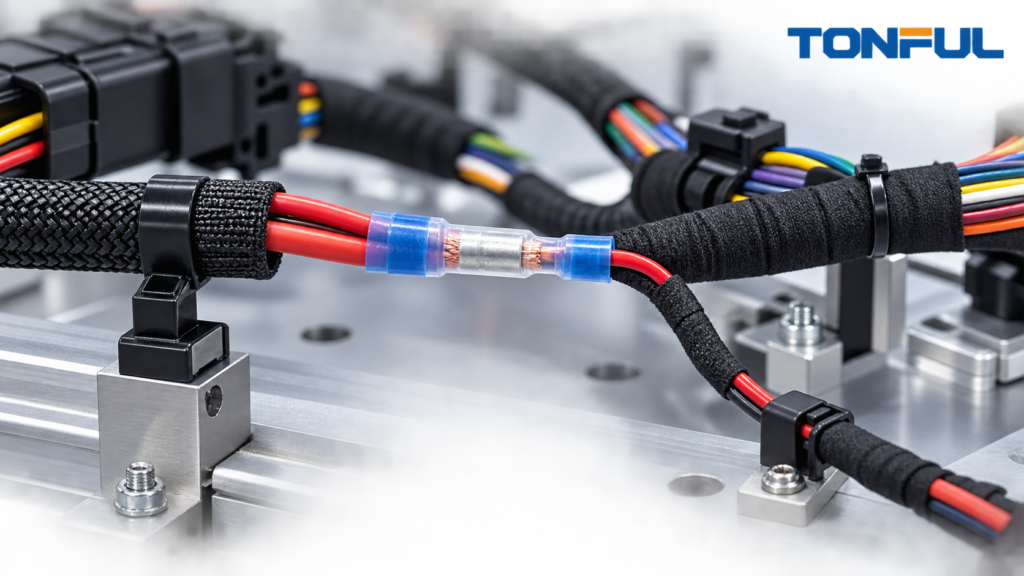
TONFUL step-down butt connector installed in an automotive wiring harness branch Automotive wiring harnesses often transition from a larger feed wire to a smaller branch, lamp lead, motor pigtail, sensor supply, or accessory circuit. A step-down butt connector can make that transition with one splice body and two differently sized crimp zones. It is useful …

Step-Down Butt Connectors for Automotive Wiring Harnesses Read More »

Why Step-Down Butt Connectors Fail: 9 Causes and Fixes

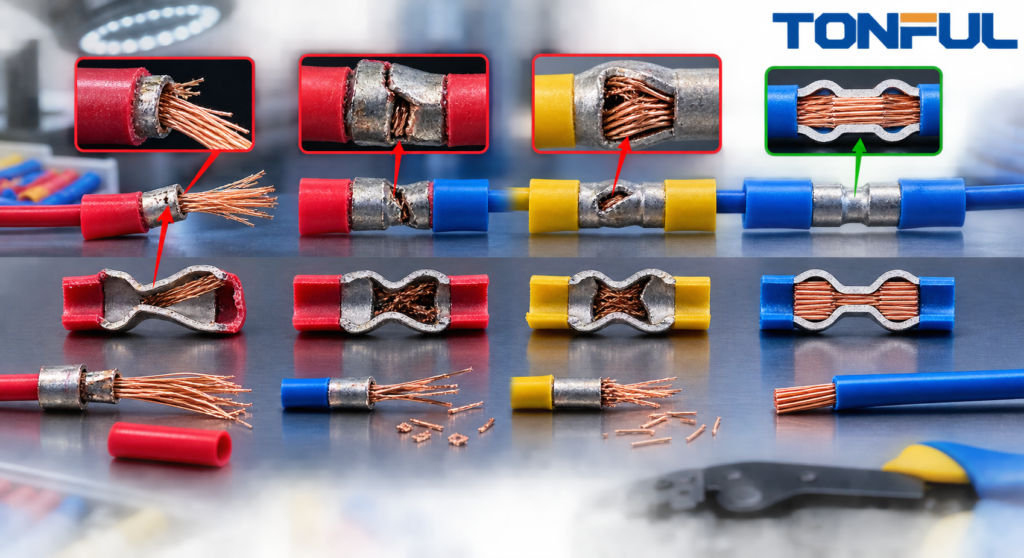
TONFUL failed and correct step-down butt connector crimps compared on a quality bench Step-down butt connectors solve an unequal-wire problem, but they create two different crimp interfaces. The large and small ends can use different wire constructions, barrel dimensions, die cavities, crimp-height windows, and pull-force criteria. A symptom at one end can originate from wire …

Why Step-Down Butt Connectors Fail: 9 Causes and Fixes Read More »

Step-Down Butt Splice Tests: Pull, Crimp Height & Resistance

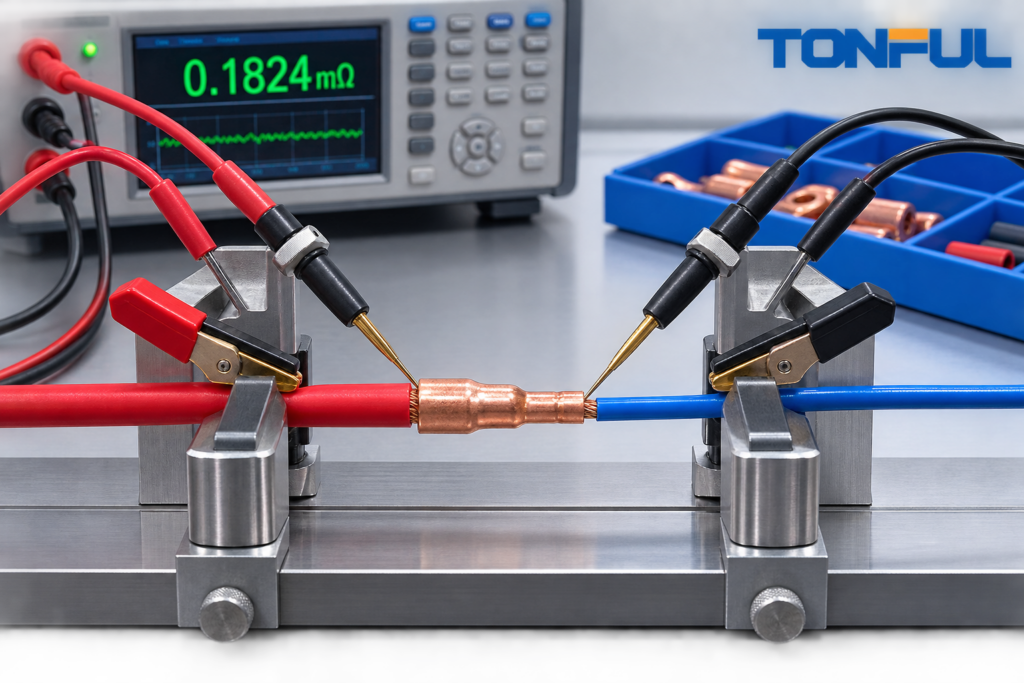
TONFUL laboratory testing of step-down butt splices with pull force crimp height and resistance equipment A step-down butt splice has two different crimp interfaces. The large side and small side may use different conductor sizes, barrel dimensions, die cavities, and process windows. Testing only the complete assembly can hide which end caused a failure. A …

Step-Down Butt Splice Tests: Pull, Crimp Height & Resistance Read More »

Step-Down Butt Connector vs. Standard Butt Splice and Jumper

TONFUL comparison of step-down butt connector standard butt splice and jumper wire transition There are three legitimate ways to transition between different conductor sizes: use one step-down butt connector, use one standard butt splice when both conductors fall within its documented range, or add a short jumper and make two standard splices. These architectures may …

Step-Down Butt Connector vs. Standard Butt Splice and Jumper Read More »

Scroll to Top

Ask For Quote Now