Blog

Your blog category

Are Crimped Electrical Connections as Good as Soldered? Complete Technical Comparison Guide

Direct Answer: Crimped electrical connections are often superior to soldered connections in many applications, offering better vibration resistance, faster installation, and easier maintenance. However, the “best” choice depends on your specific application, environmental conditions, and industry requirements. Modern crimped connections, when properly executed with quality tools and connectors, can achieve connection integrity that meets or …
Are Crimped Electrical Connections as Good as Soldered? Complete Technical Comparison Guide Read More »

what-is-the-difference-between-crimp-and-splice

What is the Difference Between Crimp and Splice?

  The main difference between crimp and splice is the connection method: crimping uses mechanical pressure through specialized connectors to join wires permanently, while splicing involves physically joining wire conductors together (often by twisting) and securing them with insulation. Crimping creates consistent, code-compliant connections ideal for professional installations, while splicing offers versatility for repairs and …

What is the Difference Between Crimp and Splice? Read More »

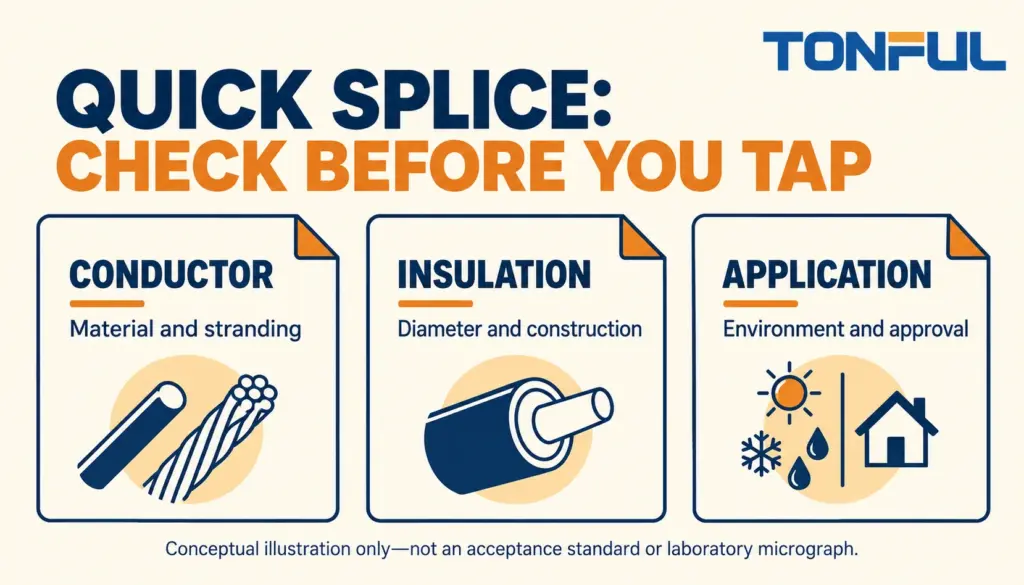
Quick Splice Connectors: Compatibility and Application Limits

Quick splice connectors can create a branch connection without the stripping and barrel-crimp sequence used by many other splices. That convenience does not establish compatibility. The contact must work with the actual conductor and insulation, and the finished branch must be permitted in the equipment and environment. A closed plastic cover alone proves none of …

Quick Splice Connectors: Compatibility and Application Limits Read More »

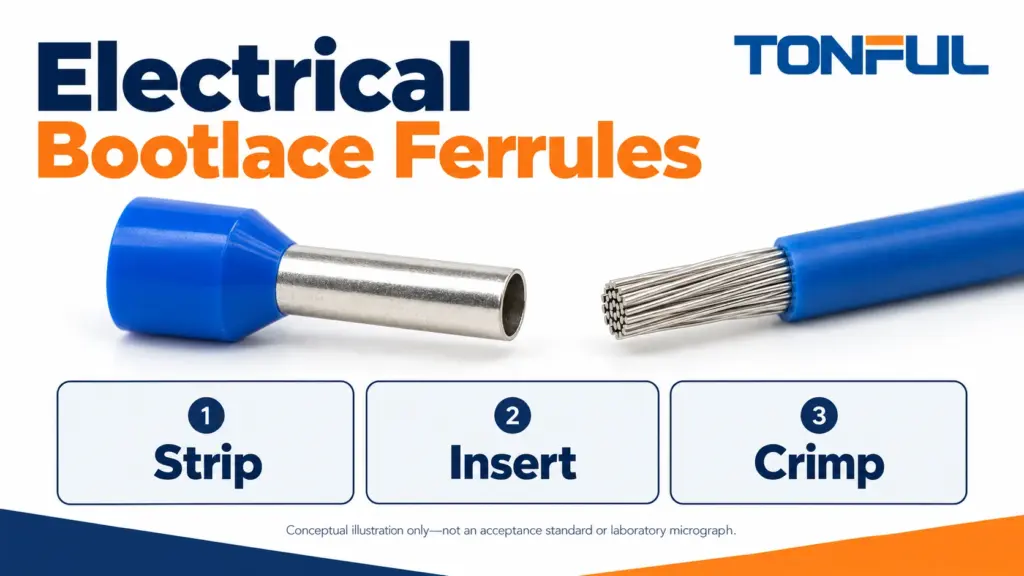
How to Use Electrical Bootlace Ferrules: Installation Guide

Electrical bootlace ferrules gather the strands of a flexible conductor inside a thin metal sleeve before that conductor enters a compatible terminal. Installing one is not simply squeezing a colored tube. The wire, ferrule, crimping tool and receiving terminal must work together, and the finished connection must remain within the receiving equipment’s instructions. This guide …

How to Use Electrical Bootlace Ferrules: Installation Guide Read More »

what-are-the-differences-between-different-types-

What Are the Differences Between Different Types of Bootlace Ferrules? A Complete Technical Guide

Quick Answer: Bootlace ferrules differ primarily in insulation type (insulated vs non-insulated), material composition (tin-plated copper vs bare copper), size range (0.5mm² to 35mm²), color coding systems, and specific applications. Insulated ferrules provide electrical protection and wire identification, while non-insulated ferrules offer maximum conductivity for high-current applications. Bootlace ferrules are essential electrical components that transform …

What Are the Differences Between Different Types of Bootlace Ferrules? A Complete Technical Guide Read More »

solder-seal-butt-connector

Solder Seal Butt Connector Applications in Electrical Connections: Complete Professional Guide

Solder seal butt connectors are weatherproof electrical connectors that create permanent, watertight connections by combining heat-shrink tubing with built-in solder rings. These connectors eliminate the need for separate soldering, heat shrink, and weatherproofing steps, making them ideal for automotive, marine, outdoor, and industrial electrical applications where moisture protection is critical. Unlike traditional butt connectors that …

Solder Seal Butt Connector Applications in Electrical Connections: Complete Professional Guide Read More »

heat-shrink-butt-connector-applications

Heat Shrink Butt Connector Applications: Complete Guide for Electrical Connections

Heat shrink butt connectors are insulated splice connectors that join two wires end-to-end while providing waterproof protection through heat-activated shrinking sleeves. These connectors create permanent, reliable electrical connections in automotive, marine, and industrial applications where moisture resistance and vibration protection are critical for safety and performance. What Are Heat Shrink Butt Connectors? Heat shrink butt …

Heat Shrink Butt Connector Applications: Complete Guide for Electrical Connections Read More »

heat-shrinkable-terminals-complete-guide-to-application

Heat Shrinkable Terminals: Complete Guide to Applications in Electrical Connections

Heat shrinkable terminals are specialized electrical connectors that combine traditional crimp terminals with heat-activated shrinking insulation, providing superior protection against moisture, corrosion, and vibration in electrical connections. These terminals shrink when heated to create waterproof, strain-relieved connections that significantly outperform standard crimp terminals in demanding environments. Quick Answer: Heat shrinkable terminals use dual-wall construction with …

Heat Shrinkable Terminals: Complete Guide to Applications in Electrical Connections Read More »

Male and Female Wire Connectors: Complete Guide to Types, Applications, and Selection

Male and Female Wire Connectors: Complete Guide to Types, Applications, and Selection

Male and female wire connectors are electrical connection components where male connectors feature protruding pins or contacts that insert into female connectors with corresponding receptacles or holes. This fundamental pairing system ensures secure, reliable electrical connections across virtually every electrical and electronic application from household wiring to industrial machinery. Understanding the difference between male and …

Male and Female Wire Connectors: Complete Guide to Types, Applications, and Selection Read More »

Scroll to Top

Ask For Quote Now