
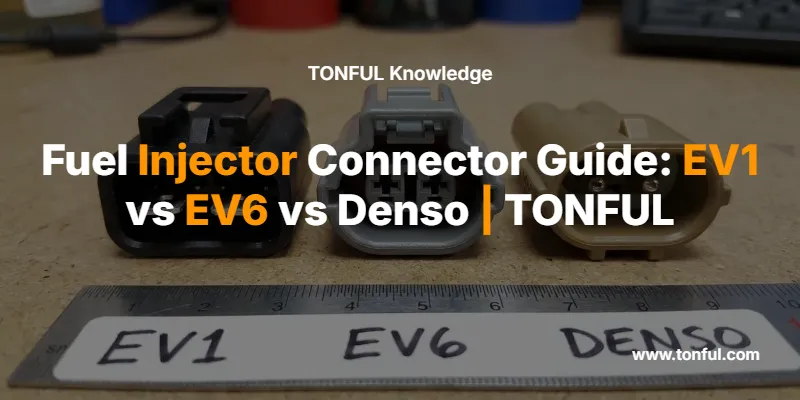
Fuel injector connectors are critical electrical components that ensure precise fuel delivery in modern combustion engines. Whether you’re upgrading your vehicle’s fuel system, performing an engine swap, or troubleshooting electrical issues, understanding the differences between EV1, EV6, and Nippon Denso connectors is essential for automotive professionals and enthusiasts alike.
This comprehensive guide examines the three most common fuel injector connector types, their specifications, compatibility, and applications to help you make informed decisions for your automotive electrical projects.
What Are Fuel Injector Connectors?
Fuel injector connectors are specialized electrical plugs that connect the engine control unit (ECU) to fuel injectors, transmitting precise electrical signals that control fuel injection timing and duration. These connectors must withstand harsh engine bay conditions including extreme temperatures, vibration, chemical exposure, and moisture.

The connector type directly affects compatibility between fuel injectors and wiring harnesses, making proper identification crucial for successful installations and repairs.
EV1 Fuel Injector Connectors: The Original Standard
Overview and History
EV1 represents Bosch’s first-generation fuel injector body style, introduced in the 1980s and widely used through the 1990s. The “EV” designation refers to the engineering generation, with EV1 being the original Bosch fuel injector design. These connectors are commonly referred to as “fat body” injectors due to their larger physical dimensions.
Technical Specifications
| Specification | Details |
|---|---|
| Connector Type | Jetronic/Minitimer |
| Shape | Rectangular, elongated |
| Body Style | Large diameter (fat body) |
| Pin Count | 2-pin configuration |
| Typical Applications | 1980s-1990s vehicles |
| Common Vehicles | Ford Mustang (1986-2004), GM vehicles, European models |
| Wire Gauge | Typically 18-20 AWG |
| Sealing | Basic weather resistance |
Key Characteristics
- Physical Design: EV1 connectors feature a long, thin rectangular shape with a centered locking tab on both the interior and exterior perimeter
- Locking Mechanism: Single-tab release system located on top or side
- Durability: Proven reliability but less resistant to modern ethanol-based fuels
- Availability: Still widely available as replacement parts

Common Applications
EV1 connectors are predominantly found in:
- Ford Mustang models (1986-2004, excluding 1999-2004 Cobra)
- Early GM fuel-injected vehicles
- Older European vehicles (Audi, VW, BMW)
- Classic performance applications
For applications requiring automotive electrical connectors, understanding EV1 compatibility is essential for maintaining original equipment specifications.
EV6 Fuel Injector Connectors: Modern Performance Standard
Overview and Evolution
EV6 injectors represent Bosch’s second-generation design, introduced in the late 1990s and early 2000s. These “skinny body” injectors feature improved atomization, better ethanol resistance, and enhanced performance characteristics. The EV6 designation often encompasses EV14 injectors, which share the same USCAR connector standard.
Technical Specifications
| Specification | Details |
|---|---|
| Connector Type | USCAR (U. S. Council on Automotive Research) |
| Shape | Square with rounded edges |
| Body Style | Narrow diameter (skinny body) |
| Pin Count | 2-pin configuration |
| Typical Applications | 2000s-present vehicles |
| Common Vehicles | 2005+ Mustang, LS-series engines, modern imports |
| Wire Gauge | 18-20 AWG |
| Sealing | Enhanced waterproof/weather-resistant design |
| Ethanol Compatibility | E85-compatible materials |
Key Characteristics
- Physical Design: Compact square shape with rounded corners, significantly narrower body than EV1
- Locking Mechanism: Improved clip design with enhanced retention force
- Fuel Compatibility: Designed for modern ethanol-blended fuels (E10, E15, E85)
- Performance: Superior atomization patterns for improved combustion efficiency
- Standardization: USCAR standard ensures cross-manufacturer compatibility

Common Applications
EV6/USCAR connectors are standard in:
- 2005+ Ford Mustang (all models)
- GM LS-series engines (LS1, LS2, LS3, LS7)
- Modern Chevrolet, Ford, and Chrysler vehicles
- Performance aftermarket injectors (Injector Dynamics, Deatschwerks, Fuel Injector Clinic)
- High-flow racing applications
When selecting wire terminal manufacturers for custom harness builds, ensure compatibility with USCAR connector standards for optimal performance.
Nippon Denso Fuel Injector Connectors: Japanese Engineering Excellence
Overview and Origin
Nippon Denso (now simply “Denso”) connectors represent the Japanese automotive industry’s approach to fuel injection technology. These connectors are predominantly found in Toyota, Lexus, Nissan, Honda, Subaru, Mazda, and Mitsubishi vehicles, featuring unique design characteristics optimized for Asian market vehicles.
Technical Specifications
| Specification | Details |
|---|---|
| Connector Type | Denso proprietary design |
| Shape | Rectangular with side clips |
| Body Style | Compact, varies by application |
| Pin Count | 2-pin configuration |
| Typical Applications | Japanese vehicles (1990s-present) |
| Common Vehicles | Toyota, Lexus, Nissan, Honda, Subaru, Mazda |
| Wire Gauge | 18-20 AWG |
| Sealing | Excellent moisture resistance |
| Variants | Multiple sub-types (bottom slot, top slot) |
Key Characteristics
- Physical Design: Rectangular connector with distinctive side-mounted locking clips
- Locking Mechanism: Robust clip system designed for high-vibration environments
- Reliability: Exceptional durability and corrosion resistance
- Variants: Multiple Denso connector styles exist (standard Denso, Sumitomo, Honda-specific)
- Quality: Premium materials and construction standards

Common Applications
Nippon Denso connectors are standard in:
- Toyota and Lexus vehicles (all generations)
- Nissan (SR20, RB-series, VQ-series engines)
- Honda and Acura applications
- Subaru (EJ-series, FA-series engines)
- Mazda rotary and piston engines
For automotive connector manufacturing projects involving Japanese vehicles, Denso-compatible components ensure OEM-level reliability.
Comprehensive Comparison Table
| Feature | EV1 (Jetronic) | EV6 (USCAR) | Nippon Denso |
|---|---|---|---|
| Era | 1980s-1990s | 2000s-Present | 1990s-Present |
| Body Style | Fat/Large | Skinny/Narrow | Varies (Compact) |
| Connector Shape | Long Rectangle | Rounded Square | Rectangle w/ Side Clips |
| Ethanol Resistance | Limited | Excellent (E85) | Good to Excellent |
| Waterproofing | Basic | Enhanced | Excellent |
| Primary Market | American/European | Universal | Japanese |
| Atomization | Standard | Improved | Excellent |
| Availability | High | Very High | High (Asian market) |
| Typical Flow Rates | 19-42 lb/hr | 30-100+ lb/hr | 19-60 lb/hr |
| Adapter Availability | Extensive | Extensive | Moderate |
| Cost (Aftermarket) | Low-Moderate | Moderate | Moderate-High |
Connector Identification Guide
Visual Identification Steps

- Examine the Connector Shape
- Long, thin rectangle = Likely EV1 (Jetronic)
- Rounded square = Likely EV6 (USCAR)
- Rectangle with side clips = Likely Nippon Denso
- Check the Locking Mechanism
- Single centered tab (top or side) = EV1
- Clip on top with rounded body = EV6
- Side-mounted clips = Nippon Denso
- Measure the Injector Body
- Large diameter (≈14mm) = EV1
- Narrow diameter (≈11mm) = EV6
- Varies by manufacturer = Denso
- Verify Vehicle Application
- Pre-2000 American/European = Typically EV1
- Post-2005 American = Typically EV6
- Japanese vehicles = Typically Denso
Important Considerations
Critical Note: EV1, EV6, and EV14 designations refer to Bosch fuel injector body styles, NOT exclusively to connector types. The same body style can have different connectors:
- EV1 injectors may have Jetronic OR USCAR connectors
- EV6 injectors may have Jetronic, USCAR, or manufacturer-specific connectors
Always visually verify the actual connector type rather than relying solely on the EV designation.
Adapter Solutions and Compatibility
Common Adapter Types
When swapping injectors or performing engine conversions, adapter harnesses enable compatibility between different connector standards:
| Adapter Type | Application | Use Case |
|---|---|---|
| EV1 to EV6 | Jetronic harness to USCAR injector | Upgrading older vehicles to modern injectors |
| EV6 to EV1 | USCAR harness to Jetronic injector | Using older injectors with newer harnesses |
| Denso to EV1 | Denso harness to Jetronic injector | Engine swaps (Japanese to American) |
| Denso to EV6 | Denso harness to USCAR injector | Performance upgrades on Japanese vehicles |
| EV1 to Denso | Jetronic harness to Denso injector | Installing Japanese injectors in American vehicles |
| EV6 to Denso | USCAR harness to Denso injector | Modern harness to Japanese injectors |
Installation Best Practices
When using adapter harnesses:
- Avoid Multiple Adapters: Each connection point introduces potential failure points
- Consider Splicing: For permanent installations, splicing new connectors directly into the harness provides superior reliability
- Verify Sealing: Ensure adapters maintain waterproof integrity
- Check Clearance: Adapters add length; verify fitment in engine bay
- Secure Connections: Use proper wire terminal crimping techniques for custom harnesses
For professional installations requiring electrical tools, proper crimping tools ensure reliable connections that withstand engine bay conditions.
Electrical Specifications and Wiring
Pin Configuration
All three connector types use 2-pin configurations:
- Pin 1: 12V power supply (constant when key is on)
- Pin 2: ECU ground control (pulsed signal)
Important: Fuel injectors are NOT polarity-sensitive. Either pin can serve as power or ground, though maintaining consistency across all injectors is recommended for troubleshooting purposes.
Wire Gauge Recommendations
| Application | Wire Gauge | Amperage Rating |
|---|---|---|
| Standard Injectors (≤60 lb/hr) | 18 AWG | 16 amps |
| High-Flow Injectors (60-100 lb/hr) | 18 AWG | 16 amps |
| Racing Injectors (100+ lb/hr) | 16 AWG | 22 amps |
Impedance Considerations
- High-Impedance Injectors (12-16 ohms): Standard for most applications, can connect directly to ECU
- Low-Impedance Injectors (2-5 ohms): Require resistor box or ECU with current-limiting capability
When sourcing terminals and connectors, ensure compatibility with your injector impedance and current requirements.
Common Issues and Troubleshooting
Connector Failure Symptoms
- Rough Idle or Misfires: Intermittent electrical connection
- Check Engine Light: Injector circuit codes (P0200-P0208)
- Poor Fuel Economy: Inconsistent injector operation
- Hard Starting: Complete connector failure
- Visible Corrosion: Green/white deposits on pins
Preventive Maintenance
- Inspect Regularly: Check for cracks, corrosion, or loose connections during routine maintenance
- Use Dielectric Grease: Apply to pins during installation to prevent corrosion
- Protect from Heat: Route wiring away from exhaust components
- Secure Harnesses: Prevent vibration damage with proper wire management
For applications requiring waterproof wire connectors, consider sealed connector upgrades in harsh environments.
Selecting the Right Connector for Your Application
Decision Factors
Choose EV1 (Jetronic) When:
- Restoring or maintaining pre-2000 vehicles
- Budget is primary concern
- Original equipment replacement is required
- Working with classic performance builds
Choose EV6 (USCAR) When:
- Building modern performance applications
- E85 fuel compatibility is required
- Maximum injector selection is desired
- Future-proofing your fuel system
- Working with LS-series or modern Ford engines
Choose Nippon Denso When:
- Working with Japanese vehicles
- OEM reliability is paramount
- Maintaining original equipment specifications
- Building JDM-specific performance applications
Quality Considerations
When sourcing fuel injector connectors, prioritize:
- Material Quality: Copper or tin-plated terminals for corrosion resistance
- Seal Integrity: Proper gaskets and weather sealing
- Locking Mechanism: Secure retention under vibration
- Wire Quality: Heat and oil-resistant insulation
- Manufacturer Reputation: Proven reliability in automotive applications
TONFUL Electric specializes in manufacturing high-quality auto fuse and electrical connector solutions that meet or exceed OEM specifications, ensuring reliable performance in demanding automotive environments.
Installation Tips and Best Practices
Proper Installation Procedure
- Disconnect Battery: Always disconnect negative battery terminal before working on fuel system
- Relieve Fuel Pressure: Follow manufacturer procedure to safely depressurize fuel system
- Clean Connections: Remove corrosion and debris from connector pins
- Inspect O-Rings: Replace fuel injector O-rings during installation
- Apply Dielectric Grease: Coat connector pins to prevent corrosion
- Verify Locking: Ensure connectors fully seat and lock mechanism engages
- Test Before Reassembly: Check resistance and spray pattern before final installation
Tools Required
- Crimping tools for custom harness work
- Terminal release tools for connector disassembly
- Digital multimeter for electrical testing
- Dielectric grease
- Fuel pressure gauge
Frequently Asked Questions (FAQ)
Can I use EV6 injectors with an EV1 harness?
Yes, with the appropriate adapter harness. EV1 to EV6 adapters are widely available and provide plug-and-play compatibility. However, for permanent installations, splicing EV6 connectors directly into your harness provides superior reliability.
Are EV6 and EV14 connectors the same?
In most cases, yes. EV14 injectors typically use the same USCAR connector as EV6 injectors, making them electrically compatible. However, EV14 injectors have a shorter, narrower body design, so verify physical fitment in your fuel rails.
Do I need to tune my ECU when changing connector types?
Changing only the connector type does not require ECU tuning. However, if you’re also changing injector flow rates, you must recalibrate your ECU’s fuel maps accordingly.
How do I identify which connector my vehicle uses?
The most reliable method is visual inspection. Remove one injector connector and compare it to reference images. Alternatively, consult your vehicle’s service manual or check with the manufacturer for your specific year, make, and model.
Can Nippon Denso connectors be adapted to EV1 or EV6?
Yes, Denso-to-EV1 and Denso-to-EV6 adapters are available from aftermarket suppliers. These are particularly useful for engine swaps involving Japanese engines in American vehicles or vice versa.
What causes fuel injector connector failure?
Common causes include: heat exposure from nearby exhaust components, chemical degradation from fuel and oil exposure, vibration-induced wire fatigue, corrosion from moisture intrusion, and physical damage during maintenance.
Are aftermarket connectors as reliable as OEM?
Quality varies significantly among aftermarket suppliers. Premium aftermarket connectors from reputable manufacturers like TONFUL Electric can match or exceed OEM specifications. Look for connectors with proper sealing, quality terminals, and appropriate wire insulation ratings.
Conclusion
Understanding the differences between EV1, EV6, and Nippon Denso fuel injector connectors is essential for successful automotive electrical work. Each connector type serves specific applications and vehicle platforms, with distinct advantages:
- EV1 (Jetronic): Proven reliability for classic and older vehicles
- EV6 (USCAR): Modern standard with superior performance and ethanol compatibility
- Nippon Denso: Japanese engineering excellence for Asian market vehicles
When selecting connectors for your project, consider your vehicle application, fuel compatibility requirements, performance goals, and long-term reliability needs. With proper identification, quality components, and correct installation techniques, fuel injector connectors provide reliable service for hundreds of thousands of miles.
For professional-grade automotive electrical components including fuel injector connectors, wiring harnesses, and related electrical products, TONFUL Electric offers comprehensive solutions backed by rigorous quality control and industry-leading technical support.
Whether you’re performing routine maintenance, building a high-performance engine, or completing a complex engine swap, choosing the correct fuel injector connector ensures optimal fuel delivery, reliable operation, and long-term durability in your automotive electrical system.
About TONFUL Electric
TONFUL Electric is a leading B2B manufacturer of automotive electrical components, specializing in terminals and connectors, electrical tools, and complete wiring solutions. With decades of experience serving the automotive aftermarket, OEM suppliers, and performance industries, TONFUL delivers quality products that meet the demanding requirements of modern vehicles.
For technical specifications, bulk pricing, or custom connector solutions, visit tonful.com or contact our engineering team for application-specific recommendations.
Related Resources: