Author name: tonful.com

Common vs Waterproof Wire Nuts: Complete Comparison Guide (2025)

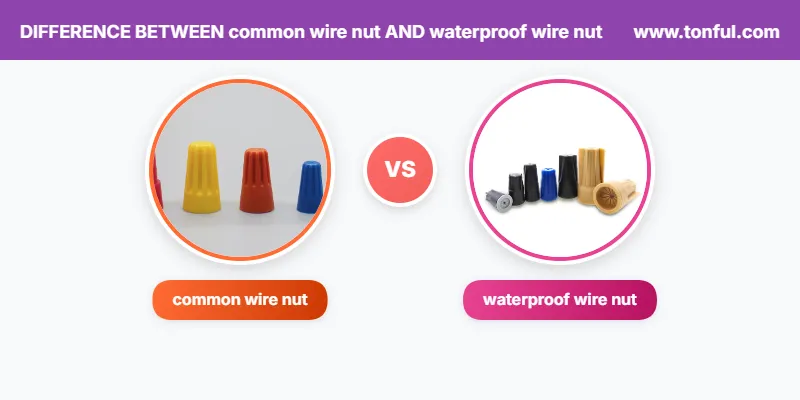
Selecting the appropriate wire connector is fundamental to electrical safety and system reliability. Wire nuts remain the most widely used electrical connectors in residential and commercial installations, but understanding the critical differences between common (standard) wire nuts and waterproof variants ensures proper application selection, code compliance, and long-term performance. This comprehensive comparison guide examines construction …

Common vs Waterproof Wire Nuts: Complete Comparison Guide (2025) Read More »

How do waterproof wire nuts create a watertight seal for outdoor wiring

Outdoor electrical splices face relentless assaults from rain, irrigation spray, condensation, insects and soil chemicals. Modern waterproof wire nuts withstand these hazards by combining three engineering features—a mechanical spring clamp, a hydrophobic sealant, and an enclosure that channels water away from the conductors. The result is a UL-486D–listed connection rated up to 600 V that …

How do waterproof wire nuts create a watertight seal for outdoor wiring Read More »

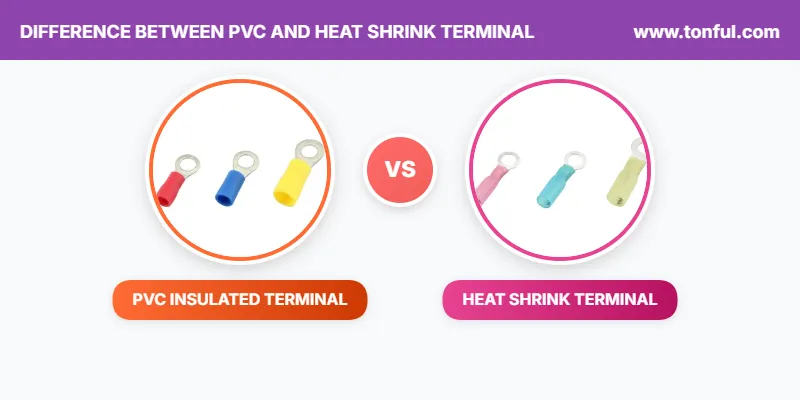
PVC Insulated vs Heat Shrink Terminals: Which Should You Choose?

Choosing the right electrical terminals can make the difference between a connection that lasts decades and one that fails within months. If you’re deciding between PVC insulated and heat shrink terminals, you’re not alone—this choice impacts everything from cost to reliability in your electrical projects. This comprehensive comparison will help you understand when to use …

PVC Insulated vs Heat Shrink Terminals: Which Should You Choose? Read More »

PVC Insulated vs Heat Shrink Terminals: Protection Guide

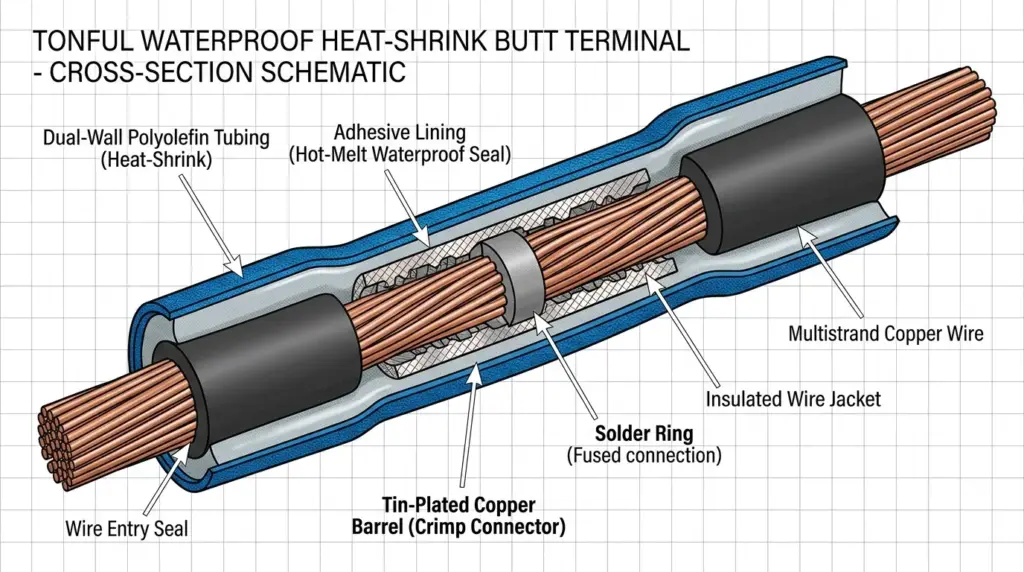
PVC insulated vs heat shrink terminals is a protection decision, not a ranking of two colors or sleeve styles. A pre-insulated PVC terminal can be suitable for a protected assembly when its wire range, connection geometry and ratings match. A heat-shrink terminal adds a heat-recovery operation; an adhesive-lined version may provide an environmental barrier when …

PVC Insulated vs Heat Shrink Terminals: Protection Guide Read More »

PVC vs Nylon Insulated Terminals: Selection Guide

The useful answer to PVC vs nylon insulated terminals is not “nylon always wins” or “PVC is only for cheap repairs.” Both names describe insulation materials used in terminal constructions. The finished part also contains a metal conductor termination and may contain a separate insulation-support arrangement. Those construction details can change fit, tooling and application …

PVC vs Nylon Insulated Terminals: Selection Guide Read More »

Waterproof Terminals & Connectors Product Category | TONFUL Electric

Every electrical failure tells a story, and in harsh environments, that story usually involves water. A single compromised connection in a marine engine bay, a solar junction box on a rain-soaked roof, or an underground irrigation splice can cascade into system downtime, equipment damage, and costly emergency repairs. Waterproof terminals exist to prevent that story …

Waterproof Terminals & Connectors Product Category | TONFUL Electric Read More »

What Are Wire Connectors Used For? Complete Guide & Types | TONFUL

Wire connectors are the unsung workhorses of every electrical system — the small devices that join conductors end-to-end, branch a circuit, or terminate a wire at a device. Without them, power distribution, lighting, vehicles, appliances, and industrial control panels simply could not function safely. This guide explains what wire connectors are used for, the main …

What Are Wire Connectors Used For? Complete Guide & Types | TONFUL Read More »

Insulated vs Non-Insulated Terminals: Specification Guide

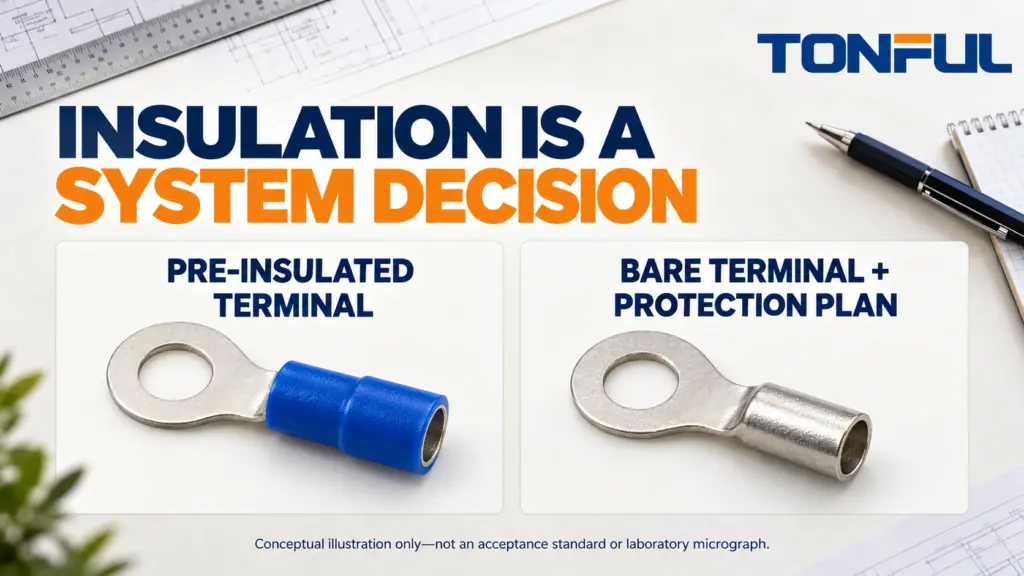
Insulated vs non-insulated terminals is an assembly decision, not a contest between colored plastic and exposed metal. A pre-insulated terminal supplies a sleeve as part of the purchased component. A non-insulated terminal leaves protection to the surrounding design or an additional operation. Neither description establishes the suitability of the completed connection. Specify the termination by …

Insulated vs Non-Insulated Terminals: Specification Guide Read More »

How to Choose the Right Wire Connectors: Complete Selection Guide

Selecting the correct wire connector is one of the most consequential decisions in any electrical assembly. A connector that is undersized, improperly rated, or mismatched to its environment can become a hidden point of failure—generating heat, increasing resistance, and in the worst cases, causing thermal events that destroy equipment or trigger fires. For procurement teams, …

How to Choose the Right Wire Connectors: Complete Selection Guide Read More »

Types of Electrical Wire Connectors by Connection Method

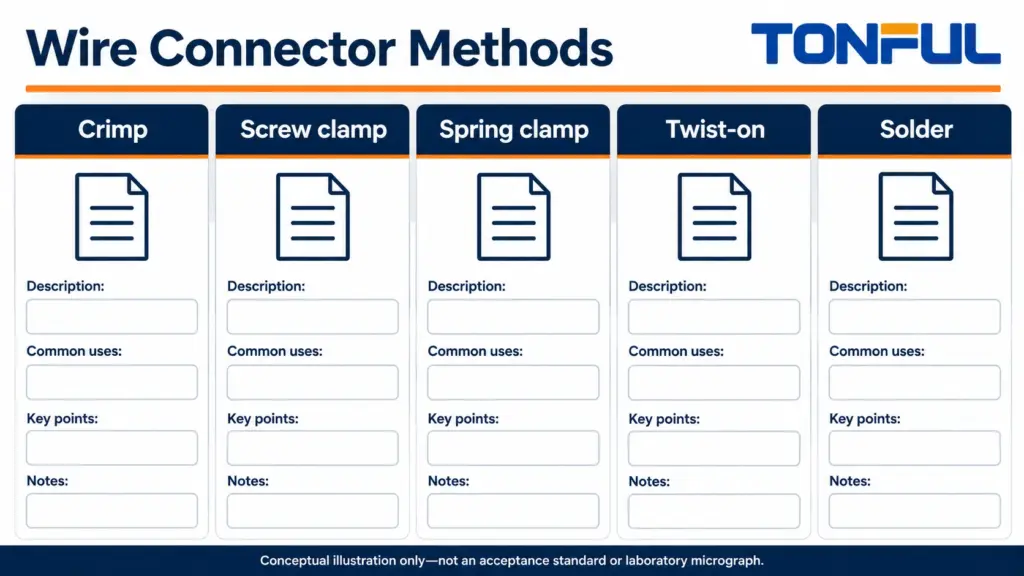
The most useful way to compare types of electrical wire connectors is to separate the conductor termination method from the interface it serves. Crimping, screw clamping, spring clamping, twist-on joining and soldering create connections through different assembly processes. A plug, ring terminal or splice describes another dimension: where that connection sits and how it is …

Types of Electrical Wire Connectors by Connection Method Read More »

Scroll to Top

Ask For Quote Now