
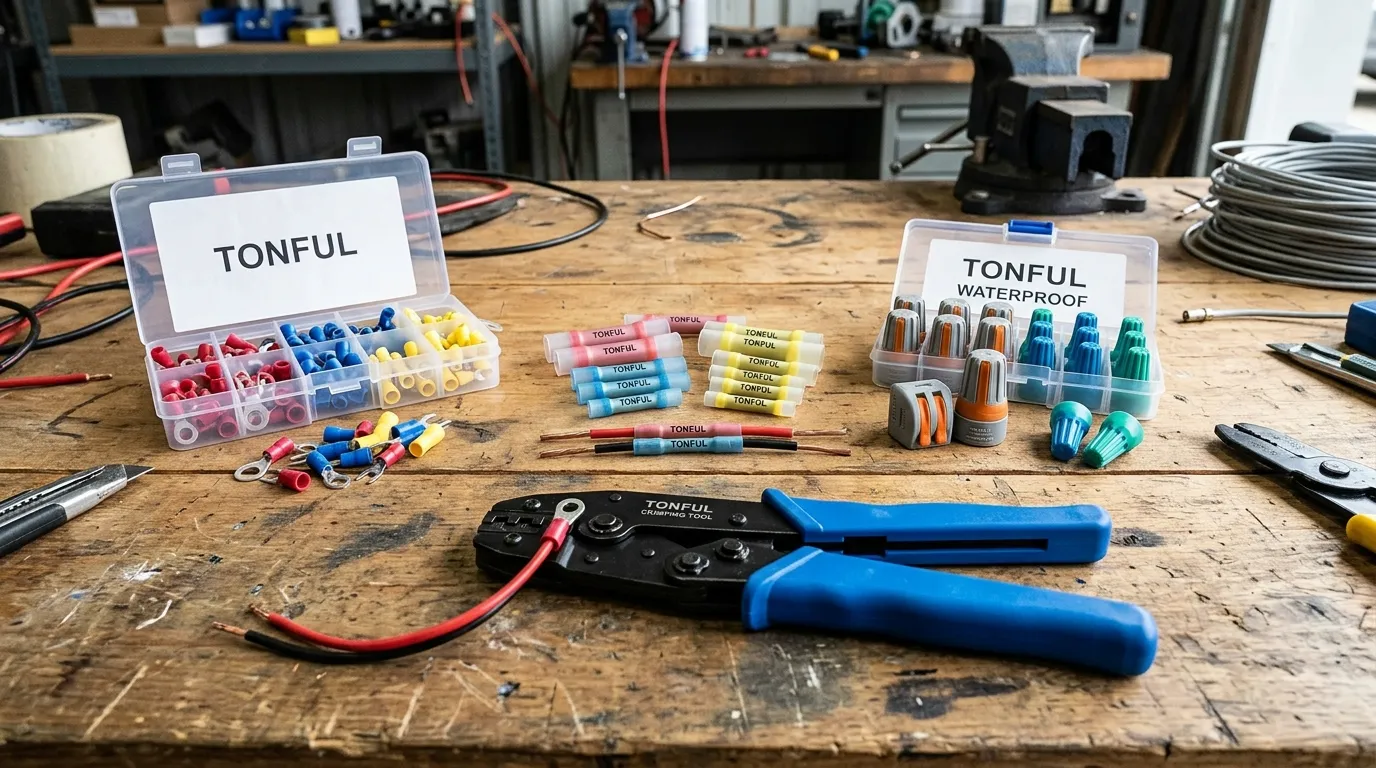
Wire connectors are the unsung workhorses of every electrical system — the small devices that join conductors end-to-end, branch a circuit, or terminate a wire at a device. Without them, power distribution, lighting, vehicles, appliances, and industrial control panels simply could not function safely. This guide explains what wire connectors are used for, the main types, how to choose the right one, and the standards that govern them — written for engineers, electricians, and procurement teams specifying wire connectors for real-world projects.
The Core Purpose of Wire Connectors

At their most fundamental level, wire connectors perform four jobs. They establish a continuous electrical path between two or more conductors with low contact resistance. They provide mechanical strain relief so vibration, thermal cycling, and handling do not pull the joint apart. They insulate the splice to prevent short circuits, arc faults, and shock. And they seal the connection against moisture, chemicals, and corrosion when the environment demands it.
A properly made connection is what engineers call a “gas-tight” joint — the conductors are pressed together with enough force to exclude oxygen and moisture from the contact interface, preventing oxidation that would otherwise raise resistance and generate heat. This is the principle behind every crimp terminal, twist-on wire nut, and lever connector, whether the application is a residential junction box or an automotive wire harness.
Primary Uses of Wire Connectors
Splicing and extending conductors. When a circuit must be extended or a branch taken off an existing run, wire connectors form the splice. In building wiring, twist-on connectors and push-in lever connectors dominate; in automotive and marine work, heat-shrink butt connectors provide the environmental sealing that bare splices cannot.
Terminating wires at devices. Terminals — ring, spade, fork, and pin — are wire connectors designed to bolt or push onto a stud, busbar, or PCB header. Ring terminals are preferred where vibration could loosen a connection because the closed ring cannot pull off the stud, while spade terminals allow quick disconnect for servicing.
Grounding and bonding. Equipment grounding conductors rely on listed connectors to maintain continuity back to the service. NEC 250.8 requires grounding conductors to be connected with listed means — pressure connectors, terminal bars, or exothermic welding — a requirement that rules out improvised twists.
Environmental sealing. In wet, buried, or outdoor locations, standard connectors corrode and fail. Sealed systems listed to UL 486D — including silicone-filled wire nuts and adhesive-lined heat-shrink connectors — keep water out of the splice for the life of the installation.
Vibration-resistant joints. Vehicles, machinery, and marine craft subject connections to continuous movement. Crimped terminals and sealed automotive connectors hold up where twist-on joints would back off.
Types of Wire Connectors and Their Uses

The table below summarizes the most common wire connector families, where each excels, and its typical limitations.
| Connector Type | How It Works | Best Use Cases | Key Limitation |
|---|---|---|---|
| Twist-on (wire nut) | Spring thread bites into twisted conductors | Residential branch-circuit splices, dry indoor boxes | Not vibration-proof; not sealed |
| Push-in / lever | Spring clamp grips inserted conductor | Retrofits, dense junction boxes, stranded/solid mixes | Higher cost; lever type reusable |
| Crimp terminal (ring, spade, butt) | Compression deformation locks conductor | Automotive, marine, industrial, panel building | Requires matched die and tool |
| Heat-shrink terminal | Solder or crimp + adhesive-lined shrink tube | Marine, outdoor, submersible, EV | Slower install; needs heat source |
| Waterproof wire nut | Silicone gel fills the connector | Irrigation, landscape lighting, direct burial | Single-use; check IP rating |
| Split bolt | Bolt clamps conductors in a groove | Large conductor splices, grounding, service work | Requires taping for insulation |
| Set-screw / mechanical lug | Screw compresses conductor against body | Service entrances, busbar terminations | Torque must be verified (NEC 110.14) |
For a deeper treatment of each family, see the complete guide to types of wire connectors.
Industry Applications
Residential and Commercial Wiring
Building wiring is the single largest market for wire connectors. Lighting circuits, outlet boxes, and switch legs all rely on twist-on connectors or, increasingly, lever nuts. Where box-fill is tight, lever connectors save space and allow solid-to-stranded splices that twist-on connectors handle poorly.
Automotive and Off-Road
Vibration, temperature swings, and exposure to road chemicals make crimped terminals the standard in 12V/24V systems. Automotive electrical connectors range from sealed Deutsch-style housings to blade terminals and cord-end terminals used in harness ends. Color-coded insulation — red for 22–18 AWG, blue for 16–14 AWG, yellow for 12–10 AWG — gives installers an instant check on wire range; the crimp terminal color code chart explains the system.

Marine and Wet Locations
Marine wiring lives in a corrosive salt atmosphere where an unsealed copper splice can fail in months. Marine-grade heat-shrink tubing and adhesive-lined connectors form the primary defense, and waterproof wire nuts rated for direct burial protect splices in bilges and dock lighting.
Industrial Control and Panel Building
Control panels use terminal blocks and ferrules to manage dense wiring. Bootlace ferrules prevent stranded conductors from splaying under screw terminals — a requirement of IEC 60998 and a best practice in any panel built to IEC 60204.
Renewable Energy and EV
Solar and battery systems demand connectors rated for high DC voltage, UV exposure, and thermal cycling. Terminal blocks in solar power plants manage string interconnections, while cold-pressed terminals in EV battery packs carry high current with low contact resistance.
Choosing the Right Wire Connector

Selecting a connector comes down to five questions:
- Wire size and type. Match the connector’s wire range to your AWG or mm². Mixing solid and stranded, or copper and aluminum, requires a connector listed for both — aluminum-to-copper splices need connectors specifically listed for the combination.
- Environment. Dry indoor boxes allow twist-on or lever connectors. Wet, buried, or outdoor locations require sealed systems listed to UL 486D.
- Voltage and current. Verify the connector’s rated voltage and ampacity exceed the circuit’s. Insulated connectors are typically rated 600 V; uninsulated lugs can reach 35 kV.
- Vibration and maintenance. Vibration-prone applications favor crimped ring terminals or sealed connectors; joints that must be serviced favor lever nuts or quick-disconnects.
- Standards and listing. In North America, connectors should be listed to UL 486A-486B (general splicing) or UL 486D (sealed/wet), and installed per NEC 110.14, which requires torque values to be verified with a calibrated tool where torque is specified. The UL 486 vs UL 310 comparison explains how these standards differ.
The AWG to metric conversion chart and the guide on how to choose the right wire connectors provide more detail.
Standards and Compliance

Wire connector safety is governed by a layered set of standards:
| Standard | Scope |
|---|---|
| UL 486A-486B | Wire connectors for copper, aluminum, or copper-clad aluminum conductors |
| UL 486C | Splicing wire connectors |
| UL 486D | Sealed wire connector systems for wet / direct burial |
| UL 486F | Wire ferrules |
| UL 310 | Quick-connect terminals (flat tab style) |
| NEC 110.14 | Electrical connections — torque, listing, and installation |
| IEC 60998 | Connecting devices for low-voltage circuits |
Compliance is not optional. A connector that is not listed for its application cannot be installed under the NEC, and using an unlisted connector in a wet location voids both the listing and the insurance coverage. Before sourcing, review the 5 red flags when choosing a crimp terminal manufacturer and the import guide for electrical terminals.
Common Mistakes to Avoid
- Mixing connector and tool. A crimp is only as good as the die. Using the wrong crimping tool on a terminal produces a joint that will fail pull-force testing. Learn how to crimp electrical wires correctly.
- Overtightening twist-on connectors. Excess torque breaks the spring; undertightening leaves a high-resistance joint.
- Ignoring torque on set-screw lugs. NEC 110.14(D) requires calibrated torque. A loose service lug is a leading cause of thermal failure.
- Using unsealed connectors outdoors. Standard wire nuts corrode in wet locations. Use waterproof alternatives.
- Reusing one-time connectors. Sealed and crimp connectors are designed for a single installation. See the risks of reusing waterproof wire nuts.
FAQ
What is the main purpose of a wire connector?
A wire connector joins two or more conductors to create a continuous, low-resistance electrical path while providing mechanical support and insulation. It is the basic building block of every splice, tap, and termination in an electrical system.
What is the difference between a wire nut and a crimp connector?
A twist-on wire nut uses a spring to grip pre-twisted conductors and is removed by hand. A crimp connector permanently deforms a metal barrel around the conductor using a tool, producing a gas-tight, vibration-resistant joint. Crimp connectors are preferred in automotive and marine work; wire nuts dominate residential dry-location splices. See solder vs crimp for the broader comparison.
Can wire connectors be used outdoors?
Only sealed connectors listed to UL 486D are rated for wet, damp, or direct-burial locations. Standard twist-on connectors are for dry indoor use. Waterproof wire connectors and adhesive-lined heat-shrink terminals are the common outdoor solutions.
Are push-in connectors as reliable as wire nuts?
Independent testing shows both can perform well when installed correctly. Push-in and lever connectors are faster and handle mixed wire types better, while properly twisted wire nuts carry current through the conductors themselves. Lever nuts are reusable; twist-on connectors are not. The guide to choosing wire connectors walks through the trade-offs.
Do wire connectors expire?
The connectors themselves do not have an expiry date, but sealed types with silicone gel or adhesive can degrade in storage. Keep them in sealed packaging away from heat and UV, and inspect waterproof wire nuts before installation.
Conclusion
Wire connectors are the point where every circuit either holds or fails. Get the type, the tool, and the listing right, and the connection outlasts the equipment around it; get it wrong, and the same joint becomes the root cause of a fault, a fire, or a field recall. TONFUL Electric manufactures a full range of terminals and connectors — from waterproof wire nuts and heat-shrink terminals to automotive connectors and cord-end terminals — built to UL and IEC standards for engineers and procurement teams who cannot afford a connection that comes loose.