Blog

Your blog category

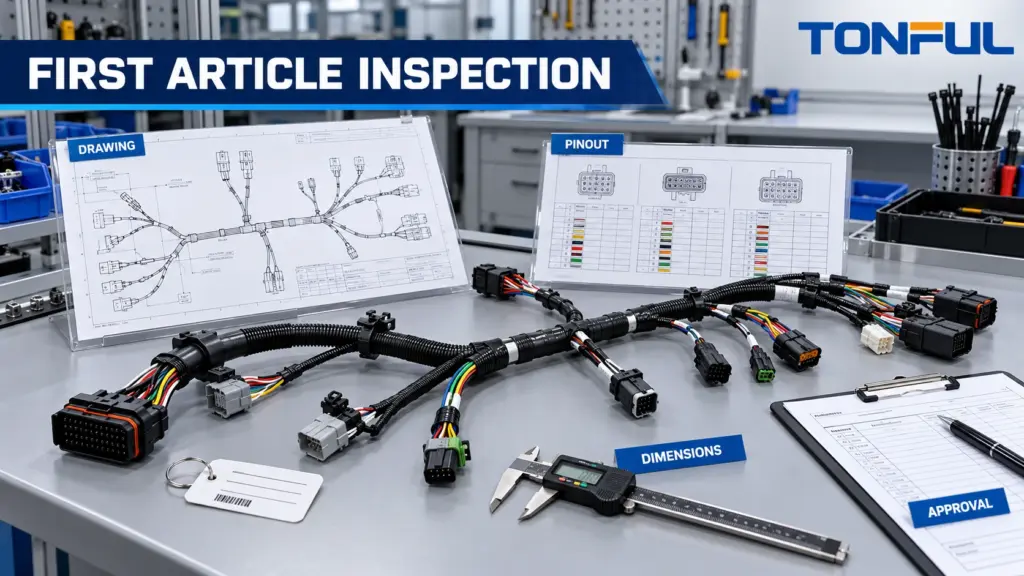
Wire Harness First Article and Incoming Inspection

A passing electrical test does not prove that a delivered wire harness matches the released design. A tester may confirm continuity while missing the wrong wire specification, unapproved connector revision, incorrect branch length, damaged seal, weak crimp, misplaced label or undocumented substitution. First article inspection and incoming inspection address different parts of that risk. First …

Wire Harness First Article and Incoming Inspection Read More »
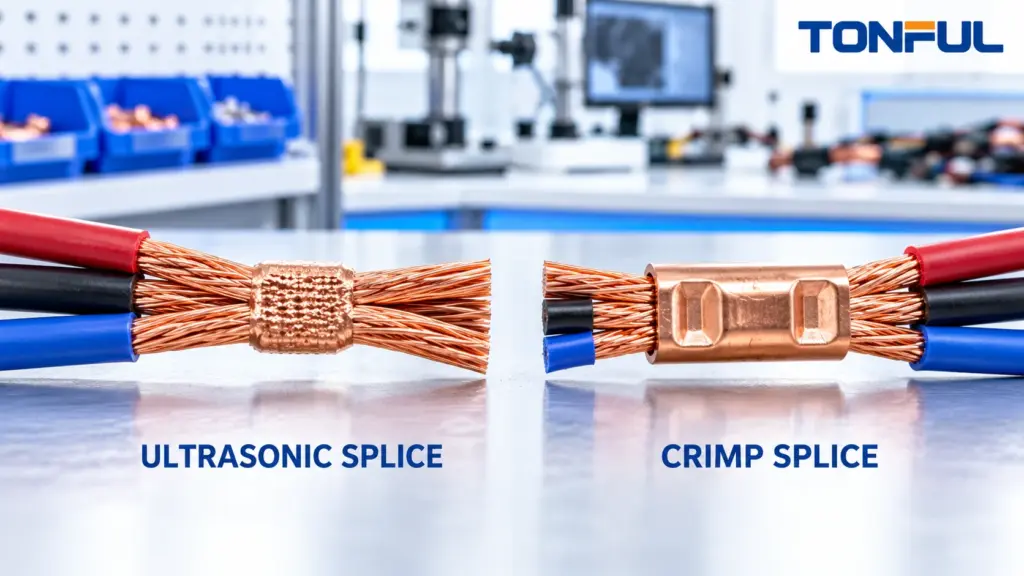
Ultrasonic Wire Splicing vs Crimp Splices

A branch splice is not just a way to join copper. It determines bundle diameter, branch direction, tooling, inspection access, covering, repair strategy and the evidence needed to release a wire harness. Ultrasonic wire splicing and mechanical crimp splicing can both produce dependable joints, but neither is automatically superior for every conductor combination or production …

Ultrasonic Wire Splicing vs Crimp Splices Read More »

Waterproof Cable Assemblies: Seals and Testing

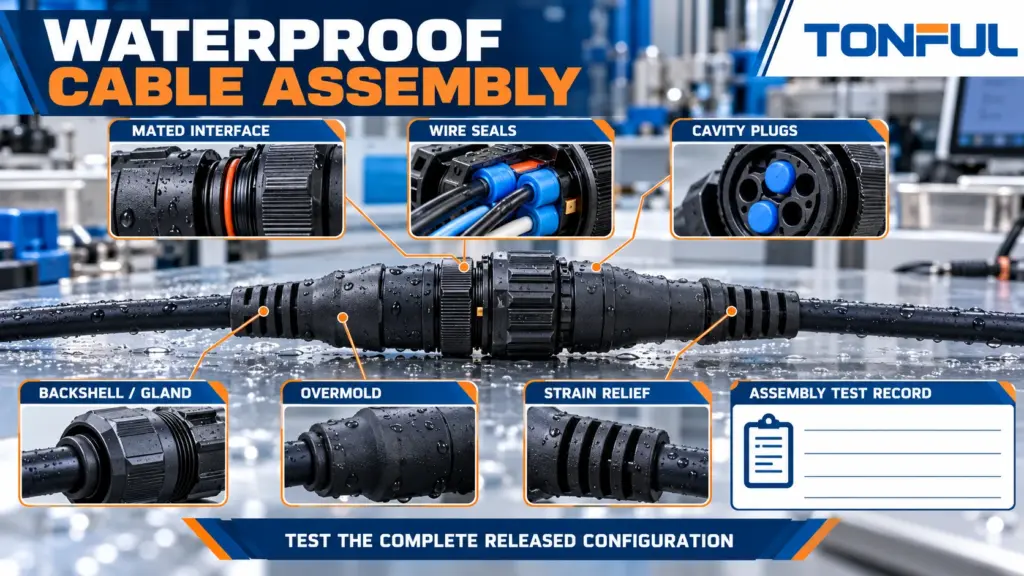
A waterproof connector does not automatically create a waterproof cable assembly. The completed path includes the mated interface, housing, terminals, individual wire seals or mat seal, unused cavities, backshell, cable jacket, overmold or gland, branch transitions and any splice. Water can enter through whichever feature is least controlled. The word “waterproof” is therefore incomplete without …

Waterproof Cable Assemblies: Seals and Testing Read More »

UL AWM Wire in Harness Assemblies: Style and Traceability

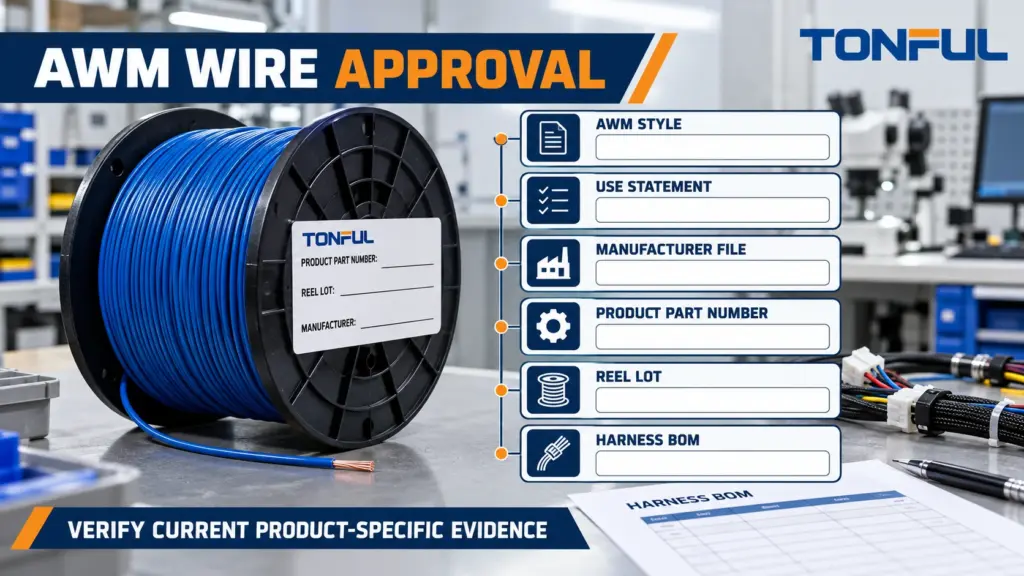
An AWM style number is not a complete custom-harness wire specification. Appliance Wiring Material (AWM) is a UL Recognized Component category used for factory-installed wiring under defined conditions. The applicable style page describes a construction and scope, but the harness buyer must still verify the actual manufacturer, product, file, conductor, insulation, ratings, use statement, markings …

UL AWM Wire in Harness Assemblies: Style and Traceability Read More »

PVC vs Silicone vs PTFE Wire for Custom Harnesses

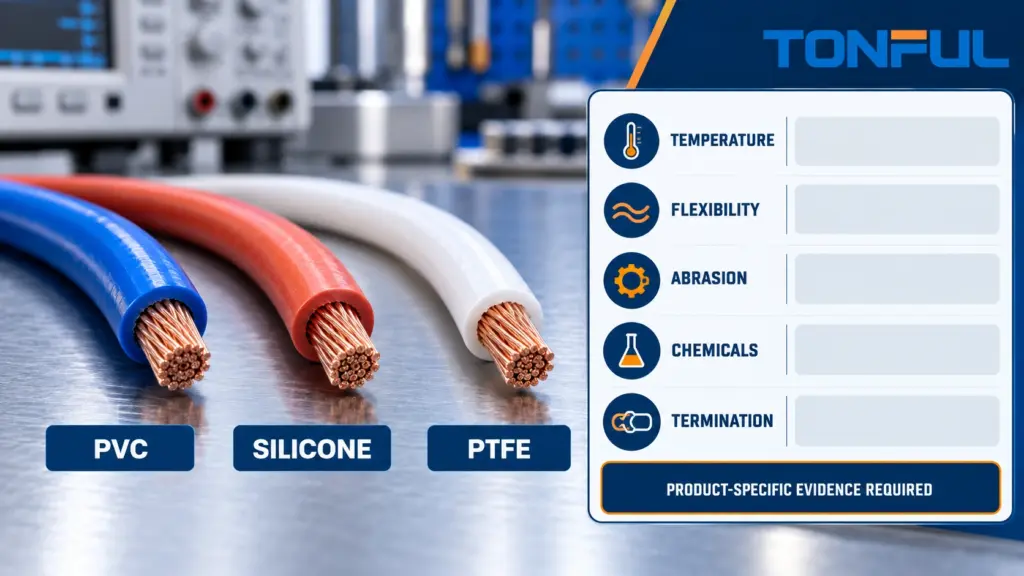
PVC, silicone and PTFE are insulation families, not complete wire specifications. Each can be useful in a custom harness, but the polymer name alone does not establish conductor size, strand construction, wall thickness, outside diameter, voltage rating, temperature range, flame performance, chemical resistance or approval. Those properties belong to an exact wire product and its …

PVC vs Silicone vs PTFE Wire for Custom Harnesses Read More »

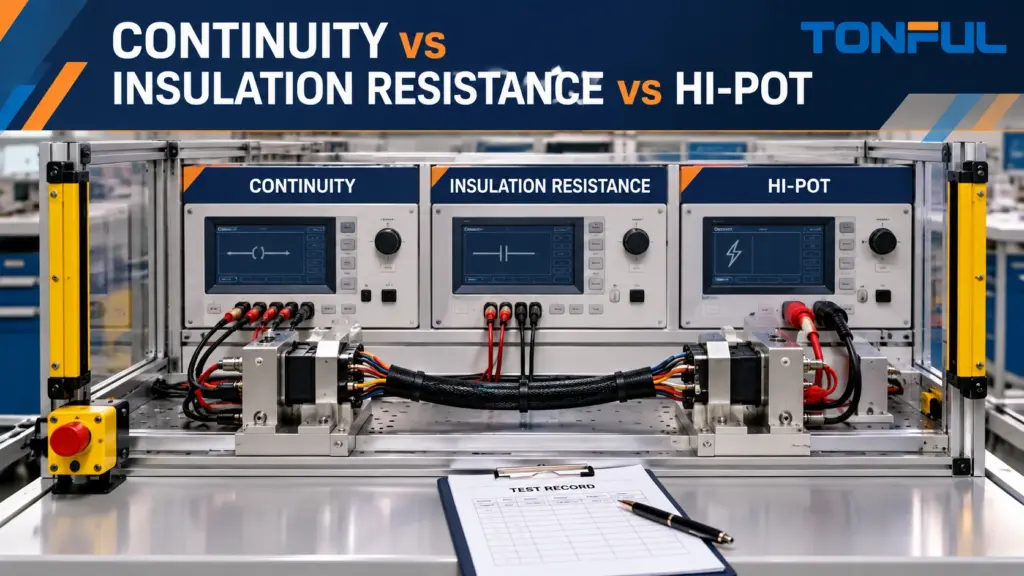
Continuity vs Insulation Resistance vs Hi-Pot

Continuity, insulation resistance and dielectric withstand (hi-pot) tests answer different questions. Continuity verifies intended conductive paths and can detect opens, miswires and shorts when the test matrix is complete. Insulation resistance applies a defined DC test condition and measures resistance between isolated conductors or between conductors and shield/chassis. Hi-pot applies a specified dielectric-withstand condition and …

Continuity vs Insulation Resistance vs Hi-Pot Read More »

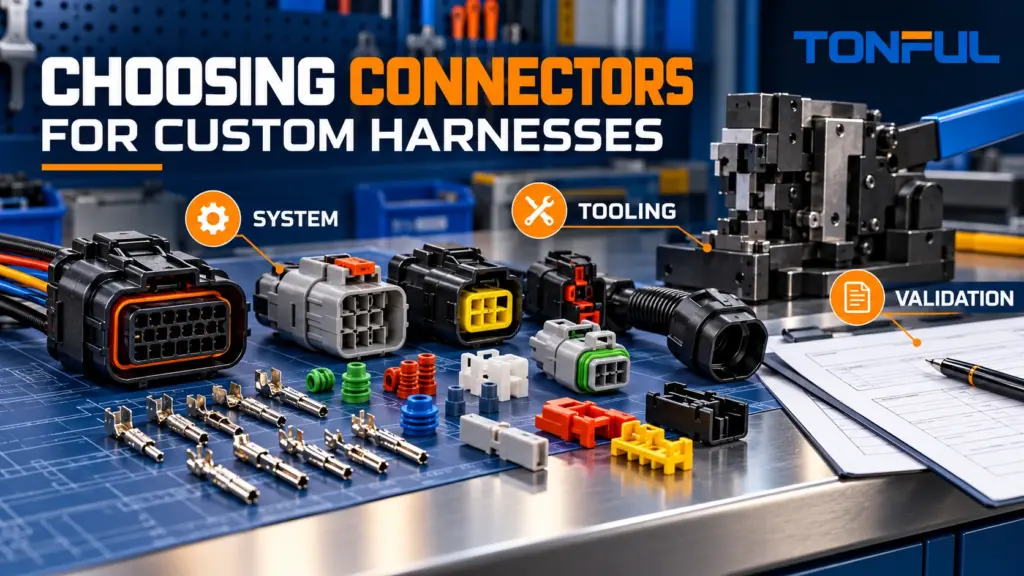
Choosing Connectors for Custom Wire Harnesses

Choosing a connector for a custom harness means selecting a complete interconnection system, not just a plastic housing. The housing, mating half, terminals, wire seals, cavity plugs, secondary lock, backshell, tooling and approved wire range must work together. Two connectors can share the same cavity count and similar shape while differing in keying, terminal geometry, …

Choosing Connectors for Custom Wire Harnesses Read More »

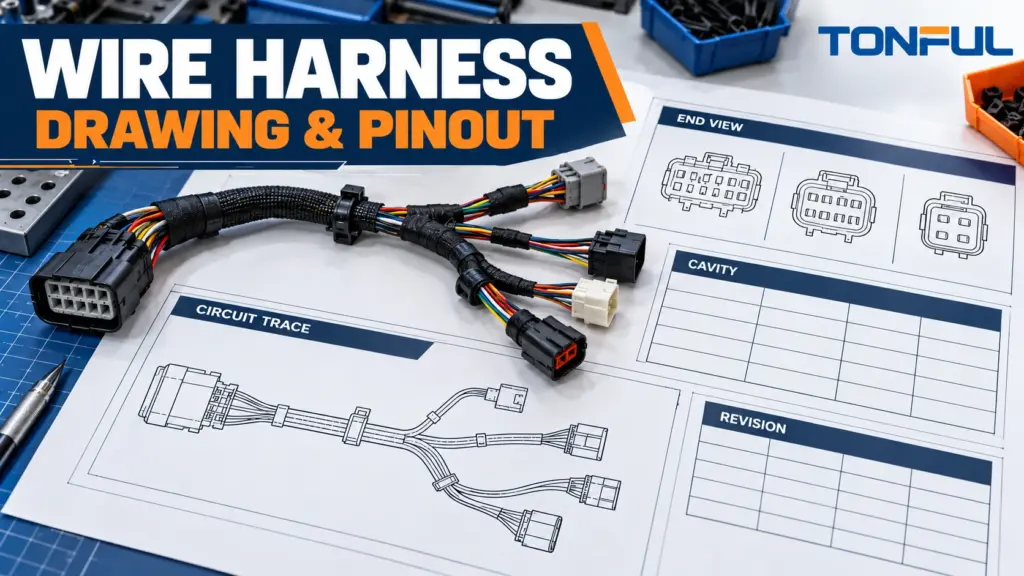
How to Read a Wire Harness Drawing and Pinout

A wire harness drawing connects several kinds of information: electrical intent, physical routing, connector interfaces, materials, workmanship and test requirements. Reading only the line diagram can miss a reversed connector view. Reading only the pin table can miss branch length, splice location or shield treatment. A reliable review follows a controlled order and confirms that …

How to Read a Wire Harness Drawing and Pinout Read More »

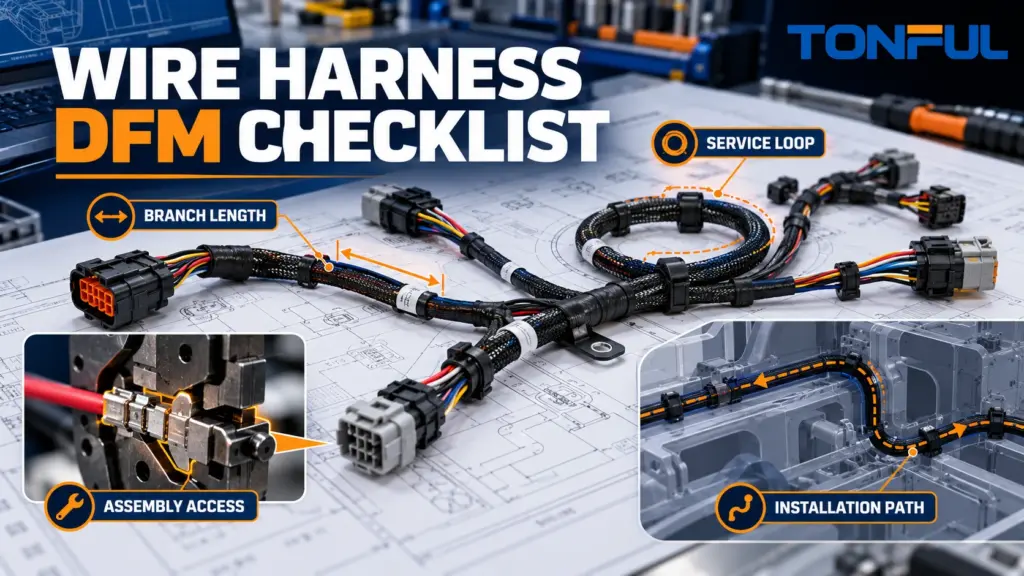
Wire Harness DFM Checklist for Reliable Assembly

Wire harness design for manufacturing is the process of making the approved electrical design practical to cut, terminate, fixture, protect, inspect and install. A circuit can be electrically correct yet difficult to build consistently because branch dimensions accumulate, connectors cannot reach their mating points, coverings block inspection, or tools cannot approach a terminal, splice or …

Wire Harness DFM Checklist for Reliable Assembly Read More »

Scroll to Top

Ask For Quote Now