
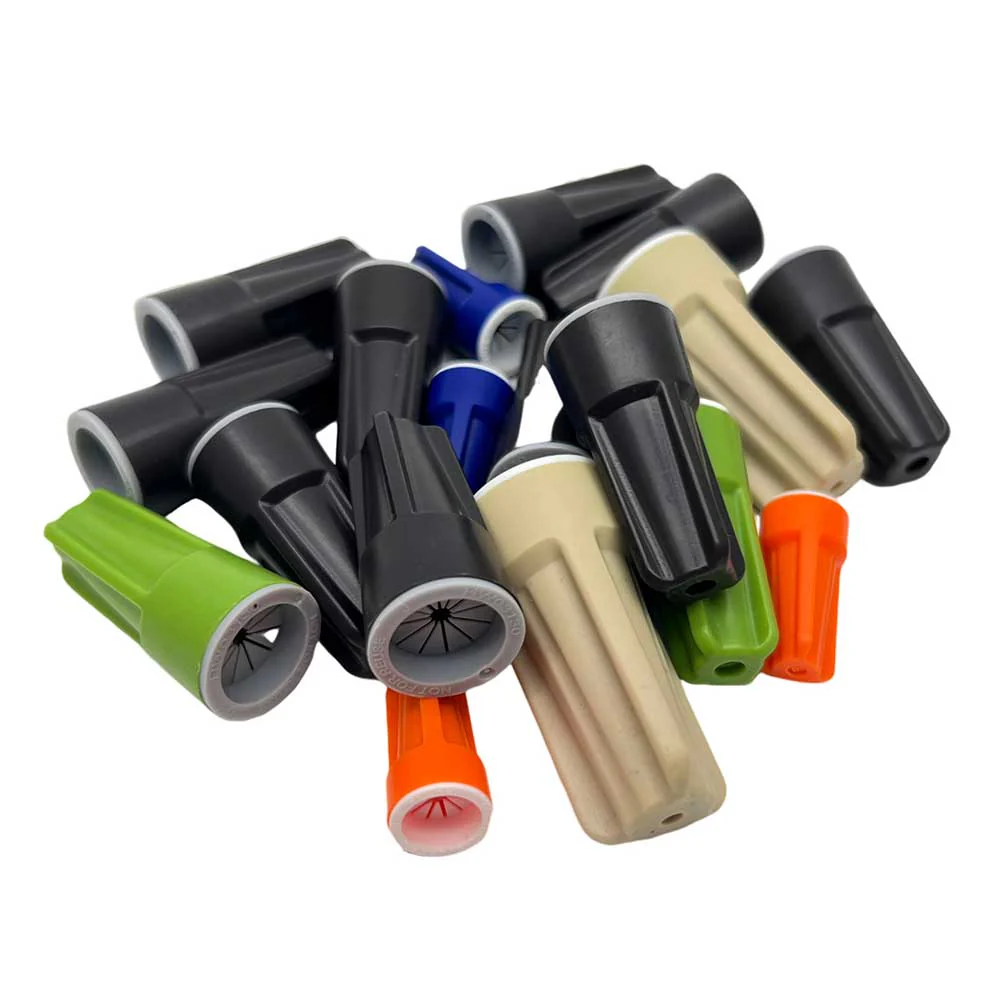
Choosing a Waterproof Wire Nut Manufacturer is not a catalog-comparison exercise. A connector can look correct, contain sealant, and still fail because of an undersized spring, inconsistent gel volume, incompatible wire combinations, poor molding, or an unsupported “waterproof” claim. For distributors, electrical brands, contractors, and OEM buyers, the audit must connect every claim on the package to a controlled material, verified test, production record, and traceable lot.
Short answer: A qualified waterproof wire nut manufacturer should prove that its product is suitable for the exact wire range, voltage, temperature, environment, and installation method you specify. Audit the certification scope, design controls, incoming materials, spring and housing production, sealant dispensing, electrical and environmental tests, lot traceability, change control, capacity, and corrective-action system before approving mass production.
Engineering note: “Waterproof,” “IP68,” “wet location,” and “direct burial” are not interchangeable claims. IP classifications address ingress protection under defined test conditions. Direct-burial or wet-location acceptance depends on the complete connector system, applicable product standard, markings, instructions, and local code. UL 486D covers specified sealed wire connector systems, but its published scope excludes twist-on style splicing sealed wire connectors. The applicable standard must therefore be confirmed for the exact architecture and intended use rather than assumed from the product name.
1. Define the Product Before Auditing the Factory
Send the supplier a controlled specification sheet before the audit. It should identify the connector type, conductor material, solid or stranded construction, approved wire combinations, AWG range, voltage, temperature, installation environment, strip length, packaging, labeling, and required approvals. If the application is landscape lighting, irrigation, marine equipment, HVAC, or direct burial, state it explicitly.
TONFUL’s current waterproof wire nuts page, for example, lists models with wire ranges from #24 to #6 AWG depending on size, a 105°C connector temperature rating, a 10–12 mm stripping length, and 600 V building-wire ratings. Buyers should treat each model as a separate qualification object rather than assume one test covers an entire family. For related connector formats, review the waterproof wire connector range.

Pre-Audit Document Request
| Request from manufacturer | What the auditor should verify | Red flag |
|---|---|---|
| Product drawing and bill of materials | Revision number, critical dimensions, materials, sealant mass, spring specification | Uncontrolled spreadsheet or no revision history |
| Certification or test report | Model numbers, factory name, standard edition, scope, expiry/status, issuing laboratory | Logo on a brochure but no searchable certificate or report |
| Wire-combination table | Tested conductor counts, sizes, materials, solid/stranded limits | “Fits all wires” without a combination matrix |
| Installation instruction | Strip length, twist direction, torque or turns, reuse policy, environmental limitations | Instructions conflict with packaging |
| Process flow and control plan | Controls from incoming inspection through packing | Final inspection is the only quality gate |
| Recent lot records | Actual readings, operator, equipment, date, disposition | Perfectly identical handwritten results |
| Change-control procedure | Customer notification for resin, spring, gel, mold, supplier, or process changes | “Equivalent material” substitutions without requalification |
2. Verify Certifications and Claims at Model Level
Do not approve a supplier because it says “UL compliant” or displays an IP icon. Match the exact model and manufacturing location on the certificate to the product, drawing, label, and quotation. Verify the record through the certification body’s official database where available. UL notes that certification programs can include follow-up service to assess continued conformity, which is different from possessing a one-time laboratory report.
For an IP claim, request the complete report, not the cover page. The report should identify the tested configuration, cable or wire entries, sample conditioning, immersion depth, duration, acceptance criteria, and any installation accessories. IEC 60529 uses the two-digit IP code to classify protection against solids and water; IPX8 conditions are specified rather than inferred from the number alone. TONFUL’s NEMA vs. IP ratings guide provides a useful overview.
If direct burial is required, ask for explicit evidence that the listed system and its marking permit that use. An ingress test alone does not establish code acceptance. TONFUL’s direct-burial wiring guide explains why application-specific listing and instructions matter.
3. Audit Materials and Component Control
A waterproof wire nut is a system: housing, metallic spring or insert, sealant, and installed conductors must work together. Audit each critical input.
| Component | Audit points | Evidence to sample |
|---|---|---|
| Housing resin | Approved grade, colorant ratio, moisture control, flame/temperature properties, regrind policy | Certificate of analysis, incoming lot ID, drying log, material-change record |
| Spring or insert | Alloy, plating, wire diameter, geometry, hardness, corrosion protection | Material certificate, dimensional study, coating record, supplier lot |
| Silicone or sealing compound | Approved formulation, dielectric properties, viscosity, temperature stability, shelf life | Batch certificate, storage temperature, first-expiry-first-out record |
| Packaging and labels | Model, wire range, ratings, lot code, installation instructions, warning text | Approved artwork, barcode check, line-clearance record |
Challenge the manufacturer’s substitution rules. A different resin colorant can affect UV or flame behavior; a spring supplier change can alter bite force and resistance; a sealant with similar appearance can have different migration, curing, or low-temperature behavior. No critical change should reach production without documented risk review and, where necessary, revalidation or customer approval.

4. Walk the Manufacturing Process
Begin at incoming inspection and follow one lot to finished goods. At injection molding, inspect how melt temperature, pressure, cycle time, mold maintenance, cavity identification, flash, short shots, cracks, and dimensions are controlled. Cavity-level traceability matters because one damaged cavity can create a repeating defect hidden inside an otherwise acceptable lot.
At spring or insert assembly, verify orientation, retention, depth, and poka-yoke controls. At sealant filling, check whether dispensing is controlled by weight or validated volume, how the nozzle is purged, how air pockets are prevented, and how start-up and changeover pieces are segregated. Review measurement-system analysis and calibration for scales, gauges, torque devices, resistance meters, chambers, and immersion equipment.
Ask operators what happens after an out-of-control reading. Their answer should match the written reaction plan: stop, contain material since the last accepted check, identify the cause, correct it, re-inspect, and document disposition. A control chart without a containment rule is decoration.

5. Witness Product Verification
Testing should reproduce the approved installation, including conductor type, strip length, number of wires, and assembly method. Select samples across molds, cavities, shifts, and production times rather than accepting samples prepared in advance.
Minimum Witness-Test Matrix
| Test | What it reveals | Audit acceptance question |
|---|---|---|
| Visual and dimensional inspection | Molding, assembly, fill, marking, and fit defects | Are critical-to-quality limits defined and statistically monitored? |
| Sealant mass or volume | Underfill, overfill, air entrapment, dispensing drift | Is every dispenser challenged at a defined frequency? |
| Conductor retention / pull test | Spring engagement and assembly strength | Are fixtures, pull rate, conductor combinations, and limits controlled? |
| Initial contact resistance | Poor metal contact, contamination, weak spring force | Is the method repeatable and tied to an approved specification? |
| Temperature-rise or current-cycling test | Heating at the connection under electrical load | Are worst-case wire combinations included? |
| Dielectric withstand / insulation resistance | Insulation or contamination weakness | Are voltage, duration, leakage criteria, and post-test handling recorded? |
| Water-ingress or immersion test | Seal integrity in the claimed configuration | Do depth, duration, conditioning, and pass criteria match the claim? |
| Thermal cycling / freeze-thaw | Pumping, cracking, and seal movement | Is electrical performance checked before and after exposure? |
| Corrosion exposure when applicable | Plating and connection durability in aggressive service | Does the method reflect the target environment, especially coastal use? |
| Installation abuse and torque study | Cross-threading, shell cracking, installer variation | Is there an adequate process window, not merely one ideal assembly? |
For salt exposure, do not accept “salt-spray tested” without the test method, duration, specimen preparation, and acceptance criteria. ASTM B117 describes operation of a salt-spray apparatus, but a procurement specification still needs product-specific pass/fail requirements. For deeper context, see TONFUL’s salt spray testing guide for marine connectors.

6. Evaluate the Quality System and Traceability
Pick a finished carton and perform a backward trace. The lot code should lead to production date and shift, machine and mold/cavity, operators, resin lot, spring/insert lot, sealant batch, inspection results, and release authorization. Then perform a forward trace from one incoming material lot to every affected finished lot and customer shipment.
Review the last three relevant complaints or internal nonconformities. Strong suppliers use a structured corrective-action method, verify the root cause with evidence, contain affected stock, and confirm effectiveness after implementation. Weak suppliers blame operators, retrain them, and close the case without changing the process.
Check calibration status, internal audit results, training records, retention-sample policy, nonconforming-material quarantine, and document control. ISO 9001 certification can support confidence in the management system, but it does not by itself certify connector performance.
7. Confirm Capacity, OEM Control, and Commercial Readiness
A capable factory must deliver the same product after approval. Compare demonstrated output—not theoretical machine speed—with your monthly forecast and peak demand. Review bottlenecks in molding, spring supply, gel filling, testing, and packaging. Ask for contingency plans covering mold damage, power loss, equipment failure, material shortage, and sub-supplier disruption.
For private-label business, approve a golden sample, signed drawing, color standard, label artwork, packaging specification, inspection plan, and change-notification agreement. Define sample approval, tooling ownership, minimum order quantity, lead time, spare capacity, warranty handling, and the rules for mixed models. TONFUL’s bulk waterproof wire nut purchasing guide and waterproof wire nut pricing guide can support the commercial review after technical qualification.
8. Manufacturer Scorecard
Score evidence, not presentation quality. A practical rule is to disqualify the supplier for any unresolved safety or certification critical failure, even if the total score is high.
| Audit category | Weight | Approval expectation |
|---|---|---|
| Certification and claim verification | 20% | Exact-model evidence; no ambiguous marks |
| Design, BOM, and change control | 15% | Controlled specifications and revalidation rules |
| Incoming materials and sub-suppliers | 10% | Lot traceability and verified critical properties |
| Process control and equipment | 15% | Defined parameters, reaction plans, capable measurement |
| Product testing and laboratory competence | 20% | Relevant tests witnessed with complete raw data |
| Quality system and traceability | 10% | Backward and forward trace completed successfully |
| Capacity, continuity, and delivery | 5% | Demonstrated capacity with contingencies |
| OEM packaging and commercial controls | 5% | Approved samples, artwork, terms, and change notice |
Suggested decision rule: approve at 85% or above with no critical findings; conditionally approve at 70–84% only with dated corrective actions and evidence; reject below 70% or for falsified records, unverifiable certification, uncontrolled material substitution, failed traceability, or inability to reproduce a claimed environmental test.

9. Questions to Ask a Waterproof Wire Nut Manufacturer
- Which exact models are certified or tested for our intended application, and where can we verify them?
- What wire combinations were used for electrical, mechanical, and ingress testing?
- Which characteristics are critical to quality, and what are their control limits?
- How do you measure and trace sealant quantity for every production lot?
- What changes require requalification and advance customer notification?
- Can we select random production samples and witness the complete test sequence?
- How quickly can you trace a complaint to material, mold cavity, line, and shipment?
- What is your containment plan if one cavity or dispenser fails?
- Which operations or tests are subcontracted, and how are those suppliers controlled?
- What capacity is available during our peak season?
Conclusion
The best Waterproof Wire Nut Manufacturer is not the supplier with the longest claim list. It is the supplier that can connect a defined application to an exact model, controlled materials, stable manufacturing, reproducible test data, and complete lot traceability. Use this checklist before tooling approval and repeat the critical checks during production surveillance.
For model selection or OEM sourcing, review TONFUL’s waterproof wire nut manufacturer capabilities and contact TONFUL with your wire combinations, target market, environment, annual volume, packaging needs, and required certifications.
Short FAQ
What should I verify first when auditing a waterproof wire nut manufacturer?
Verify the exact model’s certification and test scope against your intended wire combination and environment. If the product identity, factory, standard, or application does not match, stop the audit until the gap is resolved.
Is an IP68 rating enough for direct burial?
No. IP68 addresses ingress protection under specified test conditions. Direct-burial suitability requires explicit evidence for that use, correct product marking and instructions, and compliance with applicable local codes.
Should every production lot receive immersion testing?
The control plan should define routine lot tests and periodic validation based on risk and certification requirements. At minimum, sealant quantity, assembly integrity, electrical performance, and sealing controls must be monitored at a frequency that detects drift before shipment.
Can one certificate cover every wire nut size?
Only if the certificate or report explicitly lists the family and its scope. Confirm each ordered model, wire combination, rating, and manufacturing location rather than assuming family coverage.
What is the biggest supplier-audit red flag?
A claim that cannot be traced to model-specific evidence. Unverifiable certificates, missing raw data, uncontrolled substitutions, and failed lot traceability justify rejection or containment.