Author name: tonful.com

Adhesive-Lined Heat Shrink Tubing Selection Guide

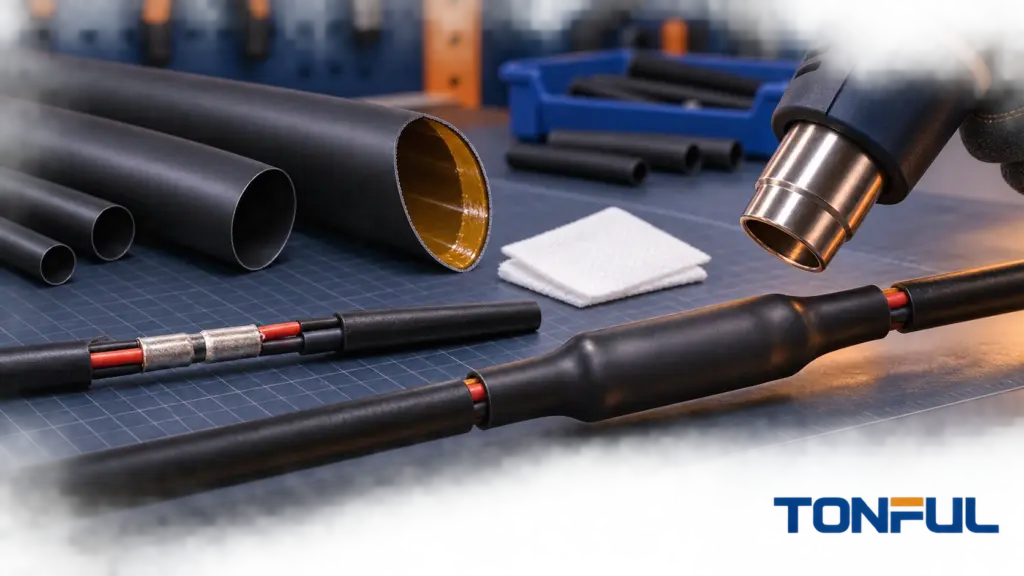
Adhesive-lined heat shrink tubing can protect a splice or cable transition by combining a recoverable outer wall with an inner thermoplastic adhesive or sealant. During controlled heating, the outer wall shrinks while the liner softens, wets compatible surfaces and fills some available gaps. A successful result depends on the complete joint: tubing, liner, substrate, geometry, …

Adhesive-Lined Heat Shrink Tubing Selection Guide Read More »
Single-Wall vs Dual-Wall Heat Shrink Tubing

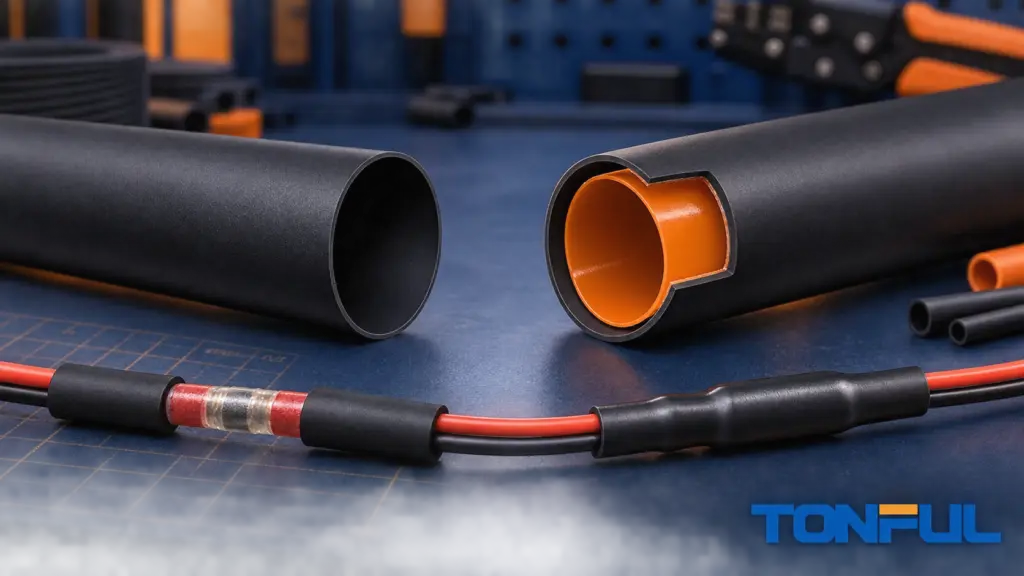
Single-wall and dual-wall heat shrink tubing can share the same outside appearance before installation, yet they perform different jobs. Single-wall tubing consists of one recoverable polymer layer. Dual-wall tubing adds an internal adhesive or sealant that softens during heating while the outer layer recovers. The second layer can improve environmental protection and strain transition, but …

Single-Wall vs Dual-Wall Heat Shrink Tubing Read More »

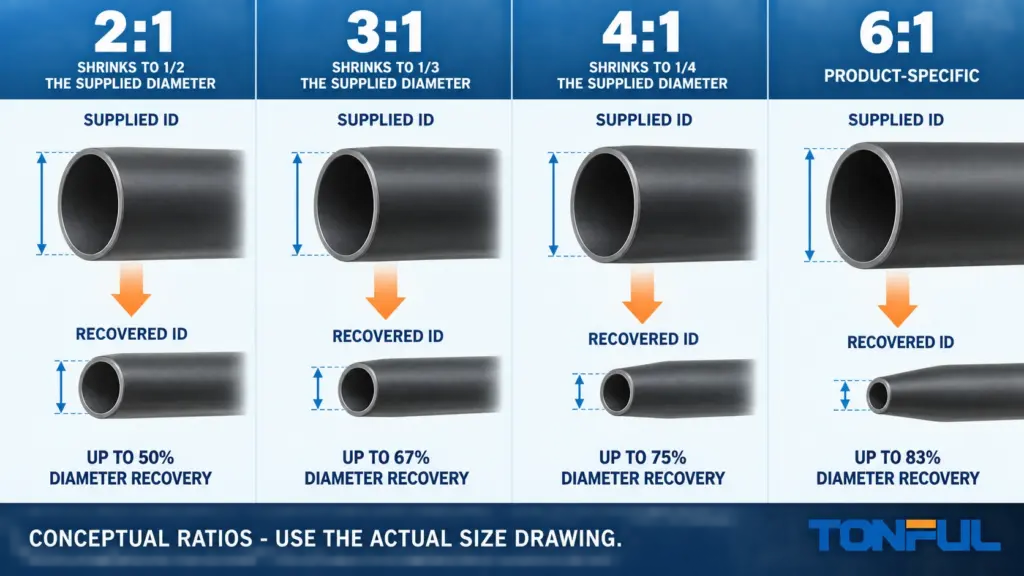
Heat Shrink Ratios Explained: 2:1, 3:1, 4:1 and 6:1

A heat shrink ratio describes the relationship between a tubing family’s expanded and fully recovered diameters. It helps engineers estimate how large a feature the tube can pass over and how small a substrate it can recover toward. It does not define the actual size, installed wall, adhesive, material, temperature, sealing or electrical performance. This …

Heat Shrink Ratios Explained: 2:1, 3:1, 4:1 and 6:1 Read More »

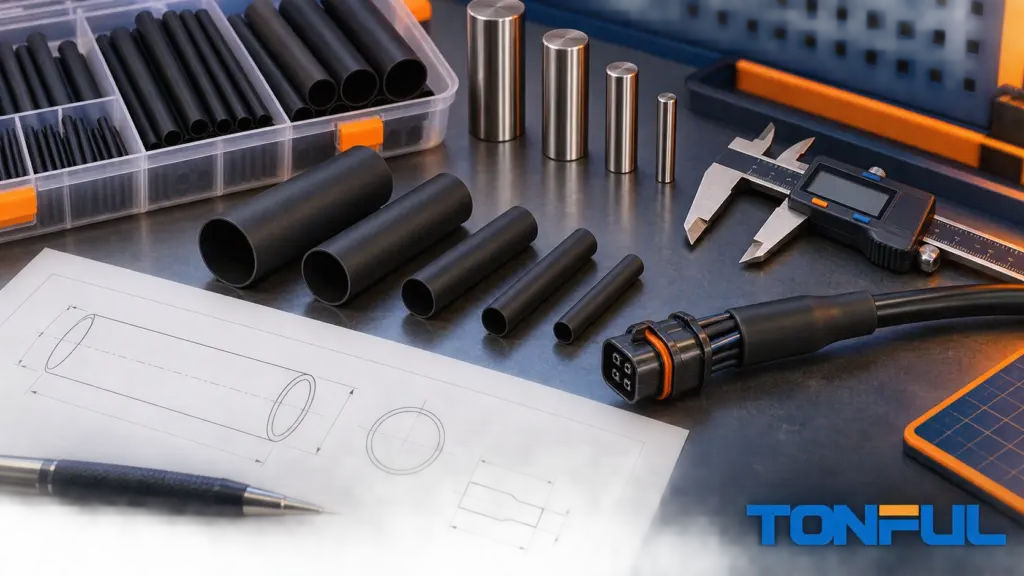
Heat Shrink Tubing Size Guide and Calculator

The correct heat shrink tubing size must pass over the largest part before heating and recover onto the smallest required surface afterward. Wire gauge alone cannot answer both questions because insulation thickness, splice barrels, connector bodies, terminals, bundle arrangement and manufacturing tolerances change the real outside diameter. The product’s supplied and recovered dimensions, not its …

Heat Shrink Tubing Size Guide and Calculator Read More »

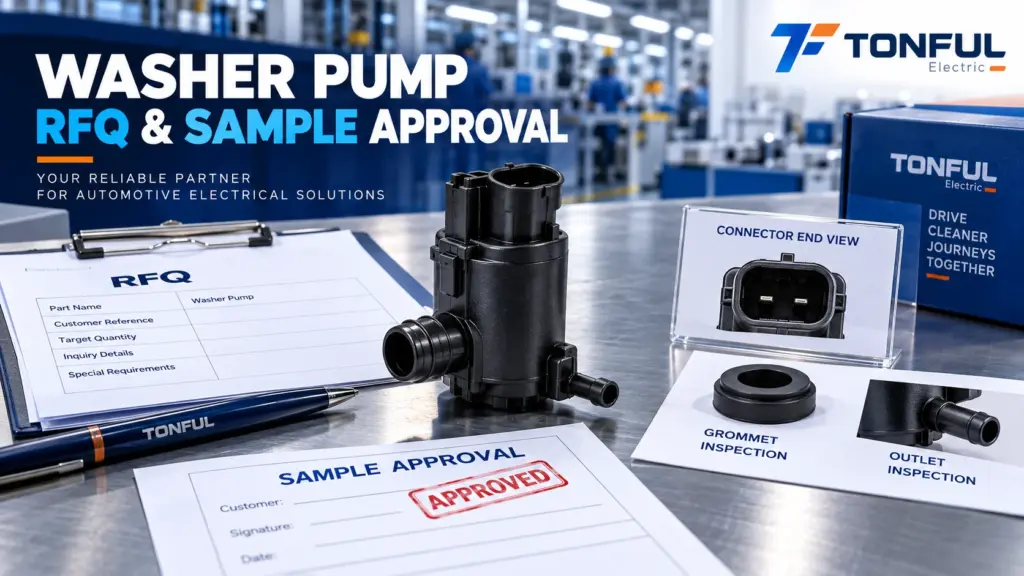
Washer Pump RFQ and Sample Approval Checklist

A washer pump quotation is only comparable when every supplier receives the same technical, validation and commercial definition. A photograph, vehicle model or OE reference may start the discussion, but none of them defines the complete pump. Reservoir mounting, connector keying, voltage domain, control architecture, outlet geometry, hose interface, hydraulic duty and environmental exposure can …

Washer Pump RFQ and Sample Approval Checklist Read More »

Washer Pump Manufacturer Audit Checklist

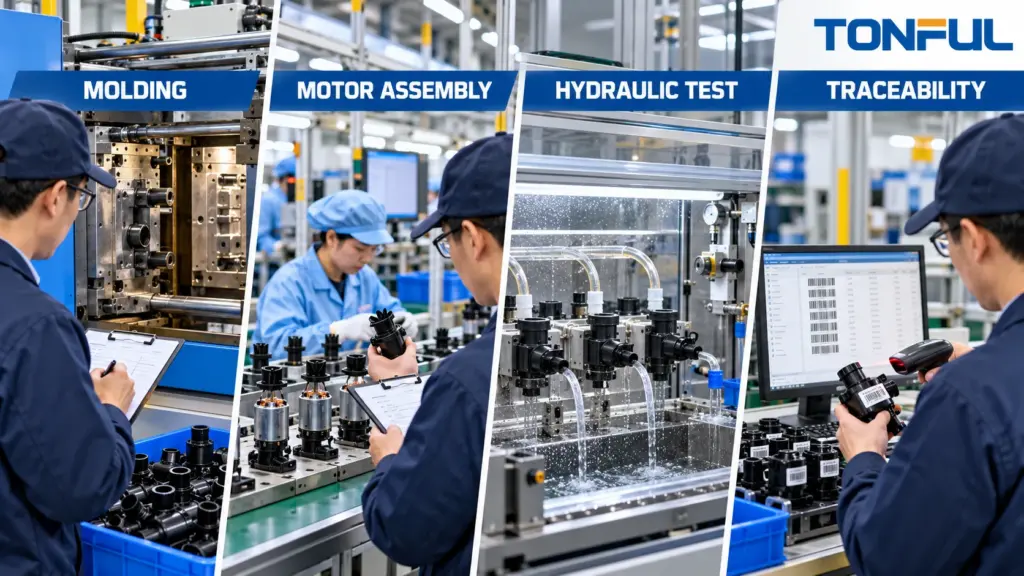
Approving a washer pump manufacturer should not depend on a showroom tour, supplier questionnaire or one passing sample. A reliable audit follows customer requirements through design records, purchased materials, molding, motor and impeller assembly, sealing, electrical connection, hydraulic testing, packaging and field performance. It must also state how evidence is sampled, scored and closed. This …

Washer Pump Manufacturer Audit Checklist Read More »

Washer Pump Testing: Flow, Current, Noise and Endurance

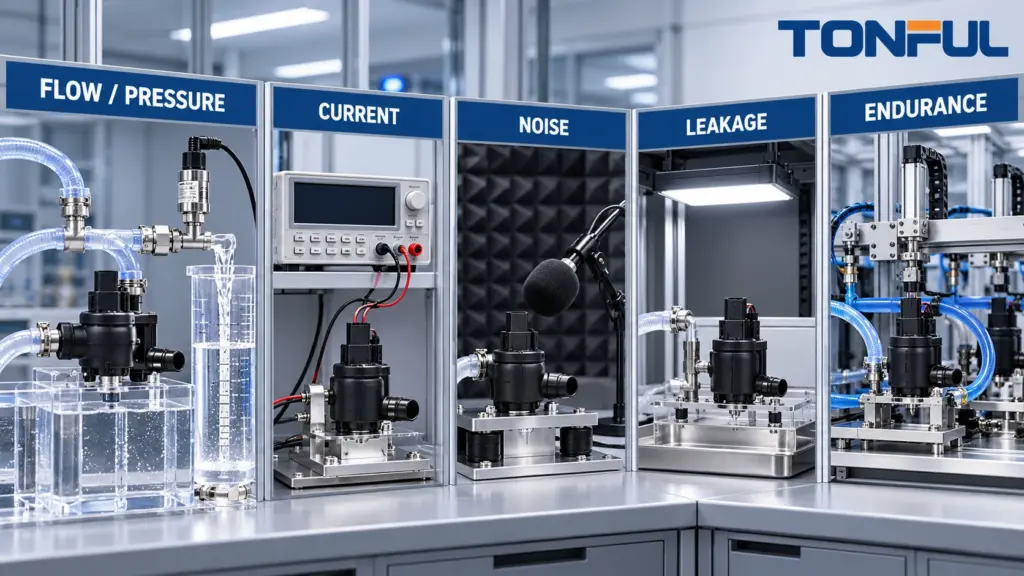
Washer pump testing should reproduce a defined electrical and hydraulic operating condition, not just prove that a motor spins. Flow changes with supply voltage, hose restriction, fluid viscosity and nozzle load. Current changes with motor condition and hydraulic demand. Noise depends on mounting, reservoir fill and the measurement environment. Endurance results are meaningful only when …

Washer Pump Testing: Flow, Current, Noise and Endurance Read More »

Scroll to Top

Ask For Quote Now